Getting Around Pakse: Local Transport Guide for Backpackers
Pakse is small enough that you can walk across the central peninsula in twenty minutes, but it’s the gateway city for two of southern Laos’s biggest draws, the Bolaven Plateau waterfalls and the 4000 Islands downriver, so the transport question is two questions: how do you move around town, and how do you get out. Most backpackers end up renting a motorbike from the moment they arrive, riding it up to Tad Fane and Tad Yuang one day, parking it at the slow boat pier for Don Det the next, and returning it the morning they fly out. The local alternative is a fleet of songthaews that loop the peninsula on a fixed route, plus tuk-tuks for short hops when your legs give up. For related planning, see our guide on Sea Backpacking Hub.
Quick Answers
| What | Answer | Price (INR) |
|---|---|---|
| Cheapest way around central Pakse | Walk, then songthaew when the heat wins | Free to ₹43 (~10,000 LAK or ~$0.45) |
| Tuk-tuk from Pakse airport to town (12 km) | ₹215 (~50,000 LAK or ~$2.23) flat rate (negotiate before you get in) | ₹215 (~$2.23) |
| Motorbike rental, 110-125cc semi-auto | ₹344 (~80,000 LAK or ~$3.57) per day | ₹344 (~$3.57) |
| Fuel, full tank on a 125cc | ₹129-₹172 (~30,000-40,000 LAK or ~$1.34-$1.78) | ₹129-₹172 (~$1.34-$1.79) |
| Slow boat Pakse to Don Det (4000 Islands) | ₹558 (~130,000 LAK or ~$5.80), 2-3 hours with engine change | ₹559 (~$5.80) |
Where to Stay
Pakse doesn’t have a huge hostel scene the way Vang Vieng or Vientiane do. Most rooms are simple doubles with fans at small guesthouses around the peninsula tip where the backpacker zone sits. For the full Where-to-Stay reference with prices in INR, see our Pakse accommodation guide and the 4000 Islands hostel guide if you are heading onward to the 4000 Islands. Walk-in rates are nearly always lower than anything you’ll find online, so book only the first night and decide in person.
Walking: The Free Option You Don’t Realise You Have
Pakse’s tourist zone is tiny. The morning market, the riverfront promenade, the Xaysana Hotel area, and the main strip of guesthouses all sit on a peninsula pinched between the Mekong and the Xedone rivers, and you can cover the whole thing on foot. Travellers fresh off a flight from Bangkok or Hanoi tend to over-pay for rides that weren’t necessary, which is fine, it’s only ₹43-₹86 (~10,000-20,000 LAK or ~$0.45-$0.89), but it adds up over a week.
When walking stops being fun, the heat in southern Laos hits hard from March to May, the songthaews take over.
Songthaews: The Local Bus Network
Songthaews in Pakse are the converted pickup trucks you’ll see everywhere in Laos, with bench seats in the back and a roof for shade. They run fixed routes that loop the peninsula and bridge over to the bus station on the east bank. You don’t flag them down and ask where they’re going the way you would in Chiang Mai. You stand at one of the obvious pickup points (the morning market, the riverside, the gas station roundabout) and board any songthaew that’s already moving your direction. The conductor will wave you off at your stop, or you’ll recognise the place yourself.
Fare: ₹43 (~10,000 LAK or ~$0.45) per ride, regardless of distance within town. Same price as in Vientiane, same flat structure as anywhere in Laos.
Hours: Roughly 6 AM to 6 PM. After dark, the songthaews stop running and you’re on tuk-tuks only.
Routes that matter: The riverfront loop covers most guesthouses. The east-bound songthaew crosses the bridge to the new bus terminal, useful if you’re catching an overnight VIP bus to Vientiane. Ask your guesthouse which pickup point sits closest to the route you need.
The downside is timing. Songthaews leave when they’re full, which can mean a ten-minute wait or a forty-minute one depending on the time of day. Travellers report that mornings around 7-9 AM are reliable, late afternoons get sparse.
Safety Alert: Songthaews don’t have seatbelts and the drivers accelerate hard. Keep bags in your lap, not standing in the aisle, and don’t lean out to take photos while moving.
Tuk-Tuks: Short Hops and Set Fares
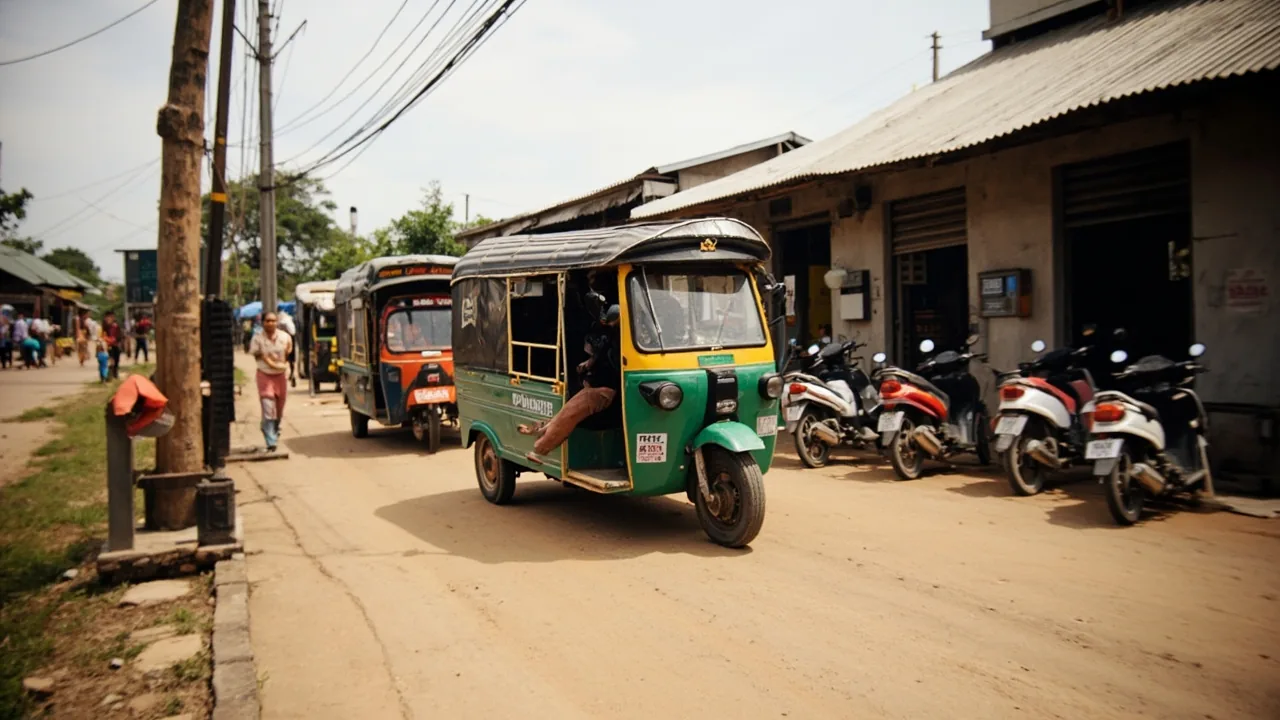
Pakse’s tuk-tuks are the auto-rickshaw style, smaller than the open-bed Thai version and built for two passengers plus a driver. There’s no Grab or Bolt here, the apps don’t cover Pakse, so tuk-tuks are the on-demand option when songthaews aren’t running or your destination is off the main loop.
Standard fares (negotiate before you get in):
| Route | Price |
|---|---|
| Anywhere within the peninsula | ₹43-₹86 (~10,000-20,000 LAK or ~$0.45-$0.89) |
| Peninsula to the airport (12 km, on the west bank) | ₹215 (~50,000 LAK or ~$2.23) |
| Peninsula to the new bus terminal (across the bridge, 7 km) | ₹129-₹172 (~30,000-40,000 LAK or ~$1.34-$1.78) |
| Peninsula to the slow boat pier for Don Det | ₹86-₹129 (~20,000-30,000 LAK or ~$0.89-$1.34) |
| Hourly charter for the Bolaven loop | ₹1,074-₹1,503 (~250,000-350,000 LAK or ~$11.15-$15.60) |
Subodh’s Pro Tip: Drivers will quote ₹344 (~80,000 LAK or ~$3.57) or more for the airport run if you look tired and have a backpack on. The flat rate locals pay is closer to 50,000. Walk into the tuk-tuk stand at the airport with your price already decided and most drivers will take it. If one refuses, three more will pull up in the next two minutes.
Motorbike Rental: The Real Way to See Bolaven
The Bolaven Plateau is the main reason backpackers land in Pakse, and the loop up to Tad Fane, Tad Yuang, and the coffee farms around Paksong is the single most rewarding ride in southern Laos. You can do it by guided tour, by charter songthaew, or by motorbike, and the motorbike is by far the cheapest and most flexible option if you’ve ridden before. Read the full Bolaven Plateau cycling tour guide for the route breakdown.
Rental costs:
| Bike | Daily Rate |
|---|---|
| 110-125cc semi-automatic (Honda Wave, Dream) | ₹344 (~80,000 LAK or ~$3.57) |
| 110-125cc fully automatic | ₹430 (~100,000 LAK or ~$4.46) |
| 250cc+ dirt bike / bigger trail | ₹644-₹859 (~150,000-200,000 LAK or ~$6.69-$8.92) |
| Mountain bike | ₹129-₹215 (~30,000-50,000 LAK or ~$1.34-$2.23) |
Miss Noy Motorbike is the shop most backpackers end up at, well-maintained bikes, fair pricing, and the owner speaks enough English to walk you through the bike’s quirks. See Miss Noy Motorbike tours on GetYourGuide if you want to compare their rental options against what the booking platforms list.
What they want as deposit: Passport, a photocopy of your passport, or a cash deposit of ₹2,148-₹4,295 (~500,000-1,000,000 LAK or ~$22.29-$44.58). Most shops will accept a copy plus the rental fee upfront. Don’t leave the original passport, that’s the mistake that traps travellers when a bike gets scratched and the owner decides your passport is collateral until “repairs” are paid.
Safety Alert: Laos traffic drives on the right, same as India, which makes Pakse one of the easier Southeast Asian cities for an Indian rider to adjust to. The roads up to Bolaven are paved but have unmarked drop-offs, blind corners, and the occasional stray cow. Wear a closed-toe shoe, not sandals, and keep speeds under 50 km/h on the plateau.
License Reality
Laos technically requires an International Driving Permit (IDP) with motorcycle endorsement, and an Indian car license alone is not valid for any two-wheeler above 50cc. In practice, Pakse traffic police rarely set up the kind of motorcycle checkpoints that Chiang Mai or Hanoi are known for, but the Bolaven loop passes through districts where random checks happen. Travellers report that police will accept a photocopy of an Indian license plus a passport if stopped, and on-the-spot fines of ₹215-₹430 (~50,000-100,000 LAK or ~$2.23-$4.46) are common when nothing is shown. An IDP costs ₹1,000-₹2,000 (~$12-$24) at any Indian RTO before you fly, applied for online through Parivahan Sewa. Getting one before departure is cheaper than gambling on a checkpoint.
Boats: The Slow Boat to Don Det
The other big transport decision from Pakse is the slow boat down to Don Det in the 4000 Islands. Two piers handle this, the main one on the east bank near the bridge, and a smaller one on the west bank. Most travellers take the public slow boat from the east bank pier, which runs once or twice a day depending on the season.
Pakse to Don Det (public slow boat):
| Detail | Info |
|---|---|
| Departure point | East bank slow boat pier (10-15 min from town by tuk-tuk) |
| Price | ₹558 (~130,000 LAK or ~$5.80) |
| Duration | 2-3 hours, with a 10-minute engine change at a village mid-route |
| Schedule | One morning departure, sometimes a second at noon, never after 2 PM |
| What to bring | Snacks, water, sun protection, headphones (the engine is loud) |
The private speedboat option costs ₹1,503-₹2,148 (~350,000-500,000 LAK or ~$15.60-$22.29) per boat and takes 90 minutes, useful if you’re a group of four or have a connection to catch. Travellers report the slow boat is the more pleasant ride, more scenic, easier to film from, and the engine-change village is a fun stop to stretch your legs.
For the full breakdown of transport once you’re on Don Det, the 4000 Islands local transport guide covers it.
Long-Distance Buses Out of Pakse
Pakse’s new bus terminal sits across the bridge on the east bank, 7 km from the peninsula. The old terminal in the centre still sells some tickets but most operators have moved east. VIP overnight sleeper buses to Vientiane leave between 7 PM and 9 PM, arrive 8-10 hours later.
| Route | Price | Duration | Book |
|---|---|---|---|
| Pakse to Vientiane (sleeper VIP) | ₹945-₹1,203 (~220,000-280,000 LAK or ~$9.81-$12.48) | 10-12 hours | Book on 12go |
| Pakse to Savannakhet (sleeper) | ₹644-₹773 (~150,000-180,000 LAK or ~$6.69-$8.02) | 6-7 hours | Book on 12go |
| Pakse to Ubon Ratchathani, Thailand (border run) | ₹515-₹644 (~120,000-150,000 LAK or ~$5.35-$6.69) | 4-5 hours | Book on 12go |
For longer cross-border trips, the Laos transport guide covers buses to Luang Prabang, Hanoi, and Bangkok. The getting around Vientiane guide helps if you’re extending north.
Subodh’s Pro Tip: Vientiane sleeper buses get fully booked two days ahead during Lao New Year (Pi Mai, mid-April). If you’re travelling in that window, book the night you arrive in Pakse, not the morning of.
Getting Connected
You need data working for tuk-tuk negotiations, Maps.me offline maps of the Bolaven loop, and the slow boat pier’s exact pin (it’s hard to find without GPS). The two real options are a local tourist SIM at the airport or a tuk-tuk ride into town to a Unitel or Lao Telecom shop, or an eSIM you activate before departure. Get Nomad eSIM for the eSIM route, scans the regional Laos-Thailand-Vietnam combo plans if you’re heading onwards after Pakse.
Local SIM cost is ₹129-₹215 (~30,000-50,000 LAK or ~$1.34-$2.23) for 7-15 days of 4G with enough data for Maps and messaging. The Unitel counter at Pakse airport is more expensive than the Unitel shop on the main peninsula road, but the airport option is faster if you have a same-day connection.
Common Transit Mistakes Indians Make
Leaving your passport as rental deposit. Walk away from any motorbike shop that insists on the original passport. A photocopy plus a ₹2,148-₹4,295 (~500,000-1,000,000 LAK or ~$22.29-$44.58) cash deposit is the standard. Shops that push for the passport are the ones that will “find” damage on return and refuse to give it back until you pay.
Renting a 250cc bike for a first Bolaven ride. The mountain roads are forgiving, but a heavy bike on a wet corner is not where you want to be if you’ve never ridden a manual clutch in Laos. The 110cc semi-auto is plenty for the plateau, lighter to pick up when you drop it, and cheaper to repair.
Skipping the helmet for a “short ride.” Pakse traffic police do random helmet checks, and the fine, ₹129-₹215 (~30,000-50,000 LAK or ~$1.34-$2.23) on the spot, costs more than three days of helmet rental. Plus, the Bolaven roads have sand patches near coffee plantations that surprise you mid-corner.
Paying the songthaew twice because you didn’t ask the conductor to drop you at your stop. Songthaews don’t stop unless you tell them. They’re not buses with fixed stops. If you miss your guesthouse, you’ll ride the whole loop and pay again.
Taking the tuk-tuk from the airport without a price agreed first. Drivers at Pakse airport quote inflated rates to anyone who asks “how much?” The right move is to say “50,000 to [your guesthouse name]” and wait for a yes. If no, wait for the next driver.
Where to Eat While You Sort the Bike Out
Two hours of haggling over a motorbike, then a slow boat at 11 AM, then a Bolaven waterfall loop, the food scene in Pakse is mostly fuel stops for these bigger plans, not a culinary destination. That said, the Lao noodle shops are a quiet strength.
Mrs Khamla Fish Noodle Soups does exactly what the name suggests: a clear fish broth over rice noodles, ₹107-₹150 (~25,000-35,000 LAK or ~$1.11-$1.56), served in a plastic-stool setup that feels like the real thing. Heng’s Rice Noodle Shop (ເຂົ້າປຽກ) is the same genre, khao piak, the local Lao rice noodle dish, with a thicker hand-pulled noodle and a heavier broth.
If you need something closer to what your stomach recognises, Samlee’s Garden Restaurant Pakse does traditional Lao food in a garden setting, the laap and the sticky rice come out properly portioned, and the staff speak enough English to walk you through the menu. Champa Hom Restaurant is the quieter option for an evening meal, Lao dishes, prices around ₹150-₹215 (~35,000-50,000 LAK or ~$1.56-$2.23) per plate.
Travellers looking for Italian food, this comes up more than you’d think, end up at ITALAO Restaurant Pakse, a small authentic Italian spot with proper pasta and wood-fired pizza around ₹258-₹387 (~60,000-90,000 LAK or ~$2.67-$4.01). Useful if you’ve spent four days eating sticky rice and your body is asking for bread.
FAQ
Do I need an International Driving Permit (IDP) to rent a motorbike in Pakse?
Technically yes, an IDP with motorcycle endorsement is required by Lao law, and an Indian car license alone is not valid for scooters above 50cc. In practice, police checks on the Bolaven loop are occasional, and a photocopy of an Indian license plus a passport often gets you waved through with a 50,000-100,000 LAK spot fine. Getting an IDP from any Indian RTO before you fly costs ₹1,000-₹2,000 (~$12-$24) and removes the gamble entirely.
Is there Grab or Bolt in Pakse?
No. Pakse is too small for ride-hailing apps. Your on-demand option is tuk-tuks, and the flat fare for anywhere in town is ₹43-₹86 (~10,000-20,000 LAK or ~$0.45-$0.89). Agree the price before getting in.
What’s the cheapest way from Pakse airport to town?
Tuk-tuk at ₹215 (~50,000 LAK or ~$2.23) negotiated before you get in. Songthaews don’t run to the airport reliably, and there’s no airport bus. If you’re two people, the tuk-tuk is 25,000 each, cheaper than a songthaew plus a connection.
Can I take a motorbike on the slow boat to Don Det?
No. The slow boat doesn’t accept motorbikes. Most travellers return the bike to the rental shop in Pakse and rent a new one on Don Det, or just use bicycles and motorbikes on the islands. Don Det rentals are ₹215 (~50,000 LAK or ~$2.23) per day for a small semi-auto.
How much is a tuk-tuk from Pakse to the slow boat pier?
₹86-₹129 (~20,000-30,000 LAK or ~$0.89-$1.34). The pier is on the east bank, 4-5 km from the peninsula, and tuk-tuk drivers know the route. Ask your guesthouse to call one if the morning songthaew doesn’t line up with your boat departure.
Is Pakse safe for Indian travellers?
Pakse is a quiet town with little of the scam culture you find in Vientiane or Luang Prabang. Travellers report feeling safe walking around the peninsula even at night. The bigger safety risk is the Bolaven motorbike loop, paved roads but with cattle, sand, and blind corners. Ride slow, wear a helmet, and don’t ride at night.
For broader safety context on southern Laos, check your government’s travel advisory before departure: the Indian Ministry of External Affairs publishes advisories at mea.gov.in, and the Lao government’s official tourism site lists current conditions for visitors.
Subodh’s Take
Pakse is a one-night town unless you count the Bolaven day trip and the slow boat to Don Det, and that means the transport decision is three decisions: rent a motorbike the moment you arrive (you’ll use it for the Bolaven loop, and the rental cost is lower than a guided tour for one person), pre-buy your slow boat ticket to Don Det the day before (boats fill up in peak season), and skip the tuk-tuk for anything within walking distance on the peninsula. The tuk-tuks are honest, the songthaews are cheap, and the motorbike shop will treat you well as long as you keep your passport in your bag. If you’ve ridden a scooter in Goa or Pondicherry, the Bolaven loop is the same difficulty at a third the price.
