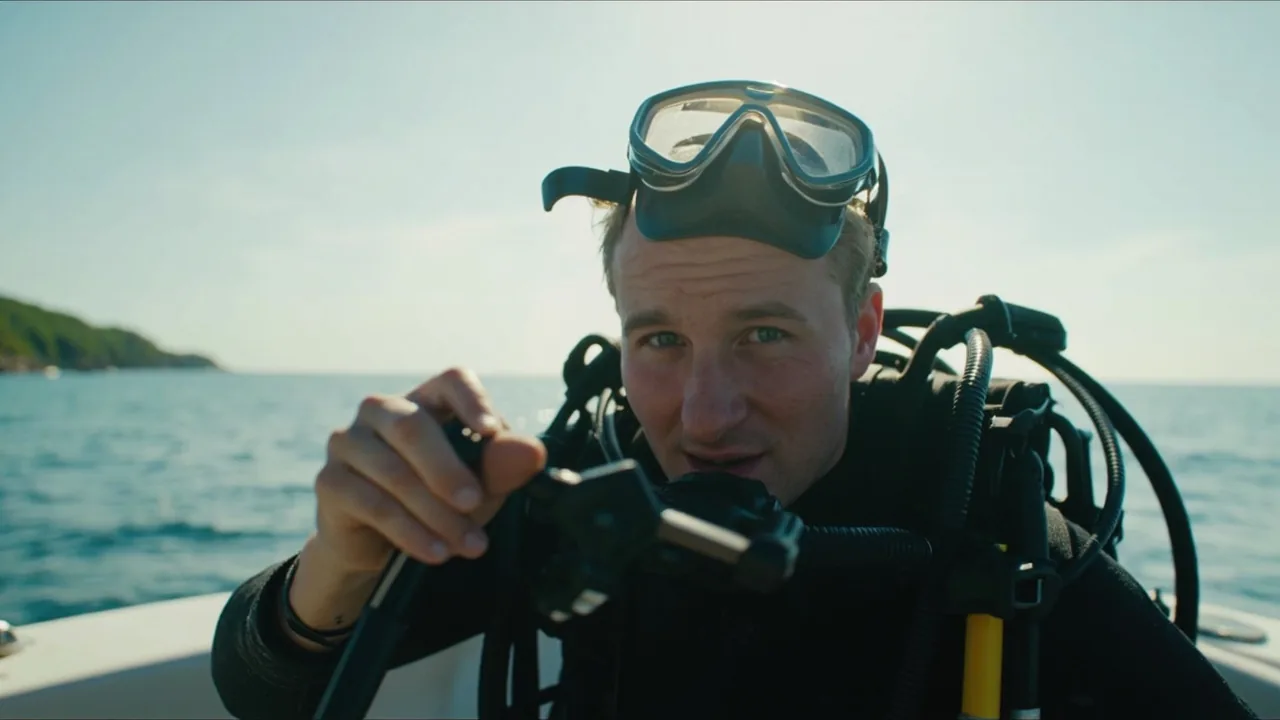
Diving Certification in Southeast Asia: A Budget Backpacker’s Guide (2026)
You can get a PADI Open Water certification in Southeast Asia for ₹24,301-₹51,460 (~8,500-18,000 THB or ~$252-$534) depending on the country and the dive shop. Koh Tao in Thailand is the cheapest place on earth to learn, and it’s where most backpackers do it. The course takes 3 to 4 days, no prior experience needed. For related planning, see our guide on Sea Backpacking Hub.
Diving certification in Southeast Asia works out cheaper than doing it in India for most backpackers, mainly because of competition among dive shops in places like Koh Tao and the Gili Islands.
What Is a PADI Open Water Certification?
The PADI Open Water Diver course is the world’s most recognized beginner scuba certification. It lets you dive to 18 meters anywhere in the world with a buddy, no guide required. The course has three parts: knowledge development (theory, done online or in a classroom), confined water dives (skills practice in a pool or shallow water), and four open water dives in the ocean. After certification, your certification card is valid for life, though most divers do a refresher if they haven’t dived in 12 months.
For Indian backpackers, this is the entry point. Anything else (Advanced, Rescue, Divemaster) costs more and requires Open Water first.
Subodh’s Pro Tip: If you’ve never snorkeled before, do a try scuba dive first. Most shops offer it for ₹7,147-₹10,006 (~2,500-3,500 THB or ~$74-$104). It’s one ocean dive with an instructor, no certification, just a chance to see if you can equalize your ears and you’re comfortable underwater. People who skip this and later find they can’t equalize mid-course lose 50% of the fee.
Quick Answers
| What | Answer | Price (INR) |
|---|---|---|
| Course | PADI Open Water Diver | ₹24,301-₹51,460 (~$252.24-$534.16) |
| Cheapest country | Thailand (Koh Tao) | ₹24,301 (~8,500 THB or ~$252) |
| Most expensive | Philippines, Indonesia | 25,000-35,000 PHP (₹43,250-₹60,550 (~$448.94-$628.51)) or ₹24,210-₹32,280 (~4,500,000-6,000,000 IDR or ~$251-$335) |
| Course length | 3 to 4 days | , |
| Age requirement | 10+ (Junior Open Water) | , |
| Medical requirement | Self-declared health form | , |
| Max depth after cert | 18 meters | , |
| Validity | Lifetime | , |
| Where to book | Local dive shop or Book on GetYourGuide | , |
Prices above are typical ranges for budget dive schools in high-volume locations (Koh Tao, Gili Trawangan, Puerto Galera). Premium shops and resort courses cost 30 to 50% more.
Step-by-Step: How to Get Certified
Step 1: Pick your country and island
The five Southeast Asian countries where backpackers commonly get certified, ranked by cost (cheapest first):
- Thailand (Koh Tao), ₹24,301-₹34,307 (~8,500-12,000 THB or ~$252-$356). The undisputed budget capital. Over 70 dive shops on a tiny island means constant price competition.
- Vietnam (Nha Trang, Phu Quoc), ₹23,868-₹33,048 (~6,500,000-9,000,000 VND or ~$247.75-$343.04). Less crowded than Thailand, fewer English-speaking instructors at the budget end.
- Malaysia (Perhentian Islands, Sipadan), ₹18,849-₹28,273 (~800-1,200 MYR or ~$196-$293). Good quality, smaller market.
- Indonesia (Gili Trawangan, Bali), ₹24,210-₹34,970 (~4,500,000-6,500,000 IDR or ~$251.30-$362.99). Beautiful diving, but pricier than Thailand.
- Philippines (Puerto Galera, Bohol), 18,000 to 28,000 PHP. Best marine biodiversity, costs more.
Subodh’s Pro Tip: For Indian travelers on a tight budget doing the Thailand-Cambodia-Vietnam loop, Koh Tao is the answer. For Indonesia-focused trips (Bali, Gili), do it in the Gilis. Don’t fly to the Philippines specifically for certification unless you’re already going there.
Step 2: Book your course (and where to stay nearby)
Most backpackers book the course first, then find accommodation close to the dive shop. Budget guesthouses on Koh Tao go for ₹1,144-₹2,287 (~400-800 THB or ~$11.87-$23.74) per night, and many dive shops include free or discounted dorm accommodation as part of the course package. Ask when booking. Gili Trawangan has the same setup, slightly higher prices.
If you’re doing the course as part of a larger Southeast Asia trip, coordinate it with your transport route. Coming from Bangkok? The Thailand sleeper train to Chumphon, then a ferry to Koh Tao, is the standard backpacker move. From the islands, 12go handles the ferry + bus combos back to Bangkok.
Step 3: Complete the theory (eLearning)
PADI’s eLearning is now the standard. You pay PADI directly (around ₹21,195 (~220 USD) globally, included in most shop course fees), study the manual and watch videos online at your own pace, then take a final exam. The whole theory block takes 8 to 12 hours and you can do it from home in India before you fly, or in your hostel before the course starts.
If you don’t finish eLearning before day 1, the shop will do classroom-based theory with you. It works, but eLearning at your own pace is faster.
Step 4: Confined water dives (pool skills)
Day 1 or 2 of the course is pool work. You’ll practice mask clearing, regulator recovery, buoyancy control, and emergency procedures in shallow water. This is where most people either fall in love with diving or realize it’s not for them. The full session takes 4 to 6 hours.
Bring: swimsuit, towel, reef-safe sunscreen. The shop provides all scuba gear for the entire course.
Step 5: Four open water dives
Days 2 to 4 are the ocean dives. Two dives per day, typically morning and afternoon, with a surface interval of at least an hour between. Each dive is 30 to 45 minutes underwater at depths of 5 to 18 meters. By dive 4, you’re certified.
Safety Alert: If you have asthma, heart conditions, or severe sinus problems, the medical self-declaration form will ask you to get a doctor’s clearance before diving. Skipping this is genuinely dangerous, not just a paperwork formality. Decompression sickness and lung over-expansion injuries have killed uncertified-fit divers. See a doctor in India before you fly if you have any history.
Step 6: Get your certification card
After the final dive, your instructor processes your certification. PADI issues a digital card immediately and a physical card arrives by mail in 4 to 6 weeks. Most dive shops worldwide accept the digital card. Keep a photo of it on your phone.
Common Mistakes Indians Make
Not budgeting for the full 4 days. Many backpackers assume they can squeeze Open Water into 2 or 3 days. The PADI standard is 3 to 4 days of in-water training, plus theory. Trying to rush it means doing 3 dives per day, which exhausts you and increases the risk of injury. Block out 4 full days. Plan the rest of your route around it. The Southeast Asia trip cost breakdown should account for 4 days of zero other activity.
Choosing the cheapest shop without checking reviews. On Koh Tao, prices range from ₹24,301 (~8,500 THB or ~$252) to ₹34,307 (~12,000 THB or ~$356). The cheapest shops cut corners on instructor-to-student ratios (sometimes 1:8 instead of the PADI max of 1:4 for beginners), boat safety, and gear maintenance. Read Google Reviews and TripAdvisor, looking specifically for mentions of safety incidents. A ₹2,859 (~1,000 THB or ~$30) difference is not worth a sketchy shop.
Booking a course the day after arriving from a flight. You cannot dive within 18 to 24 hours of flying. The pressure changes from a flight plus the pressure changes from diving can cause decompression sickness even on a shallow dive. Most dive shops will refuse to certify you if you arrived by plane the previous day. Plan at least one rest day between landing and starting the course.
Not bringing a medical certificate. The PADI medical form has questions about conditions that need a doctor’s sign-off (asthma, heart conditions, certain medications). Some Indian backpackers tick “no” to everything to avoid the hassle. If you have a relevant condition and don’t get clearance, you’re risking your life, not just your certificate.
Paying in cash without getting a receipt. Most dive shops are legitimate, but some budget operations have been known to “lose” booking records if you want to switch courses or get a refund. Get a printed or PDF receipt showing the course name, duration, and what’s included.
What Most Guides Don’t Tell You
Insurance matters more than the certification itself. Most Indian travel insurance policies do not cover scuba diving below 18 meters. Standard PADI Open Water goes to 18 meters. If something goes wrong (and it occasionally does, even on certification dives), a hyperbaric chamber evacuation in Thailand costs ₹481,695 (~5,000 USD) to ₹1,445,085 (~15,000 USD) without insurance. Standard travel insurance for India to Southeast Asia needs an explicit diving rider or a specialist policy. Read the fine print before you book.
The dive school you pick matters for your cert recognition globally. PADI is the most globally recognized. SSI is also widely accepted. SDI, TDI, and smaller agencies are fine in their home regions but some dive shops in other countries won’t accept them. If you’re planning to dive worldwide after certification, stick with PADI.
You don’t need to bring any gear for the course. Every budget shop includes mask, fins, snorkel, regulator, BCD, wetsuit, and weights in the course fee. If you buy your own mask before the trip (1,500-3,000 THB at Decathlon or on Lazada), you’ll have a better fit, but it’s not required. Don’t buy fins, regulator, or BCD, the shop gear is fine for beginners.
Certification dives are not leisure dives. Your four open water dives are training, not exploration. You’ll be doing skills underwater the whole time (mask removal and replacement, regulator switching, buoyancy practice). The marine life is secondary. If you want to see whale sharks and turtles, do fun dives after certification. The course itself is mostly pool skills repeated in the ocean.
Subodh’s Pro Tip: After certification, do at least 2 to 3 fun dives in the same location before moving on. The Open Water course teaches you the bare minimum. The first 5 dives after certification are where you learn to dive. Many dive shops offer “certification + 3 fun dives” packages at a discount.
Course Costs by Country (Real Ranges)
| Country | Island/Location | Budget Range | Course Length |
|---|---|---|---|
| Thailand | Koh Tao | ₹24,301-₹34,307 (~8,500-12,000 THB or ~$252-$356) | 3 to 4 days |
| Thailand | Koh Phi Phi, Phuket | ₹31,448-₹42,884 (~11,000-15,000 THB or ~$326-$445) | 3 to 4 days |
| Vietnam | Nha Trang | ₹23,868-₹33,048 (~6,500,000-9,000,000 VND or ~$247.75-$343.04) | 3 to 4 days |
| Indonesia | Gili Trawangan | ₹24,210-₹34,970 (~4,500,000-6,500,000 IDR or ~$251.30-$362.99) | 3 to 4 days |
| Indonesia | Bali (Tulamben, Sanur) | ₹29,590-₹43,040 (~5,500,000-8,000,000 IDR or ~$307-$447) | 3 to 4 days |
| Malaysia | Perhentian Islands | ₹21,205-₹32,985 (~900-1,400 MYR or ~$220-$342) | 3 to 4 days |
| Philippines | Puerto Galera | 18,000 to 25,000 PHP | 3 to 4 days |
| Philippines | Panglao/Bohol | 22,000 to 32,000 PHP | 3 to 4 days |
Currency exchange at time of writing: 1 THB = ₹2.87, 1 VND = ₹0.0037, 1 IDR = ₹0.0054, 1 MYR = ₹23.59, 1 PHP = ₹1.73. These are typical 2026 budget shop rates, premium shops can charge 40 to 60% more.
FAQ
Can I dive if I don’t know how to swim?
You need to be able to swim 200 meters and float for 10 minutes. Most people who “can’t swim” can pass this with a few practice sessions in a pool. If you genuinely cannot swim at all, take 3 to 4 swimming lessons in India before the trip. The certification dive will not pass you without these basics.
What’s the best time of year to learn in Thailand?
Koh Tao has two main seasons. November to April is dry season with calm seas and 25 to 30 meter visibility. May to October is monsoon season with rain, occasional storms, and reduced visibility (5 to 15 meters). You can get certified year-round, but dry season is more comfortable and you’ll see more marine life. The low season guide explains the tradeoffs in detail.
Do I need to know English for the course?
Yes. PADI manuals, briefings, and all instructor communication are in English. If your English is conversational but not fluent, you can still pass, but you’ll need to ask more questions during theory. Some shops on Koh Tao have German, French, and Mandarin instructors, but English is the default.
Can I get certified in 2 days if I do eLearning first?
No. The 4 open water dives are a hard PADI standard and cannot be compressed below 2 days even with eLearning done. Some shops advertise “2-day fast track” but they combine 2 dives per day, which means you need 3 days minimum. Any shop promising certification in 1 day is cutting the standard.
Is Koh Tao cheaper than everywhere else?
Yes. The combination of high shop density (70+ on one small island), constant customer flow, and low operating costs makes Koh Tao roughly 30 to 50% cheaper than anywhere else in Southeast Asia for the same PADI standard. The trade-off: it’s a small island with one main road, fewer accommodation options than Bali or Phuket, and dive sites are boat rides of 15 to 45 minutes.
Should I do Open Water or Advanced Open Water?
Start with Open Water. It’s the foundation. Advanced Open Water is a 2-day add-on (5 adventure dives, no exam) that lets you go to 30 meters and do specialty dives (wreck, night, deep). Most backpackers do Open Water first, then Advanced immediately after, getting both certifications in 6 to 7 days total.
What if I fail the exam or a skill?
PADI allows retakes. The exam can be retaken once with no extra fee at most shops. Skill failures (not being able to clear your mask, equalize, etc.) can be practiced and retested, sometimes on the next dive. If you genuinely cannot complete the course, most shops refund 50 to 70% of the fee. Ask about their refund policy before paying.
Subodh’s Take
Diving certification is one of the few Southeast Asia experiences where India-based backpackers consistently save 70% compared to doing it at home. A PADI Open Water course in India runs ₹25,000 (~$259.50) to ₹40,000 (~$415.20) at good schools. The same course in Koh Tao costs ₹24,000 (~$249.12) to ₹34,000 (~$352.92), and includes better weather, warmer water, and actual ocean dives instead of pool drills. If you’re spending 3 to 4 weeks in Southeast Asia anyway and you’ve ever been curious about the underwater world, do it. Koh Tao in dry season is the budget answer. Book it before you arrive (via email or WhatsApp with the shop directly), block out 4 full days with nothing else planned, and budget for 2 to 3 fun dives after certification in the same location. The certification lasts a lifetime. The reef you’ll see on your first ocean dive lasts forever in memory.
