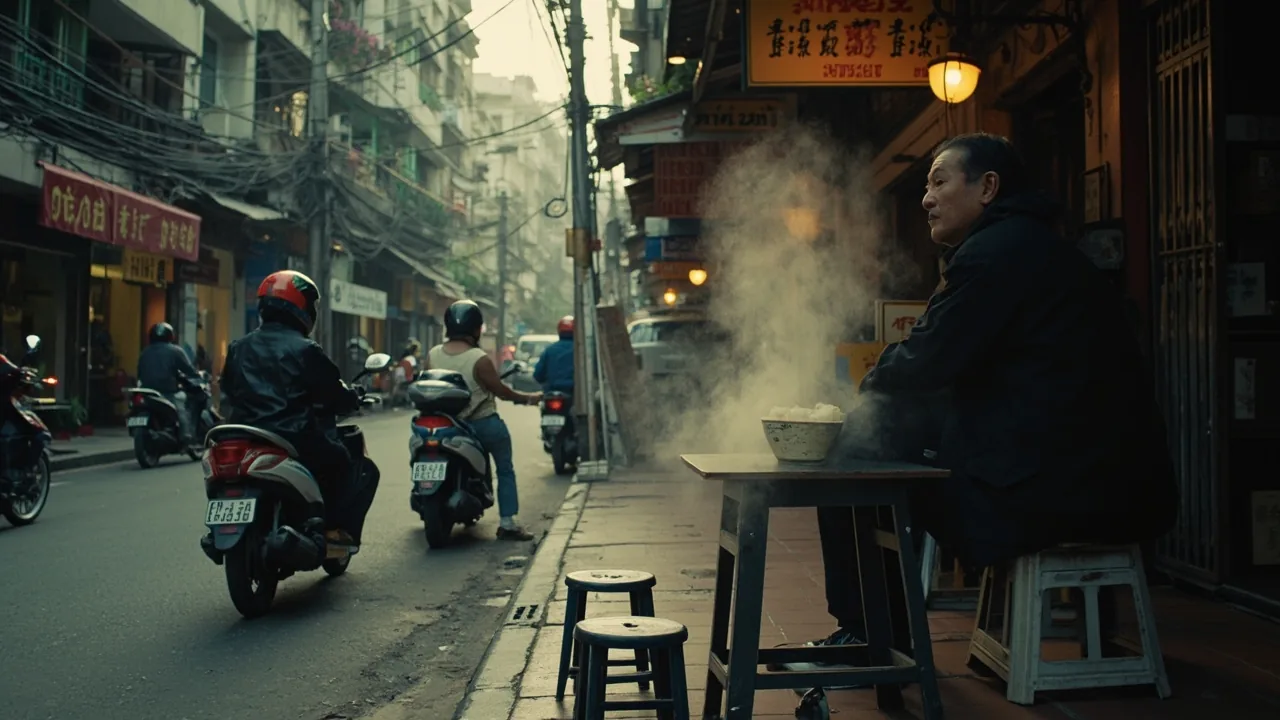
Hanoi: The Indian Backpacker’s Guide (2026)
This hanoi guide india covers everything Indian backpackers need: the Old Quarter, street food, e-visa steps, hostels, and daily costs. Hanoi crashes a thousand years of Vietnamese history into a thousand scooters, the Old Quarter smells like grilled pork, diesel, and incense in roughly equal measure. Here’s the 2026 briefing.
Quick Answers
| What | Answer | Price (INR) |
|---|---|---|
| Vietnam e-visa fee (Indian passport) | ₹2,408 (~25 USD), applied online | ₹2,408 (~$25) |
| Dorm bed in Old Quarter | 180,000-360,000 VND/night | ₹666 (~$6.91) to ₹1,332 (~$13.83) |
| Bowl of phở at a streetside stall | ~₹147 (~40,000 VND or ~$1.53) | ₹148 (~$1.54) |
| Sleeper bus Hanoi → Hoi An | ₹920-₹1,472 (~250,000-400,000 VND or ~$9.55-$15.28) | ₹925 (~$9.60) to ₹1,480 (~$15.36) |
| 14-day tourist SIM (Viettel/Mobifone, ~6 GB) | ~₹478 (~130,000 VND or ~$4.97) | ₹481 (~$4.99) |
How to Get There (From the Previous City on the Trail)
Most Indian travellers flying into Vietnam land directly at Noi Bai International Airport. Direct flights from Delhi and Mumbai run 4 to 7 hours depending on the airline and stop, with return fares typically between ₹18,000 (~$186.86) and ₹32,000 (~$332.19) on IndiGo, VietJet, and Air India during sale windows. If you’re already in the region, flying in from Bangkok is usually the cheapest overland-adjacent option, around ₹7,706 (~80 USD) to ₹14,449 (~150 USD) one way.
Coming up from Laos, the most common crossing is at Tay Trang on the Dien Bien Phu side or at Nam Phao/Cau Treo, but both require a pre-arranged e-visa and a tourist agency shuttle on the Laos side. Most Indian backpackers skip this route entirely and fly, since Hanoi to Vientiane by air is often cheaper than the bus.
| From | Mode | Duration | Price | Book |
|---|---|---|---|---|
| Bangkok | Flight | ~2h | Varies | Book on 12go |
| Chiang Mai | Flight | ~2h 30m | Varies | Book on 12go |
| Da Lat | Flight | ~1h 50m | Varies | Book on 12go |
Subodh’s Pro Tip: Don’t arrive in Hanoi after 10pm on a Friday. The Old Quarter side streets around Ta Hien turn into a wall of motorbikes and beer tourists, and even seasoned travellers find the first taxi ride overwhelming. Aim for a daytime landing.
Where to Stay
The Old Quarter is where you want to be. Anything within a 10-minute walk of Hoan Kiem Lake puts you inside the phở-and-puppets radius without needing a taxi. The hostels below are all real, currently operating, and have been cross-checked against Hostelworld this month.
| Hostel / Guesthouse | Cost/night | Vibe | Book Here |
|---|---|---|---|
| The One Hostel & Rooftop Pool Hanoi | ₹662-₹1,325 (~180,000-360,000 VND or ~$6.88-$13.75) | Pool, rooftop, social | Check prices |
| Hanoi Loopers Hostel & Rooftop Bar | ₹662-₹1,325 (~180,000-360,000 VND or ~$6.88-$13.75) | Rooftop bar, easy meeting other travellers | Check prices |
| Hanoi Wanderlust Hostel & Travel | ₹662-₹1,325 (~180,000-360,000 VND or ~$6.88-$13.75) | Slightly quieter, helpful desk for onward trips | Check prices |
| Hanoi House Hostel & Travel | ₹662-₹1,325 (~180,000-360,000 VND or ~$6.88-$13.75) | Small, family-run feel | Check prices |
| Mad Monkey Hanoi | ₹662-₹1,325 (~180,000-360,000 VND or ~$6.88-$13.75) | Party hostel, late-night crowd | Check prices |
| My pick: If you want a pool to recover from the humidity, The One Hostel & Rooftop Pool Hanoi. If you want to sleep, Hanoi Wanderlust is the move. Avoid anything with a “party hostel” tag if you’re arriving on Day 1 with jet lag. |
What to Eat
Hanoi’s food scene rewards people who eat what’s local instead of hunting for the one “best” phở place on Reddit. Most Vietnamese food here is also cook-to-order with clear ingredients, which makes life easier for vegetarians who can point at things and ask.
Phở is the obvious start. The canonical street bowl runs about ₹147 (~40,000 VND or ~$1.53) and is what you want for breakfast. Most stalls serve it from around 6am to 10am, then switch menus. Bún chả, the grilled pork noodle dish Obama famously ate here, runs around ₹129 (~35,000 VND or ~$1.34) and is heavier but worth trying once even if pork isn’t your usual. Bánh mì from a streetside cart is ₹55 (~15,000 VND or ~$0.57) and is your cheapest vegetarian-friendly meal: ask for the egg-and-herb version with no mayo.
For egg coffee, the Hanoi original is at a small café on Nguyen Huu Huan where a single cup runs ₹129 (~35,000 VND or ~$1.34). It’s not the most photogenic spot and service is non-existent, but the drink itself is the reason people write about it.
When you need a proper Indian meal, three Old Quarter spots understand spice levels instead of dialling everything down for Western palates:
- Rutba Indian Restaurant Hanoi is pure veg and Jain-friendly, the safest bet if you’re strict about no onion-garlic.
- Swad Kitchen 5 sits right in the Old Quarter and serves a butter-chicken-and-naan plate around ₹736-₹1,104 (~200,000-300,000 VND or ~$7.64-$11.46) per person.
- The Indian Kitchen in Giang Vo is a slightly longer ride but runs around ₹736-₹1,472 (~200,000-400,000 VND or ~$7.64-$15.28) per person with garlic naan most travellers flag as the highlight.
For a hands-on experience, Comida Hanoi Restaurant & Cooking Class runs half-day classes where you learn to make bún chả and bánh cuốn, useful for the rest of your Vietnam trip. And if you want a guided tour instead of guessing which stall is good, the Small-Group Street Food Walking Tour packs in five to six tastings over three hours.
Subodh’s Pro Tip: Most phở stalls close by 10am. If you sleep past noon you’ll be stuck with the all-day tourist menus near St Joseph’s Cathedral, where the same bowl is ₹258 (~70,000 VND or ~$2.67) and half as good.
What to Do
Hanoi rewards walking more than any other Vietnamese city. The Old Quarter’s 36 streets each used to specialise in a single trade (silk, silver, bamboo) and the names haven’t changed even if the goods have. You’ll cover the main stretch between Hoan Kiem Lake and Dong Xuan Market in about half a day if you stop for coffee.
- Hanoi Old Quarter. Free, 2 to 3 hours. Walk the maze once during the day and once at night, the same streets feel like different cities. Check Hanoi Old Quarter tours on GetYourGuide
- Temple of Literature, ₹110 (~30,000 VND or ~$1.15), 1 to 2 hours. Vietnam’s first university, 1,000 years old, surprisingly peaceful given how close it is to the chaos. Check Temple Of Literature tours on GetYourGuide
- Hoan Kiem Lake & Ngoc Son Temple. Free for the lake, ₹110 (~30,000 VND or ~$1.15) for the temple, 1 hour. Best at sunrise on weekends when the area shuts to traffic. Check Hanoi Opera House tours on GetYourGuide for the French colonial building a short walk south.
- Thang Long Water Puppet Theatre, ₹368-₹736 (~100,000-200,000 VND or ~$3.82-$7.64) depending on seat, 50 minutes. Weird, charming, uniquely Vietnamese. Even if you skip every other “cultural show” in Southeast Asia, do this one. Check Thang Long Water Puppet Theatre tours on GetYourGuide
- Hanoi Museum, ₹147 (~40,000 VND or ~$1.53), 2 hours. Skip if you’re museum-fatigued; worth it if you want context for the rest of Vietnam. Check Hanoi Museum Entry Ticket tours on GetYourGuide
If you have an extra day, the day-cruise to Ha Long Bay is the obvious add-on. Budget ₹5,520-₹11,040 (~1,500,000-3,000,000 VND or ~$57.30-$114.61) for a mid-range day trip including lunch and kayaking. For something less touristy, Ninh Binh is two hours south and gives you the same karst scenery without the boats.
For hands-on activities that don’t require a half-day commitment, the Silver Ring or Pendant Making Workshop is a quieter afternoon option. Travellers report leaving with a custom ring after about two hours, far cheaper than you’d pay for the same thing in a Hoi An tailor shop.
Safety Alert: Hanoi’s “tourist taxi” problem is real around the Old Quarter. Motorbike taxi touts will grab your bag before you’ve stepped off the bus. Use Grab (bike or car) for any ride over a 5-minute walk, and ignore anyone who says “taxi broken, Grab no work here.”
Getting Connected
A tourist SIM from Viettel or Mobifone with about 6 GB of data over 14 days runs around ₹478 (~130,000 VND or ~$4.97). Both brands sell at Noi Bai arrivals and at any phone shop in the Old Quarter; the airport kiosk is the most expensive but it’s open at midnight when nothing else is. If you’d rather land ready to go, Get Nomad eSIM activates before you board your flight from India, so you have data the second you walk out of arrivals.
WiFi at every hostel in the shortlist above is reliable enough for video calls, and most cafés in the Old Quarter have it too. The one place it falls apart is inside the Train Street cafés during peak hour, when everyone is trying to upload the same train video.
Daily Budget Breakdown
This is what travellers report spending on the ground in Hanoi in 2026, not the “Vietnam is dirt cheap” numbers you see on travel blogs from 2018. Verified 2026-07-16 at 1 INR = 270.27 VND.
| Category | Budget/day |
|---|---|
| Dorm bed | ₹662-₹1,325 (~180,000-360,000 VND or ~$6.88-$13.75) |
| Food (3 meals) | ₹221-₹552 (~60,000-150,000 VND or ~$2.29-$5.73) |
| Local transport (Grab bike + walking) | ₹37-₹92 (~10,000-25,000 VND or ~$0.38-$0.96) |
| Activities | ₹184-₹552 (~50,000-150,000 VND or ~$1.91-$5.73) |
| Misc / drinks | ₹110-₹294 (~30,000-80,000 VND or ~$1.15-$3.06) |
| Total | ₹1,214-₹2,815 (~330,000-765,000 VND or ~$12.61-$29.22) |
The lower end is what a strict-budget traveller eating mostly street food and walking everywhere spends. The upper end assumes a couple of sit-down meals, one paid attraction, and a few beers at Ta Hien in the evening.
Visa / Entry Notes
Indian passport holders need a visa before arrival. There is no visa-on-arrival for Indian citizens; the old “letter of approval at the airport” trick that worked a decade ago no longer applies.
Vietnam e-Visa is what you want. The process:
- Apply at the official portal: evisa.xuatnhapcanh.gov.vn
- Fee: ₹2,408 (~25 USD)
- Processing: 3 working days, often faster
- Validity: 90 days, multiple entry
- Photo: 4×6 cm, white background, taken within 6 months, uploaded as JPG
Apply at least a week before your flight, not three days. The portal occasionally rejects photos for being too small or having a shadow on the wall behind you, and you’ll need time to resubmit. Print a paper copy of the approval letter as well as saving it on your phone, since some airline check-in desks want to see a physical printout. For the full step-by-step walkthrough, see the Vietnam e-visa guide for Indians. (verified 2026-06-26 against Vietnam’s official immigration portal)
Common Mistakes
Exchanging money at the airport for “convenience.” The Noi Bai exchange counters give rates 3 to 5 percent worse than the jewellery shops around Hoan Kiem Lake. Withdraw VND directly from an Indian forex-card ATM if yours supports international withdrawals; otherwise, walk into town and exchange at any gold shop on Ha Trung street.
Eating only at Hoan Kiem Lake. The restaurants around the lake face a tourist tax that adds 30 to 50 percent to your bill. Walk two streets back and you’ll find the same food at half the price.
Skipping Hanoi for Hoi An. A lot of Indian travellers fly into Hanoi and immediately bus south because someone told them “Hoi An is prettier.” Spend at least two full days here. The Old Quarter’s food and the Water Puppet Theatre alone are worth it.
FAQ
Is Hanoi safe for solo Indian women?
Generally yes, especially inside the Old Quarter and around Hoan Kiem Lake, where there’s enough foot traffic that incidents are rare. The usual precautions apply: don’t walk alone in poorly lit areas after midnight, ignore touts, and use Grab instead of unmarked taxis. For a deeper read, see the Vietnam safety guide for Indian travellers.
Can I get Indian food in Hanoi?
Yes. Swad Kitchen 5 in the Old Quarter, The Indian Kitchen in Giang Vo, and the pure-veg Rutba Indian Restaurant all do North Indian food, and several serve Jain options if you call ahead. For more on this across Vietnam, the vegetarian and street food guide is a useful primer.
How many days do I need in Hanoi?
Three full days covers the Old Quarter, Temple of Literature, Water Puppet Theatre, and a day trip to either Ha Long Bay or Ninh Binh. Four days lets you add a cooking class or a motorbike loop. Five days is comfortable for adding the Ho Chi Minh Mausoleum complex and a slower day for Hanoi street food by neighbourhood.
Is Hanoi cheaper than Ho Chi Minh City?
Food and dorms are roughly the same. Flights out of Hanoi to Ha Long Bay, Ninh Binh, and the northern loop are cheaper because those places are closer. Ho Chi Minh City wins on flights south and to the Mekong.
Do I need to carry cash or can I use UPI?
UPI does not work in Vietnam. Carry cash in VND for street food and small shops; most mid-range restaurants and hostels accept Visa/Mastercard. ATMs are everywhere in the Old Quarter and accept Indian forex cards from HDFC, ICICI, and Axis without issue. For a broader look at money across the region, our Southeast Asia backpacking hub covers ATM fees, card acceptance, and exchange tips country by country.
What’s the cheapest way from Hanoi Airport to the Old Quarter?
Vietnam Airlines’ official bus (No. 86) runs to the Old Quarter for ₹166 (~45,000 VND or ~$1.72) and takes about 50 minutes. Grab cars run ₹736-₹920 (~200,000-250,000 VND or ~$7.64-$9.55) and take 35 to 50 minutes depending on traffic. Airport taxis will quote ₹1,472 (~400,000 VND or ~$15.28) for the same trip; ignore them.
Subodh’s Take
Hanoi is the city where most Indian backpackers have their first “Vietnam is different from Thailand” moment. The food is sharper, the streets are louder, and the visa process is less painful than the blogs make it sound. Stay three days minimum, eat two meals a day from street stalls, and skip the lakeside tourist menus. You’ll leave with the right impression.
