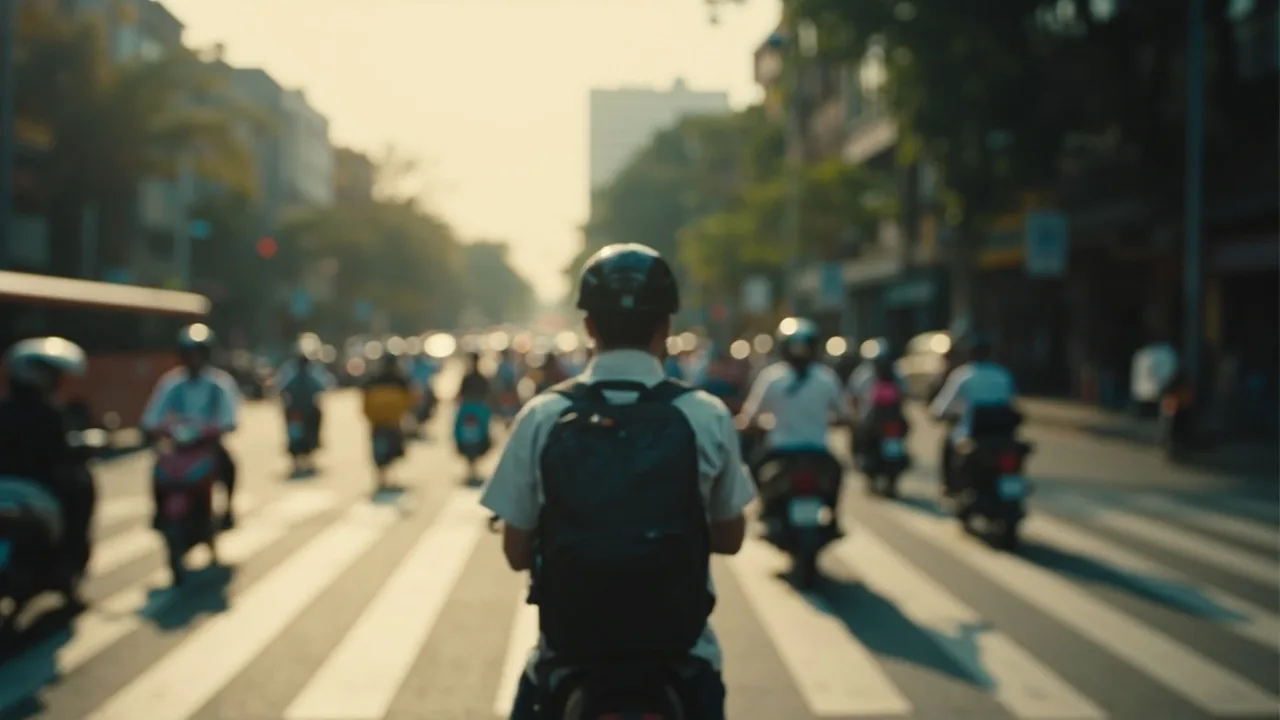
Is Vietnam Safe for Indian Travelers? Honest Safety Guide + 15 Common Scams to Avoid
Vietnam is one of the easiest Southeast Asian countries for Indian backpackers to feel at home in: cheap food, working eVisas, and a strong Indian restaurant scene. For a full regional overview, see our Vietnam country hub. The flip side is that India-Vietnam tourist numbers have jumped sharply since 2024, and where Indian tourists cluster, the petty-scam industry is fast to follow.
It answers what most Indian travellers Google before booking: scams, solo-female safety, transport safety, food safety, the new visa rules (including Phu Quoc’s visa-free window), and where to genuinely stay alert.
Quick Answers
| What | Answer | Price (INR) |
|---|---|---|
| Is Vietnam safe for Indian tourists? | Yes, with standard traveller caution. Pickpockets and taxi scams in tourist hubs, otherwise low risk. | , |
| Do Indians need a visa? | Yes, e-Visa only. ₹2,408 (~25 USD), 90 days, multiple entry. Apply at evisa.xuatnhapcanh.gov.vn at least 3 days before flying. | ₹2,408 (~$25) |
| Is Phu Quoc visa-free? | Yes, up to 30 days if you fly direct into Phu Quoc International. Mainland Vietnam still needs e-Visa. | , |
| What is the #1 scam targeting Indians? | The “fixed price” taxi from the airport. Always book a Grab before you land. | , |
| Average daily backpacker budget? | Tight budget covers dorm, street food, and buses comfortably. | ₹1,800 (~48,600 VND) |
**Exchange rate at last
How Safe Is Vietnam Really? The Honest Picture
Vietnam’s overall crime rate is lower than most of Southeast Asia. The Vietnamese government’s own tourism statistics show violent crime against foreign visitors remains rare. What you should worry about is small-scale, low-skill scams (overcharging, fake taxis, bag snatching on motorbikes), and motorbike accidents, which are the single biggest cause of serious injury for backpackers in Vietnam.
For Indian travellers specifically, three patterns have been showing up in traveller reports since 2024:
- Currency confusion scams in Hanoi’s Old Quarter and Saigon District 1, where vendors assume you can’t read VND and quote “10,000” meaning ₹37 (~10,000 VND or ~$0.38).
- “Mandarin dressing” scams at tourist restaurants: the menu shows prices in plain digits, but the bill is in USD or rounded up. Always ask whether the price is in VND or USD before you sit.
- Indian-SIM SIM swap attempts at airport kiosks. Buy from the official Viettel/Mobifone counter inside the terminal, never a “helper” in the arrivals hall.
For solo Indian women, the country ranks among the safer options in the region. Traveller-safety aggregators put Vietnam in their top tier for Southeast Asia: harassment on the street is rare, dress codes at temples are relaxed (shoulders and knees covered), and Grab (ride-hailing) is widely available. The main caution is late-night motorbike taxi rides without a registered app: if you’re a woman travelling solo, use Grab, never a street motorbike tout.
If the Indian government has issued any travel advisory for Vietnam at the time of your trip, check the live page at mea.gov.in before you fly. Vietnamese authorities don’t make public advisories easy to find in English, so the MEA page is the most reliable single source for Indian passport holders.
The 15 Most Common Scams Targeting Tourists in Vietnam
These are the scams Indian backpackers run into, ordered by how often they show up in hostel-bulletin reports and TripAdvisor’s Ho Chi Minh City forum.
1. The “Fixed Price” Airport Taxi
The classic. You land, a man in a uniform says “taxi? ₹736 (~200,000 VND or ~$7.64) fixed price” outside the terminal. Real Grab is ₹368-₹478 (~9,900-12,900 VND or ~$3.82-$4.97) to central District 1 from Tan Son Nhat. Fix: book Grab before you reach the arrivals curb, or use the official airport taxi line inside.
2. The Shoe Shine or Photo Racket
Someone “accidentally” bumps you, drops their hat, or offers to snap your photo. The friendly bit ends with a request for cash. Fix: a firm “no, thank you” and keep walking.
3. The “Closed Today” Restaurant Redirect
A student-aged tout near Ben Thanh Market says “Pho 2000 is closed for renovation, come to my uncle’s place, same same.” Your pho ends up costing 3x. Fix: check Google Maps yourself, ignore the redirect.
4. Cyclo Overcharging
A cyclo driver quotes ₹368 (~100,000 VND or ~$3.82) for a 5-minute ride. The fixed fare should be ₹110-₹184 (~30,000-50,000 VND or ~$1.15-$1.91). Fix: agree the price in writing before you sit, in VND, not “dollars.”
5. The Helmet Hustle
You rent a motorbike, return it, and the owner claims there’s a scratch. Real scratches from a tourist before you are now your problem. Fix: photograph the bike from six angles at pickup. Save the timestamp.
6. The Beer Street overpour
Beer is cheap in Vietnam. Bills sometimes round up an extra drink you didn’t order. Fix: watch the cap count. Tally yourself.
7. The “Free” Sample Stall
Especially near walking streets in Hoi An. You take a sample of coconut candy, then the vendor presses you to buy a bag at 5x market price. Fix: just walk past.
8. The Counterfeit Spa Menu
A massage shop on the main drag offers ₹736 (~200,000 VND or ~$7.64) foot massage. Inside, the menu has a “today’s special” ₹4,416 (~1,200,000 VND or ~$45.84) body treatment that you “agreed to.” Fix: ask for the menu, confirm the price before any work starts.
9. The Currency Counterfeit Trick
You pay with a ₹1,840 (~500,000 VND or ~$19.10) note, the cashier switches it with a fake, claims it’s counterfeit, and offers to take it off your hands for a discount. Genuine ₹1,840 (~500,000 VND or ~$19.10) notes exist but are rare outside banks. Fix: pay in ₹368 (~100,000 VND or ~$3.82) notes and below. Always get a receipt.
10. The Beggar Mafia
Children or elderly people asking for cash. Often organised. Even a ₹37 (~10,000 VND or ~$0.38) handout keeps an exploitative chain going. Fix: politely decline, or donate to a registered NGO instead (Blue Dragon, KOTO are credible).
11. The “Visa Run” Tourism Shop
A travel agent offers an attractive “visa run” package to Cambodia for ₹4,416 (~1,200,000 VND or ~$45.84). Halfway through the trip, “extras” start piling up. Fix: use 12go for overland transport, do the visa on the Cambodian side yourself.
12. The Grab Bait-and-Switch
A driver accepts the ride, calls you, asks you to “cancel and book direct.” Same driver, no app, no insurance, no fare lock. Fix: never cancel inside an active Grab booking.
13. The Hotel That Doesn’t Exist
You book a cheap room on a third-party site for 250,000 VND/night, arrive at the address, and the building is a parking lot. Fix: book hostels on Hostelworld, double-confirm the address on Google Maps, then message the property through the app on the day of arrival.
14. The Motorbike “Hold My Passport” Trap
The rental shop keeps your passport as “deposit.” A scratch later, the bill magically covers your whole trip’s budget. Fix: leave a photocopy plus a cash deposit (under ₹7,360 (~2,000,000 VND or ~$76.40)). Never your actual passport.
15. The Friendly Local / Bar Round
You’re invited for a drink. The bar bill is ₹11,040 (~3,000,000 VND or ~$114.61). This is the classic “bargirl round” scam. Fix: never accept a drink-led invitation into a venue you didn’t choose yourself. Cancel the invitation before anyone orders.
Vietnam Visa for Indian Citizens: What Changed
Vietnam no longer offers visa-on-arrival to Indian passport holders. The only legal pre-flight route is the e-Visa, processed through the official portal at evisa.xuatnhapcanh.gov.vn. Anything that looks like a “voa facility” or “visa-on-arrival desk” at the airport counter is an unofficial third-party agent charging 5-10x the government fee.
What the e-Visa Costs and What You Get
- Fee: ₹2,408 (~25 USD)
- Stay length: up to 90 days, multiple entry
- Processing: 3 working days, though travellers report the same-day turnaround at busy periods
- Photo spec: as specified on the official portal
- Documents: scanned passport bio page, photo, completed online form
- Payment: international card via the portal
The e-Visa is digital. You’ll receive a PDF with a barcode. Print two copies: one for immigration on arrival, one to keep with your boarding pass.
Phu Quoc: The Exception Indian Travellers Miss
Phu Quoc, Vietnam’s largest island, has a separate visa-free entry rule. If you fly direct into Phu Quoc International Airport from any country, you can stay up to 30 days without a visa. The minute you take a ferry or connecting flight to the mainland, the 30-day exemption ends and you need a regular e-Visa.
This matters for a specific kind of Indian traveller: the honeymoon couple doing a beach leg. A Phu Quoc-only trip dodges the e-Visa fee and the photo-upload step entirely. Booking a flight that lands in Ho Chi Minh City first and transfers onward to Phu Quoc does not qualify; the first entry port has to be Phu Quoc International itself.
Solo Female Indian Travellers: What the Reports Say
The recurring themes from solo-female traveller reviews on the Indie and Women Travellers threads since 2024 are consistent.
Generally safe: daylight city streets, hostels, beach destinations (Hoi An, Da Nang, Mui Ne), major bus routes, Grab rides booked through the app.
Use extra care: late-night walking alone in Saigon’s District 1 alleyways (Bui Vien back streets after midnight), unlit rural stretches, motorbike sidecar rides booked without a registered driver, and any situation where a stranger invites you to a specific bar.
Dress code for pagodas: shoulders and knees covered. Most major temples in Hue, Hanoi, and Ho Chi Minh City keep scarves at the entrance for travellers who forget.
Solo female hostel dorm safety: choose a same-sex dorm (4-6 beds, no top bunk if the hostel gives you a choice) and a property with a 24-hour front desk. The all-female dorm option is now standard in hostels in Hanoi Old Quarter, District 1, and Hoi An Ancient Town.
Transport Safety: Buses, Trains, Motorbikes
Long-Distance Buses
Sleeper buses Hanoi to Hoi An (~250,000-400,000 VND, ₹825-1,320) and Saigon to Dalat are the standard backpacker transit. Issues reported include: drivers using phones on the highway, AC cranked too cold, and rare reports of bag tampering on overnight routes.
Fix:
- Keep valuables in your daypack, between your feet or under your pillow, not in the luggage hold.
- Take a photo of your bag before it goes under.
- Book through 12go so the operator has a fraud trail and a refund path.
The Reunification Express
The Hanoi to Ho Chi Minh City train is one of the safest sleeper train options anywhere on the Banana Pancake Trail. SE1 and SE3 soft sleepers run ₹1,840-₹5,520 (~500,000-1,500,000 VND or ~$19.10-$57.30). Real-time seat availability is best on the official site dsvn.vn.
Motorbikes: The Hard Truth
Motorbike accidents are the #1 cause of serious injury for backpackers in Vietnam, by a wide margin. They are also the most common scam vector (see scam #5 above and the “hold my passport” pattern).
For Indian travellers, three notes:
- You technically need an International Driving Permit with a motorcycle endorsement to ride legally. Travellers report police spot-checks in Da Nang, Nha Trang, and Vung Tau. Without a permit, the fine is in the ₹1,840-₹7,360 (~500,000-2,000,000 VND or ~$19.10-$76.40) range.
- Wear a helmet, even if locals don’t. Hospital reports from Hue and Saigon show head injuries are over-represented in tourist casualties.
- Avoid riding at night in rural Vietnam. Rural roads have no reflectors, livestock crossings, and trucks that drift across the centreline.
Subodh’s Pro Tip: If you’ve never ridden a geared motorbike before, do not rent one in Vietnam. “Easy” in Bali is not “easy” in Saigon traffic. Start on the back of a friend’s bike, or in Ninh Binh back roads where the traffic is lighter.
For a deeper dive on the licensing question, see the Vietnam motorbike license guide for Indians.
Where to Stay (Backpacker Picks)
Hostels in Vietnam are some of the best value in Southeast Asia. Dorm beds in Hanoi run ₹662-₹1,325 (~180,000-360,000 VND or ~$6.88-$13.75) per night; Hoi An and Da Nang are slightly cheaper; Ho Chi Minh City is the priciest of the big three.
| Hostel | Cost/night | Vibe | Book Here |
|---|---|---|---|
| Subodh’s pick: Little Charm Hanoi if you want quiet and good sleep, Mad Monkey if you want to meet other backpackers on day one. The middle-ground Nexy Hostel in Saigon is the best balance of social + clean + central. |
What to Eat
Vietnamese food is a vegetarian-friendly exception in Southeast Asia. Most Buddhist-influenced menus include tofu, mushroom, and rice dishes, and the language helps: “chay” means vegetarian, written on signs in the major cities.
| Dish / Place | What it is | Cost | Where |
|---|---|---|---|
| Pho (beef or chicken noodle) | Breakfast standard, light herb-packed broth | ₹147 (~40,000 VND or ~$1.53) | Vietnamese/Jay/India |
| Banh Mi | Pork or tofu baguette with pickled veg | ₹55 (~15,000 VND or ~$0.57) | Vietnamese/Jay/India |
| Bun Cha | Grilled pork rice noodles, Hanoi classic | ₹129 (~35,000 VND or ~$1.34) | Vietnamese/Jay/India |
| Egg Coffee | Whipped egg yolk + Vietnamese coffee, sweet and strong | ₹129 (~35,000 VND or ~$1.34) | Vietnamese/Jay/India |
| Com Chay | Veg rice plate, fully vegetarian | ₹129-₹184 (~35,000-50,000 VND or ~$1.34-$1.91) | Vietnamese/Jay/India |
| Banh Xeo | Crispy rice pancake (filled with pork and shrimp, vegetarian version available) | ₹147-₹221 (~40,000-60,000 VND or ~$1.53-$2.29) | Ngon Da Nang (Da Nang) |
When the veg options exhaust you (give it 5-7 days before this happens), the Indian food network is solid in the four main hubs. Mustard The Indian Bistro in Saigon (around ₹1,000-₹2,000 (~$10.38-$20.76) per head), Shri Natraj Indian Cuisine (Ho Chi Minh City, North Indian curries and tandoori), and The One Indian Halong Restaurant in Ha Long serve reliable dal-chawal-thali meals. For a vegan-leaning Vietnamese meal, Nhà An is a Vietnamese restaurant option to consider.
Safety Alert: Tap water is not drinkable anywhere in Vietnam. Bottled water is ₹18 (~5,000 VND or ~$0.19) in any minimarket. Ice in restaurants is generally factory-sealed (look for the hollow tube with sealed ends) but avoid street stalls where the ice comes loose.
For more vegetarian coverage, see the Vietnam street food vegetarian coffee guide.
Getting Connected (SIM and eSIM)
Three of Vietnam’s big four carriers, Viettel, Mobifone, and Vinaphone, sell tourist SIM cards at the airport, at official shops in central districts, and at any Circle K or 7-Eleven. A 14-day tourist SIM with around 6GB of data runs ₹478 (~130,000 VND or ~$4.97). Viettel has the strongest rural coverage, which matters if you’re heading to Sapa or the Ha Giang loop.
If you don’t want to swap SIMs or wait in line at the airport, Get Nomad eSIM covers Vietnam with plans starting at 1GB. Activate before you fly.
WiFi is reliable in most Vietnamese hostels and cafes, even rural homestays. If you’re relying on WiFi for a video call, test it before assuming it works.
Daily Budget Breakdown (Backpacker, 2026)
| Category | Budget/day |
|---|---|
| Dorm bed | ₹736-₹1,104 (~19,900-29,800 VND or ~$7.64-$11.46) |
| Food (3 meals) | ₹331-₹552 (~90,000-150,000 VND or ~$3.44-$5.73) |
| Local transport (Grab) | ₹184-₹368 (~50,000-100,000 VND or ~$1.91-$3.82) |
| Activities | ₹184-₹552 (~50,000-150,000 VND or ~$1.91-$5.73) |
| Misc / drinks | ₹184-₹368 (~50,000-100,000 VND or ~$1.91-$3.82) |
| Total | ₹1,619-₹2,944 (~440,000-800,000 VND or ~$16.81-$30.56) |
This is what travellers spend, not what the blogs round up. The tight-budget end assumes street food for all three meals, a 6-bed dorm, and one paid attraction per day. The upper end covers a private hostel, one restaurant meal, and a beer or two in the evening.
**Exchange rate at last
Common Mistakes Indian Travellers Make in Vietnam
-
Exchanging money at the airport. The airport rate is 3-5% worse than Hanoi Old Quarter gold shops or any bank ATM on a major network (Visa, Plus, Cirrus). Withdraw VND from a Vietcombank or TPBank ATM inside the airport; the fee is around ₹81 (~22,000 VND or ~$0.84) per withdrawal, regardless of amount.
-
Forgetting the e-Visa photo spec. Indian passport photos are 35x45 mm. Vietnam’s e-Visa demands 4x6 cm. Most photo shops in Vietnam will resize on the spot for ₹74-₹110 (~20,000-30,000 VND or ~$0.76-$1.15), or shoot a fresh one. Upload the right size to the portal or your application gets bounced.
-
Ordering “fish sauce” expecting a sweet Indo-Chinese variant. Vietnamese nuoc cham is fish sauce, lime, sugar, garlic, and chili. It is not the same as Indian “fish sauce” (which typically refers to a thin fermented anchovy liquid used in Bengali and Goan cooking). Travellers expecting Indo-Chinese flavours are often surprised by how pungent Vietnamese nuoc cham is. Substitute with soy sauce + sugar if needed.
-
Trusting the “Indian restaurant is halal” claim without asking. Many Indian restaurants in District 1 and Hoi An have a halal certificate on the wall. Confirm with the waiter where the meat was sourced; cross-contamination with non-halal is sometimes the issue, not the meat itself.
-
Booking the wrong Phu Quoc route. If your itinerary includes a Ho Chi Minh City stop first, you do not qualify for the Phu Quoc exemption. Apply for the regular e-Visa instead.
FAQ
Is Vietnam safe for solo Indian female travelers?
Yes, generally. Use Grab instead of street taxis, stay in hostels with 24-hour reception, avoid late-night alley drinking in Bui Vien’s back lanes (Saigon), and your trip will be fine. Traveller safety reports consistently rank Vietnam above Thailand, Indonesia, and Cambodia for solo female experience.
Can Indians get a Vietnam visa on arrival?
No. As of the current rules, Indian passport holders must apply for the e-Visa online at least 3 days before flying. The visa-on-arrival window closed for Indian nationals years ago; any airport kiosk claiming to offer this is an unofficial agent, not the government.
Is Phu Quoc visa-free for Indians?
Yes, but only if you fly direct into Phu Quoc International Airport and stay 30 days or fewer. Travelling onward to mainland Vietnam (Hanoi, Ho Chi Minh City, Da Nang) reverts you to the standard e-Visa requirement.
What is the biggest safety risk for tourists in Vietnam?
Motorbike accidents, by a wide margin. Pickpocketing and petty scams are the second tier. Violent crime against tourists is rare enough that it doesn’t usually make the local news unless it’s a high-profile case.
How much cash should I carry for a 10-day Vietnam trip?
Roughly ₹9,200-₹14,720 (~2,500,000-4,000,000 VND or ~$95.51-$152.81) per person per week on a hostel-and-street-food budget, plus a working ATM card. Most Indian banks charge a flat per-transaction foreign ATM fee plus 3.5% currency conversion; the cheapest workaround is a forex card (HDFC, ICICI, Axis) loaded with USD, then withdrawn in VND.
Are Indian restaurants in Vietnam usually safe?
Yes, the Indian restaurants in the major hubs (Saigon’s Mustard The Indian Bistro, Shri Natraj Indian Cuisine) follow mid-range Indian restaurant hygiene standards. Stick to these over the unbranded “Indian food” buffets on the walking streets.
Do I need any vaccinations for Vietnam?
Hepatitis A and Typhoid are the two the WHO recommends as routine. Japanese Encephalitis and Rabies are situation-dependent. Check the latest advisory at the Indian government’s Universal Immunization Programme page and consult a travel medicine clinic 4-6 weeks before flying.
Subodh’s Take
Vietnam is genuinely one of the safer Southeast Asian countries for first-time Indian backpackers. The real risk isn’t the country, it’s the small-bore scams that hit tourists who don’t know what ₹184 (~50,000 VND or ~$1.91) looks like. Learn the notes, download Grab, take the e-Visa photo to spec, and you’ll have fewer problems than you do at Bandra Linking Road. The motorbike question is the one I’d be honest with myself about, because that’s where Indian guys in their twenties get hurt or waste a week’s budget on a “scratch fee.” Skip the bike if you haven’t ridden before; the country’s perfectly good on sleeper buses, trains, and Grab.
— Subodh
