Horseback Riding on the Beach in Mui Ne: What to Know Before You Go
You can ride a horse along Mui Ne beach. The cost runs ₹1,836-₹2,938 (~500,000-800,000 VND or ~$19.06-$30.49) per hour. Sessions are 45 minutes to 1.5 hours, beginners walk in a group with two handlers, and the only thing most travellers get wrong is riding too close to the surf.
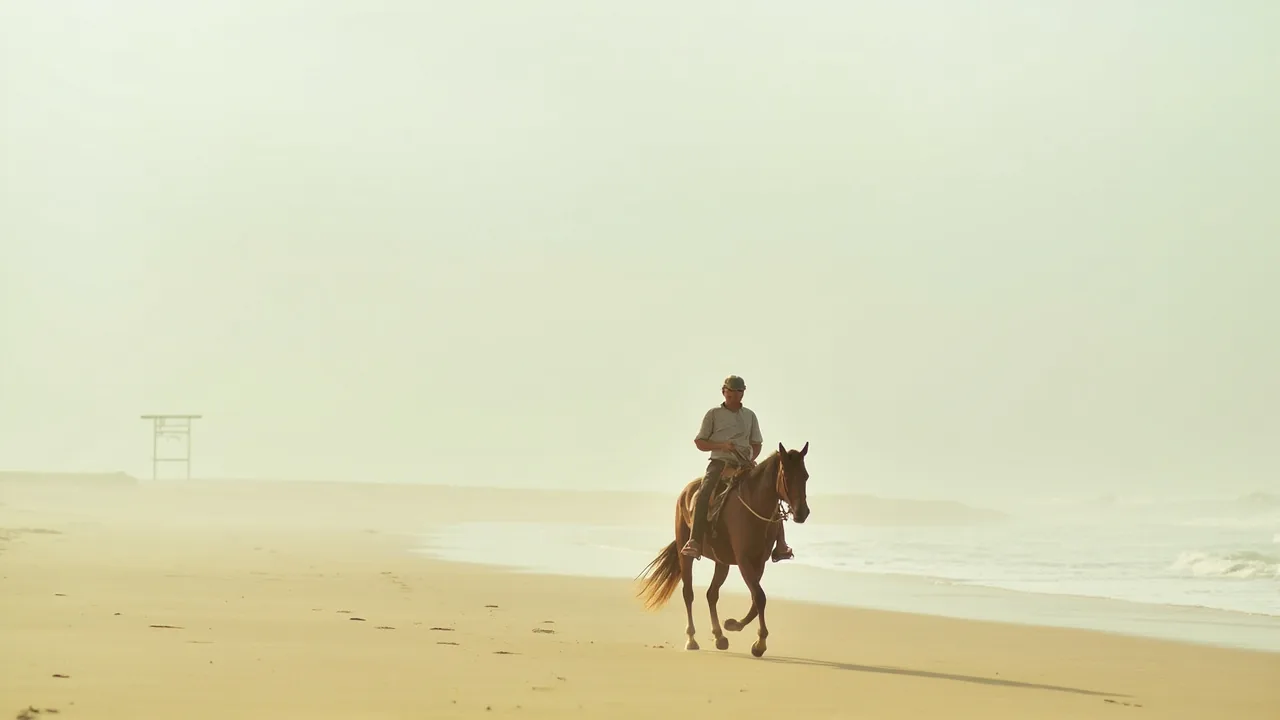
For anyone considering horseback riding in Mui Ne, the scene sits in the gap between the backpacker strip and the fishing village. On most mornings you can see a line of saddled horses walking single-file down the wet sand just after sunrise. For related planning, see our guide on Sea Backpacking Hub and Vietnam Budget Trip for Couple.
Mui Ne has a small horse-riding scene that lives in the gap between the backpacker strip and the fishing village, and on most mornings you can see a line of saddled horses walking single-file down the wet sand just after sunrise. For backpacker logistics and hostel norms before you go, see our hostel etiquette guide. It is one of those rare activities that is both photogenic and genuinely cheap by Vietnamese standards. The catch is that the operators are small, cash-only, and almost none of them have a working website. Here is what I tell friends who ask before they fly.
Quick Answers
| What | Answer | Price (INR) |
|---|---|---|
| Where it happens | North end of Mui Ne beach, near Suoi Nuoc / the fishing village end | — |
| Cost per hour | ₹1,836-₹2,938 (~500,000-800,000 VND or ~$19.06-$30.49) | ₹1,836 |
| Session length | 45 minutes to 1.5 hours | — |
| Skill needed | None, complete beginners ride in guided groups | — |
| Best time of day | Sunrise (5:30 to 7:00) or sunset (16:30 to 18:00) | — |
| Best time of year | December to April, before the monsoon swell picks up | — |
| Booking | Walk-in at the stable or WhatsApp the day before | — |
| Currency | Vietnamese dong, cash only at the beach stables | — |
Step-by-Step: Booking a Beach Ride in Mui Ne
1. Decide sunrise or sunset
Mui Ne gets hot by 9 a.m. And the sand burns. Sunrise rides start around 5:30 and finish before breakfast, sunset rides roll from about 16:30 and run into the blue hour. Sunrise is cooler and the light is better for photos. Sunset is warmer, more crowded, and the horses are usually calmer because they have already worked all day. Travellers report sunrise feels like a movie scene but sunset is the more relaxed ride. See also: How to Get From Sapa to Halong Bay.
2. Find the stable (no website, just walk or ask)
There are a few operators in the area. The most consistent one sits at the north end of Mui Ne beach near Suoi Nuoc, the fishing-village side away from the resorts. You can see the horses tethered under the casuarina trees from the main road. A second smaller stable operates out of an alley behind the backpacker strip in central Mui Ne. Travellers report neither operator has a proper online presence, so walk-ins or a WhatsApp message the day before is the normal booking path. If your hostel does not know the number, ask at any scooter rental shop on Nguyen Dinh Chieu street. For related planning, see our guide on Koh Lipe Temple Etiquette a Respectful Visitor S Guide.
3. Choose your ride
Most stables offer three tiers:
- Walking ride on the wet sand, about 45 minutes, the cheapest option. Good for first-timers.
- Walking plus trotting on firmer sand, about 1 hour, slightly more.
- Walk, trot, and a short stretch along the firmer strip just above the waterline, 1.5 hours, the most expensive. Only for riders the handler has cleared during the warm-up.
4. Pay in cash, in dong
Bring Vietnamese dong. The stables do not take cards and will not accept USD at a fair rate. At the current rate, 1 INR works out to about 270 VND, so ₹2,000 in your pocket covers a basic hour ride with money to spare. Mui Ne has ATMs on Nguyen Dinh Chieu street but they run dry on Sundays, so plan ahead.
5. Show up in closed shoes and long trousers
The staff will give you a helmet and often a half-chaps wrap, but they will turn you away in flip-flops or sandals. Closed shoes stop your foot from sliding through the stirrup on a stumble, which is the single most common beginner injury in Mui Ne, not the fall itself. Long trousers prevent chafing on the saddle. Travellers report wearing leggings under shorts works fine if you do not have riding trousers.
6. Listen to the handler at the mount-up
The handler matches horse to rider by weight. You will not get to pick. Do not try to bargain your way onto a faster horse on your first booking. The handlers in Mui Ne are local fishermen who have ridden these specific horses for years and their matchmaking is accurate. Once mounted, they will ask you to hold the reins with one hand, sit upright, and let the horse follow the lead horse in front. That is it for the first five minutes.
7. Stay out of the surf
The wet sand between the dry beach and the surf is where horses want to walk, because their hooves sink less. It is also where waves wash in unpredictably. A horse that steps into a knee-deep wave with a beginner on board will usually just stop and turn sideways, but it has bucked a few times when surprised by a bigger set. Travellers report the rule every handler repeats is stay on the firmer strip just above the wet line, not in it.
8. Tip the handler in dong
A tip of ₹367 (~100,000 VND or ~$3.81) per rider is standard for a good hour ride. Hand it to the handler directly at the end, not to the stable counter.
Common Mistakes Indians Make
- Riding at midday to “save time” and burning out the horse and yourself. Mui Ne sand at noon is 50+ degrees, the horses pant, the staff cut rides short, and you finish the trip sunburnt. Pick sunrise.
- Booking through the hotel at double the price. Most Mui Ne resorts will arrange a ride for you, but they add a commission and book you into the next available slot, not the best slot. Walk into the stable yourself and ask.
- Wearing brand-new white clothes. Sand, sweat, sunscreen, and horse hair will mark anything you wear. Travellers report dark colours and old clothes are the move.
- Trusting photos of “galloping on the beach.” No Mui Ne operator offers true gallops on sand. The horses walk and trot, occasionally canter for 20 seconds on the firm strip at the back of the beach. If you want real galloping, this is not the activity.
- Forgetting the sunscreen, then reapplying at the stable. Apply SPF 50+ at the hostel before you leave, let it soak in for 20 minutes, then go. Sunscreen does not work on freshly sweat-wet skin.
What Most Guides Don’t Tell You
The horses are not sport horses
These are small Vietnamese working horses, usually 13 to 14 hands, the kind used in the delta for sugarcane carts. They are calm, sure-footed, and patient with beginners, which is the reason the activity exists. They are also narrower in the back than a Western riding-school horse, so the saddle sits slightly differently. Travellers report first-time riders feel a bit unstable for the first ten minutes until they adjust their seat.
The tide matters more than the time of day
Low tide gives you a wide, firm strip of beach. High tide narrows it to a strip between the water and the dunes, which is also where the mosquitoes concentrate. Travellers report asking the stable which tide window the ride falls in before booking, then picking the low-tide slot when you can.
”Sunset ride” often means a foggy blue hour, not golden light
Mui Ne sits on a coastal weather fault and gets thick sea fog rolling in from the east most evenings from February to April. Sunrise rides are usually clear, sunset rides are often misty. If your goal is photographs, sunrise wins. Travellers report the surprise of arriving for a sunset ride in March and finding the whole beach wrapped in fog.
The stable will not insure you
There is no travel insurance that covers routine commercial horse riding in Vietnam, including SafetyWing. If you get hurt, you are paying cash at the clinic in Phan Thiet, 25 km away. The stables carry no liability cover. This is not a reason to skip the ride, the actual injury rate for guided beach walks is low, but it is a reason to ride sober, ride rested, and not push for the canter stretch on your first booking.
Best Time to Ride in Mui Ne
Mui Ne has a short dry season and a long wet one. The dry season runs roughly December to April, with northeast winds, calm mornings, and clear sunsets. The wet season runs May to November, with southwest monsoon, regular afternoon rain, and stronger swell that pushes the surf higher up the beach.
December to February is the sweet spot: cool air, light wind, low swell, horses and handlers at their best. March to April gets hotter but the surf is still manageable. May to August is when the beach narrows and the wet sand line moves higher, which makes the ride slightly less comfortable but still possible.
Subodh’s Pro Tip: If you are building a Vietnam trip and Mui Ne is one stop, ride the horse on day one, before any other beach activity. Sunrise, after a light hostel breakfast, before the heat. Then spend the rest of the day at the dunes or the fairy stream. The energy bill is lower when the temperature is.
Safety: What to Watch For
Riding safety
- Closed shoes, long trousers, helmet on. No exceptions.
- Hold the reins in one hand, the other on the pommel or your thigh. Do not wave your arms around or take selfies with both hands.
- If the horse stops and refuses to move, lean forward slightly and squeeze with your calves. Do not kick. Do not pull the reins.
- If the horse starts trotting and you feel unsafe, pull one rein gently toward your hip to slow it. The handlers are 2 metres behind you, they will step in.
Beach and water safety nearby
Mui Ne’s surf is real. The same coastline that gives you the beautiful horse ride has rips and lateral currents, especially from May to September. Travellers report swimming in front of a resort with a flagged area only. The beach north of the fishing village (Suoi Nuoc side) is usually calmer than the central strip.
General travel safety
Mui Ne is one of the safer stops on a Vietnam trip. Petty theft is low, scams are mostly the gentle kind (overcharging on taxis, sand-flea sales pitches). The bigger risks are scooter accidents on the coastal road and dehydration from forgetting to drink water. Ride with a valid international driving permit, or do not ride at all.
Safety Alert: Before you fly, check the latest advisory on the Indian MEA travel page (mea.gov.in) and the Vietnamese government’s own tourism advisory. Mui Ne has been steady for years, but rules on motorbike rental, drone flights over the dunes, and beach access near military zones do change without notice.
What to Eat Before and After the Ride
Mui Ne is seafood-heavy and not vegetarian, but the town has caught up with the backpacker crowd. For a pre-ride breakfast, EVA Hut beach bar and restaurant on the central strip does eggs, pancakes, and fresh fruit from 7 a.m., perfect after a sunrise ride. Travellers report the coffee is strong and the view is right on the sand.
For lunch, Bếp Nhà Béo is the Thai fusion spot behind the Wandurlust hotel on Nguyen Dinh Chieu, a 4.8-rated kitchen that does a credible pad thai and a green curry strong enough to wake you up after a long ride. They are flexible with spice and can do a vegetable-only version if you ask.
For a sit-down dinner after sunset, PHỐ MŨI NÉ on the seafood street does clay-pot seafood hotpot (cơm niêu hải sản) for two people in the ₹1,469-₹2,203 (~400,000-600,000 VND or ~$15.25-$22.87) range. Travellers report the prawns are the reason to come, and they are sourced from the fishing boats you walked past that morning.
If you want a coffee break between rides and the dunes, Sunset Quán and Quán ăn coffee Restaurant Phi Nguyễn both sit just off Nguyen Dinh Chieu and pull a strong Vietnamese coffee for under ₹110 (~30,000 VND or ~$1.14).
Getting to Mui Ne
From Ho Chi Minh City, Mui Ne is about 200 km northeast along the coastal highway. The bus takes 5 to 6 hours and runs from Mien Dong bus station multiple times a day. The sleeper bus option departs in the evening and arrives around midnight, which fits a sunrise ride the next morning if you book the horse in advance.
You can Book the HCMC to Mui Ne bus on 12go and lock a seat for the evening departure.
From Nha Trang, the bus runs north to south along the coast in about 5 hours. You can Book the Nha Trang to Mui Ne bus on 12go.
From Da Lat, the mountain-to-coast route takes 4 to 5 hours by minivan with a winding climb down the pass. Travellers report this is the most scenic approach. You can Book the Da Lat to Mui Ne bus on 12go.
If you are already in Phan Thiet (the larger city 25 km south), a local bus or a xe om (motorbike taxi) is the cheapest way in.
SIM and Connectivity
Mui Ne has solid 4G from Viettel and Mobifone. The tourist SIM from the airport counter costs ₹918 (~250,000 VND or ~$9.53) for 30 days with 3 GB per day, and you can grab the same SKU at any Viettel store in Phan Thiet for about ₹845 (~230,000 VND or ~$8.77). Travellers report signal is strong on the beach and at the dunes but drops inside the backpacker strip because of the building density.
If you do not want to swap your Indian SIM, an eSIM works fine in Mui Ne and avoids the airport queue. Get Nomad eSIM is the one I tend to point friends to, runs on Viettel under the hood and activates the moment your flight lands.
FAQ
How much does horseback riding on Mui Ne beach cost?
₹1,836-₹2,938 (~500,000-800,000 VND or ~$19.06-$30.49) per hour depending on the stable and the tier of ride. At today’s rate (1 INR = about 270 VND), that works out to roughly ₹1,850 to ₹2,960 (~$30.72). Cash, in dong.
Can complete beginners ride on Mui Ne beach?
Yes. Every stable runs first-timer sessions with a lead handler on foot and a guide horse in front. No previous riding experience is needed, and the horses are small Vietnamese working horses bred for patience.
What should I wear for horseback riding on the beach?
Closed shoes (trainers or boots, never sandals), long trousers or leggings, and a t-shirt. The stable provides a helmet. Bring sunscreen, a buff for the dust, and a strap for your glasses if you wear them.
When is the best time of day to ride?
Sunrise, around 5:30 to 7:00 a.m. The sand is cool, the light is best, and the horses are fresh. Sunset works too, but Mui Ne gets sea fog most evenings from February to April.
Is it safe to swim at Mui Ne beach?
In the flagged areas in front of the resorts, yes. Outside those, the rips and lateral currents can be strong, especially May to September. Travellers report the beach at Suoi Nuoc (the north end) is the calmest stretch.
Can I book horseback riding online?
Not reliably. The Mui Ne stables are small, mostly cash-only, and do not run an online booking system. The most reliable path is a WhatsApp message the day before or a walk-in. Your hostel front desk can usually connect you.
Do I need travel insurance for horseback riding in Vietnam?
Standard travel insurance does not cover commercial horse riding as a covered activity, including most plans aimed at backpackers. Carry cash for a clinic visit in Phan Thiet just in case, and ride sober.
Subodh’s Take
Horseback riding on Mui Ne beach is the kind of activity that sounds like a tourist trap and turns out to be the opposite. The horses are small, calm, and walked slowly by handlers who care about them, the sand is wide and empty at sunrise, and an hour on a horse costs less than a bad cup of coffee in Europe. You will get dusty, your legs will be sore the next day, and the photos will be worth it. Book sunrise, wear closed shoes, tip the handler in dong, and stay out of the surf line. That is the entire skill set.
