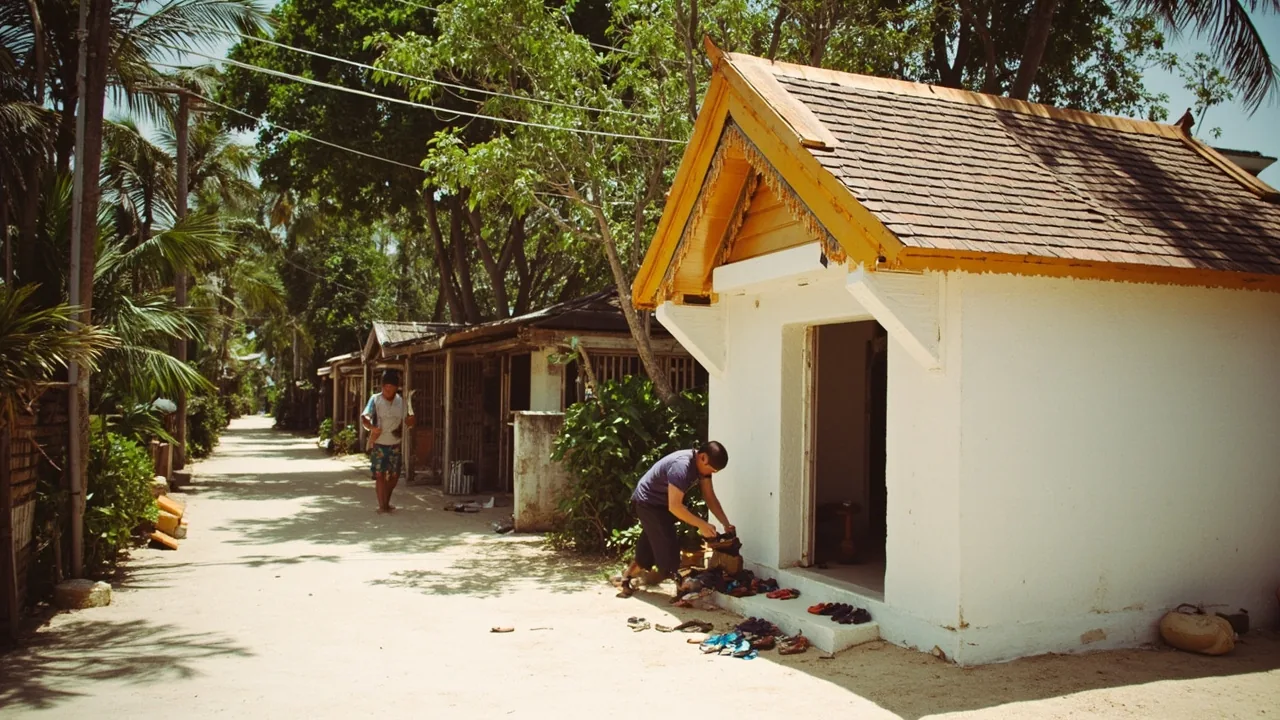
Koh Lipe Temple Etiquette: A Respectful Visitor’s Guide (2026)
Treat Koh Lipe’s few active shrines the way you would treat a family altar: shoes off, shoulders covered, voice down, phone away. The island runs on a small Chao Leh (sea gypsy) community and Thai-Buddhist tradition. For a broader regional view, our SEA backpacking hub covers the region, and our temple etiquette guide goes country by country.
What Temples Does Koh Lipe Have?
Koh Lipe is a small Tarutao-surveyed island, so the temple inventory is thin: a working Buddhist shrine at the top of Walking Street, a handful of spirit houses at family-run guesthouses, and a Chao Leh shrine near the old Chao Leh village at the south end of Sunrise Beach. There is no grand temple complex like Wat Pho or Wat Arun in Bangkok. What exists is small, active, and used daily. That is exactly why etiquette matters: residents see visitors up close, and small mistakes are noticed. If you are also planning island time, our guides to Koh Phangan and Koh Tao cover other Thai islands worth visiting on the same trip.
Quick Answers
| What | Answer | Price (INR) |
|---|---|---|
| Dress code | Shoulders and knees covered, no see-through fabric | Free (pack what you own) |
| Footwear | Off at indoor shrine thresholds; outdoor spirit houses are generally approached without removing shoes | Free |
| Photography | Ask first, never photograph during prayer or offerings | Free |
| Best time to visit | Morning (07:00 to 09:00) when locals pray | Free |
| Donation | Optional, local norm | ₹57-₹287 |
| Loud talk / alcohol | No, anywhere near a shrine | Free |
The Step-by-Step: How to Behave at Every Koh Lipe Shrine
1. Dress the part before you leave the guesthouse
The single most common mistake Indian travellers make is walking over in a singlet, shorts, and flip-flops because the temple is “just a small shrine.” Bring a sarong or a long towel. Wear a T-shirt that covers your shoulders. Treat every indoor shrine boundary as a dress-code boundary. Long pants or a maxi skirt plus a T-shirt works for everyone. If you forget, most shrines keep a stash of borrowed sarongs near the entrance; drop ₹57 (~20 THB or ~$0.60) in the donation box when you use one.
2. Cross the threshold shoes-off, every time
At indoor shrines, shoes come off at the line where the floor changes colour, where there is a small step up, or where a sign says so. In Thailand the rule is universal: the bottom of the foot is considered the dirtiest part of the body, and pointing it at a Buddha image or an active shrine is a real insult. Leave your shoes together, soles pointing away from the shrine. (Outdoor spirit houses on pedestals are generally not entered, so shoe removal does not apply to them.) Socks are fine on hot concrete; barefoot is the default.
3. Lower your body and your voice
Thai women kneel or sit on their heels when a monk is present. Men sit cross-legged or kneel. Do not point your feet at the Buddha image or at monks. Keep your voice low. Phones on silent, no calls, no video. If you want to take a quiet photo, do it before people start praying, never during.
4. Interact with monks correctly
There are not many resident monks on Koh Lipe, but you will see visiting monks during festivals. The rule for women: do not touch a monk or hand him anything directly. Place the item on a cloth, on the table, or pass it to a male relative who then gives it to the monk. The rule for men: greet with a slight bow and a wai (palms together at chest level). If you cannot wai back gracefully, a soft nod is fine. Travellers report that monks on the smaller islands are forgiving about clumsy wais from foreign visitors, but do try.
5. Photography etiquette
Ask before photographing people praying, monks, or the inside of any shrine where locals are present. Outdoor spirit houses are generally fine to photograph if no one is mid-prayer. Never use flash inside any active shrine; it damages old murals and looks disrespectful. Never pose with your back turned to a Buddha image and pretend to “hug” or “kiss” it for a photo. That gesture has got travellers asked to leave shrines in Thailand before. No staged selfies at all.
6. Offerings and donations
If you want to leave an offering: small packaged flowers, three incense sticks, or a small garland bought from a Walking Street stall (₹57-₹144 (~20-50 THB or ~$0.60-$1.49)) is the right scale. Light incense, place it in the burner, bow once. Do not blow out the incense with your mouth; wave it out or let it burn down. For monks, leave food, fruit, or small packets of toiletries rather than cash. Donation boxes accept any amount; ₹57-₹287 (~20-100 THB or ~$0.60-$2.98) is the local norm, never less than ₹57 (~20 THB or ~$0.60) if you light incense or borrow a sarong.
7. Behaviour near spirit houses (san phra phum)
Almost every Thai home and shop has a small spirit house on a pedestal, often brightly painted in red and gold. Koh Lipe guesthouses and beach bars are no exception. The rule: never sit on, lean against, or step over a spirit house. Never place anything on top of it (drinks, bags, phones). If you smoke or drink, do not do it within arm’s reach of one.
8. The Chao Leh shrine near Sunrise Beach
The Chao Leh (sea gypsy) community that historically settled Koh Lipe maintains small spirit shrines and ancestor markers near the old village area at the south end of Sunrise Beach. These are not tourist sites; they are family spaces. Treat them the way you would treat any private religious site in India: pause, observe quietly, ask before photographing, and step away within two or three minutes. Travellers report that standing respectfully for a moment often invites a quiet nod from locals passing by.
Common Mistakes Indians Make
Wearing shorts and a vest because “it’s a small island”
What happens: you get turned away at the door of even the modest Walking Street shrine, and the experience you came for is lost. How to avoid: pack one light overshirt and a sarong in your day bag specifically for shrine visits. Costs nothing, takes ten seconds to put on.
Touching the monk’s shoulder to pose for a photo
What happens: it is genuinely offensive, not in a polite-frown way but in a “you must leave now” way. How to avoid: keep one arm’s length between you and any monk, and never initiate physical contact with one.
Using flash inside an active shrine
What happens: a sharp Thai word you will not enjoy hearing, and a request to delete the photo in front of the group. How to avoid: flash off before you even raise the camera. Low-light photos from a phone inside a Thai shrine will be grainy; that is the correct outcome.
Talking loudly or laughing while people are praying
What happens: you are asked to wait outside until prayer ends, which on a small island can be the entire visit. How to avoid: arrive between prayer calls, observe first, speak in a whisper if you must speak.
Treating spirit houses as decoration
What happens: a guesthouse owner quietly asks you to move, or worse, asks you to leave. How to avoid: keep your bag, drink, and elbow off any shrine pedestal. If a spirit house is near your beach lounger, do not stretch out next to it like it is furniture.
What Most Guides Don’t Tell You
The “borrow a sarong” stash exists, but use it properly
Almost every working shrine on Koh Lipe keeps a small pile of free loaner sarongs near the entrance for visitors who need to cover up. They are provided as a complimentary donation item and should be returned folded before you leave. If you take one home by accident, return it the same day or drop it at the nearest guesthouse with a small apology note.
Festivals change the rules for a few days a year
During Songkran (mid-April) and during the annual Chao Loh Liang festival in late February or early March (the date follows the lunar calendar, verify locally), Koh Lipe’s shrines run all-day ceremonies with music, food offerings, and monks. Visitors are welcome and even encouraged to participate, but the rules get stricter on those days: dress more formally, no alcohol anywhere near the shrine area, photography is restricted in some sections. Travellers report that showing up with a packet of flowers and staying an hour is the right move during these festivals.
The Chao Leh community has its own additional customs
The small sea-gypsy community that historically settled Koh Lipe follows a mix of Thai Buddhism and older animist practice. There are small taboos about photographing certain boats, ancestral markers, and spirit poles near the south end of Sunrise Beach. If a local asks you to put the camera down, do so immediately, no negotiation. Travellers who push back on this on small islands have been asked to leave the area by community elders. The right move: ask once, accept the first answer, move on.
Practicalities Around the Visit
Getting there and timing
Most shrines on Walking Street open by 06:30 and quiet down by 19:00. The most respectful visit window is early morning (07:00 to 09:00) when locals come to pray on the way to work, or just before sunset (17:30 to 18:30). Mid-day, the shrines are often empty and the heat is brutal. Pair a shrine visit with a Walking Street stroll rather than treating it as a standalone “attraction.” Koh Lipe is reached by ferry from Pak Bara, so plan your temple timing around your arrival day.
What to bring
A light overshirt or scarf, a sarong or long towel, small change (coins and small notes), and a single small packet of flowers or incense if you want to make an offering. Leave the camera in the bag unless you have confirmed you can photograph.
Cost summary for a respectful visit
| Item | Cost (THB) |
|---|---|
| Sarong or overshirt (one-time buy) | ₹431-₹861 (~150-300 THB or ~$4.47-$8.94) |
| Flowers or incense from Walking Street | ₹57-₹144 (~20-50 THB or ~$0.60-$1.49) |
| Donation in the box | ₹57-₹287 (~20-100 THB or ~$0.60-$2.98) |
| Refreshments after | 60-120 THB |
FX reference: 1 THB ≈ ₹2.87 at current rates. Total out-of-pocket for a respectful visit runs ₹718-₹1,637 (~250-570 THB or ~$7.45-$16.98).
FAQ
Do I need to remove my shoes at outdoor spirit houses?
Yes. Treat every shrine boundary, including a small spirit house on a pedestal outside a guesthouse, as a no-shoes zone. Leave them together on the ground with the soles pointing away from the shrine.
Can women give alms to monks directly?
No. Place the offering on a cloth or hand it to a male companion who passes it to the monk. Direct physical contact between women and monks is the rule most consistently enforced across Thai temples.
Is it okay to take a quiet photo if no one is around?
For an empty outdoor spirit house, usually yes. For any shrine where locals are mid-prayer, ask first. For any monk, ask and accept the answer. Flash is never fine inside an active shrine.
Do I need a sarong if I am wearing long pants?
Long pants covering the knees plus a T-shirt covering the shoulders is acceptable at every Koh Lipe shrine. A sarong is useful if you plan to sit on the floor or if you arrive in shorts.
Are there temple festivals I should know about?
Songkran in mid-April is the largest. The Chao Loh Liang sea-gypsy festival falls in late February or early March on the lunar calendar; confirm the exact date locally the week before, since visitor behaviour rules tighten during the festival.
What if I make a mistake and accidentally offend someone?
Apologise quickly and quietly, leave the shrine area, and let a local host know what happened. Thai shrine keepers on small islands are experienced with backpacker visitors and most mistakes are absorbed without lasting consequence as long as you do not argue about it.
Subodh’s Take
The “rules” above are not bureaucracy. They are how the people who live on Koh Lipe show respect to their own traditions, and copying that for a few hours costs you almost nothing. The visitors who get the warmest reception are the ones who dress for it, slow down, and accept that a small shrine can be a meaningful moment rather than a photo stop. Do that, and the rest of the island opens up to you in ways the loudest hostel-bar crowd never sees.
Connectivity tip: Grab a Nomad eSIM before you fly so you can map the Walking Street shrines and read Thai signs on arrival without hunting for a local SIM kiosk.
For a full Thailand breakdown, see our Thailand travel guide for Indian backpackers.