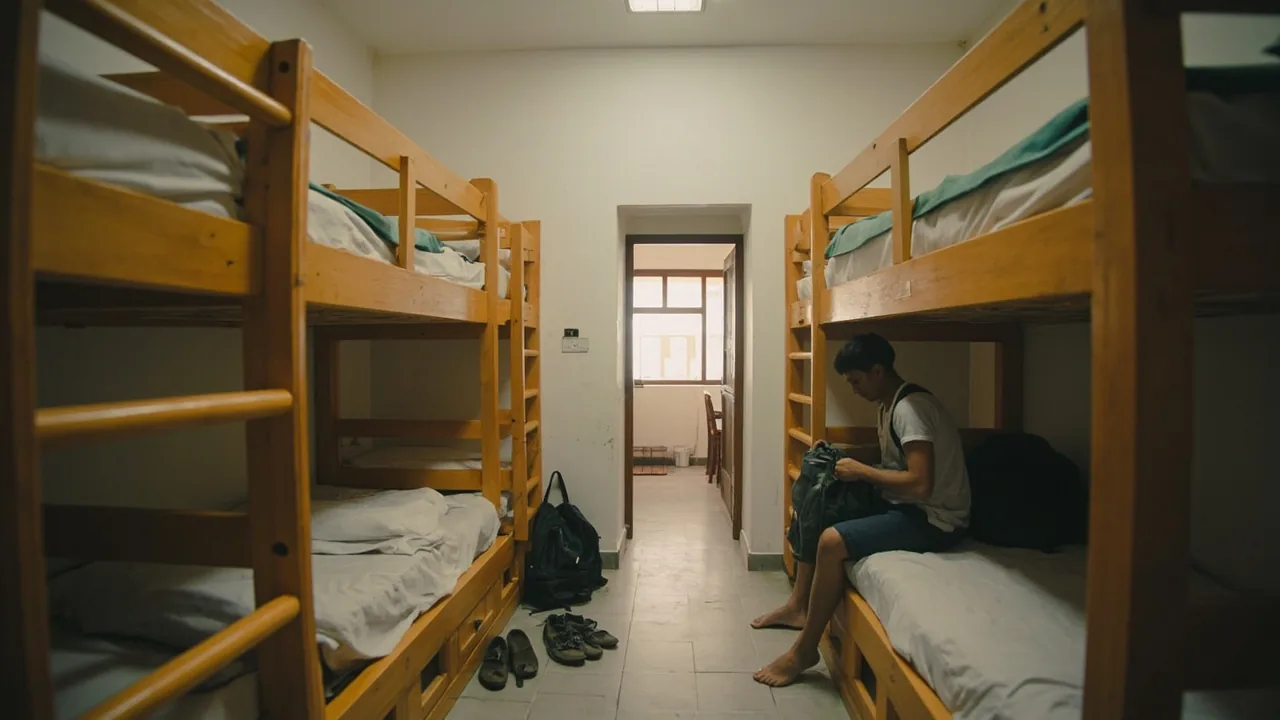
Hostel Etiquette: Unwritten Rules for First-Timers in Southeast Asia (2026)
If you’ve never slept in a shared dorm before, here’s the short version: be quiet after 10 pm, use headphones for everything, keep your stuff in your bag or a locker, and wear flip-flops in the shared bathroom. That covers 80% of hostel etiquette. The rest is detail.
This guide was written for Indian backpackers booking their first dorm bed in Bangkok, Hanoi, Vientiane, or Phnom Penh. If this is your first time in SEA, our SEA backpacking hub covers country guides, visa rules, and budget breakdowns for every destination in one place. Verified against Hostelworld and Booking.com house rules from 12 popular SEA hostels, plus traveller feedback from the r/SoutheastAsia and r/hostelling communities as of July 2026.
What Is “Hostel Etiquette”?
Hostel etiquette is the set of unwritten social rules that keep a shared dorm functional for 4 to 12 strangers sleeping, packing, and moving around within arm’s reach of each other. Hostels aren’t hotels. There’s no housekeeping turning your bed down. The bathroom is shared. The kitchen is shared. The air is shared. Most rules are common sense, but a few are dorm-specific and only make sense once you’ve lived in one.
Quick Answers
| What | Answer | Price (INR) |
|---|---|---|
| Lights out | 10 pm to 11 pm is the soft curfew; many dorms go fully dark | , |
| Phone calls | Step into the hallway or common area, never the dorm | , |
| Music/videos | Headphones, always. No speaker playback, even at low volume | , |
| Check-in | 2 pm or 3 pm standard; arrive early and you wait or pay for the night before | , |
| Check-out | 10 am or 11 am; leave the bed stripped or you’ll be charged | , |
| Bathroom | Flip-flops in the shower, keep it under 10 minutes, don’t leave hair in the drain | , |
| Kitchen | Wash your dish within 5 minutes of eating | , |
| Locker | Bring your own padlock; hostels rarely provide them | , |
| Quiet hours | Posted on the wall, usually 10 pm to 8 am | , |
| Towel | Rent one for ₹143 (~50 THB or ~$1.49); don’t bring the white hotel ones from home | ₹143 |
Step-by-Step: How to Not Annoy Your Dormmates
1. Lights, Headphones, and the 10 pm Curfew
Most SEA hostels post quiet hours between 10 pm and 8 am. That doesn’t mean total silence, but it means no phone calls in the dorm, no speaker music, no unpacking a rustly polybag at midnight.
The biggest offender for Indian travellers is the video call home. Your parents want to hear from you, your friends want to see Pai, that’s fine. Step into the hallway, the lobby, or the rooftop. A 4 am video call with Diwali wishes playing on speaker is the fastest way to get a dorm of strangers to hate you.
For music and reels, headphones are non-negotiable. Even at “low” volume, an Instagram reel in a 6-bed dorm carries to every bunk.
Subodh’s Pro Tip: Pack a pair of wired earphones as backup. Bluetooth earbuds die on long bus days, and the cheapest hostel dorm bed is no place to be earphone-less at 11 pm. Our SEA packing list covers the full gear breakdown for dorm travellers.
2. Bathroom and Shower Etiquette
This is the section most first-timers underestimate, and where the cultural gap between home and SEA hostels shows up most.
Wear flip-flops in the shared bathroom, always. Not just in the shower stall, in the whole bathroom. SEA hostel bathrooms are wet. The floor stays wet. Tinea pedis (athlete’s foot) and other fungal infections are common in tropical dorms, and walking barefoot is how you pick them up. Indian travellers used to chappals at home already have the habit; just make sure you own a dedicated bathroom pair that never touches your dorm floor.
Keep showers short. Under 10 minutes is the rule of thumb in busy hostels. There are 6 to 10 other people who need that bathroom before 9 am, and many SEA hostels only have 2 to 3 shared bathrooms per floor. A 25-minute hot shower at 7:45 am will form a queue and earn you a bad reputation with the front desk.
Don’t leave hair in the drain. Western travellers are the worst offenders here, but Indian travellers with shorter hair aren’t off the hook. Pull your shed hair out of the drain with a tissue before you leave. The next person shouldn’t have to.
Don’t use the bathroom sink to wash clothes. Use the laundry service (₹115-₹172 (~40-60 THB or ~$1.19-$1.79) per kg in Thailand, ₹74-₹147 (~20,000-40,000 VND or ~$0.76-$1.53) per kg in Vietnam). Washing your kurtas in the sink blocks it for everyone.
Avoid brushing teeth or washing your face at peak hours. 7:30 to 8:30 am is when everyone needs the sink. Wash up at 6:45 am or after 9 am and you’ll save yourself a wait and avoid the awkward “are you going to be long?” eye contact.
Subodh’s Pro Tip: A small microfiber towel dries faster than a regular cotton one. In humid SEA dorms, that means less damp smell in your bag and quicker turnarounds between showers.
3. The Bed, the Locker, and Your Stuff
Every SEA hostel bed comes with a personal locker, usually under the bed or built into the frame. Use it. Bring a small TSA-style padlock or a combination lock from home (you can pick one up at any Decathlon in India for ₹300 (~$3.11) to ₹500 (~$5.19)). The hostel will sometimes sell or lend locks, but the deposit is often the price of the lock anyway.
What goes in the locker:
- Passport and extra cash (carry a photocopy in your daypack instead — our guide to carrying money abroad covers the best options)
- Spare phone charger and power bank
- Any medication, including regular stuff like crocin or avil
- Underwear and socks for the next day
What stays out:
- The outfit you’re wearing tomorrow (hang it on the bunk hook)
- Your toothbrush, toothpaste, and a small toiletry pouch (most bunks have a small shelf or a hanging net)
- Headphones, earplugs, sleep mask (you’ll use these every night)
Beds come with a fitted sheet, a top sheet, and usually a thin pillow. Indian travellers used to thick home pillows often find these flat. A travel pillow from home (the inflatable kind from any Decathlon) makes a real difference.
4. Kitchen and Common Area Etiquette
Most SEA hostels have a small guest kitchen with a stove, a fridge, a sink, and some pans. The rules are simple:
- Wash your dish within 5 minutes of finishing. The next person is waiting.
- Label anything you put in the fridge with your name and the date. Anything unmarked gets thrown out on Sunday by most hostels.
- Don’t cook strong-smelling food at peak hours. A full fish curry at 7 am in a 12-bed dorm is a crime.
- Take what you need, not more. If there’s one egg left, leave it.
- Clean the stove and the counter after you use them.
For veg-only travellers, this section matters less because you’re probably eating out at Indian or Jay restaurants. But if you do use the kitchen for Maggi or instant poha, the same rules apply. The vegan travellers from Germany and Australia you’ll be sharing the kitchen with appreciate the same consideration.
Subodh’s Pro Tip: The hostel kitchen is for reheating and quick meals, not for replacing meals out. If you’re cooking full dinners every night, you’re spending more time in the kitchen than at the bar. Eat out for ₹150 (~$1.56) to ₹300 (~$3.11), save the cooking for a slow Sunday.
5. Alcohol, Smoking, and the Dorm
No alcohol in the dorm. Most SEA hostels ban this outright, especially since Thailand’s 2025 tightening of alcohol sales near hostels in tourist zones. The bar downstairs or the rooftop is where drinking happens.
No smoking inside, full stop. Smoke breaks go to the designated smoking area, usually marked at the entrance. The fine for smoking in a dorm in Thailand is up to ₹14,346 (~5,000 THB or ~$148.92), and Vietnam’s hostel scene has started enforcing similar penalties after a 2024 fire incident in Ho Chi Minh City.
Vape the same as cigarettes. This is a common Indian traveller mistake. Hostels treat vape clouds the same as cigarette smoke, and the cleaning fee for a smoky dorm room is the same as a hotel’s.
6. Check-In, Check-Out, and the Front Desk
- Check-in is usually 2 pm or 3 pm. Arriving at 8 am from an overnight bus means you’ll wait in the lobby, store your bag with the front desk, and come back at 3 pm. Some hostels let you pay for the previous night to get early access (worth it after a sleeper train).
- Check-out is usually 10 am or 11 am. Strip the bed (sheet and pillowcase in a pile on the mattress), drop the key at the desk, and leave. If you overstay past checkout, hostels charge a half-day rate, usually 50% of one night’s stay.
- The front desk is not 24-hour in budget hostels. In smaller SEA hostels, the desk closes between 11 pm and 7 am. If you’re arriving at 1 am, message ahead and arrange a late check-in or you’ll be sleeping in the lobby.
7. The Common Courtesy Stuff Most Guides Skip
- Don’t unpack everything across two bunks. Use your own bed and the locker.
- Knock before opening a bunk curtain. Most SEA dorm bunks have a small privacy curtain. Knock, wait 3 seconds, then open.
- Don’t ask “where are you from?” at 6 am. Save the social talk for the common area.
- The top bunk is a privilege, not a punishment. If you take it, be careful on the ladder and don’t stomp around.
- Sex in the dorm is a fast way to get asked to leave. Couples get private rooms; that’s the deal.
- Shoes off at the dorm entrance. Most SEA hostels have a shoe rack or a marked floor area. Don’t track mud and street germs into the dorm.
Common Mistakes Indians Make in Hostels
Mistake 1: Assuming the bathroom is like an Indian railway station
Most Indian travellers are used to Indian-style wet bathrooms, where the floor drains and you wash the whole room with you. SEA hostel bathrooms are tiled wet rooms, but the hostel staff cleans them once a day, not after every guest. Heavy-duty Indian-style washing isn’t expected; just rinse yourself off, keep the floor reasonable, and pull your hair out of the drain. The hostel floor is not your bathroom floor.
Mistake 2: Bringing home food into the dorm
Curry, dal, anything with a strong smell. It lingers in a small dorm for hours and the next person has to sleep with it. Eat at the restaurant or in the common area, then brush your teeth before entering the dorm.
Mistake 3: Calling home on speaker from the bunk
Indian families often do long catch-up calls on WhatsApp video. From a hostel dorm bunk, even at low volume, this is rude. Step into the hallway or the rooftop. If you have to take an urgent call, whisper and step out within 30 seconds.
Mistake 4: Treating the front desk like a hotel concierge
The front desk staff at a hostel is usually 1 or 2 people handling 30 to 80 guests. They’re not going to remember your name, book your bus, or hold your laundry for an extra day. Be polite, brief, and clear. “Hi, I need to book the night bus to Chiang Mai for tomorrow, can you point me to the right counter?” works better than a five-minute explanation of your whole itinerary.
Mistake 5: Not reading the house rules
Every hostel has them, usually on the back of your room key folder, on the wall by the entrance, or in the booking confirmation email. Most first-time complaints (“I didn’t know I had to check out by 10!”) come from skipping this 90-second read.
What Most Guides Don’t Tell You
The 11 pm dorm culture difference
Western hostels tend to enforce quiet hours strictly after 11 pm. SEA hostels are looser until about midnight, especially in party hostels like Mad Monkey (now called Bodega) and Green Tiger House in Bangkok. If you’re a light sleeper, book a “quiet dorm” or a smaller 4-bed dorm instead of the 10-bed social one. The price difference is usually ₹287-₹574 (~100-200 THB or ~$2.98-$5.96) per night.
The hot water shower surprise
Not every SEA hostel has hot water. In Laos and Cambodia especially, “hot water” means a solar-heated system that works only after 10 am. Vietnam and Thailand have hot water in most hostels. If you need a hot morning shower, ask before booking. Travellers report freezing morning showers in Vientiane and Phnom Penh as one of the most consistent complaints from Indian backpackers who booked the cheapest bed.
The bag drop trick
Most hostels let you drop your bag for free between check-out and your bus/train departure. Use this. Dragging a full backpack around Hanoi at noon is how you ruin your last day. Just leave your passport and electronics in a small daypack and lock the rest in storage.
The bed bug paranoia (and reality)
Bed bugs aren’t common in well-run SEA hostels, but they’re not unknown. Check the mattress seams when you check in. Look for small dark spots, live insects, or tiny white eggs. If you see anything, switch rooms that night and tell the front desk. Sleeping in a bag in the lobby is better than a week of bed bug bites. Travellers report Chiang Mai’s old-town hostels as the most common spot for bed bug issues, though it’s not a 2026-specific pattern.
The “social dorm” isn’t always social
A 10-bed “social dorm” sounds great until you’re in it with 9 people on different schedules. The actual socialising happens in the common area, not the dorm. If you want to meet people, sit in the common area after 7 pm, not in your bunk.
Bathroom Etiquette: A Quick Reference
This section exists because the gap in competitor coverage is real, and Indian travellers specifically ask about it in hostel Facebook groups.
| Situation | What to do |
|---|---|
| Entering the bathroom | Flip-flops on, door locked, bag on the hook (not the floor) |
| During the shower | Under 10 minutes, hair out of the drain, no phone calls |
| After the shower | Towel hung to dry on the hook, flip-flops off at the door, not in the bathroom |
| Brushing teeth | Off-peak hours (before 7 am or after 9 am), sink cleaned of paste spit |
| Washing clothes | Laundry service, never the sink |
| Period products | Wrapped in tissue, disposed in the bin, not flushed |
| Going barefoot | Never, anywhere in the bathroom |
FAQ
Is it rude to go to bed early in a hostel?
No. Most dorm travellers turn in by 10:30 pm. Just do it quietly, no rustling, and don’t make a show of telling people “goodnight” loudly.
Do I have to make friends in a hostel?
No. Hostels are great for solo travellers because you can be social when you want and alone when you don’t. Sitting in the common area with a book is a valid hostel experience.
What if my dormmate snores?
Earplugs. Pack them from home (the foam ones from any chemist). If it’s unworkable, ask the front desk for a room switch. Most hostels will move you.
Can I bring food into the dorm?
Dry, low-smell snacks only. No full meals, no curry, nothing that lingers. Eat in the common area for hot food.
What’s the dress code in a hostel?
None in your own dorm. In the common area, normal streetwear is fine. Most SEA hostels have a “no shirt, no shoes, no service” policy at the bar or the cafe.
Are mixed-gender dorms safe?
Yes, in well-reviewed SEA hostels. Theft is rare; the bigger risk is staying in a poorly-lit, low-reviewed place. Stick to 8+ rated hostels on Hostelworld. If you’re a woman travelling solo, our solo female safety guide covers what to expect in mixed and women-only dorms across Southeast Asia.
Can I cancel a hostel booking?
Most hostels offer free cancellation up to 24 to 48 hours before check-in. Read the policy before you book. Hostelworld and Booking.com both show it clearly.
Subodh’s Take
Hostel etiquette looks like a long list until you’ve done it twice. By your third dorm, you’ll be the one showing new arrivals where the lockers are. The single biggest shift Indian travellers make in their first month of hostelling is from “I want to be comfortable” to “I want the room to be comfortable for everyone.” That one sentence covers most of what’s above. If you haven’t booked your first trip yet, our first trip abroad guide walks you through every step from passport to landing.
