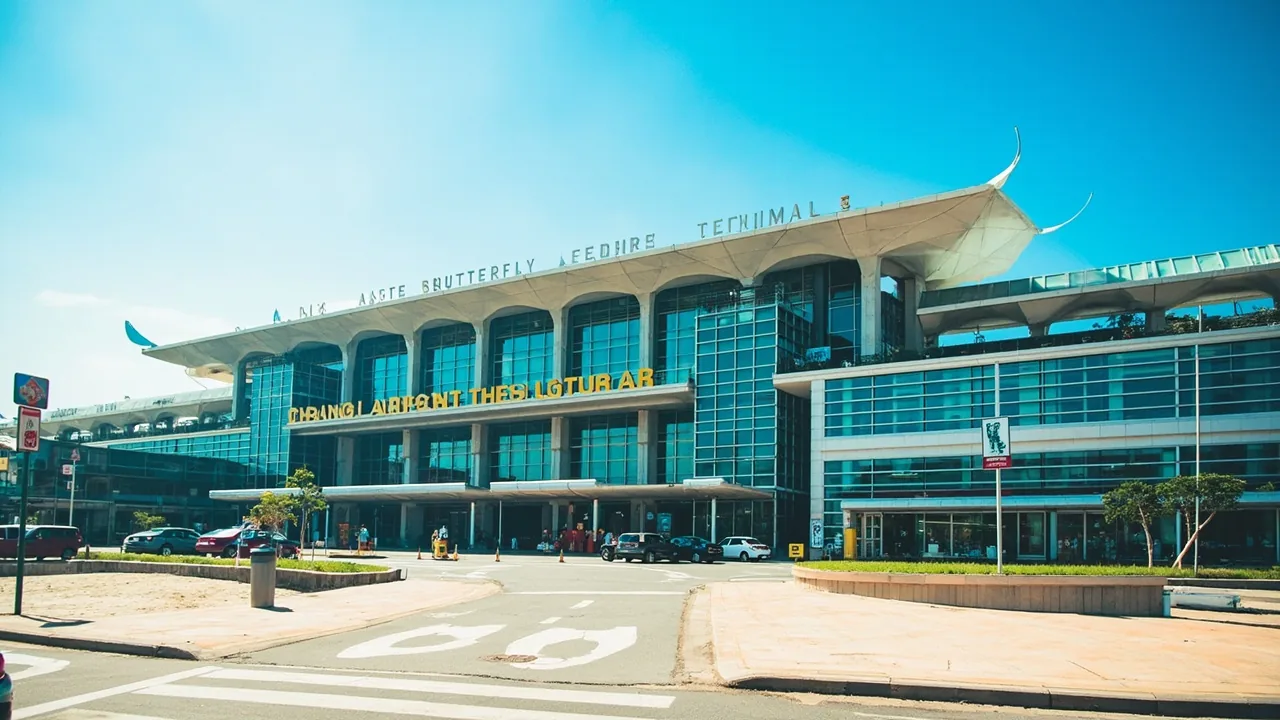
Changi Airport Terminals: The Indian Flyer’s Breakdown
Changi Airport currently runs four passenger terminals (T1, T2, T3, and T4), with a fifth terminal under construction and slated to open in the mid-2030s. Most Indian travellers will land at T1 or T3.
Here’s the breakdown: the four operating terminals, the airline-to-terminal map, Jewel (the shopping complex linked to T1), the Skytrain, and what the under-construction T5 will add once it opens.
Quick Answers
| What | Answer | Price (INR) |
|---|---|---|
| How many terminals does Changi have today? | Four (T1, T2, T3, T4) | Free to move between them |
| Which terminal do most Indian flyers use? | T1 (Singapore Airlines) and T3 (IndiGo, Air India) | Free shuttle inside the transit area |
| What is Jewel, and where is it? | A shopping/dining complex linked to T1 via a covered walkway | Entry is free, attractions ticketed |
| Singapore tourist visa fee (Indian passport) | ₹2,119 (~22 USD) single-entry, 30-day stay | ₹2,119 (~$22.00) |
| Singtel/M1 tourist SIM (7 days, ~50GB data) | Available at Changi counters | ₹1,119 (~15 SGD or ~$11.61) |
Tip: the Skytrain between T1, T2, and T3 is free inside the transit (airside) area. If you’ve already cleared immigration and you’re moving between terminals landside (the public side), use the free Terminal Shuttles at Level 1 instead. See also: How to Get From Singapore Airport to City.
Which Terminal Does Your Airline Use
Changi splits its airlines across four terminals based on airline alliances and operational agreements. The full Indian-relevant breakdown:
| Terminal | Airlines Flying Indian Routes (to Indian Routes Often) | Best For |
|---|---|---|
| T1 | Singapore Airlines (most India flights), some Scoot, Jetstar Asia | Full-service, lounge-heavy flyers |
| T2 | Air India (selected flights), ANA, Lufthansa, Thai Airways | Star Alliance connections to Europe/Japan |
| T3 | IndiGo, Air India Express, Singapore Airlines (selected), Cathay Pacific, Emirates, Qatar Airways | The busiest India hub; most Indian arrivals land here |
| T4 | AirAsia, Cebu Pacific, VietJet, Korean Air | Budget carriers, mainly regional SEA |
Quick rule of thumb: if you’re flying IndiGo, Air India Express, or AirAsia into Changi, you’re going to T3 or T4. Singapore Airlines and the full-service carriers cluster at T1 and T2. Always reconfirm with your airline 24 hours before departure; the terminal assignment shifts occasionally.
The Four Operating Terminals
Terminal 1
T1 is the original Changi terminal, opened in 1981, and recently refurbished after a multi-year revamp that wrapped in 2024. It is the home of Singapore Airlines’ main operations, plus a heavy concentration of SkyTeam carriers (China Eastern, Korean Air) and Jetstar Asia. Indian flyers on Singapore Airlines from Mumbai, Delhi, Chennai, and Bengaluru will land here most of the time.
The terminal’s biggest draw for Indian travellers is its direct connection to Jewel Changi Airport, the 10-storey indoor forest complex anchored by the HSBC Rain Vortex (the world’s tallest indoor waterfall). From T1’s Level 1 (landside), a covered walkway takes you into Jewel in under five minutes. From T2 and T3, Jewel is accessible via the Skytrain (transit side) or the complimentary shuttle bus (landside).
Terminal 2
T2 is the Star Alliance side of Changi, reopened in 2023 after a full rebuild. It handles ANA, Lufthansa, Swiss, Turkish Airlines, Thai Airways, and Air India on certain India routes. If you’re connecting from an Indian Star Alliance flight onto a European or Japanese onward flight, you may well stay airside at T2 for the connection. For lounges on a longer connection, see our Changi lounge guide for Priority Pass and Indian travelers.
T2’s standout feature is the “Wonderfall” digital art and light installation inside the Dreamscape garden, plus a wider mix of dining options. The terminal also has a 24-hour food and beverage zone, useful if you’re arriving from India on a late-night flight.
Terminal 3
T3 is the busiest terminal at Changi and the most common landing point for budget-conscious Indian flyers. IndiGo’s Singapore flights operate from T3, and Air India Express uses T3 as well. Cathay Pacific, Emirates, Etihad, and Qatar Airways also cluster here, so if you’re connecting onward to the Middle East or Hong Kong, you might transit through T3.
T3 is connected to T1 and T2 via the free Skytrain on the transit (airside) side. If you need Indian vegetarian food while you wait, our vegetarian Indian food guide for Changi terminals covers the options. Landside, the terminals are linked by shuttle bus and a covered walkway (T1-T3 is walkable in about 10 minutes landside).
Terminal 4
T4 is the smallest and newest of the four (opened 2017). It is the terminal for low-cost carriers, primarily AirAsia, Cebu Pacific, VietJet, and a handful of other regional airlines. If you’re flying AirAsia from Kochi or Trichy into Changi, you’ll land at T4.
T4 does not have a Skytrain link to the other three terminals. To move between T4 and T1/T2/T3, you take the free Terminal Shuttle Bus at Level 1 (landside), running every 5 to 10 minutes from 5:00 AM to midnight. If you’re connecting from an AirAsia flight to a Singapore Airlines flight, give yourself plenty of time for the bus transfer; if your itinerary is on separate bookings you’ll need to clear immigration between terminals.
Jewel Changi: The Complex You Should Know
Jewel is not a terminal. It’s a multi-storey retail and lifestyle complex physically linked to T1, and it’s one of Changi’s most recognisable features. Indian flyers with a layover of 3+ hours often step out to Jewel just to see the Rain Vortex and the surrounding garden terraces.
Jewel sits landside, so you clear immigration first before walking over (for a full pre/post-immigration breakdown, see our Jewel Changi guide). If you’re transiting on a single booking (no immigration clearance), you can still access Jewel via the Skytrain from T2 and T3 to T1, then walk into Jewel from T1 without clearing immigration. This is one of the only airports in the world where you can visit a major attraction during a transit without a visa.
The Canopy Park at Jewel (top floors, with hedge and mirror mazes, sky nets, and walking trails) requires a separate ticket, generally ₹597 (~8 SGD or ~$6.19) to ₹1,119 (~15 SGD or ~$11.61) depending on which attractions you bundle. Indian flyers on a long layover who want to stretch their legs often find this a better use of 4 hours than sitting at the gate.
Terminal 5: What’s Coming
A fifth terminal is under construction on a 1,080-hectare site east of the existing Changi complex, with a planned opening in the mid-2030s. When it opens, T5 will be the largest terminal at Changi and is expected to handle up to 50 million passengers a year in its first phase.
The bigger picture: T5 is part of Changi’s long-term plan to grow capacity toward roughly 100 million passengers per year across all terminals, up from Changi’s current pre-pandemic peak of about 68 million. For Indian flyers, the practical impact today is zero, because T5 won’t open for almost a decade. The takeaway is just that Changi is not standing still; the four terminals you fly through today will not be the four terminals of 2035.
How to Move Between Terminals
Three free options:
-
Skytrain (airside/transit side): Connects T1, T2, and T3. Runs roughly every 4 minutes from 5:00 AM to 2:30 AM. Free. Does not serve T4.
-
Terminal Shuttle Bus (landside/public side): Connects all four terminals, including T4. Runs every 5 to 10 minutes from 5:00 AM to midnight. Free. Best option if you’ve cleared immigration and want to switch terminals landside.
-
Walking: T1 and T3 are connected landside by a covered walkway (about 10 minutes on foot). T1 to T2 is a longer walk (about 15 minutes landside). T4 has no walking connection to the others.
If you’re connecting on the same booking (no immigration), the Skytrain is fastest. If you’ve already cleared immigration and need to get to a different terminal to meet someone, or to visit Jewel from T2/T3, use the shuttle bus.
Singapore Tourist Visa for Indians
Indian passport holders need a visa before arrival. The standard tourist visa is single-entry, valid for up to 30 days, and costs ₹2,119 (~22 USD). Apply through the Immigration & Checkpoints Authority (ICA) or an authorised visa agent like the official eVisa partner. Processing takes 3 to 5 working days.
You’ll need: a printed visa approval letter, an onward ticket (out of Singapore), and a hotel booking for at least the first night. The most common rejection reason is insufficient funds shown in bank statements, so keep at least 3 to 6 months of statement history ready.
If your visa is still processing the day before your flight, do not check in. The Singapore airline desk in India will ask for the visa approval letter at boarding.
Getting to the City from Changi
For a fuller breakdown, see our guide on how to get from Singapore airport to the city. The MRT (Mass Rapid Transit) is the cheapest option: a single ride from any terminal to the city centre runs ₹75 (~1 SGD or ~$0.77) to ₹186 (~2.50 SGD or ~$1.94), and the journey to Marina Bay or Bugis takes about 35 minutes. You’ll need an EZ-Link card or a Singapore Tourist Pass. The EZ-Link card costs ₹746 (~10 SGD or ~$7.74) (₹373 (~5 SGD or ~$3.87) card cost + ₹373 (~5 SGD or ~$3.87) stored value) and works on MRT, buses, and most retail purchases.
Grab and city taxis are faster but pricier: a Grab from Changi to the city centre runs ₹597 (~8 SGD or ~$6.19) to ₹1,119 (~15 SGD or ~$11.61) depending on time of day and traffic. Late-night arrivals (after the last MRT around 11:30 PM) usually end up in a Grab.
SIM Card and Connectivity at Changi
Singtel, M1, and StarHub all run counters in every terminal’s arrivals hall (landside). The standard tourist SIM is ₹1,119 (~15 SGD or ~$11.61) for 7 days with around 50GB of data, which is plenty for navigation, Grab, and WhatsApp calls back home. Most Indian travellers find the Singtel tourist SIM the most reliable for India-bound calls.
If you’d rather skip the airport counter and get connected before you land, a Nomad eSIM delivers a Singapore data plan to your phone before you fly, and you activate it the moment you land.
Where to Eat if You Have a Long Layover
If you have 3+ hours and don’t want to leave the airport, every terminal has food courts and grab-and-go options that stay open late. For Indian food at the airport itself, look for the “Indian” or “Curry” tagged stalls in the transit-area food courts of T1 and T2. For a full sit-down Indian meal after clearing immigration, the city has stronger options (covered in the dedicated Indian food guide).
To plan the rest of your solo trip, our solo Singapore trip guide from India covers itineraries day by day.
FAQ
Which Changi terminal does IndiGo fly into?
IndiGo’s Singapore flights operate from Terminal 3. Always reconfirm with IndiGo 24 hours before departure, because Changi occasionally reassigns terminal slots.
Can I walk from T1 to Jewel without clearing immigration?
Yes. Jewel is accessible from T1’s Level 1 (landside) via a covered walkway. If you’re transiting airside on a single booking, you can take the Skytrain from T2 or T3 to T1, then walk into Jewel from T1 without clearing immigration. You cannot do this if you’ve already cleared immigration into Singapore and want to come back airside.
Does Terminal 4 have a Skytrain?
No. T4 is the only terminal without a Skytrain link. To move between T4 and T1, T2, or T3, take the free Terminal Shuttle Bus at Level 1 (landside), running every 5 to 10 minutes.
Do I need a Singapore visa if I’m just transiting at Changi?
If you stay airside (within the transit area) and your connecting flight is on the same booking, no visa is needed. If you leave the transit area, even to visit Jewel for a few hours, you need a valid Singapore visa.
When will Changi Terminal 5 open?
T5 is under construction and is expected to open in the mid-2030s. There’s no firm public date yet, and it will be the largest terminal at Changi, eventually pushing total airport capacity toward 100 million passengers a year.
Is Changi expensive for food and drinks?
It’s not cheap, but it’s not Bangkok either. A meal at a transit-area food court runs ₹597 (~8 SGD or ~$6.19) to ₹1,119 (~15 SGD or ~$11.61). A coffee at a chain cafe is ₹373 (~5 SGD or ~$3.87) to ₹522 (~7 SGD or ~$5.42). Tap water is freely available at every terminal’s water dispensers, so you can skip buying bottled water.
Subodh’s Take
Indian flyers often stress about which terminal they’re flying into as if it matters on landing day, but it only matters if you’re transiting or meeting someone at a different terminal. If Changi is your final stop, just follow the signs to immigration and the MRT. The terminal question becomes real when you’re connecting, and there the rule is simple: same booking + same terminal = walk to your gate. Same booking + different terminal = Skytrain. Different bookings or you want to leave the airport = clear immigration, take the shuttle bus landside. Changi’s signage is the best in Asia for this; trust it.
Before you fly, double-check your terminal on your airline’s app the morning of departure. A common mistake is showing up at T1 for an IndiGo flight that’s at T3. The fix is one tap on the boarding pass.
For more on what to do once you land, the Singapore immigration walkthrough covers what happens at the counter, and the Changi layover guide maps out what to do with 4, 8, or 12 hours between flights.
