Indian Food in Cambodia: Best Indian Restaurants in Phnom Penh & Siem Reap (2026)
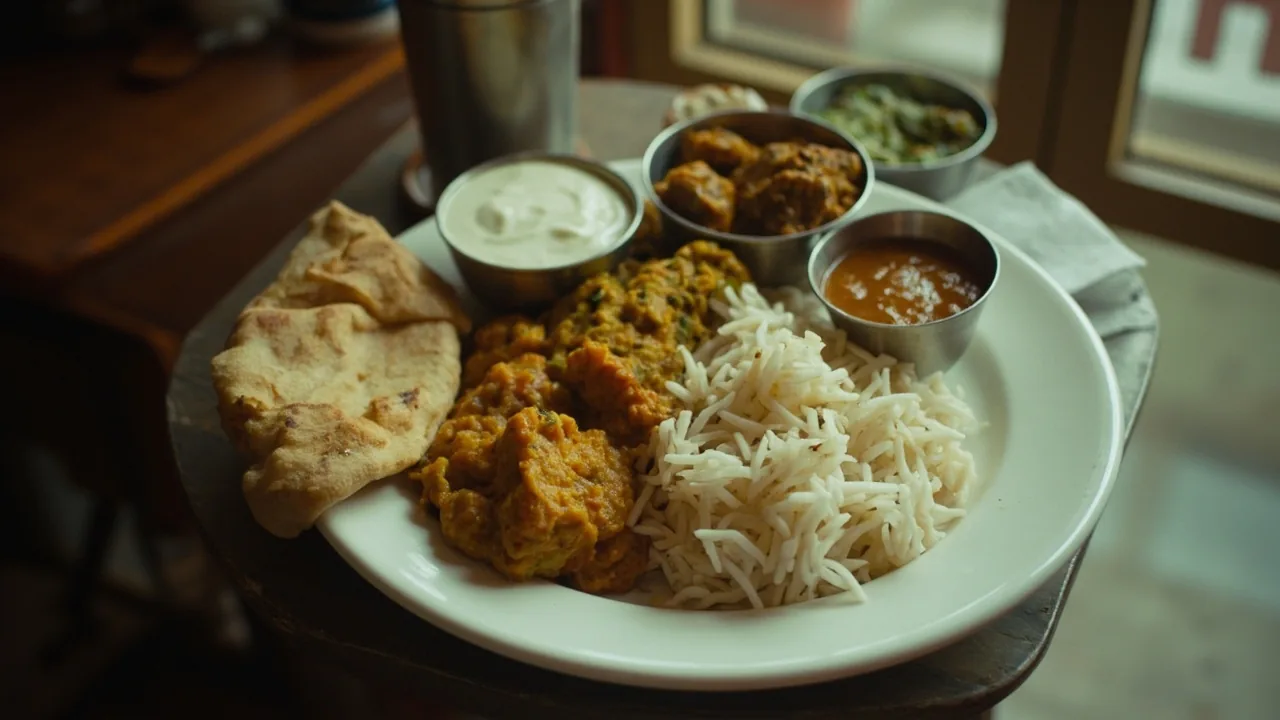
Good news for any Indian landing in Phnom Penh or Siem Reap: you do not have to cook in a hostel kitchen to get a proper thali. For related planning, see our guide on Sea Backpacking Hub.
The catch: most Cambodian street food is not vegetarian by default. Fish sauce (tuk trei) and oyster sauce appear in almost every stir-fry and most soups, and Khmer cooks do not always understand “vegetarian” the way we do. Ordering “no meat” can still leave you with a dish cooked in chicken broth or topped with dried shrimp. I’ll show you the phrase to use, the dishes that are safe to default-order, and the restaurants where you can skip the cross-language headache entirely.
Quick Answers
| What | Answer | Price (INR) |
|---|---|---|
| Can you find Indian food in Cambodia? | Yes, mostly in Phnom Penh (BKK1 area) and Siem Reap. 6+ dedicated Indian restaurants, both North and South Indian. | ₹482-₹1,156 (~5-12 USD) per meal |
| What does a vegetarian thali cost in Phnom Penh? | Around ₹674-₹963 (~7-10 USD) for a full plate with dal, sabzi, roti, rice. | ₹674-₹963 (~7-10 USD) |
| Best area for Indian food in Phnom Penh? | BKK1 (Boeung Keng Kang 1), roughly Street 51, 57, and 278. Walking distance between most options. | Walkable between 5–6 spots |
| Is South Indian food available? | Yes. Masala dosa, idli, vada pav, and sambar are served at a few dedicated spots. | ₹482-₹771 (~5-8 USD) |
| Average cost of an Indian meal in Siem Reap? | Slightly higher than Phnom Penh due to tourist-area rent. Expect ₹771-₹1,156 (~8-12 USD). | ₹771-₹1,156 (~8-12 USD) |
The Local Culinary Landscape
Khmer food is rice-based, fish-sauce heavy, and rarely vegetarian by accident. The national dish amok is a fish curry in coconut milk. Lok lak is stir-fried beef in a tangy sauce. Kuy teav (the breakfast noodle soup) almost always has pork or beef and a fish-based broth. Even the “vegetable” soups at small family restaurants routinely start with a chicken-stock base, and oyster sauce shows up in stir-fried morning glory and water spinach dishes without being on the menu.
Cambodians classify food differently from how we do. It is common to be told a Khmer dish has “no meat” while dried shrimp sits on top as a garnish. The word “vegetarian” (sru pruk jark) translates but doesn’t fully land. When you eat local, you will want to specify three things: no fish sauce, no oyster sauce, no shrimp paste (the last is kapi, used in many dips and salad dressings).
For a roundup of what local Cambodian dishes look like beyond just curries and noodle soups, the street food angle including edible insects is worth a glance, especially if you are the adventurous type.
Where this matters most: if you have spent five days eating only safe Khmer food and your gut is starting to crave a hot chapati with sabzi, Cambodia is well set up for that fix. Indian restaurants are clustered enough that you won’t burn half a day in tuk-tuks getting to one. The trade is the price. A ₹289 (~3 USD) bowl of noodles becomes a ₹674 (~7 USD) thali. But for vegetarians, that thali is a near-guaranteed meal, versus the 50/50 gamble of trusting a Khmer restaurant to honour “no meat.”
Key Phrases to Order Safely at Khmer Restaurants
If you eat at local spots at all, learn these. They save you more than you’d think.
| English | Meaning | Khmer | Pronunciation |
|---|---|---|---|
| I am vegetarian (no meat, no fish, no seafood) | Specify all three to be safe | Knyom sru pruk jark ot te, ot trei, ot sinu | Knyom s-roo prook jark ot tay, ot tray, ot see-noo |
| No fish sauce | Many Khmer dishes have it by default | Ot tuk trei | Ot took tray |
| No oyster sauce | Common in stir-fries | Ot tuk muk hing | Ot took mook hing |
| No egg | Useful for Jain-leaning vegetarians | Ot koun | Ot kohn |
| No onion, no garlic | Required for Jains | Ot khtum, ot katruet | Ot k-toom, ot ka-troot |
| Without chicken broth | Important for soup dishes | Ot kroeung srokunh | Ot kroo-eng sro-koon |
| Just vegetable, please | Fallback phrasing when the above stalls the conversation | Pruk jork kpoy hom | Prook jark kpoy hom |
These phrases get you through the local food scene 95% of the time when you don’t want Indian.
Best Indian Restaurants in Phnom Penh
Phnom Penh is the main hub for Indian food in Cambodia. All the listed spots below are sit-down restaurants with proper vegetarian sections, not takeaway joints.
Mekong Authentic Indian Restaurant sits in the BKK1 area and pulls a full North Indian menu: paneer dishes, dal makhani, tandoori, and a long list of biryanis. Travellers report it’s the dependable week-in, week-out spot when you’re tired of negotiating Khmer menus.
Royal Indian runs North and South Indian together, so masala dosa and garlic naan sit on the same menu. Reviewers call out the garlic naan specifically. It’s a calmer vibe, slightly pricier, but the menu range means a group of mixed-preference eaters can all settle here.
MDSK - Best Vegan Masala Dosa & Indian Street Food Phnom Penh is the spot for South Indian and strictly plant-based. Vada pav, masala dosa, and several other Mumbai-style snacks. It is a casual, minimalist set-up, so plan for it to be a sit-down dinner rather than a quick lunch.
Don’s Mumbai Chaat focuses on home-cooking and street food rather than restaurant curries. Travellers looking for the specific taste of home-made poha, sev puri, or bhel will recognize the menu.
Indian Royal Halal Food Restaurant-Phnom Penh Riverside is on the upscale side, with riverside seating and a Punjabi-Mughlai focus. Reviews put per-person cost noticeably higher than the casual BKK1 spots, but it’s the kind of place Indian travellers book when family is visiting or when they want a slightly nicer setting.
Indian Restaurant is a no-frills option. Some travellers use it when other BKK1 options are full. The menu is small and basic.
Best Indian Food in Siem Reap
Siem Reap has fewer Indian options than Phnom Penh and they cluster around the Old Market and Pub Street areas. Expect slightly higher prices because of the tourist-area rent, and a slight drop in menu variety, but the basics are all there: dal, sabzi, roti, biryani, masala dosa at one or two spots.
When you eat at the temples, do not expect Indian food on-site. Outside the main temple complex the options near the main gates skew toward Khmer stir-fry and tourist buffets. Plan a stop in town for lunch after sightseeing.
Local Khmer Food That’s Vegetarian-Friendly
A few local dishes are genuinely safe to default-order even if you say nothing beyond “no fish sauce”:
| Dish | What It Is | Default Vegetarian? | Note |
|---|---|---|---|
| Bai sach chrouk (no pork version) | Grilled meat on rice | Ask for “without pork” | Most places will accommodate |
| Num banh chok | Fermented rice noodles with curry sauce | Often vegetarian if no fish sauce | Specify “no trei” |
| Bay domien (Khmer spring rolls) | Rice-paper wraps with tofu/veg | Usually safe | Some have pork inside, ask |
| Kuy teav (vegetable broth version) | Rice noodle soup | Hard to make veg | Not worth negotiating, skip |
| Tapok with tofu | Stir-fried tofu with vegetables | Safe with no oyster sauce | Cleanest option at local spots |
For a broader take on Khmer food beyond the usual amok-and-lok-lak list, Cambodia street food beyond amok covers some of the more unusual options travellers stumble onto. And if you want the full rundown of where to eat vegetarian across the country, our vegetarian food in Cambodia guide breaks it down city by city.
What an Indian Meal Costs in Cambodia
A typical week of Indian food for one vegetarian traveller in Phnom Penh comes out to about ₹3,372 (~35 USD) to ₹5,780 (~60 USD). Most budget travellers tell me they eat Indian two or three times a week and Khmer the rest of the time, which lands roughly ₹4,817 (~50 USD) to ₹7,707 (~80 USD) per week including the local meals. Siem Reap pushes ₹963 (~10 USD) to ₹1,445 (~15 USD) higher because of tourist-area pricing. For a full breakdown of daily food costs across Cambodia, see our cost of food in Cambodia guide.
Travelling beyond Cambodia into the rest of Southeast Asia? Where to find Indian food across Laos’ 4000 Islands covers the gap further north.
Common Mistakes Indian Travellers Make in Cambodia
Assuming “vegetable fried rice” means safe. Most Khmer restaurants use oyster sauce or a fish-stock base. Specify no oyster sauce and no fish sauce explicitly. Otherwise you’ll get a “veg” dish that makes you sick by morning.
Skipping bottled water thinking the restaurant’s filtered water is fine. Cambodia has plenty of clean restaurant chains, but for street stalls, drink only bottled water, even for brushing teeth. Most travellers who’ve been burned say it’s almost always traced back to ice or water, not the cooked food.
Trusting “no MSG” by default. Khmer restaurants lean on MSG heavily in stir-fries and soups. If you react to MSG, say so before ordering. Most cooks will reduce it on request.
Not pre-checking if the Indian restaurant accepts cards. Cash is still king at the smaller Indian spots in BKK1. Travellers report surprise at the lack of card acceptance even in 2026. Bring USD or Khmer riel in cash, and check first if you don’t want to walk to an ATM.
Ordering Indian breakfast every day. It gets expensive fast. Travellers who figure this out mix in “veg Khmer breakfast” options (a few standbymenus do plain congee bobor with vegetables), which can be ₹145 (~1.50 USD) instead of ₹578 (~6 USD).
Getting Connected
Having data on your phone in Cambodia makes a real difference here. Most Indian food spots don’t rank high on Google Maps for Khmer-language searches, so opening Google Maps or Waze to find “Indian restaurant near me” in Phnom Penh pulls up the BKK1 cluster in seconds. A physical SIM from Smart or Cellcard works fine (around ₹482 (~5 USD) for 7 days at the airport). If you’d rather skip the airport counter, get Nomad eSIM before you fly, pay in INR, and land with data already on.
FAQ
Is Indian food in Cambodia vegetarian-friendly? Yes, most Indian restaurants in Phnom Penh and Siem Reap have dedicated vegetarian sections, and several (like MDSK) are fully plant-based. Vegan and Jain travellers find fewer options but they exist.
How much does a meal at an Indian restaurant in Cambodia cost? Around ₹482 (~5 USD) to ₹1,156 (~12 USD) per person for a thali or main with sides. North Indian restaurants tend to be slightly cheaper than South Indian or upscale Punjabi spots.
Which city has better Indian food, Phnom Penh or Siem Reap? Phnom Penh. More restaurants, longer menus, lower average prices, and the BKK1 area keeps most options in walking distance.
Can I find South Indian food in Cambodia? Yes, but limited. Royal Indian offers South Indian options, and MDSK is dedicated to South Indian street food including masala dosa and vada pav.
Is Indian food in Cambodia expensive for backpackers? Slightly. A ₹674 (~7 USD) Indian thali versus a ₹145 (~1.50 USD) noodle bowl adds up. Travellers who eat Indian for one meal a day and Khmer the rest land around $60/week for food total.
Do Indian restaurants in Cambodia take card or cash? Smaller BKK1 spots lean cash. Cards are more widely accepted at the upscale riverside restaurants. Bring USD or Khmer riel in cash as backup.
Is fish sauce in everything in Cambodia? Most stir-fries and soups, yes. Specify “no trei” (no fish sauce) at local spots, or eat at Indian restaurants where it’s not in the menu at all.
Subodh’s Take
Cambodia won’t out-spice India, but it doesn’t have to. After three or four days of Khmer fried noodles and fish-sauce soup, Indian food here feels like a small piece of home, and the Phnom Penh Indian scene is good enough that you never have to choose between budget and comfort. BKK1 is your base, Mekong Authentic is your dependable week-one stop, MDSK is your South Indian and vegan fix, and the riverside spots handle the family-is-visiting dinner. Don’t eat Indian for every meal or your wallet will hurt. Mix in vegetarian Khmer (with the phrases I gave you), drink bottled water, and stay flexible. You’ll do just fine.
