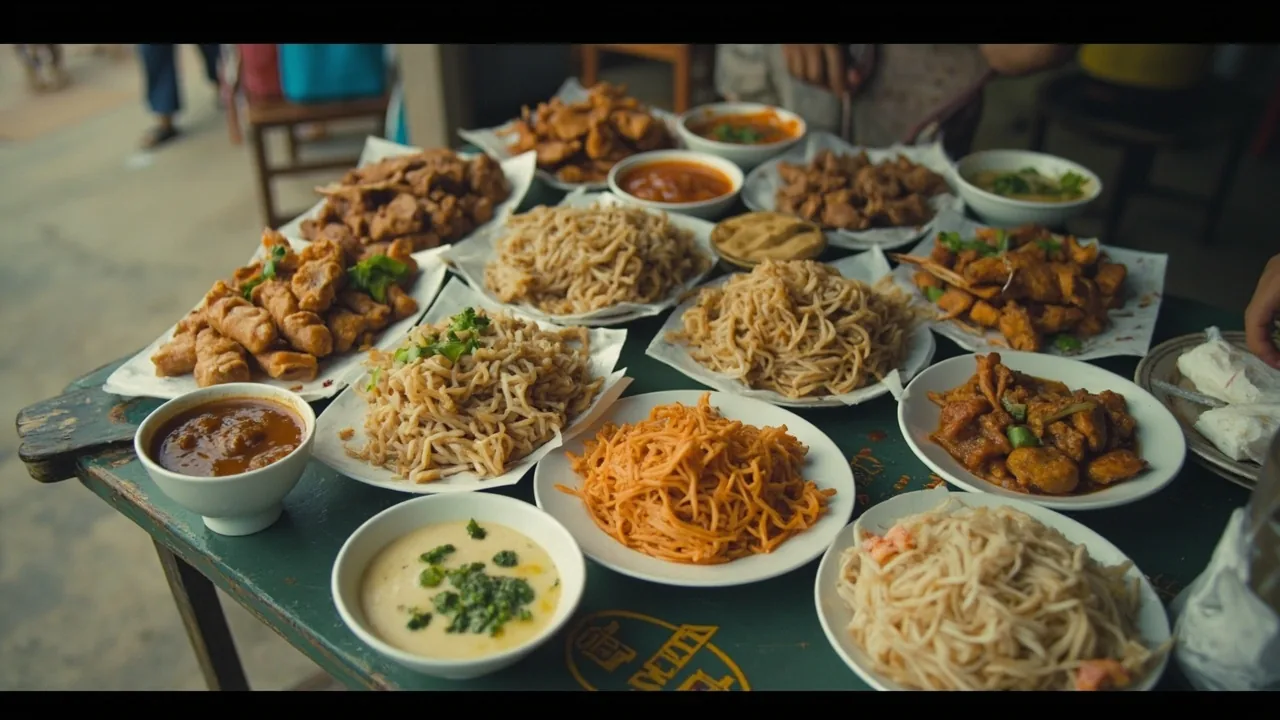
Indonesia Food Guide: Must-Try Dishes, Famous Foods & Vegetarian Options
Planning a trip to Indonesia? Our Southeast Asia backpacking hub covers the full multi-country route. This Indonesia food guide answers the one question most Indians Google before flying: Indonesia food to India, what transfers well, what to try on the ground, and how to eat safely as a vegetarian.
Indonesian cuisine and Indian cuisine share more DNA than you’d think: coconut, cardamom, coriander, turmeric, the slow love for a fried snack. The result is that going from Indonesia food to India in your kitchen is almost frictionless once you’ve tasted a few classics in person. This guide covers the top 5 foods in Indonesia, the breakfast staples, the dishes Indians already know without realizing they come from here, and the spots worth your rupiah.
Quick Answers
| What | Answer | Price (INR) |
|---|---|---|
| Cheapest street food | Nasi goreng or mie goreng from a warung | ₹125 (~25,000 IDR / ~$1.50) |
| Typical Indonesian breakfast | Nasi uduk + sambal + tempe or peanut fritters | ₹100 (~20,000 IDR / ~$1.25) |
| Famous dish common in India | Nasi goreng (Indonesian fried rice), Indonesia’s national dish | ₹125 (~25,000 IDR / ~$1.50) |
| Indonesian food Indians already eat | Tempe (originated in Java), sambal, rendang spice profile | ₹25 (~5,000 IDR / ~$0.30 for a snack portion) |
| Vegetarian fallback restaurant in Jakarta | Ganesha Ek Sanskriti Kemayoran | ~₹650 (~130,000 IDR / ~$8 per person) |
The Local Culinary Landscape
Indonesian food is built on a small set of foundations: rice (nasi), sambal (chilli paste), kecap manis (sweet soy sauce), coconut milk, and a spice paste called bumbu that blends garlic, shallots, ginger, turmeric, galangal, and candlenut. The cuisine varies sharply by island: Java leans sweet and mild (soto, gudeg), Sumatra goes heavy on chilli and Padang-style curries (rendang), Bali uses base genep spice mix on almost everything, and Sulawesi/Maluku leans into seafood and sago.
Hidden ingredients are the main vegetarian trap. Shrimp paste (terasi) goes into sambal and many vegetable side dishes. Fish sauce shows up in “vegetable” stir-fries. Chicken broth is the default stock for nearly every soup, including the famous soto. When you order sayur (vegetables), confirm the cooking liquid: say tanpa ayam, tanpa ikan, tanpa terasi.
Local attitude toward vegetarianism: Indonesians themselves don’t have a strong vegetarian tradition, but Jamur (mushroom) and tahu/tempe (tofu and fermented soybean cake) are everyday proteins, so most warungs know how to build a meatless plate. Pure veg restaurants (often called rumah makan sayur) exist in bigger cities. In tourist areas of Bali in particular, the Warung scene has adapted somewhat for visitors, and marked veg menus turn up in some spots.
Top 5 Foods in Indonesia (The Must-Try List)
These five cover roughly 80% of what an Indian traveler will eat here, and they map cleanly back to Indonesia food which is famous in India once you fly home.
1. Nasi Goreng (Indonesian Fried Rice)
The national dish. Pre-cooked rice fried with kecap manis, garlic, shallots, chilli, and a tiny shrimp-paste whisper (ask for tanpa terasi). Served with a fried egg on top, krupuk crackers, and a side of acar (pickled vegetables). Versions range from street warung plates to hotel-restaurant adaptations. At its best, it’s smoky, slightly sweet, deeply savoury, and faster than any Indian counterpart because the wok heat is volcanic.
Where to try it: Almost every warung in Java. In Jakarta, SEMAJA Menteng (rated 4.8) serves Indonesian comfort food in a cozy setting. For a guided tasting that strings several of these dishes together in one sitting, browse a food-tour marketplace. Check food tours on GetYourGuide.
2. Mie Goreng (Indonesian Fried Noodles)
The yellow-noodle cousin of nasi goreng, dressed in kecap manis and sambal. Often comes with chicken or seafood by default; ask for mie goreng tanpa daging, tanpa seafood. It’s the dish most Indian travelers under-order, then regret on day three when they’re sick of rice.
3. Rendang (Slow-Cooked Spicy Beef)
A West Sumatran dry curry: coconut milk, chilli, galangal, lemongrass, turmeric, and ginger cooked down for hours until the meat is dark, tender, and the sauce has been absorbed into the meat itself. Not vegetarian, but important to know because the spice profile (coconut + dry-roasted aromatics) is the closest cousin in Indonesian cooking to a South Indian varuval or a Kerala thoran flavour direction. Worth a single tasting portion even if you’re veg.
4. Gado-Gado (Indonesian Salad with Peanut Sauce)
The vegetarian hero of Indonesian cuisine. Blanched or steamed vegetables (bean sprouts, long beans, cabbage, spinach), hard-boiled egg, tofu, tempe, and potato, all drenched in a thick peanut sauce that’s sweet, spicy, and slightly sour. The default sauce has shrimp paste; order gado-gado tanpa terasi. The peanut sauce itself travels well, and you’ll find versions of it in Indian peanut chutneys via the long spice-trade overlap. In Yogyakarta, Kalluna Cafe & Restaurant (rated 4.7) blends Western and Indonesian flavours and is worth a detour for its gado-gado and truffle mushroom pasta.
5. Tempe (Fermented Soybean Cake)
Originally from Java and now globally known as a plant-based protein. Fried tempe (tempe goreng) is crispy outside, nutty inside, and shows up as a side or a sandwich filling. Tempe is one of the few foods that travels cleanly from Indonesia food to India in both directions, with Indonesia producing most of the world’s supply.
What Indonesian Breakfast Looks Like
Forget cereal or toast. A typical Indonesian breakfast is a plate of rice-based comfort food, often bought from a morning warung between 6 and 9 AM:
- Nasi uduk (fragrant coconut rice) with sambal, tempe orek (sweet soy tempe), and a thin omelette
- Bubur ayam (chicken-porridge, like a thicker, more savoury khichdi); ask for bubur tanpa ayam for a veg version, though it’s less common
- Lontong sayur (compressed rice cakes in coconut vegetable curry)
- Gorengan (banana, tempe, or sweet potato fritters) from a street cart, sold in paper cones for ₹27 (~5,000 IDR or ~$0.28) a piece
Vegetarian-friendly breakfast fallback: order nasi uduk + telur + tempe (coconut rice with egg and tempe), ask for sambal on the side. Coffee is its own subculture here, see kopi luwak ethics and GoFood tips for what to order and what to skip.
Key Phrases in Bahasa Indonesia
Print this table or screenshot it. These six lines save a vegetarian more trouble than any guide can.
| English | What it means | Local Script | Pronunciation |
|---|---|---|---|
| I am vegetarian | Saya vegetarian | Saya vegetarian | Sah-yah veh-geh-tah-ree-ahn |
| No meat | Tanpa daging | Tanpa daging | Tuhn-pah dah-geeng |
| No fish / seafood | Tanpa ikan / seafood | Tanpa ikan / seafood | Tuhn-pah ee-kahn |
| No shrimp paste (terasi) | Tanpa terasi | Tanpa terasi | Tuhn-pah teh-rah-see |
| No egg | Tanpa telur | Tanpa telur | Tuhn-pah teh-loor |
| No onion, no garlic (for Jains) | Tanpa bawang | Tanpa bawang | Tuhn-pah bah-wahng |
Safe Local Street Food Dishes for Vegetarians
These five are vegetarian or trivially customizable. Order them at any warung.
- Nasi goreng (tanpa terasi, tanpa telur if Jain) ~₹134 (~25,000 IDR or ~$1.39)
- Mie goreng (tanpa daging, tanpa seafood) ~₹107 (~20,000 IDR or ~$1.11)
- Gado-gado (tanpa terasi, ask for extra tofu) ~₹107 (~20,000 IDR or ~$1.11)
- Tahu isi (stuffed fried tofu with vegetables) ~₹54 (~10,000 IDR or ~$0.56) per piece
- Pisang goreng (fried banana fritters) ~₹54 (~10,000 IDR or ~$0.56) per piece
- Tempe goreng (fried tempe) ~₹54 (~10,000 IDR or ~$0.56) per piece
Recommended Vegetarian Restaurants
For Indian travelers who want a dal-chawal baseline or strict-veg certainty, these are the verified fallbacks. None of them require you to decode a Bahasa menu.
| Restaurant | City | Vibe | Price Range | Must-Try |
|---|---|---|---|---|
| Ganesha Ek Sanskriti Kemayoran | Jakarta | Casual North Indian | ₹536-₹1,340 (~100,000-250,000 IDR or ~$5.56-$13.89) per person | Paneer butter masala (veg) |
| Shahi Tadka | Jakarta | Tandoor + Indo-Chinese | Mid-range | Paneer tandoori |
| The Indiana Cuisine | Jakarta | Modern North Indian | Mid-range | Dal makhani |
| The Indian Flame | Jakarta | Punjabi family-style | Mid-range | Chole bhature |
| Ganesha Ek Sanskriti Menara Karya | Jakarta | Family-run | Mid-range | Thali |
| Ganesha Ek Sanskriti Batavia Cove PIK | Jakarta | Casual beachside | ~₹697 (~130,000 IDR or ~$7.23) per person | Paneer butter masala (veg) |
Jakarta has the densest concentration of named Indian restaurants. In Bali (Canggu, Ubud, Seminyak), the Indian-restaurant scene is thinner and more tourist-priced; check shortlist data for your specific Bali neighborhood before booking.
Food Safety & Hygiene
- Bottled water only. A 1.5 L bottle is ~₹27 (~5,000 IDR or ~$0.28) at any minimarket (Indomaret, Alfamart). Don’t trust refill jugs.
- Eat at busy warungs. High turnover = fresh food. An empty stall at noon is a warning, not a deal.
- Avoid raw vegetables you didn’t peel yourself. Salads and garnishes can be washed in tap water.
- Skip the ice from unknown sources. Hotel and restaurant ice is usually fine (tube-shaped, hollow); street-cart ice is hit or miss.
- Carry ORS. Indonesian heat + unfamiliar spice levels can dehydrate you faster than you expect. Available at any Apotek (pharmacy) for ~₹54 (~10,000 IDR or ~$0.56).
- Sambal is your friend. Capsaicin kills a lot of what would otherwise bother your stomach.
For deeper safety context (earthquakes, transport scams, regional advisories), read the Indonesia natural disasters guide, check the Indian government’s MEA travel advisory page on mea.gov.in before departure, and see our Indonesia e-Visa guide for entry requirements.
Getting Connected
You’ll want Google Maps loaded with Bahasa translations, Grab or Gojek for delivery when a warung closes early, and a translation app for reading warteg menus. Pick up a local SIM (Telkomsel is most reliable, around ₹268-₹536 (~50,000-100,000 IDR or ~$2.78-$5.56) for a starter pack at the airport), or skip the airport queue and use an Get Nomad eSIM that activates before you land.
Common Food Mistakes Indians Make
- Assuming “vegetable soup” is safe. Indonesian sayur asem or sayur lodeh often has shrimp paste or dried shrimp. Always ask about the broth.
- Ordering “veg” without specifying no fish sauce. The default assumption in many warungs is “vegetarian except for fish sauce and shrimp paste.” Specify all three: tanpa daging, tanpa ikan, tanpa terasi.
- Skipping tempe because it looks “bland.” Tempe is one of the world’s most underrated plant proteins, with a meaty texture and neutral taste that absorbs sambal beautifully.
- Drinking tap water “just this once.” Indonesian tap water isn’t potable. One slip can wreck three days. For bottled-water costs and ATM access, see Indonesia ATM charges for Indian travelers.
- Not telling servers about Jain restrictions. “No onion, no garlic” is unusual in Indonesian cooking, so without that line, your “veg” dish may still carry bawang as a default base.
FAQ
Which Indonesian food is most famous in India?
Nasi goreng is the single most recognized Indonesian dish in India, followed by rendang (more among non-veg eaters) and gado-gado among vegetarians. The peanut-sauce logic and coconut-milk base show up in many South and coastal Indian dishes through historical spice-trade overlap.
Is Indonesian food spicy?
Usually medium-spicy by default, with sambal served on the side so you control the heat. If you’re spice-shy, say jangan pedas (“don’t make it spicy”). If you want it hotter, ask for tambah sambal.
Can vegetarians survive in Indonesia on warung food alone?
Yes, but you’ll be doing some translating. Gado-gado, nasi goreng (without terasi), tempe goreng, tahu isi, and mie goreng (no meat) form a complete rotation. For strict-veg days, Jakarta has the strongest Indian-restaurant fallback (see table above).
Is street food safe in Bali?
Bali’s street food is generally safe if you follow the busy-warung rule. Canggu and Ubud have multiple veg-friendly cafes; see our Bali vegetarian food guide for specific spots.
What does a typical Indonesian breakfast cost?
Street breakfast (nasi uduk + tempe + sambal + tea) is around ₹107-₹161 (~20,000-30,000 IDR or ~$1.11-$1.67). A cafe breakfast (eggs, coffee, toast) in tourist areas runs ₹268-₹536 (~50,000-100,000 IDR or ~$2.78-$5.56).
Do I need to tip?
No. Tip jars exist in tourist-area cafes (around ₹27-₹54 (~5,000-10,000 IDR or ~$0.28-$0.56) if service was good), but warung meals are tip-free. Round-up tipping on Gojek is appreciated but not required.
Subodh’s Take
The thing most Indians don’t expect about Indonesian food is how familiar it tastes. Sambal is just a different dialect of thecha. Coconut rice is a cousin of South Indian tiffin. Peanut sauce is a thicker, sweeter cousin of shenga chutney. Once you stop hunting for “exotic” and start treating it as a long-lost relative of your own thali, Indonesia becomes one of the easiest Southeast Asian countries to eat well in, vegetarian or not.
