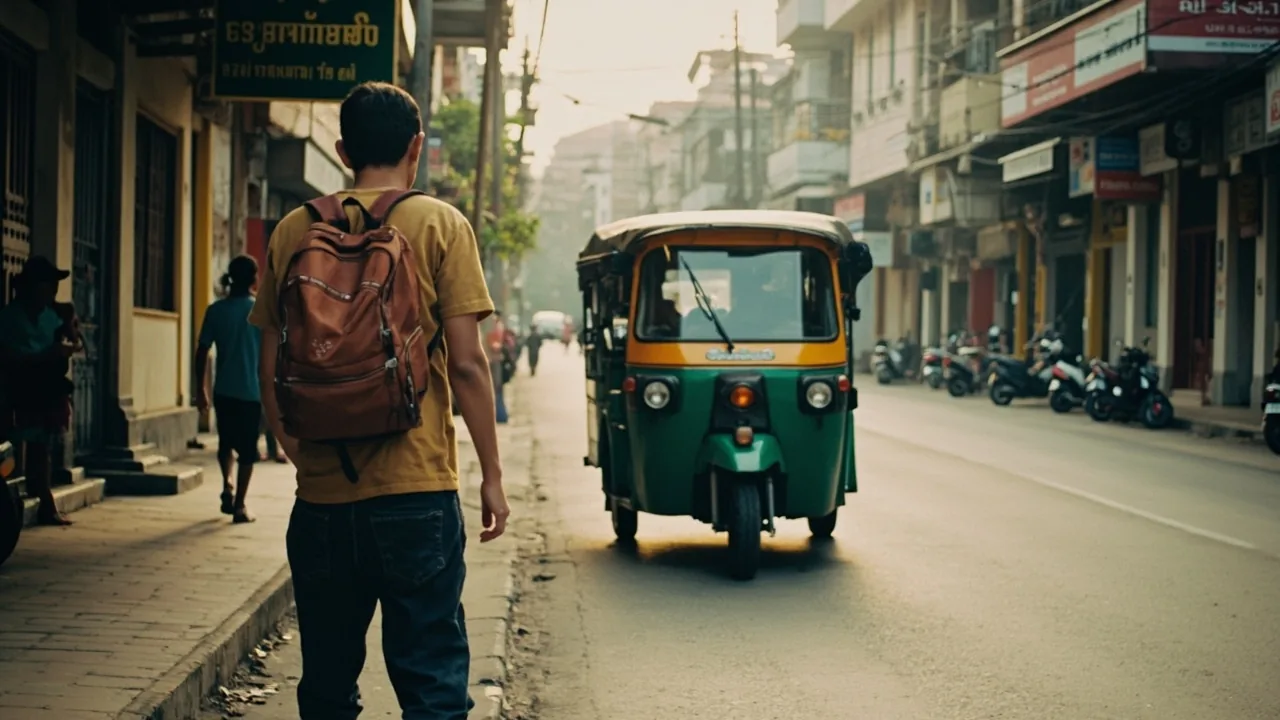
Is Cambodia Safe for Indian Tourists Right Now? (2026 Safety & Scam Guide)
The straight answer for 2026: yes, Cambodia is generally safe for Indian tourists, but the scams here are sharper and more targeted at Indians than in Thailand or Vietnam. The risk isn’t violence, it’s being played at the visa counter, at the ATM, in a tuk-tuk, or at a “friendly local” bar near Pub Street.
I want to start with the cheat-sheet table, then get into the city-by-city reality.
Quick Answers
| What | Answer |
|---|---|
| Is Cambodia safe for Indian tourists right now? | Yes, for normal tourism in Phnom Penh, Siem Reap, Sihanoukville, Koh Rong |
| Biggest risk for Indians? | Visa scams, bag-snatching on motorbikes, tuk-tuk overcharges, Pub Street drink scams |
| Solo female travel? | Fine with standard precautions; avoid dark alleys and drink-spiking situations near Pub Street |
| Areas to skip in 2026? | Some Sihanoukville casino zones (Chinese-run); rural border zones on the Thai border |
| Tap water safe? | No. Always bottled. Ice in tourist-area drinks is usually safe |
| Police helpful if robbed? | Hit or miss. Get a written report for insurance either way |
| Emergency number? | 117 (police), 119 (ambulance). Tourist Police: 012 942 884 |
The Scams That Hit Indians in Cambodia
These aren’t theoretical. Travellers on recent trips have reported each one. The pattern is consistent: Cambodia’s scams target newcomers who don’t know local prices, plus anyone who looks like easy money (foreigners with phones out, families with kids, solo men in Pub Street bars).
The “e-visa agent” scam at the airport. You land at Phnom Penh or Siem Reap, walk towards passport control, and a man in a fake vest with a laminated sign approaches saying “Indian e-visa problem, you need to pay extra.” There is no problem. Your e-visa was $36 USD (₹3,464 at 1 USD = ₹96.3294), the official fee, applied at evisa.gov.kh. Pay nothing. Walk to the real counter. If your e-visa printed correctly, you’re done in 5 minutes.
The tuk-tuk “your hotel is closed” scam. Driver says the guesthouse burned down, flooded, or “has a special event today, I take you to a better place.” This is a referral commission to a partner hotel. Insist on going to your booked address. If the driver refuses, get out and take another one. Don’t show the booking on your phone, just say the name and walk.
Pub Street drink and bar scams. Siem Reap’s Pub Street has a long-running pattern: a friendly local (often Cambodian or Western) invites solo travellers, especially solo men, for “one drink,” then a bill arrives for ₹3,861 (~40 USD) to ₹7,722 (~80 USD). Tactics include “closing-time” specials, free shots laced with something, or a drinks menu that wasn’t shown until after. The fix is simple: never drink at a place a stranger walked you into. Pick the bar, see the prices, order first.
Bag-and-phone snatching from passing motorbikes. Phnom Penh has had a steady stream of these, particularly around riverside areas, the Central Market zone, and BKK1 at night. Two riders, one grabs, the other drives. Keep your phone in a zipped inner pocket, not in your back jeans pocket. Cross-body bag worn on the street-side shoulder is the safest carry.
Counterfeit notes and “small change” tricks. You hand over a ₹1,931 (~20 USD) note (₹1,926 (~$19.95)), you get back torn or fake ₹24 (~1,000 KHR or ~$0.25) notes (₹24 (~$0.25)). Always count your change. Refuse notes with torn edges, marks, or strange texture. The same trick happens with USD bills: USD ₹9,653 (~100 USD) notes (₹9,633 (~$99.79)) are most often counterfeited, so many small shops refuse them or short-change you. Carry small USD $1s and $5s (₹96 (~$0.99) and ₹482 (~$4.99)).
The “temple donation” scam near Angkor. A monk outside a smaller temple asks for a donation in return for a “blessing,” then hands you a small item and demands payment in return. Real monks at official temples never solicit. Walk past.
Poipet border crossing. If you’re entering Cambodia from Thailand via the Aranyaprathet-Poipet land border (common on the Bangkok to Siem Reap bus route), this is the single highest-risk entry point. Aggressive touts, fake “visa on arrival” agents who charge ₹965 (~10 USD) to ₹1,931 (~20 USD) above the official ₹2,896 (~30 USD) fee, and a chaotic scene. The official counter is at the far end; ignore everyone in between. Pay only at the official counter, get your receipt. The full fee breakdown is in our Cambodia visa fee guide.
Subodh’s Pro Tip: Carry your visa fee in exact small USD bills (₹2,896 (~30 USD)₹4,344 (~45 USD) for extension). Cambodia officials occasionally “not have change” for a ₹4,826 (~50 USD) note (₹4,816 (~$49.89)), and that small moment is where overcharging slips in.
City-by-City Safety Reality
Different cities have different risk profiles. Don’t treat Cambodia as one country for safety purposes.
Phnom Penh. Generally fine for tourism, but pickpocketing is the main risk, especially around the Central Market, Riverside, and the Russian Market. Tuk-tuk drivers here are more aggressive than in Bangkok. The BKK1 district (where HoubHoub Cambodian Restaurant sits, a solid local spot) is the safest base for tourists, with embassies, hospitals, and Indian restaurants within walking distance. Nighttime walking along the riverfront is OK in groups, less comfortable solo. Avoid any political gatherings near the Royal Palace.
Siem Reap. Lower crime than Phnom Penh overall, but Pub Street is the centre of tourist scams. The temple complex at Angkor is safe during the day. Tuk-tuk drivers here are friendlier but use the “your hotel is closed” trick. Book your temple ticket only at the official Apsara Authority counter, never through a “guide” who finds you in town. For Indian food when you’ve had enough of local Khmer fare, ask your guesthouse for the nearest Indian restaurant in the centre of town for a solid dal-chawal fix.
Sihanoukville. The beach town has changed a lot since Chinese casino investment. Some zones feel unsafe at night, particularly around the casino districts and the port area. Most backpackers now base themselves on Otres Beach instead of the main Serendipity Beach. Watch for petty theft at the bus station. Avoid late-night solo walks on poorly lit roads.
Koh Rong and Koh Rong Samloem. safe, chill. Snorkel, swim, walk the beach. Petty theft in hostels is the main issue, use the lockers. There is no real police presence, so be sensible. The Bangkok to Siem Reap bus guide covers onward transport.
Battambang and the countryside. Rural Cambodia is safe but slow. Few English signs, fewer English speakers. If you have a scooter, watch for unmarked roads and aggressive dogs at village edges.
Money Safety: Why Your Card and ATM Choice Matters
Money is where most Indian travellers in Cambodia get hit, not with violence but with fees and exchange traps. This section covers the practical setup that keeps your wallet safe, beyond just safety in the streets.
Use a Zero-Markup Card for ATM Withdrawals
Cambodia runs on a USD-plus-KHR dual-currency system. Almost every ATM dispenses USD, not riel. You need a card that doesn’t sting you twice: once at the ATM, once on FX. The detailed breakdown of which Indian banks work at Cambodian ATMs is in our Indian bank ATM in Cambodia fees guide, but the short version: Fi and Niyo debit cards are the practical winner for Indian backpackers in 2026. Here’s the comparison:
| Card | ATM Fee in Cambodia | FX Markup | Daily Limit | Verdict |
|---|---|---|---|---|
| Fi Debit | ₹145 (~1.50 USD) flat (₹144 (~$1.49)) | 0% | ₹482,644 (~5,000 USD) | Best for cash-heavy countries |
| Niyo S20 | ₹97 (~1 USD) flat (₹96 (~$0.99)) | 0% | ₹289,587 (~3,000 USD) | Best if you want lower per-withdrawal fees |
| HDFC Forex Card | 2% to 3.5% markup | Included | ₹241,322 (~2,500 USD) | Fine but more expensive overall |
| Cash from India | n/a | 5% to 8% loss at airport | n/a | Worst option in 2026 |
Always decline Dynamic Currency Conversion (DCC) at the ATM. If the machine asks “convert to INR?” choose NO, always choose to be charged in USD. Withdrawing ₹19,306 (~200 USD) on a Fi card costs about ₹144 (~$1.49) in ATM fees plus 0% markup, total ₹144 (~$1.49). The same withdrawal on DCC can charge ₹500 (~$5.18) to ₹700 (~$7.25) for the same cash.
Watch the USD Bill Condition
Counterfeit USD notes circulate heavily in Cambodia. Many smaller shops, tuk-tuk drivers, and market vendors won’t accept USD ₹9,653 (~100 USD) bills (₹9,633 (~$99.79)) because they’re so often faked. Use $1s, $5s, and $10s (₹96 (~$0.99)). Inspect any note you receive as change.
For larger exchanges (above ₹9,653 (~100 USD)), use a proper money changer or a bank, not a market stall. The currency exchange at Phnom Penh airport guide covers the airport rates and the better downtown options.
Transport Safety
Road accidents are a bigger risk than crime in Cambodia. Traffic is chaotic, helmets are optional for locals and tourists both.
- Tuk-tuks: Negotiate the price BEFORE getting in. Phnom Penh to Riverside from the airport should be around ₹676 (~7 USD) to ₹965 (~10 USD). Ask your hotel what the going rate is. Use PassApp or Grab for fixed-price rides where they work.
- Buses: Virak Buntham and Mekong Express are the reliable long-distance companies. The Ho Chi Minh City to Phnom Penh bus guide covers the cross-border route.
- Scooters: If you rent one, photograph every scratch before paying. Wear a helmet. Don’t ride at night.
- Taxis: Avoid unmarked taxis at the airport. Use the airport taxi desk or pre-book with your hotel.
- Boats: The ferry to Koh Rong is generally safe. Check our ferry Sihanoukville to Koh Rong price guide for the operators worth using.
Health and Medical Safety
Cambodia’s medical system outside Phnom Penh is thin. Most serious cases get evacuated to Bangkok or Singapore.
- Tap water is not safe. Brush teeth with bottled water. Ice in tourist-area drinks is usually OK.
- Pharmacies (Pharmacie de Garde is the French chain) sell most basics without prescription. Antibiotics are loose. Pharmacists can advise in Phnom Penh.
- Hospital options in Phnom Penh: Royal Phnom Penh Hospital (international standard, expensive by local standards, accepts travel insurance).
- Travel insurance is non-negotiable. Get SafetyWing travel insurance, covers Indian travelers from ~$62/month (~₹5,900). Includes COVID, trip interruption, and medical evacuation across Southeast Asia.
For vaccinations, Hepatitis A and Typhoid are commonly recommended by Indian doctors for Southeast Asia. Check your last booster dates before flying.
Visa Safety and Avoid Overstay
The visa rules themselves are straightforward, but overstaying is a serious issue in Cambodia. The fine structure is detailed in our Cambodia overstay penalty guide, but the headline: overstay fines are ₹965 (~10 USD) per day (₹963 (~$9.98)) and can escalate fast.
For 30 days, your options are visa on arrival (₹2,896 (~30 USD)) at the airport counter, or e-visa (₹3,475 (~36 USD)) applied online through evisa.gov.kh. Photo requirements are strict: 4x6 cm, white background. The visa is single-entry.
If you entered by land (Poipet, Bavet, O Smach), check the Cambodia e-visa entry points guide to confirm your port accepts e-visas. Not all land crossings accept them.
Getting Connected
You need data working from the moment you land: to check bank alerts, to verify your booking address before getting in a tuk-tuk, and to call a ride-hail app if tuk-tuk drivers give you trouble. SIM cards at the airport cost around ₹483 (~5 USD) for a basic tourist SIM with data from Cellcard or Smart. The airports in Phnom Penh and Siem Reap both have official booths after immigration, ignore the touts before them.
Get Nomad eSIM is a solid eSIM option that activates before you fly, no physical SIM swap needed, data-only plans starting at lower tiers.
Where to Skip in 2026
Most of Cambodia is fine. A few areas I’d specifically avoid:
- Sihanoukville casino district. The Chinese-invested casinos and the surrounding blocks have a different vibe from the rest of Cambodia. Petty theft, aggressive touts, and an undercurrent of organised crime around gambling debts. Stick to Otres Beach or skip Sihanoukville entirely.
- Thai border rural zones. Most of the border is fine for overland crossings, but rural areas away from the official Poipet crossing have seen periodic tension. Stick to official crossings during daylight.
- Phnom Penh dark alleys after midnight. Riverside nightlife is fine in groups; back alleys in BKK1 or near the riverfront at 2 AM are not.
For specific current advisories before you fly, check the Indian Ministry of External Affairs advisory page on mea.gov.in. Generic risk categories (border tensions, road safety, petty theft) are what to look for, not specific incident reports.
FAQ
Is Cambodia safe for Indian tourists right now in 2026? Yes, for normal tourism. The risks are scams and bag-snatching, not violence. The main safe paths are Phnom Penh, Siem Reap, Sihanoukville (Otres Beach), Koh Rong, and Battambang.
Is Cambodia safe for Indian solo female travellers? Yes, with standard precautions. The scams at Pub Street in Siem Reap are the main concern. Dress modestly at temples. Avoid accepting drinks from strangers in nightlife areas.
Is Cambodia safe for Indian families with kids? Yes, family-friendly. The temples, the circus, and the beach islands all work well. Watch tuk-tuk safety with small kids; bring your own car seat if needed.
What should Indian tourists be careful of in Cambodia? Scams at visa counters, tuk-tuk overcharging, Pub Street drink scams, USD counterfeit notes, and bag-snatching from motorbikes in Phnom Penh. Drink only sealed bottled water.
Is Cambodia safe at night? In tourist zones, yes. Avoid dark alleys in Phnom Penh after midnight and be wary of Pub Street bar scams in Siem Reap. Stick to lit streets and ride-hail apps.
Should I worry about political unrest in Cambodia? Tensions can flare around elections, but these rarely affect tourists directly. Avoid any political gatherings or protests if you see them. The MEA advisory page is the best live source.
What happens if my Indian bank card gets skimmed at a Cambodian ATM? Call your bank immediately using the international collect-call number on the back of the card. Most Indian banks can block a card from abroad and courier a replacement to your hotel within 3 to 5 business days. Always have a backup card stored separately.
Subodh’s Take
Here’s what I’d tell a friend flying to Cambodia next month: the country is safe enough that you should go, but the scams are sharper than Thailand or Vietnam, and they specifically target people who look like easy marks, which includes anyone fresh off the plane who doesn’t know local prices. Carry small USD, use a Fi or Niyo card, ignore every “agent” who approaches you at the airport or bus station, and don’t accept drinks from strangers in Pub Street. Do those four things and you’ll have a great trip. Cambodia has some of the best food, friendliest people, and most dramatic history in Southeast Asia. Don’t let the scams scare you off, just don’t be the tourist who falls for them.
- Subodh Where to Stay: Most Indian backpackers base themselves in BKK1 (Phnom Penh) or near Pub Street (Siem Reap). BKK1 has the embassies, hospitals, and Indian restaurants within walking distance; Pub Street puts you in walking distance of the night markets, restaurants, and tuk-tuk drivers for Angkor. Book the first 2 nights in advance and walk-in after.
