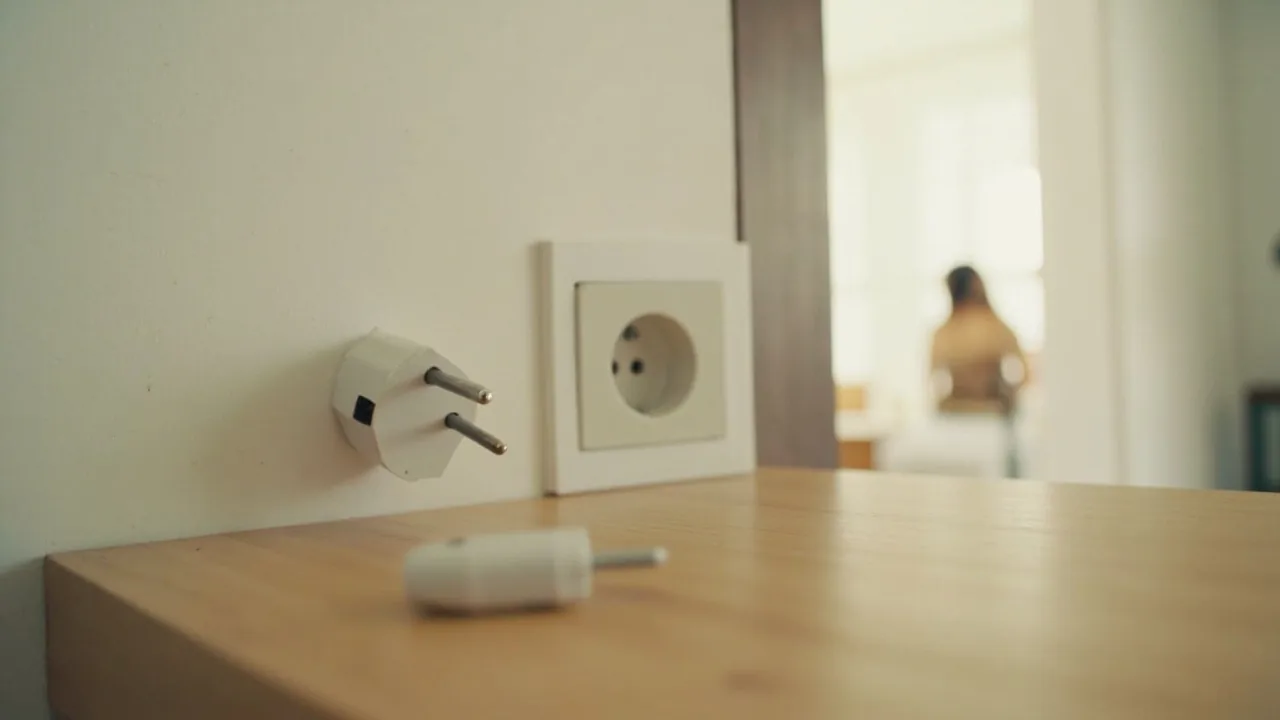
Is EU Plug the Same as Philippines Plug? Voltage & Socket Truth for Indians
If you’re packing a bag for Manila, Cebu, or Boracay and wondering “is EU plug same as Philippines,” here’s the short version: the plug shape usually fits, but the question is rarely about the plug alone. It’s about what the plug is feeding, because the Philippines runs on 220V at 60Hz, and a lot of your Indian-bought gear is built for 220V at 50Hz. For related planning, see our guide on Sea Backpacking Hub.
The plug-vs-socket confusion trips up almost every first-time visitor from Europe and India. Let’s clear it up properly so you don’t fry a hairdryer at 11 PM in a Poblacion hostel. You may also find Philippines Sim Card Number Format What 09xx Numbers Mean for Indian Travelers useful for this trip.
Quick Answers
| What | Answer | Price (INR) |
|---|---|---|
| Are EU and Philippines plugs the same? | Partially. EU Type C fits Philippines Type A/B/C, but earthing (Type E/F) is unsupported. | No cost |
| What plug type does the Philippines use? | Type A (2-pin, ungrounded), Type B (3-pin, grounded), Type C (2-pin, ungrounded). Type A and B are NEMA-style, the same as the US/Japan 2-flat and 3-flat. | No cost |
| Do I need a voltage converter for the Philippines? | Only for single-voltage 110V devices. Modern Indian phone/laptop chargers are 100-240V, so no. | Adapter ₹450 (~$4.67) |
| Is Philippines frequency 60Hz or 50Hz? | 60Hz, same as the US and Japan. This is different from India’s 50Hz grid. | No cost |
| Will my Indian-bought Indian appliance work? | Yes for most modern multi-voltage chargers. No for old timers/motors rated only 220V 50Hz. | New universal adapter ~₹800 (~$8.30) |
The price column above is for the adapter you’d buy once for the whole trip. Skip any “voltage converter” heavier than 200g for a charger brick, your phone or laptop won’t need it. See also: Philippines Sim Card Expiration How Long Does It Last and How to Extend It.
Plug Types Explained: EU Type C vs. Philippines Type A, B, and C
The Philippines doesn’t have one socket type. It has three that matter to a traveller: For related planning, see our guide on Philippines Sim Card Registration for Tourists Tm Globe Smart Guide With the Sim Registration Act Rules.
- Type A: two flat parallel pins (the American/Japanese standard)
- Type B: two flat pins plus a round grounding pin below (US 3-prong)
- Type C: two round pins, 4.0 to 4.8 mm diameter, ungrounded (the classic Europlug)
Most wall outlets in Philippine hotels, malls, and older buildings are a hybrid: the same wall plate has slots that accept both the two flat pins (Type A) and the two round pins (Type C). You can plug either in without an adapter in a pinch. power-plugs-sockets.com and the IEC 60083 standard both confirm this multi-standard layout.
The EU plug most Indians and Europeans carry is Type C (the small round two-pin “Europlug”) and Type E/F (the bulkier Schuko with two clips on the side for earthing). Here’s the catch:
- Type C into Philippine socket: fits, physically. The round pins slide into the round holes.
- Type E/F (Schuko) into Philippine socket: won’t fit. The Schuko has a female earth socket on the plug that needs a male earth pin in the wall, which Philippine outlets don’t have. You’ll have to use a Type C “Europlug” head on your device, or plug the device’s Schuko cord into a Type C adaptor, or just use a separate grounded adapter.
This is why travellers report the plug “feels loose.” A Type C plug has no earth, so it sits in the socket with some side-to-side wobble. That’s normal for a 2-pin ungrounded fit. Don’t tape it down, that creates a fire hazard.
Subodh’s Pro Tip: If you’re staying in a high-end Manila hotel or a new Airbnb in BGC or Cebu IT Park, you’ll often find a 3-prong universal outlet built into the wall that accepts UK, US, EU, and AU plugs. If you want 100% certainty, buy a small universal adapter before you leave India. ₹450 (~$4.67) to ₹800 (~$8.30) covers it.
The Voltage and Frequency Question (the Part Most Articles Skip)
This is where the question gets real. The Philippines runs on 220V at 60Hz. Most of Europe runs on 220-240V at 50Hz. India runs on 230V at 50Hz. The voltage numbers are close enough that a modern charger doesn’t care. The frequency difference is the real risk.
Why 60Hz matters more than people think
Heating elements (hairdryers, kettles, clothes irons, hot glue guns) and simple AC motors (older ceiling fans, some shavers, basic blenders) have rotational speeds tied to frequency. Run a 50Hz motor on 60Hz and it spins 20% faster. For a fan, that’s fine. For an espresso machine pump or a record player turntable, it isn’t.
Electronic devices with switching power supplies (phone chargers, laptop bricks, camera chargers, e-reader bricks) all use 100-240V at 50/60Hz now. They don’t care what the wall gives them. Multi-voltage is the default in India and the EU post-2010.
What this means for your bag from India
| Device type | Works in PH on 220V/60Hz? | Notes |
|---|---|---|
| Phone charger (Xiaomi, Realme, OnePlus, Samsung) | Yes | All 100-240V, 50/60Hz |
| Laptop brick (HP, Lenovo, Dell, MacBook) | Yes | All modern ones auto-switch |
| Hairdryer / straightener | Risky | Most Indian ones are 220V 50Hz. Check the label, don’t guess |
| Electric shaver (older Philips) | Maybe | Most new ones are 100-240V auto-switching |
| Air fryer / instant pot bought in India | Yes at voltage, frequency matters for timer | Timer/temperature calibration will be off |
| Indian heavy appliances (mixer grinder, iron) | Voltage yes, frequency issues | Use only for short trips, expect shorter lifespan |
| EU-bought Apple or USB-C charger | Yes | Confirmed 100-240V, 50/60Hz |
The single thing I’d not bring from India: a hairdryer that’s single-voltage 220V 50Hz. Either buy one rated 100-240V, or accept the burns. Same for any iron, kettle, or heating appliance.
This is also why a cheap, all-purpose “voltage converter” sold at Indian electronics shops is mostly a scam. They typically step down/up voltage (useless if your device is already rated 220V),
Adapters, Converters, and What to Buy
Let’s clear the mess.
Adapter (what you need): a small plastic pass-through that changes the plug shape. No electronics inside, no voltage transformation. This is what 99% of Indian travellers need. Universal ones (slightly bulky) handle Type A, B, C, G, I. Carry two if you’re a couple, three if you’re travelling with friends.
Voltage converter (heavy transformer, 200g to 2kg): steps 220V down to 110V or up from 110V to 220V. Only needed for single-voltage US electronics (like a 110V-only Nintendo Switch dock or hair clippers). Indian and EU buyers almost never need this.
Frequency converter (rare, $200+): tackles the 50Hz vs 60Hz problem. Only relevant for industrial equipment, medical devices, or high-end audio gear. Skip unless you’re a DJ.
For Indian travellers, the realistic kit is:
- 1 x universal adapter (₹450 (~$4.67) to ₹800 (~$8.30), ~PHP 280 to ~PHP 500 at the airport, slightly cheaper on Shopee PH)
- 1 x backup cheap Type C adapter (₹150 (~$1.56), ~PHP 95, useful for dorms with one outlet)
- A multi-USB wall charger, since some Philippine hotels still have a single outlet per room
That’s it. No transformer, no converter, no 800g brick in your 40-litre pack.
What’s on the Wall in Actual Philippine Hotels
Manila (mid-range hotels, Airbnb in BGC): A mix of universal multi-standard wall plates (the best kind, accept everything) and older two-flat or two-round outlets. Older Poblacion hostels often have only one working outlet per room.
Cebu (hostels in Fuente, IT Park hotels): Pretty good. Most new hotels have universal outlets at the desk.
Boracay (D’Mall area, beachfront hotels): Older infrastructure still. Expect the two-flat Type A as the primary, and you’ll likely need an adapter for any EU-bought electronics.
Palawan / El Nido: Boutique hostels and resorts have mostly upgraded to universal sockets. Smaller guesthouses in some barangays still have Type A only.
Siargao: Mixed bag. Cloud 9 hostels often have one universal + one Type A. Buy before you arrive.
Subodh’s Pro Tip: Even if the outlet looks universal, plug your adapter in firmly. A loose fit + a Philippine typhoon brownout + a sensitive laptop brick = a frustrating end to a tropical evening.
Brownouts, Voltage Spikes, and Why a Surge Protector Matters
The Philippine grid is famously brownout-prone, especially in provinces outside Metro Manila. Two consequences:
- Brownouts are routine: a few seconds to a few minutes. Your device’s battery takes the hit, no damage.
- Voltage spikes when power returns: from 0V back to 220V over milliseconds. Cheap power supplies sometimes don’t survive the jump.
For laptops and phones, the in-built battery smooths this out. For expensive things (a MacBook Pro, a DSLR charger, a drone battery hub), carry a small surge-protected extension board (₹1,500 (~$15.56) to ₹2,500 (~$25.93) in India, or ~PHP 850 to ~PHP 1500 at NCR or Ace Hardware PH). One for the room, plugs everything else into it.
If you’re worried, a 220V surge protector rated for the Philippines (look for “Type B” surge with joule rating over 800J) is enough.
How to Tell What Your Device Needs
Look at the label. It’s on every charger, brick, and appliance. Examples:
- “Input: 100-240V, 50/60Hz, 0.5A” = universal, plug it in anywhere
- “Input: 220V, 50Hz” = voltage ok, frequency mismatch if used on a motor
- “Input: 110V, 60Hz” = step up converter needed, common on old US gear
If the label is illegible or the device is old, assume the worst and don’t plug it in. A new charger in India is ₹500 (~$5.19). A fried laptop motherboard in Manila is ₹35,000 (~$363.06)+ to fix.
The Earthing Question (Why “It Fits” Isn’t the Whole Story)
Philippine Type B outlets have an earth pin. Type C outlets don’t. If you plug a Schuko (Type E/F) plug through an adapter into a Type C socket, you lose earthing. For a phone charger that’s double-insulated, this is fine. For a metal-bodied laptop or kitchen appliance with a metal chassis, it’s not.
If you’re plugging anything with a metal body you can touch, make sure the wall outlet has a proper earth. If the wiring is old (which it often is in barangay guesthouses), use only double-insulated devices.
Quick Buying List Before You Fly
- 1 x universal travel adapter (₹450 (~$4.67) to ₹800 (~$8.30), or ~PHP 280 to ~PHP 500)
- 1 x second backup adapter (₹150 (~$1.56) to ₹300 (~$3.11), or ~PHP 95 to ~PHP 185)
- 1 x multi-port USB charger (₹600 (~$6.22) to ₹1,200 (~$12.45), or ~PHP 370 to ~PHP 740)
- 1 x small surge-protected extension board (₹1,500 (~$15.56) to ₹2,500 (~$25.93))
- 1 x eSIM from Nomad eSIM or a Globe/Smart tourist SIM at Manila Airport. Airport SIM is PHP 50 for a 7-day starter, see the Globe/Smart SIM guide for Indian travellers for current plans.
- 0 x voltage converters (you don’t need one)
That’s the bag. Roughly 300g of electronics, all of it fits in a side pocket.
Safety Alert: Plug adapters sold at Manila airport kiosks run PHP 250 to PHP 500. They’re marked up. Shopee PH and Lazada PH also deliver, and any Ace Hardware carries them.
Common Mistakes Indians Make with Philippine Power
Bringing the wrong appliance and then blaming the plug. It wasn’t the plug that killed your Philips hairdryer in Boracay. It was 60Hz vs 50Hz.
Buying a “voltage converter” for a multi-voltage device. Your OnePlus charger is rated 100-240V at 50/60Hz. It works fine. The converter adds weight and does nothing.
Assuming Type A and Type C are interchangeable in every hotel. Some older hotels only accept Type A. Some only Type C. A universal adapter handles both.
Skipping earthing for laptops. A metal MacBook or gaming laptop without proper earth + a wiring fault = a tingle when you touch the chassis. Real problem in older buildings.
Forgetting brownouts. Plug your phone into a power bank during storms. Don’t leave it plugged in waiting for the spike.
Buying a cheap “all-in-one” adapter that doesn’t have Type E/F support. If you’ve got EU gear, make sure the universal adapter explicitly mentions Schuko compatibility, not just Type C.
FAQ
1. Will my Indian mobile charger work in the Philippines without an adapter?
It depends on the plug. Indian mobile chargers typically use BS 546 (the three-round-pin Indian standard), which won’t fit Philippine outlets. Indian phones typically ship with detachable USB cables, so bring the USB cable and use a compatible USB charger, or use a power bank. Most modern Indian chargers use a detachable cable, and a universal travel adapter with interchangeable prongs covers Indian plug types. Check your charger’s input label before flying.
2. Does the Philippines use 110V or 220V?
220V, similar to Europe and most of India. Frequency is 60Hz, like the US and Japan. Only some old buildings and a few specialised outlets (mostly in old hotels) still have 110V, and these are rare. The 220V/60Hz grid is the national standard per the Philippine Electrical Code.
3. Can I bring an EU-bought Apple MacBook charger?
Yes. The Apple USB-C charger is rated 100-240V, 50/60Hz worldwide. You’ll need a Type C or universal adapter to physically fit the Schuko plug into Philippine sockets. The MagSafe 1 and 2 chargers from older MacBooks are also 100-240V.
4. Will my Indian mixer-grinder work in the Philippines?
Voltage is fine (220V), frequency is 60Hz instead of 50Hz, so the motor spins faster. For occasional use (mixing batter for 5 minutes), it’s fine. For daily heavy grinding, it will wear out faster. Most Indian mixer-grinders bought after 2020 are inverter-based and handle both frequencies. Check the motor nameplate.
5. Do the Philippines have Type G (UK three-pin) outlets?
Rarely. The Philippines never adopted the British BS 1363 standard. Some upscale Manila hotels might have a few UK sockets for British tourists, but don’t count on it. A universal adapter covers this anyway.
6. Is it safe to charge a phone overnight in a Philippine hostel?
Yes, with caveats. The risk is brownouts followed by power returns with a spike. Your phone’s battery handles this fine, but if you’re paranoid, charge in short bursts and use a surge protector if available.
7. Where can I buy adapters in the Philippines if I forget mine?
Any mall (SM, Robinsons, Ayala), Ace Hardware, Handyman, or airport kiosk. Shopee PH and Lazada PH also deliver in 1-2 days to Manila, Cebu, and Davao cities. Expect to pay PHP 250 to PHP 500 for a basic universal adapter at an airport.
Subodh’s Take
The plug-shape question gets 90% of the chatter but only 30% of the actual risk. The voltage question is settled for almost every Indian traveller, your gear is multi-voltage. The frequency question is where the appliance graveyard is. If you’re packing a phone, laptop, camera, e-reader, or anything with a switching power supply, you’re fine. If you’re packing a hairdryer, an iron, a kettle, or a single-voltage appliance from a kirana store sale, you’re gambling. Spend the ₹800 (~$8.30) on a universal adapter and a cheap hair clipper at the airport, save your real gear for home.
