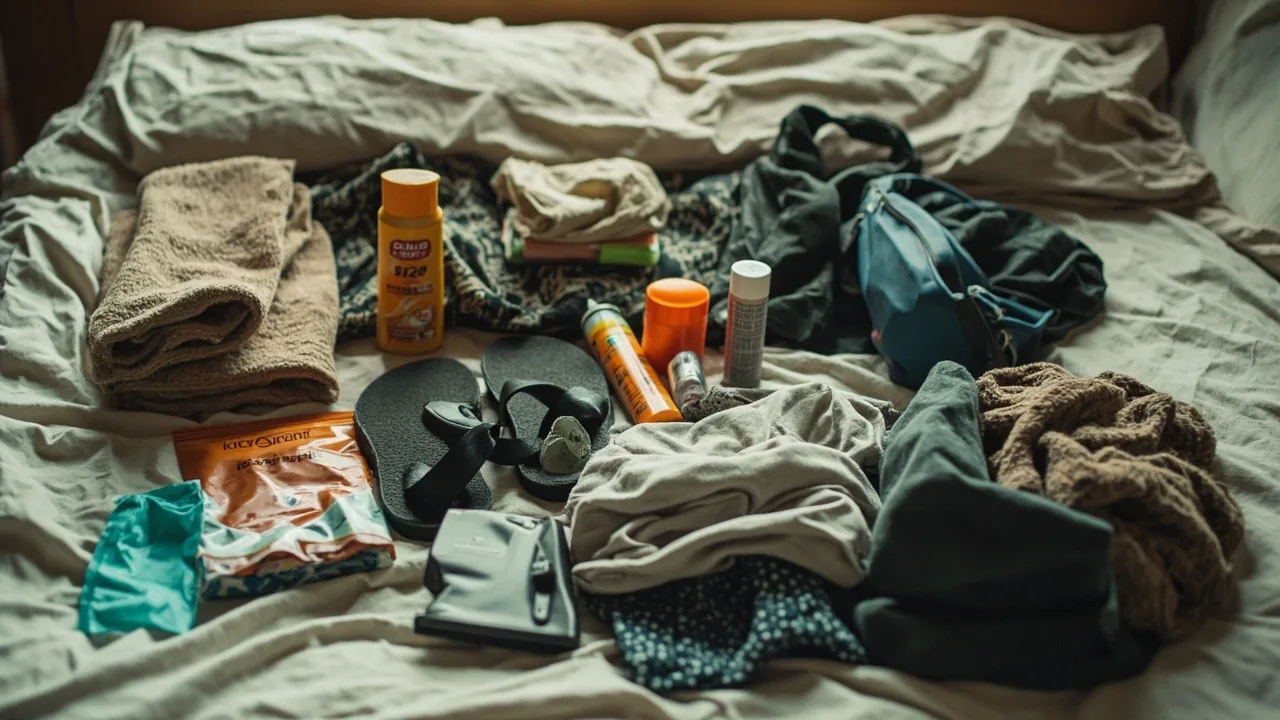
Packing List for the Philippines: What to Pack for Every Trip Length
This packing list for the Philippines covers everything an Indian backpacker needs, whether you’re flying in for a 7-day Manila and Boracay sprint or a 21-day island loop covering Palawan and Siargao. A 40 to 50 litre backpack is the sweet spot: big enough for three weeks of gear, small enough to avoid extra fees on Cebu Pacific. The list below scales by trip length, not by over-packing. Planning the wider region? Our Southeast Asia backpacking hub covers the full multi-country route.
Subodh’s Pro Tip: If your bag weighs more than 8 kg fully loaded, you will regret it on Day 3. Wear your heaviest item on the plane (usually sneakers) and ship nothing ahead.
Quick Answers
| What | Answer | Price (INR) |
|---|---|---|
| What size backpack do I need for the Philippines? | 40-50L for trips up to 21 days; 30-40L for a 7-day Manila-and-Boracay sprint | ₹3,000 (~$31.12) to ₹7,000 (~$72.61) |
| Do I need a raincoat for the Philippines? | Yes, a packable poncho is non-negotiable from June to November | ₹400 (~$4.15) to ₹800 (~$8.30) |
| Are power banks allowed on flights to the Philippines? | Yes, only in cabin baggage, under 100Wh (around 20,000 mAh) | ₹1,200 (~$12.45) to ₹2,500 (~$25.93) |
| Can I buy sunscreen cheap in the Philippines? | Yes, but most local brands are not reef-safe; bring one from India | ₹350 (~$3.63) to ₹600 (~$6.22) |
| What plug adapter does the Philippines use? | Type A and Type B (same as North America), Type C in some older buildings | ₹200 (~$2.07) to ₹500 (~$5.19) |
The Ultimate Packing Checklist
The list below is the core. Add 1-2 extra t-shirts for every extra week beyond the first.
Clothing
- 4-5 quick-dry t-shirts (merino or polyester, no cotton)
- 2-3 lightweight shorts (one with zip pockets for tricycle rides)
- 1 pair of lightweight travel trousers or zip-offs
- 1 long-sleeve linen shirt for sun and temple cover
- 1 light rain shell or packable poncho
- 7-10 pairs of underwear, 2-3 sports bras
- 2-3 pairs of quick-dry socks (only 1-2 if you’re doing laundry every 3 days)
- 1 swim trunk or bikini (two, since they rarely dry overnight in monsoon)
- 1 light hoodie or fleece for over-air-conditioned malls and ferries
- 1 sarong or scarf (temple cover-up, beach towel, blanket on night buses)
Footwear
- 1 pair of broken-in sneakers or trail shoes (Tevas, Merrell, or running shoes with grip)
- 1 pair of durable sandals (Tevas, Chacos, or just sturdy flip-flops)
- Optional: water shoes for Bantayan, Moalboal sardine run, or Palawan lagoon entries
Toiletries
- Toothbrush, small toothpaste, floss
- Travel soap or shampoo bar (refill bottles leak in checked bags)
- Razor (3-pack of disposables is lighter than an electric)
- Small microfibre towel (hostels rarely supply them)
- Reef-safe sunscreen (SPF 50, mineral-based; see why below)
- Mosquito repellent with 20-30% DEET
- Hand sanitiser and a small pack of tissues (many CRs in the provinces have none)
- Period products if relevant (limited options in small island sari-sari stores)
- Lip balm with SPF
First Aid
- Paracetamol and ibuprofen
- Antacid (Gaviscon or Digene, since Filipino food is heavy on vinegar and fat)
- ORS sachets (5-6, more if you plan to dive)
- Loperamide for emergency runs
- Motion sickness pills for bangka rides (Dramamine or Avomine)
- Small bandage pack and antiseptic cream
- Your regular prescriptions, with a copy of the prescription
- Doxycycline or malaria prophylaxis only if your itinerary includes Palawan or Mindanao rural areas; check the best time to visit Philippines before deciding
Documents and Money
- Passport (6+ months validity), printed return ticket, printed hotel booking for immigration
- Photocopy of passport and visa stamp, stored separately
- PHP cash for Day 1 (around 2,000 to 3,000 PHP for tricycles, food, and SIM)
- Forex card or debit card with no foreign transaction fee
- Travel insurance policy printout
- Vaccination card (not mandatory, but useful for hospital visits)
Trip-Length Variations
The checklist above is calibrated for 14 days. Here’s how to scale it down or up without over-packing.
1-Week Trip (Manila + 1 Island)
- 3 quick-dry t-shirts, 2 shorts, 5 underwear, 2 socks
- Skip the hoodie (Mall of Asia and 7-Eleven are everywhere)
- Skip the long trousers (you won’t need them unless you’re doing Intramuros churches)
- One set of smart casual for a decent restaurant in Makati or BGC
2-Week Trip (Manila + Cebu + 1 Beach Island)
- Full checklist as written above
- Add 1 pair of socks and 1 extra t-shirt over the 1-week version
3-Week Trip (Manila + Cebu + Bohol + Palawan or Siargao)
- Add 1 quick-dry t-shirt, 1 shorts, and 1 extra swimsuit
- Add a small pack towel (not just microfibre, since laundry backlogs build up on Siargao)
- Add a thin merino base layer if travelling December to February for cooler northern nights
Verified 2026-07-17 at 1 INR = 0.6437 PHP.
Monsoon vs. Dry Season Packing
The Philippines has two main seasons: the dry season from December to May and the wet season from June to November, with typhoons clustering August to October. Your packing changes between the two.
Monsoon Season (June to November)
- Clothing: Quick-dry synthetics only. Cotton stays wet for hours and mildews in hostel lockers.
- Outerwear: A proper packable rain jacket with taped seams, not a thin emergency poncho. A backup thin poncho costs 50 to 100 PHP at any sari-sari store.
- Footwear: Sandals with heel straps (Tevas or Chacos) handle boat ramps better than flip-flops. Trail shoes dry faster than running shoes.
- Electronics: A dry bag or ziplock for phone and power bank on bangka rides. Sea conditions in monsoon make spray unavoidable.
- Laundry: Plan for 2-3 day drying cycles. Bring enough socks and underwear to cover the gap.
Dry Season (December to May)
- Clothing: Cotton and linen breathe better than synthetics. The heat index regularly crosses 40°C from March to May.
- Sun protection: Wide-brim hat, UV-blocking sunglasses, and SPF 50 reapplied every 2 hours. Even under cloud cover, Manila and Cebu UV hits extreme levels.
- Hydration: A 1-litre water bottle with a built-in filter (LifeStraw or Grayl) saves you from buying bottled water constantly.
- Cooling: A folding hand fan costs 30 to 50 PHP in Divisoria and is a lifesaver in jeepneys without AC.
Electronics and Tech Setup
Plugs and Voltage
The Philippines uses Type A (two flat parallel pins, same as the US) and Type B (Type A plus a grounding pin) as the standard. Type C (two round pins) shows up in some older European-style sockets but is uncommon. Voltage is 220V at 60Hz, the same nominal range as India. Indian three-pin plugs will not fit; you need a Type A adapter.
Subodh’s Pro Tip: A single universal adapter with USB-C and USB-A ports is the only thing you need. Do not bring three separate adapters like I’ve seen in hostel kitchens across Manila. See the full breakdown at is EU plug same as Philippines and do I need voltage converter Philippines.
Power Bank Rules
Indian airports, Manila NAIA, and Cebu Pacific enforce a strict 100Wh limit on power banks in cabin baggage. A 20,000 mAh power bank sits at 74Wh, which is safe. A 26,800 mAh power bank is also typically under the 100Wh limit, but the exact Wh rating varies by cell and labelling, so check the spec sheet. Anything labelled 30,000 mAh or higher (typically 111Wh) will be confiscated at security. Carry it in your hand luggage, not checked bags.
SIM and Connectivity
The Philippines has three main networks: Globe, Smart, and Dito. For Indian travellers, the easiest path is either:
-
Physical SIM: Grab a Globe or Smart tourist SIM at NAIA or Mactan-Cebu airports on arrival. A 7-day SIM costs 100 PHP, with a 5 GB data add-on for around 100 PHP. Registration requires your passport and is mandatory under the SIM Registration Act; the airport booth staff handle it in about 5 minutes. Full guide at Philippines SIM card registration for tourists.
-
eSIM: Skip the airport queue and activate before you fly. Get Nomad eSIM, choose a 5 GB or 10 GB Philippines plan, and your phone lights up the moment you land. Useful if your phone is dual-SIM and you want to keep your Indian number on WhatsApp active.
You can compare plans side-by-side at Philippines SIM cards for Indian travelers and figure out recharge mechanics at Philippines SIM card recharge.
Charging and Backup
- 1 multi-USB charger (65W GaN, around ₹1,500 (~$15.56) to ₹3,000 (~$31.12))
- 2 USB-C cables, 1 USB-A to Lightning (in case your roommate is on iPhone)
- Offline Google Maps download for Luzon, Visayas, and Mindanao before you fly
- VPN installed before arrival for hotel and café Wi-Fi; see Philippines VPN WiFi charging brownout survival
Cultural Dress Codes
The Philippines is a Catholic-majority country, and dress codes apply at:
- Churches and cathedrals: Sleeveless tops, shorts above the knee, and deep necklines are frowned upon. The Manila Cathedral and San Agustin Church in Intramuros require shoulders and knees covered. The same rule applies at the Basilica del Santo Niño in Cebu.
- Beach resorts: Casual everywhere. Boracay, El Nido, and Panglao are tourist towns and bikinis are normal outside the sand.
- Uptown malls (BGC, Ortigas, Greenbelt): Smart casual is the baseline. Gym wear and flip-flops will get you refused at most mid-range restaurants on a Friday night.
A sarong or scarf in your daypack solves 90% of these. For temples and cathedrals, a long-sleeve linen shirt over your shorts is enough.
Trail Laundry and Toiletries
Filipino hostels and guesthouses all offer laundry, usually charged by the kilo. Expect to pay 50 to 80 PHP per kilo (around ₹960 (~$9.96) to ₹1,540 (~$15.97) per kilo at current rates) with same-day return. Most places hand-wash and sun-dry; turnaround is typically 24 hours.
Convenience stores (7-Eleven, Ministop, and Alfamart) stock every basic toiletry you could need: shampoo sachets for 8 to 15 PHP, toothpaste for 35 to 60 PHP, deodorant for 80 to 120 PHP, and sunscreen for 150 to 350 PHP. The catch: most local sunscreens use chemical filters (oxybenzone, octinoxate) that damage coral reefs and are banned in some Boracay and El Nido boat tours. Bring one reef-safe bottle from India, then top up locally if you run out.
Don’t carry full-sized bottles. Refillable silicone squeeze bottles (under 100 ml each) save space and weight.
Common Packing Mistakes Indians Make
-
Bringing a hardshell suitcase. Every hostel I’ve checked into in Manila, Cebu, and Puerto Princesa has stairs with no elevator. Trundling a suitcase across Intramuros cobblestones or up a bangka ramp is a recipe for a broken wheel. A backpack with a detachable daypack is the move.
-
Packing jeans and heavy cotton hoodies. Manila jeans weather in December is fine. Manila jeans weather in May is hell. Two pairs of zip-off trousers and a thin merino hoodie cover the same ground at a third of the weight.
-
Ignoring the power bank limit. Travellers get stopped at NAIA security with 30,000 mAh bricks all the time. The confiscation slip is not a souvenir you want. Anything above 20,000 mAh (100Wh) gets pulled.
-
Carrying full-size toiletries. A 200 ml sunscreen bottle plus a 200 ml shampoo plus a 100 ml toothpaste triple your liquids weight and eat into your liquids bag. Decant into 50 ml silicone bottles, and buy refills in Manila.
-
Forgetting quick-dry everything. Cotton takes 8-12 hours to dry in monsoon humidity. Quick-dry synthetics take 2-3 hours. Multiply that across 7 pairs of underwear over a 3-week trip and the math is obvious.
What to Eat in Manila (Quick Reference)
If you’re stocking up on snacks, charging your phone over a meal, or just need a dal-chawal fix on arrival, here are the spots worth knowing. For a deeper dive, see the vegetarian Indian food Manila Cebu guide.
Local Filipino Spots
-
Kantina Manila (4.9) is the move for a first proper sisig and adobo plate. Expect to pay 300 to 500 PHP per head.
-
Cafe Ilang-Ilang (4.6) inside the Manila Diamond Hotel serves buffet Filipino breakfasts and is a solid intro to kare-kare and sinigang.
-
Italianni’s - Robinson Place Manila (4.8) for a Western night out when Filipino food fatigue hits.
-
Toshie’s Bar And Restaurant (4.4) for a date-night sushi platter if you’re missing Japanese food.
Indian and Veg-Friendly Spots
- Royal Indian Curry House (4.4) is the closest thing to a North Indian dhaba in Ermita.
- Biryanista (4.9) for a Hyderabadi dum biryani that hits the 400 PHP mark and lives up to the rating.
- Seven Mannah Indian Fusion Food (4.8) at around 300 to 500 PHP per head is your best budget veg-friendly option with solid biryani reviews.
Subodh’s Take
The Philippines punishes over-packers harder than almost any other Southeast Asian destination. The heat, the humidity, the boat ramps, the tricycles, the constant up-and-down between islands; a heavy bag turns every transfer into a chore. Pack half of what you think you need, leave the jeans at home, and trust the sari-sari store. The country is a deeply Catholic, deeply friendly place where you’ll find laundry soap, snacks, and rain ponchos within a five-minute walk of any guesthouse. If you do this right, you’ll come back with empty space in your bag, not with regrets.
FAQ
Can I bring a suitcase instead of a backpack to the Philippines?
You can, but expect to regret it. Most budget hostels and guesthouses have no elevators, and you’ll drag that suitcase across cobblestones in Intramuros and up bangka ramps in Palawan. A backpack distributes weight better and fits on sleeper buses and small boats.
Are power banks allowed in cabin baggage on flights to the Philippines?
Yes, but only under 100Wh (around 20,000 mAh). Anything above 100Wh, even at 99.9Wh, can be questioned. Keep your power bank in your hand luggage, not checked bags, and bring the spec sheet printed or saved on your phone.
Can I buy sunscreen cheap in the Philippines?
Yes, but most local brands use chemical UV filters (oxybenzone, octinoxate) that are banned in some marine protected areas and harm coral. Bring one reef-safe mineral sunscreen bottle from India, then top up locally if needed.
Do I need a voltage converter for the Philippines?
No. The Philippines runs on 220V at 60Hz, the same nominal range as India. You only need a plug adapter (Type A, two flat parallel pins).
Is a raincoat necessary if I’m going in dry season?
A packable rain shell or poncho is still worth carrying. Rain in the Philippines is unpredictable even in February and March. A 200-gram emergency poncho costs 200 to 400 PHP in any department store and weighs nothing in your daypack.
How much cash should I carry on Day 1 in Manila?
Around 2,000 to 3,000 PHP covers airport tricycle, a meal, a SIM card, and a Grab ride to your hostel. ATMs at NAIA have a 250 PHP transaction fee, so withdraw the full amount at once.
Should I bring a hard drive for photos?
Yes if you’re a heavy shooter. A 1TB portable SSD (around ₹6,500 (~$67.42)) is cheap insurance. Cloud storage works but is slow on Philippine café Wi-Fi.
