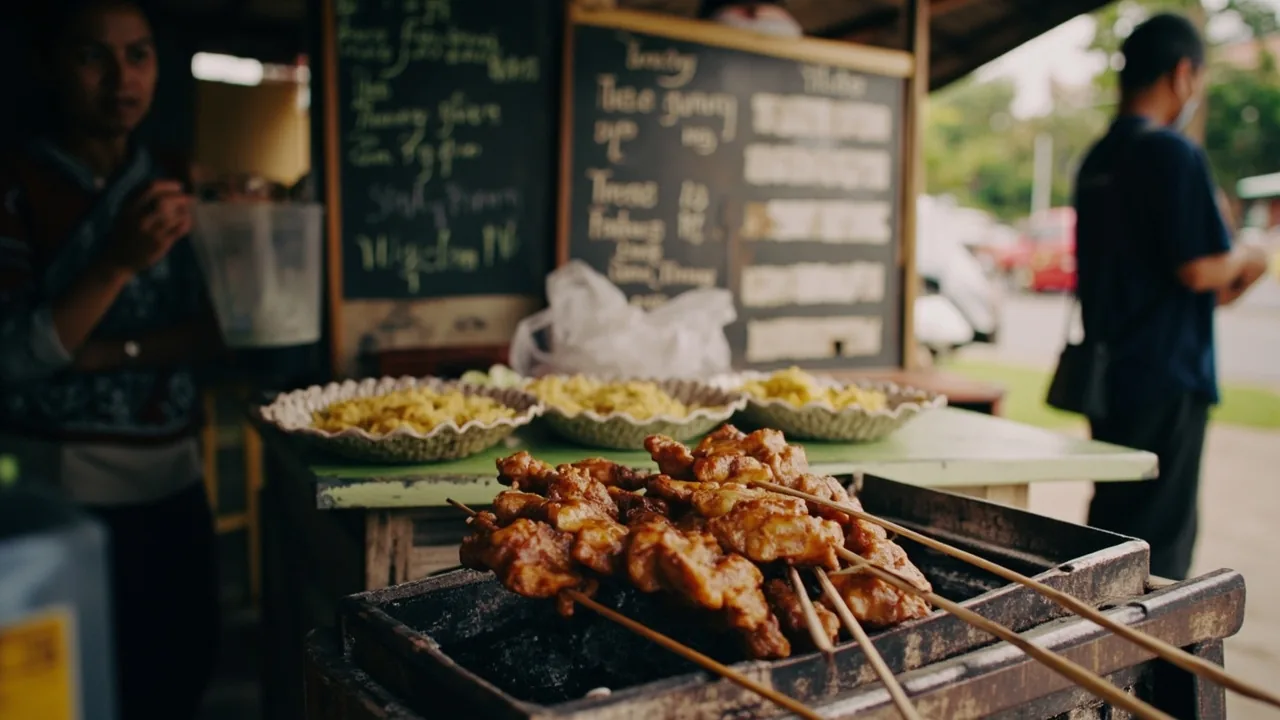
Is Indonesian Street Food Safe? A Backpacker’s Guide to Tap Water, Allergies & Eating Without Getting Sick
Honest answer for Indian backpackers: yes, Indonesian street food is safe to eat for most travellers, provided you follow a few non-negotiable rules. I cross-checked the stall-selection advice in this guide against the Australian Smartraveller and UK FCDO health advisories for Indonesia this month, plus current traveller reports from Kuta, Ubud, and Jakarta. The short version: cook-to-order sate and nasi goreng from busy warungs will not hurt you. Tap water, on the other hand, will wreck your trip. And if you carry a nut allergy, read the peanut section below before you board the plane. For related planning, see our guide on Sea Backpacking Hub.
This guide bundles three high-anxiety questions (is the food safe, is the water safe, can I survive with a peanut allergy) into one checklist. Bookmark it, share it with the group, and stop doom-scrolling Reddit.
Quick Answers
| What | Answer | Price (INR) |
|---|---|---|
| Is Indonesian street food safe for tourists? | Yes, at busy warungs with high turnover and food cooked fresh in front of you. | ₹80-₹161 (~15,000-30,000 IDR or ~$0.83-$1.67) per dish |
| Can you drink tap water in Indonesia? | No. Never. Use bottled or filtered water, even for brushing teeth. | ₹27 (~5,000 IDR or ~$0.28) per bottle |
| Is Indonesian street food safe for peanut allergies? | Risky. Many dishes (gado-gado, sate, padang) contain peanut sauce. Carry an EpiPen and a translated allergy card. | — |
| Average cost of a street food meal in Bali? | Nasi goreng or mie goreng runs ₹107-₹134 (~20,000-25,000 IDR or ~$1.11-$1.39) at warungs. | ₹107-₹134 (~20,000-25,000 IDR or ~$1.11-$1.39) |
| Should I take an eSIM for food translations? | Yes. Get a Nomad eSIM so you can use Google Lens on menus. | from ₹8 (~1,500 IDR or ~$0.08)/day |
How to Choose a Safe Street Food Stall in Indonesia
The competitive gap nobody else covers properly: hygiene signals. You can read the menu, smell the wok, and still eat something dodgy if you picked the wrong stall. Here is the exact selection framework.
The 7 Stall-Selection Rules
- High turnover wins. A warung selling 50 plates an hour will have fresher food than a quiet stall recycling yesterday’s stock. If locals are queuing, join the queue. The food is fresh, the wok is hot, and the cash drawer is open.
- Cook-to-order only. Watch the stall before you order. If the cook is actively grilling, frying, or flipping, your food will be made fresh. Avoid stalls where everything is sitting pre-cooked under glass or in a bain-marie for hours.
- Look for the wet-wipe towel stack. Indonesian warungs that serve good food almost always offer a small stack of hand towels (lap tangan) or tissue. If the stallkeeper provides them, they are thinking about customer hygiene. If there is nothing to wipe your hands with, walk on.
- Avoid roadside dust. Stalls right next to a main road (especially in Jakarta or Kuta traffic) get hit with constant exhaust and dust. Move one street block back. The food is the same, the air is cleaner, and your stomach will thank you.
- Visual cleanliness of the cook. Look at the stallholder’s hands and apron. Clean nails, a clean cloth, no jewellery while cooking. You are not inspecting a Michelin kitchen. You are checking for the baseline.
- Boiling water and oil. A safe stall will have visibly boiling water (for noodles) or bubbling oil (for fritters). If the wok is cold and the oil is still, the food is being reheated, not cooked.
- Reject pre-cut fruit from unknown vendors. Whole fruit (bananas, mangosteens, snake fruit) is fine. Pre-cut fruit in a plastic bag sitting in the sun for two hours is the most common cause of traveller diarrhoea. Buy the whole fruit, peel it yourself.
Subodh’s Pro Tip: If the same stall has a 4.5+ rating on Google Maps with 200+ reviews from the last six months, and it is busy at 7pm, the risk drops to near-zero. Travellers report that rating-weighted busy stalls in Canggu, Ubud, and Yogyakarta have the best hit rate.
The Tap Water Reality in Indonesia
Tap water in Indonesia is not safe for tourists. This is not a rumour, it is the official position of the Indonesian Ministry of Health and every embassy advisory. The infrastructure is inconsistent: some hotels have treated water, most warungs do not. The risk is not just bacteria. It is also parasites (Giardia, Entamoeba) and occasional viral contamination.
What You Can and Cannot Do
- Drinking: bottled water only, sealed cap, check the seal before opening. A 600ml bottle runs ₹27 (~5,000 IDR or ~$0.28) at any warung or Indomaret. For multi-day trips, get a LifeStraw or Grayl filter cup.
- Brushing teeth: use bottled water, not tap. Yes, even in five-star hotels. The cost of a bottle is ₹27 (~5,000 IDR or ~$0.28); the cost of three days stuck in a Yogyakarta clinic is ₹8,037 (~1,500,000 IDR or ~$83.37). Do the math.
- Ice: only drink ice from hollow-tube ice (the small cylindrical cubes) or branded packaged ice. The hollow tubes are factory-sealed. The crushed cloudy ice from a street cart is a gamble.
- Salads and raw vegetables: be cautious. If you cannot see how they were washed, skip them. Opt for cooked vegetables (sayur lodeh, tum kangkung) where the heat kills the bugs.
- Fresh juice (jus): only from stalls that juice in front of you with bottled water and no ice. The mango juice at Kuta’s Jalan Pantai is a classic culprit. Skip it.
For more on the Indonesia trip cost from India, including water budget over 10 days, the full breakdown is in that guide.
Peanut and Nut Allergy in Indonesian Cuisine
This is the highest-stakes section. If you have a peanut allergy, Indonesian food is genuinely risky. Peanut sauce (sambal kacang) is foundational to gado-gado, sate, ketoprak, and many Padang dishes. Cross-contamination is constant.
The Highest-Risk Dishes
- Gado-gado: blanched vegetables with peanut sauce. Peanut is the main ingredient.
- Sate (any kind): most sate vendors use peanut sauce for dipping, even if the skewer is chicken.
- Padang/Rendang dishes: many Padang warungs use peanut in their chili sambal.
- Martabak manis: the sweet stuffed pancake often contains peanut and chocolate.
- Bumbu rujak: a fruit salad with spicy peanut sauce.
How to Travel Safely with a Peanut Allergy in Indonesia
- Carry two EpiPens. Pharmacies in Indonesia (Apotek Kimia Farma) do not reliably stock EpiPen. Bring them from India. Keep one on you, one in your bag.
- Print an Indonesian allergy card. Google “Indonesian allergy translation card.” The phrase you need is: “Saya alergi kacang. Tolong jangan gunakan kacang, minyak kacang, atau saus kacang dalam makanan saya. Ini bisa mengancam jiwa saya.” (I am allergic to peanuts. Please do not use peanuts, peanut oil, or peanut sauce in my food. This is life-threatening.)
- Eat at high-end restaurants, not warungs. Jakarta and Bali have many international kitchens with English menus and allergy-aware staff. Warung cooks often cannot read a card.
- Avoid Padang restaurants entirely. They are peanut-heavy by tradition.
- Skip the street food circuit. For an allergic traveller, the cost-benefit of street food does not work. The risk is too high, the language barrier too thick. Stick to restaurants where you can speak to a manager.
For specific allergen-aware restaurants in Jakarta, see the Indian restaurant guide for spots that accommodate dietary restrictions.
Safe Indonesian Street Food Dishes to Try
These are the lowest-risk, highest-reward dishes for your first week. All are vegetarian-friendly (with modifications), cooked fresh, and use ingredients you can see.
| Dish | What it is | Price | Veg-Friendly? |
|---|---|---|---|
| Nasi Goreng (fried rice) | Indonesia’s national dish, fried in a hot wok with kecap manis | ₹134 (~25,000 IDR or ~$1.39) | Yes (ask no egg, no shrimp paste) |
| Mie Goreng (fried noodles) | Yellow wheat noodles, wok-fried with vegetables | ₹107 (~20,000 IDR or ~$1.11) | Yes (ask no egg) |
| Sate Lilit (Balinese sate) | Minced chicken or pork on lemongrass sticks, grilled | ₹134 (~25,000 IDR or ~$1.39) per 5 sticks | Skip if nut allergy |
| Pisang Goreng (fried banana) | Banana fritters fried to order | ₹54 (~10,000 IDR or ~$0.56) per 3 pieces | Yes |
| Bakso (meatball soup) | Beef or chicken meatballs in broth | ₹107-₹161 (~20,000-30,000 IDR or ~$1.11-$1.67) | Veg version (bakso tahu/tempe) exists |
| Tahu Krispi (crispy tofu) | Fresh fried tofu with chili sauce | ₹54 (~10,000 IDR or ~$0.56) | Yes |
| Tempe Mendoan | Thinly sliced tempeh, battered, fried | ₹54 (~10,000 IDR or ~$0.56) | Yes |
For more veg options, see the vegetarian food guide.
Where to Eat: Recommended Restaurants
When you want a sit-down meal, these spots have clean kitchens, English menus, and traveller-tracked hygiene standards.
Local / Indonesian Favourites
- Kalluna Cafe & Restaurant, Yogyakarta: Chic setting combining Western and Indonesian flavours. Highlights include truffle mushroom pasta and ayam betutu (slow-cooked spiced chicken). Around ₹429-₹804 (~80,000-150,000 IDR or ~$4.45-$8.34) per person. Travellers report consistent quality and attentive staff.
- SEMAJA Menteng, Jakarta: Cozy neighbourhood spot for Indonesian comfort food in a leafy colonial district. Rice plates run ₹241-₹429 (~45,000-80,000 IDR or ~$2.50-$4.45). Quiet, clean, and a good first-night dinner near the city centre.
- Alma Restaurant Komodo, Labuan Bajo: Charming dinner spot before or after a Komodo trip. Indonesian and seafood options, with grilled fish in sambal. Around ₹536-₹964 (~100,000-180,000 IDR or ~$5.56-$10) per person.
Food Tour (Best Way to Learn the Rules)
Rather than guess, go with a guide on night one. The Private Guided Sightseeing & Street Food Night Tour covers Jakarta’s street food scene with a local guide who can read the stalls. For Bali or Yogyakarta, search the same link with the city name.
Indian / Veg-Fallback
When you need dal-chawal or have a peanut-allergy concern, these are tested.
- Ganesha Ek Sanskriti Kemayoran, Jakarta: Traditional Indian menu, butter chicken, paneer dishes, biryani. Around ₹536-₹1,340 (~100,000-250,000 IDR or ~$5.56-$13.89) per person. Family-friendly, casual vibe.
- The Royal Kitchen Signature, Jakarta: North Indian cuisine, lamb Raan Sikandar as a signature. Around ₹804-₹1,607 (~150,000-300,000 IDR or ~$8.34-$16.67) per person. Upscale, good for a treat.
- Queen’s Tandoor, Jakarta: North Indian and Indo-Chinese, butter chicken highly rated. Around ₹1,072 (~200,000 IDR or ~$11.12) per person. Family-run, consistent.
- Shahi Tadka, Jakarta: North Indian tandoor and Indo-Chinese. Around ₹536-₹1,072 (~100,000-200,000 IDR or ~$5.56-$11.12) per person. Casual, fast service.
For a broader list across Bali, Jakarta, and Batam, see the where to find Indian food guide.
Common Food Mistakes Indians Make in Indonesia
- Assuming “no meat” means vegetarian. Indonesian cooks often consider chicken, seafood, or even bacon as separate from “meat.” Always say: “Saya vegetarian. Tidak ada daging, ayam, ikan, seafood, atau telur.” (I am vegetarian. No meat, chicken, fish, seafood, or egg.)
- Drinking tap water in the bathroom. The toothpaste-spit is the classic infection route. Use bottled water on your brush. Every time.
- Trusting fruit juice with ice. That ₹107 (~20,000 IDR or ~$1.11) mango juice in Kuta is the number one cause of Bali belly. Get the juice without ice, or skip it on day one.
- Eating at a stall with pre-cooked food sitting out. If the nasi goreng is in a pile at noon and the stall is quiet, that rice has been there since breakfast. Find a busy stall or skip the rice.
- Not packing Oral Rehydration Salts (ORS). Electral or ORS packets from India cost ₹20 (~$0.21). A clinic visit in Bali costs ₹8,037 (~1,500,000 IDR or ~$83.37). Pack them.
What to Do If You Get Bali Belly
Even with the best rules, sometimes it hits. Here is the response plan.
- ORS first: two sachets in bottled water, sip slowly.
- Imodium (loperamide): pack from India, 2mg tablets.
- Doctor visit: if it lasts more than 48 hours, with blood, or with high fever, see a doctor. BIMC Hospital in Kuta and Siloam Hospitals in Jakarta are Indian-traveller-tested.
- Travel insurance: keep your SafetyWing policy number on your phone. Most clinics will direct-bill.
Safety Alert: If symptoms include high fever, blood in stool, or signs of dehydration (dizziness, dark urine, no tears), do not wait. Go to a clinic the same day. Bali belly is usually viral and self-limiting, but dengue and typhoid share early symptoms and need real treatment.
For a full pre-trip checklist, including the travel warning for Indians and natural disaster guidance, the linked guides are verified monthly.
Getting Connected
A working data connection is your best food-safety tool. Google Lens lets you translate a menu, Google Maps shows the rating and recent reviews of the warung, and Grab/Gojek get you back to the hotel fast if you feel sick.
Physical SIM: Telkomsel is the strongest network across Indonesia. A tourist SIM with 25GB runs ₹536-₹804 (~100,000-150,000 IDR or ~$5.56-$8.34). Buy at the airport counter or any GraPARI store.
eSIM option: Get Nomad eSIM for Indonesia from 1,500 IDR/day, activated before you land. No passport scan at the airport.
Daily Food Budget in Indonesia (Backpacker)
Verified 2026-07-17 at 1 INR = 188.68 IDR.
| Item | Cost |
|---|---|
| Bottled water (600ml) | ₹27 (~5,000 IDR or ~$0.28) |
| Nasi goreng (street) | ₹134 (~25,000 IDR or ~$1.39) |
| Mie goreng (street) | ₹107 (~20,000 IDR or ~$1.11) |
| Pisang goreng (3 pieces) | ₹54 (~10,000 IDR or ~$0.56) |
| Bottle of Bintang beer (warung) | ₹188-₹268 (~35,000-50,000 IDR or ~$1.95-$2.78) |
| Sit-down Indonesian meal | ₹429-₹804 (~80,000-150,000 IDR or ~$4.45-$8.34) |
| Indian restaurant meal | ₹804-₹1,607 (~150,000-300,000 IDR or ~$8.34-$16.67) |
A backpacker eating street food three times a day can stay under ₹804 (~150,000 IDR or ~$8.34) per day on food. Add water and snacks, and ₹1,072 (~200,000 IDR or ~$11.12) per day is a comfortable food budget.
For the full trip cost in rupees, see the Indonesia trip cost guide.
FAQ
Is Indonesian street food safe for tourists with a sensitive stomach?
Yes, for most travellers. Stick to the 7 stall-selection rules above, avoid pre-cut fruit, drink bottled water, and carry ORS. If you have a serious medical condition (IBS, Crohn’s, immunodeficiency), consult your doctor before flying.
How do I ask for no shrimp paste (terasi) in Indonesian?
Say: “Tidak pakai terasi, ya.” Shrimp paste is in many sambals and fried items, so be specific.
Is it safe to eat at night markets like Pasar Malam or Jalan Sabang?
Yes, these are some of the best street food experiences in Indonesia. The turnover is high, the food is cooked fresh, and the locals eat there. Jakarta’s Jalan Sabang night market is a classic.
What is the safest first meal in Indonesia for a new arrival?
Plain nasi goreng from a busy warung, bottled water, and Pisang Goreng. Avoid juice, salad, and ice on day one. Give your stomach 24 hours to adjust to the new bacteria load.
Is Nasi Goreng safe for vegetarians?
Yes, if you order it without egg and without shrimp paste. Standard fare across Indonesia.
Can I find Jain food (no onion, no garlic) in Indonesia?
Difficult outside of upscale Indian restaurants. Most Indonesian vegetarian dishes use bawang (onion/garlic) as a base. If you need strict Jain, plan on cooking in your accommodation or eating at an Indian restaurant in Jakarta or Bali.
What about Bali belly prevention shots or probiotics?
Some travellers report success with Saccharomyces boulardii (a yeast probiotic) started 3 days before departure. The evidence is mixed but it is cheap and harmless. Pack it.
Subodh’s Take
Indonesian street food is one of the great experiences of Southeast Asia, and the risk is manageable if you pick your stalls properly. Eat the nasi goreng, drink the bottled water, carry ORS, and if you have a nut allergy, take the allergy card seriously. The food is part of the trip, not a threat to it. Go eat.
