Where to Eat in Bali Like a Local: Rendang, Warungs & Fine Dining Worth Every Rupee
Bali’s food scene splits hard between what tourists eat and what locals eat. Use this guide for where to eat in Bali local spots not tourist traps: pick the right region, skip the laminated English menu, and follow the locals. For related planning, see our guide on Sea Backpacking Hub.
For broader Indonesia context beyond Bali, see our Indonesia food guide and the vegetarian survival guide for Indonesia.
Quick Answers
| What | Answer | Price (INR) |
|---|---|---|
| Cheapest nasi campur at a local warung | Roadside spot in Ubud or Denpasar, eat where locals queue | ₹81 (~15,000 IDR or ~$0.84) |
| Where to find proper rendang in Bali | Indonesian Padang restaurants in Denpasar and Kuta (look for “Masakan Padang” signs) | ₹134 (~25,000 IDR or ~$1.40) |
| Mid-range dinner at a Bali warung with a view | Ubud or Canggu, rice-paddy or garden setting | ₹269-₹404 (~50,000-75,000 IDR or ~$2.79-$4.19) |
| Fine dining worth the splurge | Uluwatu cliff or Ubud jungle tasting menus | ₹2,690-₹5,380 (~500,000-1,000,000 IDR or ~$27.92-$55.84) |
| Gojek bike for hopping between warungs | Within Ubud or Canggu, short trip | ₹38-₹108 (~7,000-20,000 IDR or ~$0.39-$1.12) |
Subodh’s Pro Tip: If a warung has a laminated menu in English with photos and a “tourist price” sticker, walk five minutes deeper and eat where there’s no English signage at all. The food is the same, the sambal is better, the bill is half.
The Bali Food Map: Which Region to Eat In
Bali is small enough that most travellers base themselves in one region and eat local, but the food scene splits hard by region. Pick the wrong region and you’ll eat mediocre Indonesian food at Italian-tourist prices. Pick the right one and you’ll eat better than most tourists ever do.
Ubud is the warung capital. Most warungs here serve Balinese home cooking: nasi campur Bali (rice with a dozen small sides including lawar, sate lilit, tempe, and sayur urab), bebek betutu (slow-roasted duck, the island’s signature dish), and tahu/tempe preparations you’ll only see in Bali. Ubud warungs cluster along Jalan Hanoman, Jalan Gootama, and the side streets off Jalan Raya Ubud. Eat here for lunch, not dinner (warungs run out of the day’s food by 6 PM).
Denpasar is where Balinese people eat. The capital has the cheapest, most authentic food on the island: Padang restaurants serving rendang and gulai, Chinese-Indonesian warungs, and the legendary Jalan Sulawesi food street. Skip Denpasar for sightseeing, head there specifically to eat.
Sanur has the calmest, oldest expat food scene in Bali, and a quieter warung scene than Kuta. Good for breakfast warungs and seafood warungs along the beachfront.
Kuta and Seminyak are tourist-heavy but contain the highest density of Padang restaurants (where you’ll find proper rendang), plus mid-range warungs catering to surfers. Eat in Kuta for the Padang scene specifically, walk-through Seminyak mostly for cafes.
Canggu is the cafe-warung hybrid: Western brunch places with Indonesian twists, smoothie bowls, and the occasional warung tucked behind a villa. Prices trend higher than Ubud but quality is consistent.
Uluwatu and the Bukit Peninsula is where Bali’s fine dining lives: cliff-top tasting menus, sea-grill restaurants, sunset-view splurges. Worth one meal per trip, not your everyday eating.
Munduk, Sidemen, and Sinaraja (north and east Bali) are where you eat babi guling (suckling pig) at the source, drink Bali’s oldest coffee, and find warungs that haven’t seen a tourist menu in their life. If you’re doing a north-Bali loop, plan lunch in Munduk or Sinaraja.
Safety Alert: Bali’s south (Kuta, Seminyak, Canggu, Denpasar, Sanur, Ubud) is generally safe for street food. North Bali and the eastern regencies (Karangasem, Buleleng) are also fine, just quieter. Always check your government’s official travel advisory (Indian MEA advisory at mea.gov.in) before booking, especially if you’re adding the Gili Islands or Lombok to the same trip.
What to Eat in Bali (And What It Costs)
Here are the dishes you should order, what to expect, and what locals pay. All prices below are in IDR at the warung (not restaurant) tier.
Nasi Campur Bali is the daily-driver meal of the island. A plate of white rice surrounded by small portions of lawar (minced coconut, vegetables, often meat), sate lilit (lemongrass-minced sate), tempe, sayur urab (vegetables with grated coconut), sambal, and a small piece of chicken or duck. At a Ubud or Denpasar warung, expect to pay ₹81-₹161 (~15,000-30,000 IDR or ~$0.84-$1.68). Add a fresh coconut for another ₹54 (~10,000 IDR or ~$0.56). For a broader Indonesia plate-by-plate breakdown, see our Indonesia food guide on must-try dishes.
Bebek Betutu is Bali’s slow-roasted duck, traditionally cooked for 8+ hours with a spice paste of turmeric, ginger, galangal, and chili. The classic version is served at warung-style restaurants in Ubud and the village of Peliatan. Expect ₹242-₹404 (~45,000-75,000 IDR or ~$2.51-$4.19) for a half duck with rice and vegetables. Travellers hunting Bali’s signature dishes often cross-reference our Indonesia must-try dishes guide.
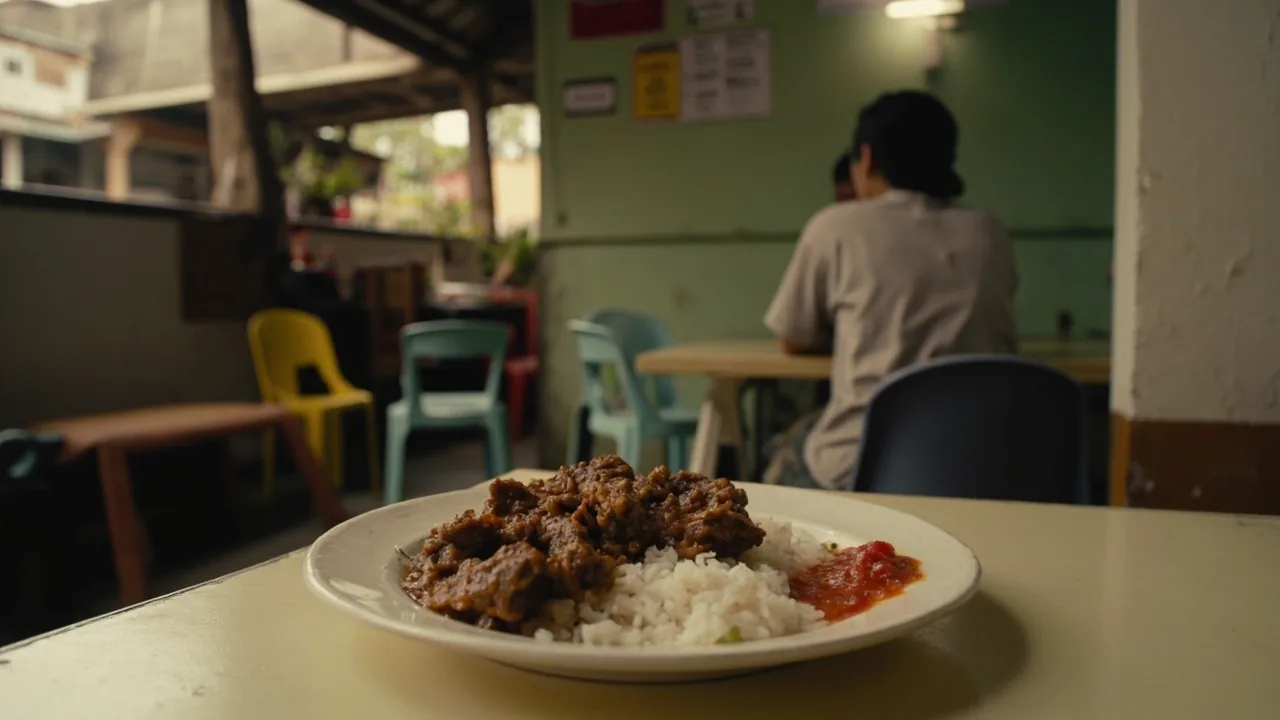
Rendang is technically a Sumatran dish, but Bali’s Padang restaurants serve it well. Rendang is dry-style beef curry cooked for hours until the coconut milk reduces and the chili-coconut paste coats every strand of beef. At a Padang restaurant (warung Masakan Padang), 25,000 IDR gets you a plate with rice and a generous scoop of rendang. Order “nasi rendang” and you’ll get rice, rendang, sambal ijo, and some vegetables.
Sate Lilit is the Balinese twist on sate: minced chicken, fish, or pork mixed with grated coconut, lemongrass, and lime leaves, then wrapped around bamboo sticks and grilled. It looks like a meat popsicle. A plate of 10 sticks runs ₹108-₹188 (~20,000-35,000 IDR or ~$1.12-$1.95) at a Ubud warung.
Lawar is the dish that scares tourists and rewards locals: a mix of minced meat (pork, duck, or beef), coconut, vegetables, and sometimes fresh pig’s blood, all chopped fine and seasoned with Balinese spices. The non-blood version (lawar putih) is widely available. Price is usually included inside a nasi campur plate.
Nasi Goreng and Mie Goreng are the Indonesian fried-rice and fried-noodle staples. At warungs, expect ₹108-₹161 (~20,000-30,000 IDR or ~$1.12-$1.68). Street stalls do it for ₹81-₹108 (~15,000-20,000 IDR or ~$0.84-$1.12).
Bali Coffee (Kopi Bali) is single-origin arabica grown in the Kintamani highlands north of Ubud. At warungs, a black coffee runs ₹43-₹81 (~8,000-15,000 IDR or ~$0.45-$0.84). At cafes, the same bean with a frothy pour-over goes for ₹188-₹323 (~35,000-60,000 IDR or ~$1.95-$3.35). The warung version is just as good. Cafe-hoppers may also want our Southeast Asia specialty coffee and coworking guide.
Bottled Water is ₹27 (~5,000 IDR or ~$0.28) at warungs, ₹54-₹81 (~10,000-15,000 IDR or ~$0.56-$0.84) at cafes. Don’t drink tap water in Bali, period.
For the vegetarian version of these dishes (especially lawar and sate lilit), see our vegetarian Indonesia guide.
Safe Local Street Food Dishes
Bali’s street food is safer than most of Southeast Asia because the warung turnover is high and the food is cooked to order. Stick to busy stalls, eat where locals queue, and you’ll be fine. These are the dishes worth seeking out:
| Dish | What it is | Average price | How to order it |
|---|---|---|---|
| Nasi Campur (Bali style) | Rice with 10+ small Balinese sides | ₹81-₹161 (~15,000-30,000 IDR or ~$0.84-$1.68) | Just point at the display case, ask “nasi campur satu” |
| Sate Lilit | Lemongrass-minced sate on bamboo | ₹108-₹188 (~20,000-35,000 IDR or ~$1.12-$1.95) | “Sate lilit, sepuluh” for 10 sticks |
| Nasi Rendang | Rice with dry beef rendang and sambal | ₹134 (~25,000 IDR or ~$1.40) | “Nasi rendang” at any Padang warung |
| Mie Goreng / Nasi Goreng | Fried noodles or fried rice | ₹81-₹161 (~15,000-30,000 IDR or ~$0.84-$1.68) | “Mie goreng satu” or “Nasi goreng satu” |
| Tahu Crispy / Tempe | Fried tofu and fermented soybean cake | ₹54-₹81 (~10,000-15,000 IDR or ~$0.56-$0.84) | “Tahu tempe goreng” as a snack |
| Pisang Goreng | Fried banana fritters, sometimes with cheese | ₹54-₹108 (~10,000-20,000 IDR or ~$0.56-$1.12) | “Pisang goreng, lima” for 5 pieces |
Where to Eat: Local Warungs, Cafes, and Padang Spots (Real Spots)
This is a tiered list: budget warungs first, mid-range cafes second, splurge fine dining last. Prices are per person in IDR.
Budget Warungs (₹81-₹269 (~15,000-50,000 IDR or ~$0.84-$2.79) per person)
These are the spots where you’d happily eat three meals a day if you lived in Bali. Lotus Garden (4.9 rating) in Ubud is a serene garden setting with delicious local flavours - a solid first stop for nasi campur and sate lilit.
Mid-Range Cafes and Padang Spots (₹269-₹807 (~50,000-150,000 IDR or ~$2.79-$8.38) per person)
This is where you’ll find proper rendang, atmospheric warungs, and the brunch-cafe-warung hybrid that’s taken over Canggu.
Fine Dining Worth the Splurge (₹2,690-₹8,070 (~500,000-1,500,000 IDR or ~$27.92-$83.77) per person)
This is where Bali punches well above its weight. Save one meal per trip for one of these.
For the full splurge scene (cliff-top tasting menus, jungle dining, the famous Ubud resorts), browse food tour and tasting-menu options on GetYourGuide.
The Indian Food and Vegetarian Fallback
Sometimes you just need dal-chawal, and Bali delivers. The island has a deep Indian-Indonesian food tradition (especially in Kuta and Denpasar) thanks to decades of Gujarati and Sindhi trading families. These spots are real, traveller-recommended, and safe for vegetarians.
Subodh’s Pro Tip: Kuta and Seminyak have the highest concentration of Indian restaurants in Bali, mostly clustered along Jalan Legian and the surrounding side streets. Ask your hotel for the nearest option - the scene changes fast. For Indian restaurant options across Indonesia (including The Royal Kitchen Signature, Ganesha Ek Sanskriti, and Queen’s Tandoor), see our Indian food in Indonesia guide.
For broader Indonesian food safety beyond just veg, browse our street food safety guide for Southeast Asia or check is Indonesian street food safe.
Key Phrases in Indonesian (and Balinese)
Bali’s main language is Balinese, but everyone speaks Indonesian. Use these Indonesian phrases; Balinese phrases are nice but not necessary.
| English Phrase | What it Means | Indonesian | Pronunciation |
|---|---|---|---|
| I am vegetarian | Tells the kitchen no meat | Saya vegetarian | SAH-yah veh-geh-tah-ree-AHN |
| No meat | Just no meat | Tanpa daging | TAHN-pah DAH-ging |
| No fish sauce | Critical for many Indonesian dishes | Tanpa kecap ikan | TAHN-pah KEH-chap EE-kahn |
| No shrimp paste | Hidden in many sambals and curries | Tanpa terasi | TAHN-pah teh-RAH-see |
| No egg | Common request | Tanpa telur | TAHN-pah teh-LOOR |
| Spicy, please | For sambal lovers | Pedas, ya | PEH-dahs, yah |
| Not spicy | For sensitive stomachs | Tidak pedas | TEE-dahk PEH-dahs |
| The bill, please | When you’re ready to leave | Minta bon | MEEN-tah bohn |
Subodh’s Pro Tip: “Sayuran saja” (SAH-yoo-rahn SAH-jah, “just vegetables”) is the magic phrase when a Padang warung offers a dozen meat options and you want the vegetarian sides. They’ll point you to the tempe, tahu, sayur urab, and sambal.
Food Safety and Hygiene in Bali
Bali’s food-safety track record is good, not perfect. Here’s how to eat safely:
- Eat where locals eat. High turnover = fresh food. If a warung has no customers at lunch hour, walk on. For the full rules of thumb, see our street food safety guide for Southeast Asia.
- Drink bottled water only. Tap water in Bali is not potable. Bottled water runs ₹27 (~5,000 IDR or ~$0.28) at warungs.
- Avoid raw vegetables at street stalls unless you can see them washed in clean water.
- Skip the buffet. Buffets in tourist areas sit out for hours. Order fresh.
- Sambal is your friend. The chili paste that comes with everything is boiled and reheated, generally safe.
- Ice is usually fine at warungs and restaurants (they use tube ice from factories), but ask “es batu” (ice cube) if you want to confirm it’s factory-made.
For a deeper dive, see street food safety in Southeast Asia.
Getting Connected
A local SIM or eSIM makes the difference between wandering the rice paddies lost and finding that perfect warung. Telkomsel and XL have tourist SIMs at the airport (around ₹538-₹807 (~100,000-150,000 IDR or ~$5.58-$8.38) for 15-25 GB), or pick up an eSIM from Nomad before you fly and land online in five minutes. Either way, you’ll want Google Maps for finding warungs, Grab for transport, and a translation app for menu-deciphering.
Common Food Mistakes Indians Make in Bali
- Assuming “vegetarian” means vegetarian. Many Balinese warungs consider fish or chicken “bukan daging” (not meat). Always say “saya vegetarian” and add “tanpa ikan, tanpa ayam” (no fish, no chicken) if you’re strict veg.
- Eating only in Kuta and Seminyak. Both areas are great for surf and nightlife, terrible for food value. A ₹134 (~25,000 IDR or ~$1.40) nasi campur in Kuta is ₹81 (~15,000 IDR or ~$0.84) in Denpasar with better sambal.
- Skipping Padang restaurants. Rendang in Bali comes from Padang warungs, not Balinese warungs. The “Masakan Padang” sign is your friend.
- Not asking for the day’s special. Warungs cook one or two dishes daily in big batches. Ask “menu hari ini apa?” (what’s today’s menu) and you’ll get the freshest food at the lowest price.
- Drinking tap water in nicer hotels. Even five-star hotels in Bali source water carefully. Bottled water everywhere, no exceptions.
Getting Around Between Warungs
A Gojek bike is your best friend for hopping between warungs. Within a single area (Ubud, Canggu, Seminyak), expect ₹38-₹108 (~7,000-20,000 IDR or ~$0.39-$1.12) per trip. From Denpasar to Kuta, around ₹134-₹215 (~25,000-40,000 IDR or ~$1.40-$2.23). Grab Bike works the same way. Airport to Kuta or Seminyak in a fixed taxi runs ₹807-₹1,614 (~150,000-300,000 IDR or ~$8.38-$16.75).
Visa and Practical Notes for Indian Travellers
Indonesian visa-on-arrival for Indian passport holders is ₹3,372 (~35 USD), valid for 30 days, single entry, extendable once at the immigration office for another 30 days. Bali adds an ₹807 (~150,000 IDR or ~$8.38) tourism levy from February 2024, payable at the airport or online before arrival. Bring USD cash for the visa fee in case the card machine is down.
FAQ
Where can I find real Balinese rendang in Bali, not tourist rendang? Hit a Padang restaurant (look for “Masakan Padang” or “Rumah Makan Padang” signs) in Denpasar or Kuta. The rendang will be on the steam table in the window. Ask for “nasi rendang” and you’ll get rice, rendang, sambal ijo, and some sides. Expect to pay around ₹134 (~25,000 IDR or ~$1.40).
Is Bali street food safe for Indian travellers? Generally yes, especially at warungs with high turnover. Stick to cooked food, drink bottled water, eat where locals queue. See our street food safety guide for the full breakdown.
Which region of Bali is best for food? Ubud for warungs and Balinese home cooking, Denpasar for Padang restaurants and cheap local eats, Canggu for cafe-warung hybrids, Uluwatu and Bukit for fine dining. Skip Kuta and Seminyak for value.
Can vegetarians eat well in Bali? Yes, easier than most of Indonesia. Nasi campur Bali has lots of veg sides (sayur urab, tempe, tahu, sambal), and Indian restaurants are abundant in Kuta and Seminyak. See our vegetarian Indonesia guide for more.
How much should I budget per day for food in Bali? At warung prices, expect ₹538-₹1,076 (~100,000-200,000 IDR or ~$5.58-$11.17) per day. At cafe prices, double that. One splurge fine-dining meal per trip, plus warungs the rest of the time, lands most travellers around ₹1,345-₹2,152 (~250,000-400,000 IDR or ~$13.96-$22.34) per day.
Is the Bali tourism levy worth paying? It’s mandatory and goes toward conservation and cultural programs. Pay it online before arrival to skip the airport queue.
Do I need to speak Balinese? No, everyone speaks Indonesian, and tourist-area staff speak English. Learn “saya vegetarian” and “terima kasih” (thank you) and you’re set.
Subodh’s Take
Eat at warungs, not restaurants, for at least three meals a day. Spend the difference on one fine-dining sunset in Uluwatu. Skip the buffet breakfast at your hotel and hit a roadside warung for nasi campur instead. That’s the whole game in Bali, and you’ll come home having eaten better than 90% of the tourists on the island. Planning your Bali leg as part of a longer Southeast Asia loop? See our Sea Backpacking Hub for the route overview.
Where to Stay in Bali: Base yourself in Ubud for warung access, Canggu for the cafe-warung hybrid scene, or Sanur for a quieter stay close to Denpasar’s Padang restaurants. Book early in July-August.
— Subodh
