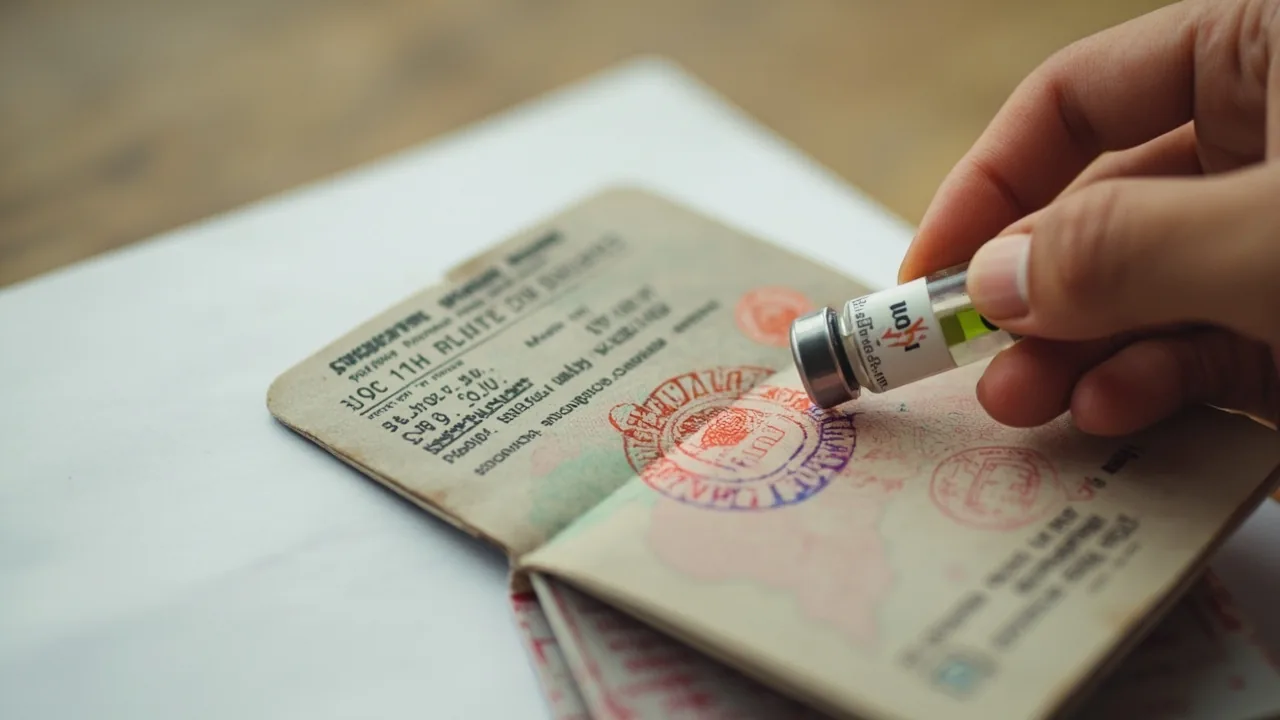
Myanmar Travel Vaccinations & Health Kit: The Complete Guide for Indian Backpackers
If you’re flying from Delhi or Kolkata into Yangon, the vaccinations on your record matter more than your passport photos. Myanmar’s mosquito-borne disease profile is similar to eastern India, but the rural areas you’ll likely visit (Bagan, Inle, Hsipaw) sit further from clinics than any equivalent place back home. Get the right jabs before you board, carry the right tablets in your daypack, and your trip stays a trip. For related planning, see our guides on Sea Backpacking Hub and Travel Insurance Myanmar Conflict Medical Evacuation.
This guide is built specifically for Indian backpackers: which vaccines the Indian Association of Pediatrics and WHO recommend for Myanmar, what the yellow fever certificate rule means if you’re transiting through Bangkok or KL, the real dengue and chikungunya risk by month, and what to pack so you don’t end up hunting for a pharmacy in Yangon at 11pm. You may also find Street Food Tap Water Myanmar Indian Tourist Safety useful for this trip.
Subodh’s Pro Tip: Start your vaccines 6-8 weeks before departure. Hepatitis B is a 3-dose series over 6 months, and rabies pre-exposure is 2 doses over 7 days. If you’ve only got two weeks, prioritize what protects you from bites (JE, rabies pre-exp) over what protects you from food/water (typhoid, hep A booster). See also: Emergency Myanmar Foreigners Hospitals Embassy Guide.
Quick Answers
| What | Answer | Price (INR) |
|---|---|---|
| Is yellow fever vaccine required for Myanmar entry? | Only if you’re transiting from a yellow fever country (parts of Africa, Latin America). Indian passport holders flying direct get a stamp without a certificate. | ₹4,800 (~$49.82) |
| Do I need malaria pills for Myanmar? | Yes, CDC recommends prophylaxis for all of Myanmar except Yangon city centre. Doxycycline or Malarone are the practical picks. | ₹2,400-₹6,000 (~$24.91-$62.28) |
| Is dengue a risk in Myanmar? | Yes, year-round with peak May-October. No vaccine for travellers; prevention is DEET + sleeves. | ₹600 (~$6.23) |
| What’s the most common Indian-traveller vaccine they forget? | Japanese Encephalitis (JE), especially for Inle Lake and rural Bagan. | ₹3,500 (~$36.33) |
| Is rabies pre-exposure vaccine worth it? | Yes for backpackers doing rural stays, Hsipaw trekking, or Bagan e-bike tours with stray dogs around. | ₹3,200 (~$33.22) |
Yellow Fever Certificate: The Rule That Bites Indian Travellers in Transit
This is the part most “Myanmar vaccines for Indians” articles skip, and it’s the one that gets people turned around at Yangon International. For related planning, see our guide on Best Time Visit Myanmar Cyclone Season Inle Lake.
The actual rule: Myanmar requires a yellow fever vaccination certificate ONLY from travellers aged 9 months and older arriving from, or transiting through (more than 12 hours), a country with risk of yellow fever transmission. India is NOT on that list. So if you fly direct Mumbai-Yangon or Kolkata-Yangon, you do not need the certificate. Your regular yellow fever ICVP card from a government-approved centre is irrelevant here.
Where Indian travellers get caught: the layover. If your routing goes Yangon via Bangkok, Kuala Lumpur, or Singapore, you’re still fine, those airports have direct transit that doesn’t route you through a yellow fever country. But if you book a cheaper routing through Nairobi, Addis Ababa, or any South American hub (some mistake-fare routings do this), you need the certificate to board. The ICVP (International Certificate of Vaccination or Prophylaxis, the yellow WHO card) costs ₹4,800 (~$49.82) at government centres in Delhi, Mumbai, Chennai, Kolkata, and Cochin, is valid for life from 2016 onwards, and the hospital issues it on the spot after the jab. Stamaril is the brand currently used in India.
Practical move: if your itinerary is direct from India to Myanmar, skip yellow fever entirely. If you’re a digital nomad already in East Africa planning a side trip to Bagan, get it done at least 10 days before departure so the certificate is in hand.
Safety Alert: Myanmar’s e-visa portal sometimes asks about yellow fever status even when you’re not from a risk country. Answer “No” truthfully. False declarations at the border can mean denied entry, even with a valid e-visa.
The Real Risks (What to Worry About)
| Risk | Likelihood | Impact | How to Avoid |
|---|---|---|---|
| Dengue fever | High (May-October) | Moderate to severe | DEET 30%+ daily, long sleeves at dusk, screened rooms |
| Malaria | Moderate (rural areas) | Severe | Daily prophylaxis; not needed in Yangon proper |
| Chikungunya | Moderate (outbreaks reported) | Moderate (joint pain can last months) | Same mosquito prevention as dengue |
| Rabies (dog bite) | Moderate (strays common in Bagan, Hsipaw) | Fatal without PEP | Avoid touching dogs; pre-exposure vaccine is cheap insurance |
| Japanese Encephalitis | Low to moderate (rural, pig-farming areas) | Severe | Vaccine; repellent at dawn/dusk |
| Traveller’s diarrhoea | High | Low | Bottled water, busy street stalls, ORS always in pack |
| Typhoid | Low | Moderate | Vaccine + hot, freshly cooked food only |
| Hepatitis A / B | Low (with vaccine) | Moderate | Routine vaccines; both are in India’s UIP schedule |
What to Get Vaccinated For (Indian Traveller Schedule)
Here’s the practical vaccine list, grouped by urgency. Prices are what you’d pay at a private travel clinic in India (not government hospitals where some are subsidised or free).
Tier 1. Get these no matter what (already routine for most Indians):
| Vaccine | Who needs | Approx. Cost in India | Notes |
|---|---|---|---|
| Hepatitis A | All travellers | ₹1,500-₹2,200 (~$15.57-$22.84) | Single shot; lifetime coverage |
| Hepatitis B | All travellers | ₹800-₹1,500 (~$8.30-$15.57) per dose (3 doses) | Most Indians under 30 already have it via childhood schedule |
| Typhoid (Typbar/Typhibev) | All travellers | ₹800-₹1,800 (~$8.30-$18.68) | Injectable lasts 3 years; oral lasts 5 |
| Tetanus-diphtheria (Td booster) | All travellers | ₹200-₹500 (~$2.08-$5.19) | Free at government centres; one dose every 10 years |
Tier 2. Strongly recommended for Myanmar specifically:
| Vaccine | Who needs | Approx. Cost in India | Notes |
|---|---|---|---|
| Japanese Encephalitis (JE-Vax / JEEV) | Anyone outside Yangon city, especially Inle, Bagan, rural Shan State | ₹3,500 (~$36.33) | 2-dose series, 28 days apart; brand matters, ask for JE-Vax not Chinese live-attenuated |
| Rabies pre-exposure (Verorab / Rabipur) | Backpackers, trekkers, anyone staying with homestays | ₹3,200 (~$33.22) for 2 doses | 2 doses Day 0 and Day 7; simplifies PEP later if bitten |
| Cholera (oral, Dukoral) | Off-the-beaten-track rural travel | ₹1,500 (~$15.57) | Optional but cheap insurance for Hsipaw/Putao |
Tier 3. Conditional / situational:
| Vaccine | Who needs | Approx. Cost in India | Notes |
|---|---|---|---|
| Yellow Fever | Only if transiting from risk country (see section above) | ₹4,800 (~$49.82) | Skip if flying direct from India |
| MMR booster | Adults born after 1957 without 2 documented doses | ₹600 (~$6.23) | Free at government PHCs |
| Influenza (annual) | Asthmatics, elderly | ₹1,500 (~$15.57) | Not Myanmar-specific but useful in close-quarter buses |
Where to get these in India: Apollo Clinics, Max Healthcare travel clinics, Fortis, and the government-run port health offices at Delhi (Delhi Airport), Mumbai (Cochin Airport), Chennai, and Kolkata (Netaji Subhas Chandra Bose) all stock the full set. Bring your passport and yellow WHO booklet if you have one.
Malaria Pills: What Indian Travellers Should Take
Myanmar is one of the few Southeast Asia countries where the WHO and CDC still recommend prophylaxis for ALL areas except Yangon city proper and Mandalay city centre. The border regions (Kachin, Sagaing, Shan) are considered high risk.
Three options, ranked by Indian traveller practicality:
-
Doxycycline 100mg daily, ₹2,400 (~$24.91) for a 30-day course (~$25). Start 2 days before, take during, continue 28 days after leaving. Side effect: sun sensitivity. Already familiar to many Indian travellers as the acne or chikungunya arthritis prescription.
-
Malarone (Atovaquone-Proguanil), ₹6,000 (~$62.28)+ for a 30-day course (~$65). Start 1-2 days before, take during, continue 7 days after. Best tolerated, no sun reaction. Available at Apollo and Fortis pharmacies under brand or generic.
-
Mefloquine (Lariam), available but not first choice due to neuropsychiatric side effects; reserved for long-term or border-area assignments.
Subodh’s Pro Tip: Doxycycline is the practical winner for most Indian backpackers, cheap, accessible, you probably already know someone who’s taken it. If you’re spending 4+ weeks in rural Myanmar, Malarone is worth the ₹4,000 (~$41.52) premium for the lower side-effect load. Skip the homeopathy, herbal “malaria preventives” sold at Delhi’s Palika Bazaar. They do not work.
Dengue and Chikungunya: The Risk Nobody’s Talking About
Myanmar’s dengue season runs May through October with a secondary smaller peak in November. 2025-2026 surveillance data from the Myanmar Ministry of Health shows case counts in Yangon and Mandalay regions tracking 15-20% above the 5-year average, partly due to post-monsoon standing water in urban wards.
There is no vaccine for dengue recommended for travellers. Dengvaxia and Qdenga are licensed in some countries but are population-specific (prior infection matters) and are not on India’s travel-medicine recommendations for backpackers. The same applies to chikungunya. Ixchiq vaccine exists but is not recommended for most short-term Asian travellers.
What works:
- DEET 30%+ on exposed skin (reapply every 4-6 hours; Odomos and other Indian herbal brands are NOT equivalent)
- Permethrin-treated clothing for evenings (sawbuck sprays from Decathlon work; treat once per month)
- Sleeves and full pants from 5pm onwards (peak Aedes mosquito biting hours)
- Screened rooms or a knock-off mosquito net (₹300-₹500 (~$3.11-$5.19) at any Yangon pharmacy)
- Plug-in vaporisers in guesthouse rooms (Myanmar uses the same 220V Type G/D plugs as India, so your Bajaj or Hello X10 vaporiser from home works)
Chikungunya is the under-discussed risk for 2026. Travellers returning from Myanmar with persistent joint pain (sometimes for 6+ months) are reporting it more frequently in Mumbai and Chennai infectious-disease OPDs, and it’s worth mentioning to your doctor if you develop fever post-trip.
Your Myanmar Travel Health Kit (Print This Checklist)
Pack these from India. The Yangon pharmacy scene has most basics but the brands are unfamiliar and some items are fake.
Core (every traveller):
- ORS sachets (10 strips). Electral or ORS-WHO brand, ₹5/sachet
- Paracetamol 500mg (30 tablets). Dolo, Crocin, both work; bring what you trust
- Loperamide 2mg (10 tablets). Imodium or Indiabulk generic; for emergencies only
- Domperidone (10 tablets), for nausea; Domstal or Vomitrol
- Pantoprazole 40mg (10 tablets). Pantocid, no prescription needed in India
- Metronidazole 400mg (15 tablets). Metrogyl, for giardia/amoeabiasis; prescription only in India but most backpackers carry
- Azithromycin 500mg (6 tablets), broad-spectrum backup for traveller’s diarrhoea; prescription required
Repellent and skin:
- DEET 30%+ repellent (one large bottle + one small for daypack)
- Permethrin spray for clothes (one can)
- Broad-spectrum sunscreen SPF 50
- Hydrocortisone 1% cream (for bites/rashes)
- Cipladine or Betadine ointment (small tube)
- Clotrimazole cream (for fungal issues in humidity)
- Dettol liquid (small bottle for cuts)
- Band-Aids / cotton roll / micropore tape
Climate and water:
- Rehydration salts (extra)
- Water purifier tablets (Micropur Forte or Potable Aqua)
- Sterile syringes (3-piece set, in sealed pack, in case hospital visit needs them)
- ORS-WHO sachets
- Hand sanitizer (60%+ alcohol)
Prescription items (carry letter from doctor):
- Your malaria prophylaxis (Doxy or Malarone for full trip duration + 28 days buffer)
- Any personal meds (asthma inhalers, diabetes supplies), pack double and split between bags
- Epipen if you have any anaphylaxis history
Documentation to keep digital AND paper:
- Passport photo page (Cloud + WhatsApp to family)
- Vaccination card photos (Cloud + email)
- Travel insurance policy number and 24/7 hotline (printed)
- Indian embassy Yangon: +95-1-243-972 (this line has historically gone down; the MEA travel portal has the current operational number, check before departure)
- Doctor’s letter for prescription meds (English, signed, stamped)
- Blood type card (in English)
Indian Embassy and Hospital Touchpoints in Myanmar
If you need a clinic, here are the realistic touchpoints Indian backpackers use:
Indian Embassy, Yangon: 9-11, Malikha Street, Mayangone Township, Yangon. Phone lines have been intermittently disrupted since 2021; check the MEA Advisory page for the current operational number before departure. After-hours emergency assistance is routed through the High Commission in Dhaka as backup.
Hospitals Yangon-based Indian travellers use:
- Bumrungrad International Clinic Yangon branch (private, English-speaking), out-patient consults around ₹7,707-₹11,561 (~80-120 USD)
- Asia Pacific International Clinic, out-patient consults ₹4,817-₹7,707 (~50-80 USD)
- Public Yangon General Hospital, free but slow and no English, only for emergencies
For inpatient admission, expect a hospital deposit of ₹48,170-₹192,678 (~500-2,000 USD) up front, and most won’t release you until the bill clears. This is exactly why your travel insurance must include medical evacuation and pre-payment guarantees. Carry the insurance hotline on a laminated card in your wallet.
What to Do If Something Happens
If you get bitten by a dog (Bagan and Inle have free-roaming dogs):
- Wash the wound with soap and running water for 15 minutes.
- Apply povidone-iodine (Cipladine/Betadine).
- Get to a hospital within 24 hours for rabies post-exposure prophylaxis (PEP). If you had pre-exposure vaccine, you only need 2 booster doses (Day 0 and 3). If you didn’t, you need the full 4-dose series plus HRIG.
- Call your travel insurance hotline before payment. Most policies cover PEP at cost if pre-authorised within 24 hours.
If you develop high fever with body ache within 14 days of return:
- See an infectious-disease specialist in India within 24 hours. Tell them exactly where you went in Myanmar and the dates.
- Get tested for dengue (NS1 antigen + IgG/IgM), chikungunya PCR, malaria (rapid + smear), and typhoid if not vaccinated.
- Don’t self-medicate with antibiotics; dengue in particular can worsen with NSAIDs like ibuprofen or aspirin.
If you have severe diarrhoea with blood or persistent vomiting:
- Loperamide is for emergencies (bus ride, flight) only; not for treating the cause.
- Azithromycin 500mg on Day 1 then 250mg Days 2-3 covers most traveller’s diarrhoea pathogens.
- ORS aggressively; if you can’t keep water down, head to a clinic for IV rehydration.
- Call insurance hotline before admission.
If your passport is lost:
- File a police FIR at the nearest station within 24 hours (English-speaking officers exist at Yangon downtown stations).
- Contact the Indian Embassy for an emergency certificate.
- Carry 4 passport photos from home. Myanmar photo studios are slow and the embassy won’t print them.
Insurance Note: This Cluster’s Main SafetyWing Placement
Medical evacuation from Myanmar can run ₹1,445,085-₹4,816,950 (~15,000-50,000 USD). A motorcycle accident in Shan State requiring airlift to Bangkok is the kind of event that bankrupts a family if uninsured.
The plan that matters for Myanmar specifically:
- Medical evacuation covered to nearest adequate facility (Bangkok, Singapore, or back to India)
- Adventure activities included if you tick “motorcycle” on the application
- Pre-existing condition waiver available within 14 days of initial deposit
- Direct billing to hospitals (no out-of-pocket deposit if pre-authorised)
Connectivity: One eSIM to Keep You Reachable in Emergencies
For most of Myanmar you’ll have 3G/4G on local networks (MPT, Ooredoo, Telenor). Get a tourist SIM at Yangon airport for around 5,000 MMK (~₹1,200) with 5GB data and 30-day validity. If you want to land already connected (so you can pull up embassy numbers, translate Burmese, or call an ambulance in the first hour), an eSIM is the cleanest option:
eSIM option: Get Nomad eSIM, activate before you board, switch on when you land, skip the airport counter entirely.
Working data is the difference between “mild food poisoning, ride it out” and “I’m vomiting blood, can’t find a clinic, can’t read the Burmese script on the cab driver’s GPS.” Activate one before departure.
What to Eat When Your Stomach Needs a Break (Indian & Veg-Friendly in Yangon)
If traveller’s diarrhoea hits or you need a dal-chawal reset, here are the Indian-traveller-tested spots in Yangon:
- The Moon Vegetarian Restaurant (rating 4.4), small, pure-veg menu, honest Burmese-Indian fusion. Order the dal-rice combo.
- Unique Mandalay Tea Room (rating 4.2), light snacks and masala chai; safer to dip in than a full sit-down meal.
- Spice garden (rating 4.9), the Indian-Nepalese standby with a strong vegetarian section. Thali around 6,000 MMK (~₹1,400).
For local Burmese food once you’ve recovered:
- Unique Myanmar Restaurant (rating 4.2), mohinga (fish noodle soup) is the national dish and a good test of any Burmese kitchen.
- Kyal Sin Thit (rating 4.7). Shan-style noodles, lighter than standard Burmese.
- Elodie Restaurant (rating 4.6), set Burmese meals with explanations in English.
- Nourish Cafe Yangon (rating 4.5), salads, smoothies, lighter post-stomach-bug fare.
- MadameEm’s (rating 4.5). Burmese curries with rice, balanced flavours for a sensitive stomach.
Subodh’s Pro Tip: Street mohinga from a busy morning stall is one of Southeast Asia’s great food experiences and perfectly safe if the broth is boiling and turnover is high. Skip the pre-made stuff sitting at room temperature, that’s how most traveller’s diarrhoea cases start.
Pre-Departure Checklist: Print and Tick
- Vaccinations: Hep A (booster), Typhoid, JE, Rabies pre-exposure, done at least 14 days before departure
- Yellow fever certificate, only if transiting from risk country
- Malaria prophylaxis picked up from pharmacy, course dates calculated
- Travel insurance purchased, policy printed, hotline saved offline
- eSIM activated, or SIM card research done for Yangon airport
- Health kit packed (see list above)
- Doctor’s letter for prescription meds (English, signed)
- Passport photocopies (digital + paper, separated from passport)
- Doctor’s letter for prescription meds, vaccinations card photos on WhatsApp + Cloud
- Current MEA Myanmar advisory checked (status changes; advisory was active as of last - [ ] Indian embassy Yangon phone number saved offline, verified working
Subodh’s Take
Most Indian backpackers I hear from who get sick in Myanmar got sick from two things they could’ve prevented: they skipped Japanese Encephalitis vaccine (it doesn’t make headlines like typhoid does, but it’s the real risk in Inle and rural Bagan), and they didn’t finish their malaria prophylaxis course (stopped early because they felt fine in Yangon, then got bit in Hsipaw). The vaccine schedule is 6-8 weeks because medicine doesn’t work on the “oh, I fly Thursday” timeline. Get your jabs done early, finish your tablets, and Myanmar becomes one of the safer countries on the trail. For everything else, the MEAs travel advisory for Myanmar is the only document you should trust on the security side, and the medical evacuation clause on a real travel insurance policy is the only thing that matters when something goes wrong in a place this far from home.
FAQ
Do Indian passport holders need a yellow fever vaccine for Myanmar?
Only if you’re transiting from a yellow fever country (most of sub-Saharan Africa, parts of Latin America). If flying direct from India, no certificate required. The certificate, if needed, costs ₹4,800 (~$49.82) at Indian government centres and is valid for life.
Is malaria a real risk in Myanmar, or is it overhyped?
Real, especially in rural and border areas. CDC and WHO recommend prophylaxis for everywhere except Yangon and Mandalay city centres. Doxycycline or Malarone for the duration of your trip plus 28 days after.
Which vaccine do most Indian backpackers forget for Myanmar?
Japanese Encephalitis. It’s not on the standard “Hep A + Typhoid” list most travel clinics push, but it’s the most severe mosquito-borne disease you’re likely to encounter in rural Myanmar, and the vaccine is cheap at ₹3,500 (~$36.33).
Can I get a rabies booster after a dog bite in Myanmar, or do I need to fly home?
Yes, rabies post-exposure prophylaxis is available in Yangon at private hospitals. If you had pre-exposure vaccine, you only need 2 booster doses. Without it, you need the full 4-dose series plus HRIG, and not all Myanmar clinics stock HRIG, so a flight to Bangkok might be needed.
What’s the cheapest way to fill a travel health kit in India?
Apollo Pharmacy and MedPlus both stock the full kit at retail. The ORS, paracetamol, loperamide, and Pantocid together cost under ₹500 (~$5.19). The prescription items (doxycycline, azithromycin, metronidazole) need a doctor visit, but Apollo travel clinics will write the scripts the same day for ₹500-₹800 (~$5.19-$8.30) consultation fee.
Is dengue season in Myanmar year-round or seasonal?
Year-round with peak May through October. There’s no traveller vaccine, so prevention is DEET 30%+, long sleeves at dusk, and screened rooms. If you get fever post-trip, see an infectious-disease specialist and ask for NS1 antigen testing.
Should I buy travel insurance specifically covering motorcycle accidents in Myanmar?
If you plan to ride scooters in Bagan or motorbikes in Hsipaw, yes, most standard policies exclude motorcycle use unless you tick the adventure rider box. SafetyWing’s adventure add-on runs about $50/month extra and covers up to 100cc-200cc bikes with a valid Indian motorcycle license + IDP.