Kampot Guide: The Indian Backpacker’s Guide (2026)
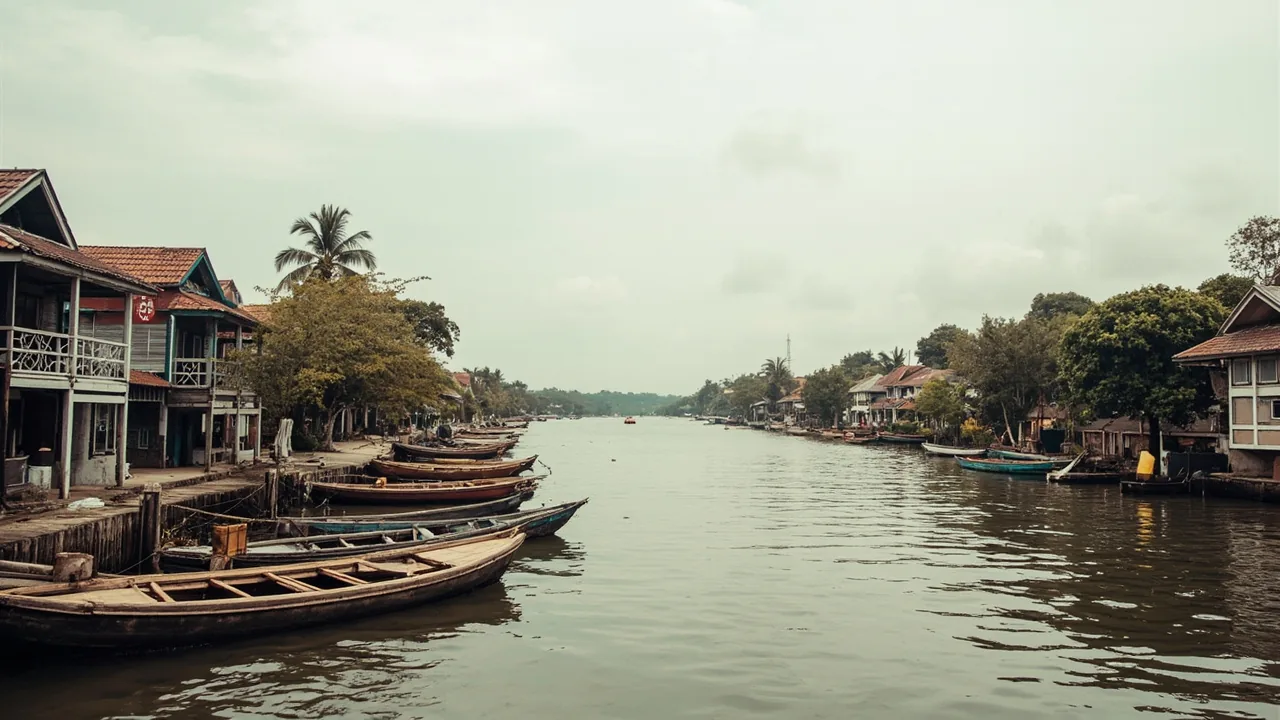
Kampot is Cambodia’s slow-cooked riverside town, famous for its pepper, its sunsets over the Praek Tuek Chhou, and a dusty French-colonial main strip that still feels like 1995. This Kampot guide covers how to get there, where to stay, what to eat, the pepper-farm and kayak half-days, and onward routes toward Sihanoukville and the islands. You should go if you want three nights of doing nothing important, badly. If you want temples, museums, or nightlife that pushes past midnight, this is not your stop.
Prices and routing in this guide were cross-checked against 12go on 22 July 2026, and the dorm rates for Onederz Kampot, Karma Traders, and Funky Moon were spot-checked against their live Hostelworld listings the same day.
Quick Answers
| What | Answer | Price (INR) |
|---|---|---|
| Best time to visit | Nov to Feb (dry, cooler) | , |
| Dorm bed per night | ₹483-₹1,158 (~5-12 USD) | , |
| Visa-on-arrival fee | ₹2,896 (~30 USD) | , |
| Pepper farm tour | ₹1,158-₹1,931 (~12-20 USD) | , |
| Tuk-tuk around town | ₹193-₹483 (~2-5 USD) | , |
| Local beer (Anchor) | 0.75 USD | , |
Verified 22 July 2026 at 1 USD = ₹96.33.
How to Get There (From Phnom Penh)
Most Indian travellers reach Kampot from Phnom Penh or from the coast at Sihanoukville, as part of the wider Southeast Asia backpacking hub. Phnom Penh to Kampot is the standard route. The bus takes 4 to 5 hours, runs all day, costs ₹772-₹1,158 (~8-12 USD), and drops you on the main road 2 km outside the centre. A tuk-tuk from the drop-off point into town is ₹193-₹290 (~2-3 USD).
| Mode | Duration | Cost | Book |
|---|---|---|---|
| Bus (Giant Ibis / Mekong Express) | 4-5 h | ₹772-₹1,158 (~8-12 USD) | Book on 12go |
| Minivan | 3-4 h | ₹965-₹1,448 (~10-15 USD) | Book on 12go |
| Taxi (shared) | 3 h | ₹1,448-₹1,931 (~15-20 USD) | Book on 12go |
Coming from Sihanoukville, you can also do a 2-hour minivan transfer. Most travellers book on 12go because you can compare every operator’s price and timing in one search and pay by card.
Subodh’s Pro Tip: Avoid the last evening bus out of Phnom Penh. The road between Sihanoukville and Kampot is single-lane in places, and night buses are more expensive for what you get.
Where to Stay
Kampot’s hostels cluster around the riverfront and the old French quarter. Dorms run cheaper than Phnom Penh, but the better places fill up fast in November and December.
| Hostel / Guesthouse | Cost/night | Vibe | Book Here |
|---|---|---|---|
| Funky Moon Kampot | ₹579-₹965 (~6-10 USD) | Riverside, social, small | Check prices |
| Onederz Kampot | ₹676-₹1,158 (~7-12 USD) | Pool, reliable chain, AC dorms | Check prices |
| Karma Traders Kampot | ₹483-₹869 (~5-9 USD) | Backpacker hub, bar downstairs | Check prices |
| Arcadia Waterpark Hostel | ₹579-₹965 (~6-10 USD) | Day-pass pool, party lean | Check prices |
| Yellow Star Kampot | ₹483-₹772 (~5-8 USD) | Quiet, family-run | Check prices |
| Subodh’s pick: Onederz Kampot, because AC dorms matter in March-April and the pool saves you when the river turns silty. Travellers report that Funky Moon is friendlier and smaller, but it books out a week ahead in high season. |
What to Eat
Kampot is known for three food stories: pepper, durian when it is in season (May to August), and fresh river fish. Most local restaurants grill fish on the riverfront in the evening, with the bill running ₹483-₹772 (~5-8 USD) for a whole tilapia with rice.
- Chili and Kampot pepper crab: Cracked crab stir-fried with local green peppercorns and garlic. Hot, fragrant, worth the mess. Find it at Chateau Kampot, around ₹772-₹965 (~8-10 USD) for a portion big enough for two.
- Num pang: Cambodia’s answer to a Vietnamese banh mi. Grilled pork or chicken in a baguette with pickled carrot and cucumber. ₹145 (~1.50 USD) at most riverfront stalls, and there is a decent veg version with egg.
- Fish amok: A mild coconut-fish curry steamed in banana leaf. Vegetarian versions exist with tofu. ₹386 (~4 USD) at Vanna Restaurant & Bar in Kampot.
- Amok tofu (vegetarian): Same dish as above, made with tofu. Most tourist-facing kitchens in the centre will do this on request. ₹290-₹386 (~3-4 USD).
- Beer and Anchor on the river: A ₹72 (~0.75 USD) Anchor at sunset is the cheapest therapy in Cambodia. IB TAPHOUSE Craft Beer Kampot is the place if you want something stronger.
- Indian food fix: Curry Mahal is the one consistent Indian spot in town, with a full vegetarian thali running ₹579-₹772 (~6-8 USD). Expect slower service than you would get at a Cambodian place.
- Bamboo rice: Sticky rice and coconut cooked inside bamboo tubes, sold by street vendors near the market in the morning. ₹97-₹193 (~1-2 USD).
Safety Alert: Tap water is not drinkable in Kampot. Stick to bottled water (₹48 (~0.50 USD) at any minimart) and avoid ice from street carts that you cannot see being made from clean water.
What to Do
The whole town can be covered on foot or by rented scooter in three days. Most travellers split it into a pepper-and-cave day, a river-and-kayak day, and a slow coffee day.
-
Kampot Pepper Plantation tour: The reason most people come here. A half-day tuk-tuk tour of the farms costs ₹1,158-₹1,931 (~12-20 USD) and usually includes a salt lake or secret lake stop. Travellers report the La Plantation tours are the most professional, with English-speaking guides who explain how the four pepper varietals differ. Book Kampot Cambodia pepper plantation tour
-
Green Cathedral kayak at sunset: A flooded forest 30 minutes upriver where the branches form a green tunnel over the water. A well-reviewed “Green Cathedral Kayaking Journey” run by local guides includes transport and a guide for ₹1,158-₹1,738 (~12-18 USD). Book Green Cathedral Kayaking Journey tour
-
Tuek Chhou waterfall: 12 km outside town, the upstream end of the river. Cold water, local families, almost no tourists. A tuk-tuk there and back with waiting time is ₹965-₹1,448 (~10-15 USD). Book Tuek Chhou tour
-
Phnom Chhngok Cave Temple: A 7th-century brick Shiva shrine inside a limestone cave, 20 minutes out of town. Worth the trip if you are heading that way anyway. Book Phnom Chhngok Cave tour
-
Kampot River beach at sunset: The strip of sand on the river just east of town at low tide. Free, walkable from most hostels, and the best sunset in Cambodia. Book Kampot River beach tour
-
Biscuit factory and bike tour (half day): The Guided Bike Tour with Biscuit Tasting and Kayaking is a four-hour loop that mixes a small factory visit with a river paddle. ₹1,738-₹2,413 (~18-25 USD). Book Guided Bike Tour with Biscuit Tasting and Kayaking tour
Subodh’s Pro Tip: Most of these tours can be booked the night before through your hostel or directly with a well-reviewed tuk-tuk driver named Rany, who charges a fixed ₹1,448 (~15 USD) for a half-day pepper loop.
Getting Connected
A local tourist SIM (Smart or Cellcard, 7 days, ~10 GB data) costs ₹290 (~3 USD) at Phnom Penh airport or any Smart shop in Kampot town. Travellers report that coverage in the centre is fine but drops fast on the road to the pepper farms. Most hostels offer free WiFi, but it slows to almost nothing between 7 and 9 pm when every guest is on video calls.
If you want data before you land or you are switching countries inside Southeast Asia, Get Nomad eSIM is the easiest option, with regional plans covering Cambodia, Vietnam, and Thailand on one QR code.
Daily Budget Breakdown
Verified 22 July 2026 at 1 USD = ₹96.33.
| Category | Budget/day |
|---|---|
| Dorm bed | ₹579-₹965 (~6-10 USD) |
| Food (3 meals) | ₹483-₹772 (~5-8 USD) |
| Local transport (tuk-tuk + scooter fuel) | ₹290-₹579 (~3-6 USD) |
| Activities (1 tour) | ₹1,158-₹1,738 (~12-18 USD) |
| Misc / drinks | ₹193-₹386 (~2-4 USD) |
| Total | ₹2,703-₹4,440 (~28-46 USD) |
This is what our travellers spent, not what blogs say. Kampot is cheaper than Phnom Penh by about ₹965-₹1,448 (~10-15 USD) a day, and noticeably cheaper than Siem Reap, mainly because there is no temple ticket to pay.
Where to Go from Here
| Destination | Mode | Duration | Price | Book |
|---|---|---|---|---|
| Phnom Penh | sleeper | 5 h | , | Book on 12go |
| Sihanoukville | bus | 2 h 30 m | ₹676 (~7 USD) | Book on 12go |
| Koh Rong | speedboat | 1 h 30 m | ₹1,448 (~15 USD) | Book on 12go |
| Koh Rong Samloem | speedboat | 02 h | ₹1,448 (~15 USD) | Book on 12go |
| Ho Chi Minh City | bus | 10 h 30 m | ₹2,510 (~26 USD) | Book on 12go |
| Battambang | sleeper | 6–7 h | , | Book on 12go |
| Siem Reap | sleeper | , | , | Book on 12go |
Most backpackers head to Koh Rong for the beach week, then loop back through Phnom Penh for the Siem Reap temple run. The Ho Chi Minh City bus is a long but cheap option if you are crossing into Vietnam.
Visa / Entry Notes
Most Indian travellers fly into Phnom Penh or Siem Reap and pick up their visa there. The full Cambodia visa process for Indians is covered in our Cambodia essentials guide. Quick version:
- Visa-on-arrival: ₹2,896 (~30 USD), available at all international airports.
- e-Visa: ₹3,475 (~36 USD), applied for at evisa.gov.kh.
- Both give 30 days single entry. One passport-size photo (4x6 cm, white background) is required for VoA.
If you entered Cambodia overland from Thailand or Vietnam, you already have your visa and this section does not apply.
Common Mistakes
- Skipping the pepper tour because it “sounds touristy.” It is the single best half-day activity in southern Cambodia and the main reason most backpackers add Kampot to their route at all.
- Booking the Ho Chi Minh bus the day before in peak season. The ₹2,510 (~26 USD) sleeper sells out a week ahead in December and January. Book at least 3 days ahead on 12go.
- Exchanging money at the Kampot night market. The rates are 2 to 3 percent worse than any of the money changers on the main road, and they take a commission on USD notes they claim are “old.” Use a proper money changer in town or withdraw from an ABA/Canadia Bank ATM.
Safety Alert: For any current advisory on road conditions, border tensions, or weather warnings, check the Indian Ministry of External Affairs advisory page at mea.gov.in before you travel, and cross-check with the Cambodian Ministry of Foreign Affairs site.
FAQ
Is Kampot safe for solo Indian women?
Yes. The town is small, low-key, and the guesthouse and homestay scene is used to solo travellers. Common-sense precautions (lock your scooter helmet, do not walk back from a riverside bar alone at 2 am) apply the same way they do in any small Southeast Asian town.
Can I get Indian food in Kampot?
Yes, Curry Mahal is the one consistent option in town, with a full vegetarian thali at ₹579-₹772 (~6-8 USD). If you are fully vegetarian and you want Indian food daily, you can also stock up at any of the local markets and ask a guesthouse kitchen to cook to order.
How many days do I need in Kampot?
Two nights is the minimum that lets you do a pepper tour and a kayak trip. Three nights lets you add a slow coffee morning and a sunset scooter loop. Anything past four nights and you are mostly reading a book by the river, which is fine but not what most backpackers have time for.
Is the Kampot pepper worth buying?
Yes. Real Kampot pepper has protected geographical status, similar to Champagne. A 200 g pack at the farm costs ₹483-₹676 (~5-7 USD) and is three to four times cheaper than the same product in a Phnom Penh airport shop.
Should I do Kampot before or after the islands?
Most travellers do Kampot first and Koh Rong second. The bus to the coast is 2.5 hours, the boats run from Sihanoukville pier, and it is a clean one-way hop. Doing the islands first means a long bus back to Phnom Penh and then another bus to Kampot, which wastes a full travel day.
Do I need a tuk-tuk for the whole trip?
Not really. Most of central Kampot is walkable. You need a tuk-tuk or scooter for the pepper farms and the waterfall, which is ₹965-₹1,448 (~10-15 USD) for a half-day hire.
Subodh’s Take
Kampot is what you go to when you have had enough of temples and tuk-tuk scams. Stay three nights, eat crab, kayak the green cathedral, buy too much pepper, and move on. The town is honest about what it is, and that is the rare part.
