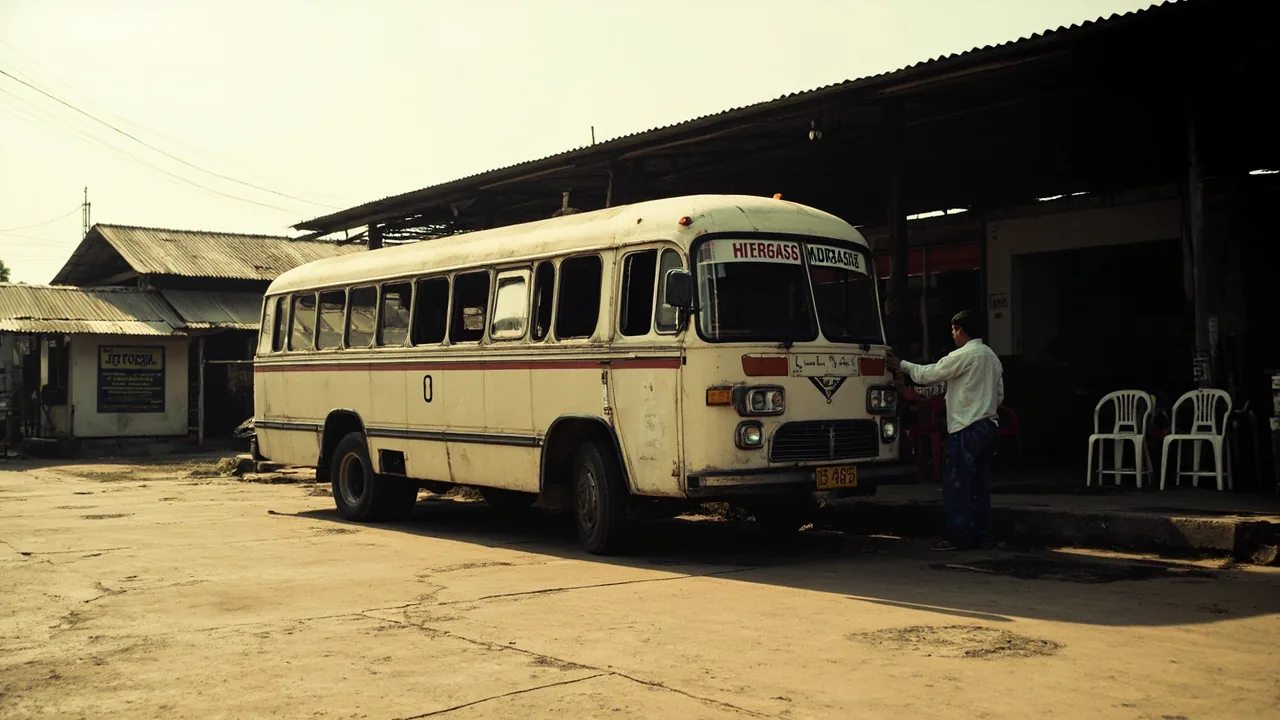
Getting Around Myanmar on a Budget: Buses vs Trains, Flights, Border Crossings & Airport Transfers
Myanmar is one of the cheapest countries in Southeast Asia to get around once you are inside it. A Yangon to Bagan night bus can cost less than a single meal back home, and the train from Yangon to Mandalay is a full-day cultural experience for the price of two coffees in Bangkok. The catch: the international leg (your flight from India) is the most expensive part, and the entry mechanics (e-Visa, SIM, airport transfer) eat up the first half-day if you do not plan them. This guide sorts out the cheapest way to travel around Myanmar as a backpacker, what each leg costs in 2026, and where Indians routinely waste money they did not have to. For related planning, see our guide on Sea Backpacking Hub.
Subodh’s Pro Tip: One Myanmar eSIM from Nomad or a tourist SIM from MPT at Yangon airport gives you Google Maps, Grab equivalents (we discuss this below), and translation for the entire trip. Skip the airport taxi queue.
Quick Answers
| What | Answer | Price (INR) |
|---|---|---|
| Cheapest inter-city transport | Yangon. Bagan night bus, ~9 hours | ₹1,500 (~$15.57) |
| Yangon. Bagan train (slow, scenic) | Ordinary class, ~17 hours | ₹800 (~$8.30) |
| Cheapest flight India to Myanmar | Kolkata or Delhi to Yangon, one-stop | ₹18,000 (~$186.84) round trip |
| Cheapest overland border | Mae Sot (Thailand) to Myawaddy (Myanmar) | ₹200 (~$2.08) |
| Yangon Airport to downtown | Airport bus, 60–90 min | ₹300 (~$3.11) |
Daily Budget Reality Check: What Travel Around Myanmar Costs
Before we get into transport specifics, here is the daily backpacker cost context, because transport only makes sense once you know what the rest of the trip is costing.
At today’s rate, 1 INR equals roughly 39 MMK (Myanmar Kyat), and 1 USD is approximately ₹96.53. If you stay in dorms, eat street food, and take buses, a realistic Myanmar daily budget is:
- Dorm bed: 10,000–20,000 MMK (canonical range across Yangon, Bagan, Mandalay, Inle). Bagan dorms lean higher (up to 25,000 MMK) during peak season.
- Street food meals: 2,000–5,000 MMK per meal. Mohinga (fish noodle soup) at a tea shop is around 2,500 MMK; a plate of Shan noodles is 3,500 MMK.
- Local transport (city buses, short taxis): 500–2,000 MMK per ride.
- Inter-city transport (bus or slow train): 8,000–20,000 MMK per leg depending on distance and class.
Add it up and a tight-budget backpacker spends roughly 40,000–60,000 MMK per day (about ₹1,000-₹1,500 (~$10.38-$15.57)), which makes Myanmar one of the cheaper Southeast Asian countries for daily spend, even if the international flight is the priciest part of your trip. For a deeper daily breakdown by category, see the Myanmar daily budget guide.
Subodh’s Pro Tip: Carry clean, crisp USD bills in small denominations (₹482 (~5 USD), ₹963 (~10 USD), ₹1,927 (~20 USD)) as a backup. Cards barely work outside Yangon and Mandalay. Many guesthouses and bus counters quote in USD even though you pay in kyat at the going rate.
Cheapest Inter-City Travel: Buses vs Trains vs Flights Inside Myanmar
Once you have arrived in Yangon, you have three ways to get around: long-distance bus, train, or domestic flight. Each has a clear use case.
Buses: The Backpacker Default
Overnight buses are the workhorse of Myanmar travel. They are cheap, frequent, and connect every major backpacker stop (Yangon, Bagan, Mandalay, Inle, Hpa-An, Ngapali in season). Most routes run nightly, departing around 7–9 PM and arriving 6–9 AM, saving you a night’s accommodation.
Yangon to Bagan is the classic example: 9–10 hours, around 15,000–25,000 MMK depending on the operator and class. Yangon to Mandalay is similar. Mandalay to Inle (via Taunggyo or direct) is 8–9 hours.
For booking, the best move is to show up at your hostel the day before and have them call a ticketing agent, or use the 12go platform directly. Here are the key routes:
- Book Yangon to Bagan bus on 12go
- Book Yangon to Mandalay bus on 12go
- Book Mandalay to Inle bus on 12go
Bus classes range from “ordinary” (no AC, wooden seats, dusty) to “VIP” (reclining seats, AC, blanket, water). For a 9-hour night ride, spend the extra 5,000 MMK for VIP. Your back will thank you.
Trains: The Slow, Scenic Choice
Myanmar’s rail network is a relic. It is slow (Yangon to Bagan takes 17+ hours, often longer), often delayed, and trains are old. But travellers report that the ordinary-class train from Yangon to Mandalay is one of the great rail journeys in Asia, even at the speed of a bullock cart.
Yangon to Bagan ordinary class costs around 8,000–12,000 MMK and takes 17 hours. Upper class is double that. Tickets go on sale at the station a few days in advance, and you can sometimes buy them the day before through your hostel. If you have time and want a story rather than a destination, take the train. If you have a tight schedule, take the bus.
Domestic Flights: Only When You Are Short on Time
Domestic flights on airlines like Air KBZ, Myanmar National Airlines, and Golden Myanmar Airlines are available on the Yangon. Bagan, Yangon. Mandalay, and Yangon. Inle routes. They run ₹4,817-₹8,671 (~50-90 USD) one-way depending on the route and how far ahead you book. As a backpacker, this is rarely the cheapest option, but it becomes the right option if you are short on time (a 3-day Myanmar trip, for example) or doing the Yangon to Ngapali beach route.
One practical note: domestic flights have been disrupted repeatedly due to the security situation. Check current status before booking, and prefer morning flights (less likely to be cancelled).
Buses vs Trains, Yangon to Bagan: A Direct Comparison
This is the single most-Googled transport question for Myanmar, so here is the side-by-side:
| Factor | Night bus (VIP) | Ordinary train |
|---|---|---|
| Journey time | 9–10 hours | 16–18 hours |
| Cost | 18,000–25,000 MMK (~₹450–630 or ~$5–8) | 8,000–12,000 MMK (~₹200–300 or ~$2–3) |
| Comfort | Reclining seat, AC, blanket | Wooden bench, open windows, dust |
| Scenery | Mostly dark, you sleep | Full day across the dry zone, river crossings, villages |
| Reliability | Usually on time | Often delayed 1–4 hours |
| Arrival feeling | Rested, ready for Bagan temples | Story to tell, slightly shell-shocked |
| Best for | Tight schedules, anyone who values sleep | Backpackers with 2 extra days and a love of slow travel |
My take: take the bus there, train back, or vice versa. The bus wins on time and sleep; the train wins on experience. If you can only afford one, take the bus.
Cheapest Flights from India to Myanmar
There are no direct flights from India to Myanmar in 2026. All routes connect through a regional hub.
Typical round-trip prices from major Indian cities:
- Delhi to Yangon: ₹18,000-₹28,000 (~$186.84-$290.64) round trip, usually one-stop via Bangkok (Thai Airways, Air India) or Kuala Lumpur (AirAsia, Malaysia Airlines).
- Mumbai to Yangon: ₹20,000-₹32,000 (~$207.60-$332.16) round trip, usually one-stop via Bangkok or Singapore.
- Kolkata to Yangon: ₹15,000-₹22,000 (~$155.70-$228.36) round trip, often the cheapest option thanks to short-hop carriers like AirAsia, Thai Smile, or IndiGo codeshares. Kolkata has the most flight options and the lowest fares.
Cheapest booking strategy: book 4–6 weeks ahead on Skyscanner or Google Flights, fly out of Kolkata, and accept a Bangkok or KL layover. Tuesday and Wednesday departures are typically cheaper than weekends.
For full Myanmar trip planning including package comparisons, see the Myanmar tour package price guide.
Thailand to Myanmar Overland Border Crossings
There are several land border crossings between Thailand and Myanmar, and for backpackers coming from Bangkok or Chiang Mai, overland is cheaper and more interesting than flying.
The two crossings that work for tourists in 2026:
Mae Sot (Thailand) to Myawaddy (Myanmar) is the most-used. It is the eastern gateway, convenient if you are coming from Chiang Mai or Bangkok heading toward Yangon. You can do it in one day: morning bus from Bangkok to Mae Sot (8–9 hours, around), walk across the Friendship Bridge, get a Myanmar entry stamp (make sure you have your e-Visa ready), and continue by bus to Yangon (another 9–10 hours, around 15,000 MMK).
Ranong (Thailand) to Kawthaung (Myanmar) is the southernmost crossing. Useful if you are heading to the southern Myanmar peninsular region or crossing over from Thailand’s Andaman coast. From Ranong, buses run to Chumphon and Bangkok.
Safety Alert: Myanmar’s security situation is highly variable and changes without warning. Before crossing any land border, check the Indian Ministry of External Affairs travel advisory at mea.gov.in and the Myanmar government’s own advisories. Several border regions have seen periodic tension that has led to temporary border closures or restrictions on Indian passport holders. Do not assume a border that was open last month is open this week.
For full e-Visa application steps for Indian passport holders, see the Myanmar e-Visa guide for Indians. Current 2026 fee is ₹4,817 (~50 USD), single entry, valid for 28 days, applied through the official portal at https://evisa.moip.gov.mm. Apply at least 7 working days before travel; processing is officially 3 days but allow buffer.
Yangon Airport to Downtown: Cheapest Transfers
Yangon International Airport is about 15–16 km north of the downtown area. You have three main options:
Airport bus: The cheapest option. Runs regularly during the day, costs around 500 MMK, takes 60–90 minutes depending on traffic. Drops you at the central bus area near Sule Pagoda. This is what backpackers should take.
Official airport taxi: Fixed-price counters inside the arrivals hall. Around 8,000–10,000 MMK to downtown. Faster (30–45 min), safer than haggling, and the price is set.
Grab (ride-hail): Grab operates in Yangon. From the airport, expect 6,000–8,000 MMK. Cheaper than the official taxi counter sometimes, but more expensive than the bus. Use Grab if you arrive late at night and the bus is not running.
Avoid: anyone who approaches you inside the terminal offering a “taxi” before you reach the official counters. Walk past them and find the proper desk.
For travellers connecting straight to a night bus to Bagan or Mandalay, the airport bus drops you near the bus terminals where long-distance buses depart. Plan a 2–3 hour buffer between landing and your bus.
Getting Connected: SIM and Data in Myanmar
You will need data from minute one: maps, Grab, translation, the bus operator’s contact. The two practical options for tourists:
Physical SIM at the airport: MPT and Ooredoo both have counters in Yangon and Mandalay airport arrivals. The tourist SIM is around ₹289 (~3 USD) for 7 days, with about 5 GB of data. This is the canonical price across operators in 2026. Bring your passport. The clerk activates it on the spot.
For deeper SIM comparisons and which operator works best in Bagan and Inle, see the best SIM card for tourists in Myanmar.
Common Mistakes Indians Make With Myanmar Transport
Mistake 1: Booking a flight from Bangkok to Yangon without checking the overland option. The flight is ₹5,780-₹9,634 (~60-100 USD) and 1 hour; the Mae Sot border crossing plus bus is around and 18–20 hours total. If you have time and want adventure, go overland. If you have 5 days in Myanmar, fly.
Mistake 2: Taking the Yangon to Bagan bus during the day instead of overnight. Day buses exist but you waste a full day of sightseeing. Night buses save accommodation and arrive at sunrise, perfect for temple-hopping in Bagan the same morning.
Mistake 3: Paying in dollars when kyat is accepted. Some hotels, tours, and bus operators quote in USD out of habit, but pay in kyat and you almost always get a better rate. Always ask “kyat or dollar?” before paying, and pay kyat.
Mistake 4: Not booking the Yangon. Bagan bus 1–2 days ahead during peak season (Nov. Feb). The VIP buses sell out, especially around full moon festivals at Bagan. Book at your hostel the day before, not on departure day.
Mistake 5: Assuming the train ticket office accepts cards or rupees. It does not. Bring kyat in cash. The Yangon central railway station ticket window is the official place to buy.
Mistake 6: Forgetting to allow for airport-to-bus-station transfer time. Yangon airport to the long-distance bus terminal is 30–60 minutes depending on traffic. Build a 3-hour buffer between your international flight and any same-day night bus.
What to Eat Between Buses and Trains
Long bus rides and train journeys in Myanmar come with food stops, and the stop food is part of the experience. But if you have dietary needs or are vegetarian, plan ahead.
For vegetarian Indian food during your Myanmar trip:
- The Moon Vegetarian Restaurant (Yangon): proper vegetarian Burmese dishes, clean kitchen, friendly to Indian travellers. Mohinga without the fish, Shan tofu, and dal-roti-style sets.
- Unique Mandalay Tea Room (Mandalay): light snacks, multiple vegetarian options, good for a quick meal between train rides. Tea and lentil curry sets.
- Izakaya AKIMOMI Mandalay Branch (Mandalay): Japanese izakaya with vegetable-heavy menu. Higher rated, useful when you need a break from Burmese flavours.
For local Burmese food, hit:
- Unique Myanmar Restaurant: a straightforward spot for trying mohinga and lahpet thoke (fermented tea leaf salad) at proper restaurant quality.
- Kyal Sin Thit: highly rated, strong on traditional Burmese curries.
- Elodie Restaurant: a charming, quieter option for a sit-down meal.
- Nourish Cafe Yangon: lighter, healthier plates when you have been on a bus for 9 hours and want a salad.
- MadameEm’s: a quaint local spot for an unhurried Burmese lunch.
Street food at bus stations: the tea shops (teashops are everywhere) serve mohinga and paratha for breakfast. Stick to cooked, hot food only. For more on food safety, see the street food and tap water safety guide.
FAQ
Is Myanmar safe to travel to in 2026? The situation is highly variable and changes without notice. Some regions (Yangon, Bagan, Inle, Mandalay) have been stable for tourist visits; other regions (much of Rakhine, Chin, Kachin, Shan state border areas) are off-limits or restricted. Check the Indian MEA travel advisory at mea.gov.in before booking, and again 48 hours before departure. For solo-specific safety guidance, see Myanmar safety for Indian solo travellers.
Should I take the bus or train from Yangon to Bagan? Bus if you value time and sleep, train if you value experience. Both are cheap. Bus is 9 hours, train is 17+ hours.
Can I cross into Myanmar from Thailand overland? Yes. Mae Sot to Myawaddy is the main one, and Ranong to Kawthaung for the south. You need an e-Visa in advance.
How much cash should I carry into Myanmar? Bring USD ₹19,268-₹38,536 (~200-400 USD) in clean, small bills as a backup. Withdraw kyat at airport exchange counters or change at your hotel. Cards work in Yangon and Mandalay, almost nowhere else.
Do I need a guide or can I travel solo? Solo is fine in Yangon, Bagan, Mandalay, Inle, and Hpa-An. For Myanmar solo travel experiences and Reddit threads, real backpackers report positive trips as long as you stay updated on the current advisory and avoid restricted regions.
Do I need any vaccinations? Hepatitis A and typhoid are recommended. For the full health kit, see Myanmar travel vaccinations.
What is the cheapest way to travel around Myanmar as a backpacker? Night buses between major cities (Yangon, Bagan, Mandalay, Inle), supplemented by ordinary-class trains where you have time, plus walking or local buses inside each city. Total inter-city transport across a 7–10 day Myanmar loop runs ₹3,000-₹6,000 (~$31.14-$62.28) per person.
Subodh’s Take
Myanmar is still one of Southeast Asia’s great transport bargains once you clear the international flight and the e-Visa. The country rewards the backpacker who plans the long bus rides in advance, carries enough kyat for places that do not take cards, and treats the slow train as a destination rather than a commute. Just stay alert to the advisory situation, get your e-Visa sorted before you fly, and pack patience for the border crossing if you are coming overland from Thailand.
