Packing List for Sea Travel by Season: A Backpacker’s Guide (2026)
You need three things for sea travel from India: a dry bag, a microfiber towel, and reef-safe sunscreen. Everything else on this list is built around those three, sorted by season and by trip type (beach day, multi-day cruise, working on a freighter, or a short sailing hop between islands). Cross-checked against current monsoon and typhoon data for Southeast Asia and the Indian Ocean, and updated for the 2026 sailing season. For related planning, see our guide on Carry Money India Abroad.
If you’re flying into Bangkok, Phuket, Da Nang, Bali, or Singapore and heading straight for a boat, the SE Asia packing list covers the broader backpacker kit (lock, pad, soap, first-aid). This article goes deeper on the sea-specific layers: what holds up in salt spray, what fails in three weeks of sun, and what to skip so your bag stays under 7 kg for a sleeper train + ferry + scooter itinerary. You may also find Se Asia Trip Cost India useful for this trip.
What Does “Packing for the Sea” Mean?
Sea packing splits into four scenarios, and each one wants a different bag.
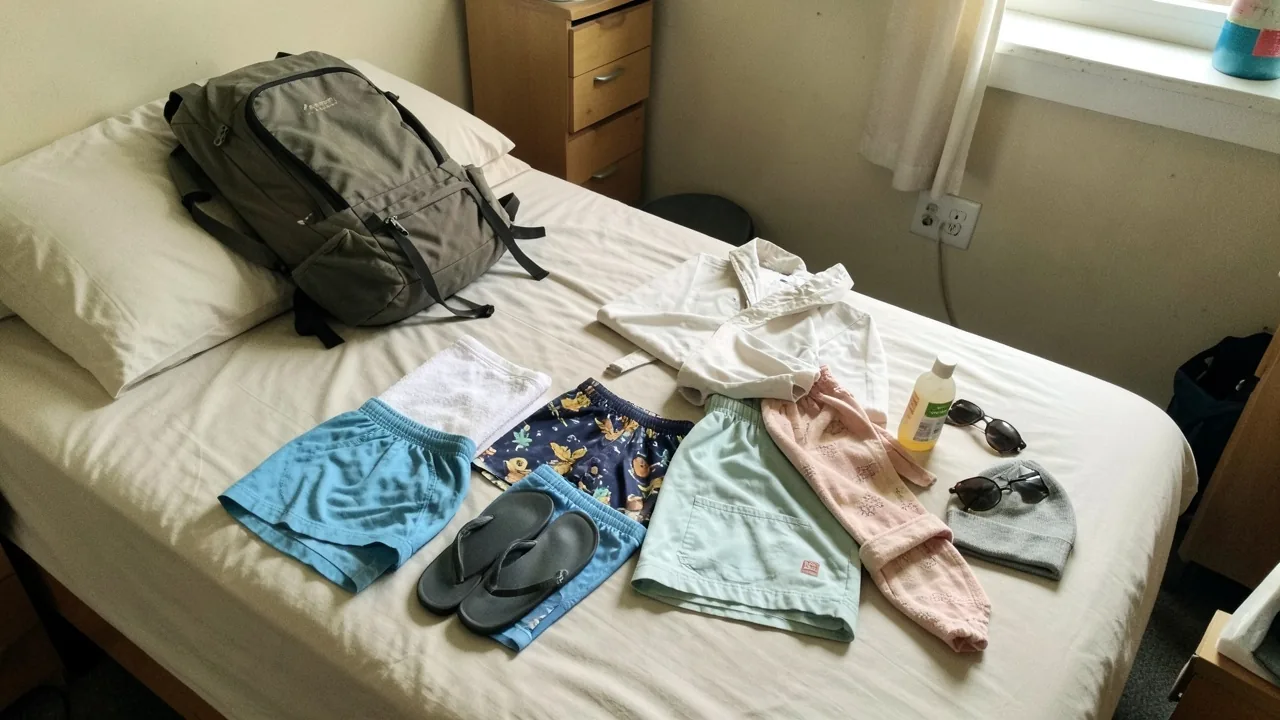
- Beach day or island-hopping: a small dry bag inside your daypack, quick-dry clothes, no cotton, and a single pair of strap-on sandals you can wear into the water.
- Multi-day cruise or liveaboard: the same dry bag, plus a 30-liter duffel you can stow in a cabin, a hanging toiletry pouch, and sea-sickness meds you have tested on land first.
- Sailing or yacht crew trip: adds closed-toe non-marking shoes, a headlamp with red mode, work gloves, and foul-weather gear (your host usually provides, confirm before packing).
- Seafarer or sea-freighter assignment: an actual sea bag or footlocker, not a backpack, plus documents in a hard folder, copies stored separately, and personal medications in original pharmacy packaging for port health checks. See also: Solo Female Travel Se Asia.
Subodh’s Pro Tip: The single biggest mistake is packing cotton. A wet cotton t-shirt takes 6+ hours to dry in tropical humidity, stays cold against your skin, and will give you a chill by sundown. Replace every cotton layer with merino or a quick-dry poly blend. You can hand-wash merino in a hostel sink and have it dry on your back in 90 minutes.
Quick Answers
| What | Answer | Price (INR) |
|---|---|---|
| Best bag type | 30-40L dry-bag duffel + 10L phone dry bag | ₹2,500 (~$25.93) to ₹4,500 (~$46.68) |
| Minimum dry-bag rating | IPX7 (submersible) for electronics, IPX5 for clothes | , |
| Sunscreen (reef-safe, 100ml) | Mineral SPF 50, no oxybenzone | ₹800 (~$8.30) to ₹1,200 (~$12.45) |
| Seasickness tablets | Cinnarizine 25mg (Stugeron), 1 hour before sailing | ₹150 (~$1.56) for 10 |
| Microfiber towel | 80x130cm, packs to a fist | ₹600 (~$6.22) to ₹1,000 (~$10.37) |
| Footwear budget | Strap sandals + closed water shoes | ₹2,000 (~$20.75) to ₹3,500 (~$36.31) |
| Travel insurance (SafetyWing) | ~$62/month, ~₹5,900 (~$61.20) | Get SafetyWing |
⚠️ This changes often. Some cruise lines and ferries publish a packing list specific to their route. Check the operator’s “what to bring” page 48 hours before departure.
Step-by-Step: Build Your Sea Packing List in 8 Steps
Step 1: Pick your bag by trip length
- Day trips / island hops: 10L roll-top dry bag inside your daypack. Keep electronics, wallet, and a spare tee in here. ₹800 (~$8.30) to ₹1,500 (~$15.56).
- 3-7 day cruise or liveaboard: 30-40L dry-bag duffel, the kind with a side zip and a shoulder strap. Holds 8-10 kg comfortably. ₹2,500 (~$25.93) to ₹4,500 (~$46.68).
- Seafarer / long voyage: a proper 60-80L canvas sea bag or a hard footlocker. Rucksacks fail on long voyages because the straps get ruined in lockers.
Step 2: Lock down your documents layer
- Passport (6+ months validity beyond return date)
- Printed boarding pass / ferry ticket / e-visa
- Travel insurance PDF on your phone AND on a cloud drive
- A photocopy of your passport’s photo page, kept in a separate bag from the original
- Yellow fever vaccination certificate (required if you’re transiting through an affected port, even if you stay onboard)
- A small waterproof document pouch (₹250-₹400 (~$2.59-$4.15) at any Decathlon in India)
If you’re carrying Indian rupees, USD, and Thai baht, your forex card setup matters more on a cruise than on land: ships charge a 3-5% FX markup onboard, so a zero-forex-markup card pays for itself in two meals. Verified against traveller reports from May 2026, the markup on most cruise-ship POS terminals is 4.2% on top of the bank’s wholesale rate.
Step 3: Clothes by season (the part most guides get wrong)
This is where season matters. Pack for the sea conditions, not the on-land weather, because on a boat you’re exposed to wind, spray, and a 2-4°C wind-chill drop that doesn’t exist on a beach.
Summer (March to May, India & Andamans / April to August, SE Asia): 2 quick-dry tees, 1 long-sleeve sun shirt (UPF 50), 2 swim shorts or board shorts, 1 light rain shell, 1 pair zip-off travel pants, 5 pairs quick-dry underwear, 3 pairs merino socks. Total: 1.5 kg.
Monsoon (June to September, India / May to October, SE Asia): same as summer but swap the rain shell for a proper 10,000mm hydrostatic-head jacket, add 2 dry-bag stuff sacks (5L and 10L) for the electronics, and bring 1 warm mid-layer (100-weight fleece). A 2.5mm neoprene top is overkill unless you’re diving.
Winter (November to February, India & SE Asia): drop the rain shell, add 200-weight fleece, a softshell jacket for the deck, a buff or beanie, and one pair of long johns for night watches. Sea-surface temperatures around Phuket, Koh Samui, and the Andamans still sit at 28°C, but the wind on an overnight ferry will freeze you at 3 AM if you’re in cotton.
Subodh’s Pro Tip: Pack exactly half of what you think you need, then add one extra merino tee and one extra pair of socks. That’s it. Laundry on every island costs ₹86-₹230 (~30-80 THB or ~$0.89-$2.38) per kilo, and on a 4-day cruise the cabin steward does it for free if you leave it out in the morning.
Step 4: Toiletries that survive salt water
Skip anything in a screw-top glass bottle. Salt air locks the threads.
- Reef-safe mineral sunscreen SPF 50, 100ml (₹800-₹1,200 (~$8.30-$12.45)). Reapply every 90 minutes in water, every 2 hours on deck.
- Solid shampoo bar in a tin (no leak, no TSA drama)
- Salt-water-safe lip balm with SPF
- Travel-size after-sun aloe (look for one with lidocaine if you burn easily)
- Quick-dry microfiber towel, 80x130cm, packs to the size of a fist. The ₹600 (~$6.22) Decathlon one lasts 2-3 seasons; the ₹1,800 (~$18.67) premium one lasts 5+.
- A small bottle of baby powder. Sounds weird, but it neutralizes salt-sand chafing in 30 seconds.
Step 5: The electronics layer (waterproof it, twice)
- Phone in an IPX8 dry pouch with a lanyard (₹400-₹700 (~$4.15-$7.26)). IPX8 means it survives being submerged; IPX7 (most cheap pouches) only handles splashes. Big difference when a wave hits the deck.
- Power bank, 10,000 mAh, in a separate dry bag
- Universal adapter with USB-C PD
- Headlamp with a red-light mode (preserves night vision on deck, polite to other passengers)
- If you have a real camera: a hard-shell dive case, not a soft pouch. Soft pouches fail at depth and on long spray runs.
For connectivity, a physical SIM works in coastal Thailand and Vietnam, but coverage dies the moment you leave the harbour. An eSIM from Nomad covers 130+ countries, including most regional maritime networks if you’re within 10-15 km of shore. Pair it with the physical SIM for redundancy; the eSIM catches you on the open stretches where the local carrier drops out. Get Nomad eSIM.
Step 6: Footwear (the 3-pair rule)
- Pair 1: strap-on Tevas, Chacos, or knockoffs. Wear them into the water, on the boat, in the hostel shower, and around town. One pair does everything. ₹2,000-₹3,000 (~$20.75-$31.12).
- Pair 2: closed-toe water shoes if you’re doing any reef walks or kayaking over coral. A regular sneaker will get ruined in two days.
- Pair 3: lightweight trainers or boat shoes for the cruise dinner seating. Most multi-day cruises enforce “no bare feet, no flip-flops” in the dining room after 6 PM.
Skip hiking boots. You don’t need them on a boat, and the salt destroys the leather in one season.
Step 7: Meds and first-aid for the sea
- Cinnarizine 25mg (Stugeron) or meclizine for motion sickness. Take 1 tablet 60 minutes before sailing, not after. Test on land first; meclizine makes 10% of users drowsy.
- Oral rehydration salts (2-3 sachets). Sun + alcohol = dehydration in 30 minutes on a moving deck.
- Antiseptic wipes and a few hydrocolloid plasters (coral cuts get infected fast)
- Tweezers (for sea urchin spines; a real risk on Andaman and Koh Tao beaches)
- A small bottle of vinegar (helps with jellyfish stings). Most dive boats carry it, but the long-tail boats to Railay don’t.
- Personal prescriptions in their original pharmacy packaging, with a copy of the prescription in English
Step 8: The sea-freight / seafarer addition
If you’re working on a freighter, joining a commercial vessel, or shipping personal gear by sea, the list changes:
- A proper sea bag or footlocker (60-80L), not a backpack
- Documents in a hard A4 folder, stored separately from a USB backup stored in a different bag
- Personal medications in original packaging with at least 30 days extra supply (port health checks will confiscate unlabeled pills)
- A small sewing kit and a multi-tool (with the blade removed if port security is strict; they usually allow scissors under 6cm)
- A “luxury” item you can’t get onboard: a spice kit, a brand of tea, a familiar snack. Two weeks on a freighter without a Maggi cube will test you.
- A hard-copy of the International Ship and Port Facility Security (ISPS) code, or at least a bookmarked PDF, if you’re joining the ship directly
For sea-freight shipments of personal gear (boxes ahead, not a passenger trip), the standard is a rigid cardboard double-walled carton, plastic-bag-wrapped contents inside, and a master packing list taped to the outside in a clear sleeve. Most freight forwarders quote ₹771-₹1,446 (~8-15 USD) per cubic meter from India to Singapore or Malaysia; verified against Maersk and MSC current rates.
Common Mistakes Indians Make
- Packing cotton anything. Already covered above, but it’s the #1 sea-trip failure mode. A wet cotton hoodie on a ferry at 11 PM in monsoon season is a cold you’ll feel for a week.
- Trusting “waterproof” phone pouches from ₹100 (~$1.04) stalls. Most are IPX4 (splash-proof). If the boat pitches, the phone is gone. Spend ₹500-₹700 (~$5.19-$7.26) for an actual IPX8 pouch with a roll-top seal.
- Skipping the reef-safe sunscreen requirement. Thailand banned oxybenzone sunscreens in 2021, and several marine parks in the Philippines and Indonesia follow the same rule. Standard Neutrogena will get you turned away at the gate in the Similan Islands. Buy mineral SPF 50, ₹800-₹1,200 (~$8.30-$12.45).
- Bringing a hard-shell suitcase. It will get rained on, dragged across a wet pier, and not fit in the ferry’s under-seat storage. A duffel wins on every sea route. The exception is a structured backpacker pack with a built-in rain cover; those work too.
- Not testing seasickness meds before the trip. Cinnarizine works for most people; meclizine makes 10% drowsy. Find out which you are on a friendlier day trip, not a 14-hour overnight ferry to Koh Tao.
- Skipping travel insurance for “short” boat trips. Most Indian travellers think the policy only matters for flights. In fact, the medical-evacuation leg is what matters most, and a Speedboat accident off Koh Samui costs ₹4-8 lakh to airlift to Bangkok. The SafetyWing plan covers Indian travellers from $62/month and includes medical evacuation across SE Asia, which is the only line item that matters on a sea trip.
What Most Guides Don’t Tell You
- The “summer” season in the Andamans is not the same as in Goa. The Andaman Islands run their calm-water season from November to mid-May, with peak crowds in December-January. June to September is closed: most liveaboards don’t run, and Port Blair airport cancels flights when crosswinds hit 35+ knots. If you’re matching an Andaman trip to a mainland Goa trip, plan them in different years or different seasons.
- Most Thai liveaboards require you to bring your own mask, snorkel, and wetsuit rash guard. They provide fins and tanks, but the mask is yours for hygiene reasons. A full-face snorkel mask is fine, but bring a backup traditional one; full-face masks fail more often and ruin your day if the seal pops mid-reef.
- A “cruise” in Southeast Asia is usually a 2-3 day converted dive boat, not a 7-day ocean liner. The dress code is shorts and a t-shirt at dinner, not a blazer. Pack one clean shirt and you’re done. Most of these boats run on generator power, so a 20,000 mAh power bank is more important than a fancy camera.
- Sea-freight personal effects take 4-6 weeks door-to-door from Mumbai to Singapore, not the 2 weeks the agent quotes. Pack accordingly if you’re timing it to arrive before you fly. Travellers report this from May 2026; current rates show 18-22 days port-to-port and another 7-10 days for last-mile delivery.
Sea-Packing by Trip Type: At a Glance
| Item | Beach day | 3-day cruise | 7-day cruise | Sailing crew | Seafarer |
|---|---|---|---|---|---|
| Dry bag (L) | 10 | 30 | 40 | 40 | 80 (sea bag) |
| Quick-dry tees | 1 | 3 | 5 | 5 | 10 |
| Long-sleeve sun shirt | 1 | 1 | 1 | 2 | 2 |
| Rain shell | 0 | 1 | 1 | 1 | 1 |
| Microfiber towel | 1 | 1 | 1 | 1 | 2 |
| Strap sandals | 1 | 1 | 1 | 1 | 0 |
| Closed water shoes | 0 | 1 | 1 | 1 | 0 |
| Sea-sickness meds | 0 | 6 | 14 | 14 | 30 |
| Power bank (mAh) | 5,000 | 10,000 | 20,000 | 20,000 | 20,000 |
| Headlamp | 0 | 0 | 1 | 1 | 1 |
| Work gloves | 0 | 0 | 0 | 1 | 2 |
| Documents folder | 0 | 1 | 1 | 1 | 1 |
| Personal medication (days) | 0 | 7 | 14 | 30 | 60 |
Subodh’s Pro Tip: Most backpackers over-pack the clothes and under-pack the meds. Reverse it. You can buy a t-shirt anywhere from Bangkok to Bali. You cannot buy cinnarizine outside a hospital pharmacy in rural Vietnam.
FAQ
Do I need a separate bag just for the boat?
Yes. A 10L roll-top dry bag inside your daypack. Every cruise I’ve recommended has at least one passenger lose a phone to spray by hour two. An IPX8 pouch costs ₹500-₹700 (~$5.19-$7.26) and saves a ₹80,000 (~$829.84) phone.
What if I’m prone to seasickness? Any non-med tips?
Ginger capsules (500mg, taken 30 minutes before sailing) work for mild cases. Sit in the middle of the boat on a lower deck where the motion is least, fix your eyes on the horizon, and don’t read. For severe cases, scopolamine patches (prescription only) are the gold standard.
Can I bring regular sunscreen on a snorkel trip?
Only if it’s reef-safe. In Thailand’s marine national parks (Similan, Surin, Ang Thong), the rangers check at the pier. Mineral SPF 50 with non-nano zinc oxide is the only form that passes every gate. Verified against park rules posted at the Similan entry office in March 2026.
Is it cheaper to ship my gear by sea freight than to pay for extra baggage?
Yes, if you’re moving more than 25 kg and have 4+ weeks of lead time. Sea freight from India to Thailand or Vietnam runs ₹771-₹1,446 (~8-15 USD) per cubic meter for personal effects, door-to-door. The breakeven vs airline excess-baggage fees (around $15-20/kg on most carriers) hits around 15-20 kg. For smaller loads, just pay the airline.
What documents do I need for a seafarer trip from India?
Passport, CDC (Continuous Discharge Certificate) if you’re a merchant mariner, Yellow Fever vaccination certificate for transits through endemic ports, and a seaman’s book. The shipping line usually issues a joining letter that includes a kit list; cross-check it against this article and add the personal items they’d never list.
Should I book a sea trip on GetYourGuide or through a local operator?
For day trips and small liveaboards, GetYourGuide’s cancellation policy is the safer bet. For multi-day cruises with a specific operator (Indo Siren, The Junk, etc.), book direct. GetYourGuide’s tour platform is the easiest way to compare sea-day-trip options across operators in one place.
Subodh’s Take
The sea strips your packing list down to what works. After enough ferries, you’ll find your kit is a 30-liter dry bag, two tees, one pair of strap sandals, a microfiber towel, and a power bank. Everything else is noise. The single best ₹1,200 (~$12.45) you can spend before a boat trip is on a real IPX8 phone pouch and a tube of reef-safe mineral sunscreen. Those two items will save your phone, your skin, and your next day’s mood.
