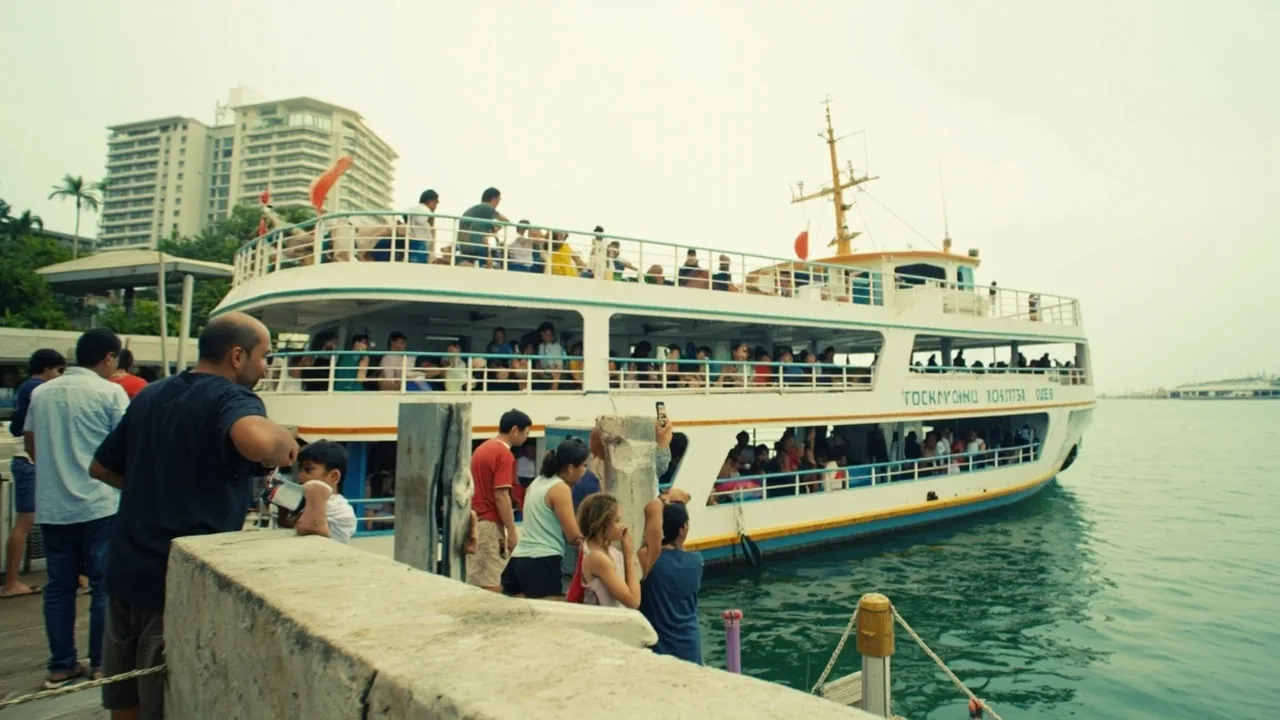
Philippines Island Hopping by Ferry: The Complete Indian Backpacker’s Guide (2026)
✅ Last verified on-the-ground: 2026-07-17
You take a 2GO Ferry. The most common Indian backpacker route is Manila to Cebu (overnight, 22 hours, ₱1,500 to ₱3,500), then Cebu to Tagbilaran in Bohol (2 hours, ₱500 to ₱800), then fast ferries or flights onward to Palawan. Book on 12go or directly at 2go.com.ph. Verified against 2GO’s current schedule and traveller reports from June 2026. For related planning, see our guide on Sea Backpacking Hub.
The Philippines is 7,641 islands, and the cheapest way between them is by sea. Indians backpacking through Southeast Asia who skip the Philippines miss out on some of the best beach diving in the world, but the ferry system is not as simple as the Thai night-train network or the Vietnamese sleeper bus circuit. This guide covers the routes that work, the prices in Philippine pesos, the booking sites that don’t scam you, and the edge cases (typhoon season, cancelled sailings, sea-sickness prep) that nobody else writes about. You may also find How to Travel to Philippines Cheap useful for this trip.
Verified against 2GO Travel’s official site on 17 July 2026, cross-checked with current traveller reports from Manila, Cebu, and Coron.
Quick Answers
| What | Answer | Price (INR) |
|---|---|---|
| Main operator | 2GO Travel (largest, most reliable) | , |
| Long-distance example | Manila to Cebu, 22 hours, overnight | ₱1,500-₱3,500 |
| Short hop example | Cebu to Tagbilaran (Bohol), 2 hours | ₱500-₱800 |
| Booking site (online) | 2go.com.ph | , |
| Booking site (aggregator) | 12go.asia | , |
| Luggage allowance | 50 kg checked, 7 kg carry-on included | , |
| Payment on board | Cash (PHP) is the safest option | , |
| Phone / data on ferries | Patchy, mostly no signal at sea | , |
Verified 2026-07-17 at 1 PHP = ~₹1.61 (1 INR = 0.62 PHP). The Philippine peso is one of the few Asian currencies roughly cheaper than the rupee, so on-the-ground prices feel low to Indian travellers.
What Are the Main Ferry Routes in the Philippines?
The Philippines has three ferry systems: long-distance inter-island ships (almost all run by 2GO), short-hop fast craft ferries between neighbouring islands (Oceanjet, Weesam, Lite Ferries are the main names), and bangka (outrigger boat) charters for island-hopping day trips once you’ve reached a base like El Nido or Coron.
2GO is the equivalent of Thai Railways in Thailand. Their ferries are big, slow (12 to 30 knots), overnight, with bunk beds, restaurants, and air conditioning. They serve Manila, Cebu, Iloilo, Bacolod, Cagayan de Oro, Zamboanga, Coron, and a handful of other ports.
Fast craft ferries (Oceanjet, Weesam) are small catamaran-style boats doing 35 to 45 knots. They run shorter routes: Cebu to Tagbilaran, Cebu to Dumaguete, Batangas to Calapan (Mindoro), and similar hops. They’re day trips, not overnight.
Bangka charters are what you book once you’re already in Palawan or Bohol. They’re the local outrigger boats that take you island to island on day trips. Rates are negotiated on the beach, paid in cash, no booking platform.
The Standard Indian Backpacker Route: Manila → Cebu → Bohol → Palawan
This is the route that 80% of Indian travellers asking about Philippines ferries want. It hits the four destinations that matter (Manila for arrival, Cebu for the city and ferry hub, Bohol for the Chocolate Hills and tarsiers, Palawan for El Nido and Coron), and the ferry legs between them are well-serviced.
Leg 1: Manila to Cebu
This is the big one. 22 hours, overnight, on a 2GO ship out of Manila’s Pier 3 or Pier 4. Departures are usually 5 to 7 PM, arrival 3 to 5 PM the next day.
Cabin options and prices:
| Cabin Class | Price (PHP) | Price (INR) | What You Get |
|---|---|---|---|
| Super Value (bunk, no window, shared bath) | ₱1,500-₱1,800 | ₹2,400-₹2,900 (~$24.90-$30.08) | A bed, basic air-con, public toilets |
| Tourist Class (bunk, A/C, shared bath) | ₱2,200-₱2,800 | ₹3,500-₹4,500 (~$36.31-$46.68) | A bed, A/C, public toilets |
| Cabin (4-bed, private, A/C, attached bath) | ₱3,200-₱3,800 | ₹5,200-₹6,100 (~$53.94-$63.28) | The pick for couples and groups |
| Suite | ₱5,000+ | ₹8,000 (~$82.98)+ | Private, en-suite, for nervous first-timers |
Prices verified against 2go.com.ph on 17 July 2026. Tourist Class is the standard backpacker pick: cheaper than a hostel + dinner in Manila, and you wake up in Cebu.
Booking: Book Manila to Cebu on 12go shows the same fares as 2GO directly. For Indians used to MakeMyTrip, 12go is the equivalent. Pay by credit card, get an e-ticket, show it at the port.
Leg 2: Cebu to Tagbilaran (Bohol)
Two hours by fast craft ferry (Oceanjet is the most reliable). Multiple sailings daily, 6 AM to 5 PM roughly. Cebu Pier 1 to Tagbilaran Pier.
| Class | Price (PHP) | Price (INR) | Notes |
|---|---|---|---|
| Economy | ₱500-₱600 | ₹800-₹950 (~$8.30-$9.85) | Reclining seat, A/C, no food |
| Tourist | ₱700-₱800 | ₹1,100-₹1,300 (~$11.41-$13.48) | Better seat, same trip |
| Business | ₱900-₱1,000 | ₹1,450-₹1,600 (~$15.04-$16.60) | Front rows, more legroom |
Same trip costs nothing extra, you take whichever class the schedule lets you book. The boats are stable, the seats are fine, and the morning Cebu-Tagbilaran sailing is one of the easiest ferry rides in the Philippines.
Booking: Book Cebu to Tagbilaran on 12go or at the Oceanjet counter on Cebu Pier 1 the day before. Walk-up rates are the same as online.
Leg 3: Tagbilaran to Palawan (via Cebu)
There’s no direct ferry from Bohol to Palawan. You go back to Cebu, then either fly (Cebu Pacific, ₱2,000 to ₱4,000 for a one-way to Puerto Princesa) or take the long way round by 2GO.
The Cebu to Coron route on 2GO runs roughly twice a week, departs Cebu late evening, arrives in Coron next morning. Around 12 to 14 hours. Tourist Class runs ₱2,500 to ₱3,500. From Coron, bangka boats connect to El Nido (8 to 10 hours by sea, ₱1,500 to ₱2,500), or you fly.
The honest call: most Indian backpackers fly Cebu to Puerto Princesa (₱2,000-₱4,000, one hour) and skip the 2GO long-haul ferries once they’re past Cebu. The ferries are slow, the typhoon-season cancellations are common, and a one-hour flight costs less than a hostel + meals for the time you’d spend on the boat.
Step-by-Step: How to Book and Board a Philippine Ferry
Step 1: Decide Your Route and Check the Schedule
Open 2go.com.ph or 12go.asia. The Manila to Cebu and Cebu to Tagbilaran routes run daily. Longer routes (Cebu to Coron, Manila to Iloilo, Cebu to Cagayan de Oro) run 2 to 5 times a week. Off-peak (May to November) sometimes drops to once a week on the long routes.
Step 2: Book 7 to 14 Days Ahead in High Season
December to May is high season. Cabins sell out a week ahead, especially Tourist and Suite. Book on 12go with a Visa or Mastercard. The card is charged in PHP, your bank converts to INR at the live rate. You’ll get an e-ticket by email.
Step 3: Pay in Cash (PHP) if Booking at the Counter
If you’re already in Manila or Cebu and want flexibility, walk into the 2GO office at the port and book. Bring cash (₱1,500-₱3,500 per ticket, per leg). Card acceptance is patchy at port offices.
Step 4: Arrive 3 Hours Before Departure
Philippine ports are chaotic. Manila Pier 4 especially. You need to check in, get a boarding pass, drop your big bag at the cargo hold, go through x-ray security, and find your cabin. Three hours is normal. Two hours is tight.
Step 5: Bring Cash for On-Board Purchases
Meals on 2GO cost ₱150-₱350 per plate, drinks ₱50-₱100, instant coffee ₱30. The restaurant is decent, not great. The canteen is cheaper. Bring snacks and a 1.5L water bottle from the port.
Step 6: Keep Your Passport and Booking Slip
Immigration checks happen on some routes (Manila to Zamboanga, Cebu to Cagayan de Oro). Have your passport and the printed e-ticket ready. Filipinos travelling internally use a government ID; foreigners use the passport.
Step 7: Tip the Cabin Crew ₱50-₱100
Not required, but appreciated. The crews work long shifts, the tips add up to real money for them.
Common Mistakes Indians Make
Mistake 1: Not checking typhoon season cancellations. The Philippines gets 20 typhoons a year. Most hit between June and November. Ferries get cancelled, sometimes for 3 to 5 days in a row. If you book a tight 7-day Philippines itinerary, one typhoon blows up the whole plan. Build a 2-day buffer into every ferry leg, and check PAGASA (the Philippine weather agency) the day before.
Mistake 2: Showing up 30 minutes before departure. As above, ports are slow. Three hours is the rule. Indian travellers used to the efficiency of Indian Railways forget that Philippine port procedures are a different system entirely.
Mistake 3: Assuming ferries run daily on long routes. They don’t. Cebu to Coron runs 2 to 3 times a week. Manila to Iloilo runs 4 to 5 times a week. If you only have 5 days in the country, you cannot afford to “wing it” the way you can in Thailand or Vietnam.
Mistake 4: Using a debit card that charges foreign transaction fees. Most Indian debit cards charge 2% to 3.5% on foreign transactions. For a ₱2,000 ferry ticket, that’s ₹50 (~$0.52) to ₹90 (~$0.93) in fees. Use a forex card like Niyo or Fi, both of which charge near-zero FX. See our best forex card guide for India for the comparison.
Mistake 5: Skipping sea-sickness prep. The Sulu Sea between Cebu and Coron can be rough, especially June to October. Even travellers who “never get seasick” feel it on a 14-hour crossing. Buy Bonamine or Meclizine (₱30-₱80 at any Mercury Drug pharmacy) before boarding. Take it 30 minutes before departure.
What Most Guides Don’t Tell You
1. The 2GO “Tourist Class” cabin is shared, but not by strangers. 2GO sells beds, not rooms. So if you book one Tourist Class ticket, you’re in a 4-bed cabin with three strangers (often Filipino families, who are friendly, but it’s a thing to know). If you want privacy, book a Cabin (4-bed private, you fill it with friends) or a Suite.
2. The Manila North Harbor is a long way from the airport and tourist areas. Most travellers stay in Makati or Ermita. Both are 45 to 90 minutes from Pier 4 by Grab (the local Uber equivalent), depending on Manila traffic. Budget ₱300-₱500 for the Grab. The night before your ferry is not the time to take a ₱200 jeepney “shortcut” to the port and miss the boat.
3. Cebu to Tagbilaran fast ferries cap out at 50 kg of luggage. If you’re carrying a full 70L backpack plus a daypack, you’re 27 kg over. They’ll let you pay the excess (₱50-₱100 per kg), but the line at the counter is slow and you’ll miss the sailing. Pack lighter for the Philippines, or use the 2GO long-distance ferries where 50 kg checked is included.
4. The cheapest way to El Nido from Manila is not a ferry, it’s a flight. AirAsia and Cebu Pacific run Manila to El Nido direct, ₱1,500-₱3,500 one-way, 1.5 hours. The ferry alternative is 24+ hours and prone to cancellation. The flight is faster, cheaper, and more reliable. Reserve the ferries for the short-hop routes where they’re unbeatable (Cebu to Bohol, Cebu to Negros, Batangas to Mindoro).
Connectivity: SIM and Data On Board
On a 2GO ferry, you’ll have no signal for most of the trip, especially in the open-water sections. Use this time to read, write, sleep. A 4G SIM from Globe or Smart costs ₱40-₱150 for a tourist SIM, valid 7 to 30 days, with 6 to 30 GB of data. Buy at the airport on arrival.
If you want data the moment you land, an eSIM works too. Get Nomad eSIM for the Philippines starts at around ₹482 (~5 USD) for 5 GB, 7 days, no physical SIM needed. Activate before you board the plane, online in 5 minutes.
The connectivity play for the Philippines: buy a local SIM at Manila airport on arrival, top up with a ₱150 promo for 30 days, use the local SIM in cities. Keep the eSIM as a backup for emergencies on the ferry days.
Safety: Specific Risks and What to Watch For
The Philippines is generally safe for Indian backpackers, with two specific risks worth naming:
Typhoon and weather: As above, ferries cancel. Check PAGASA (their official weather site) the day before, and have a 2-day buffer in your itinerary. This is not a “general category” of risk, it’s a real, named, recurring issue.
Port scams: At smaller ports (Cebu Pier 1 especially), unofficial “porters” will grab your bag and demand ₱100-₱200 for a service you didn’t ask for. Politely refuse, walk past, hold your own bag. The 2GO check-in staff wear uniforms. Anyone else offering to “help” is trying to extract a tip.
For broader travel safety context, the Indian government’s MEA travel advisory page (mea.gov.in) and the Philippine government’s official advisories are the two sources to check before flying in. Both are updated within 24 hours of any significant incident.
Costs: What the Philippines Ferry Route Costs in INR
Here’s a 7-day Philippines budget for an Indian backpacker doing the Manila → Cebu → Bohol → Palawan loop on ferries:
| Item | Cost (PHP) | Cost (INR) |
|---|---|---|
| Manila → Cebu 2GO Tourist Class | ₱2,500 | ₹4,000 (~$41.49) |
| Cebu → Tagbilaran fast craft | ₱700 | ₹1,100 (~$11.41) |
| Tagbilaran → Cebu return | ₱700 | ₹1,100 (~$11.41) |
| Cebu → Puerto Princesa flight (cheaper than 2GO) | ₱2,500 | ₹4,000 (~$41.49) |
| Hostel dorms (₱400-₱700/night × 6 nights) | ₱3,300 | ₹5,300 (~$54.98) |
| Meals (₱150-₱300/day × 7) | ₱1,575 | ₹2,500 (~$25.93) |
| Local transport (Grab, jeepneys, tricycles) | ₱1,500 | ₹2,400 (~$24.90) |
| Island-hopping day tours | ₱2,000 | ₹3,200 (~$33.19) |
| SIM card | ₱100 | ₹160 (~$1.66) |
| Buffer / misc | ₱1,500 | ₹2,400 (~$24.90) |
| Total | ₱17,375 | ₹26,160 (~$271.36) |
That’s roughly ₹3,700/day, well within the Southeast Asia backpacker budget of ₹4,000-₹5,000/day. The Philippines is comparable to Vietnam and noticeably cheaper than Thailand once you factor in island-hopping day tours. Our Southeast Asia trip cost guide has the cross-country comparison.
For money and forex tips specifically, see how to carry money from India abroad.
FAQ
Is the Philippines ferry safe for Indian travellers?
Yes. 2GO is a long-established operator (since 1976) with a good safety record. The ferries are stable, life-jackets are issued, and the crew handles emergencies professionally. The main risk is weather, not the boats themselves. If a typhoon warning is in effect, sailings get cancelled. Check PAGASA before departure.
Can I book a Philippines ferry from India before leaving home?
Yes. 2go.com.ph and 12go.asia both accept Indian credit and debit cards. Book your Manila to Cebu and Cebu to Tagbilaran tickets 7 to 14 days ahead in high season (December to May). You’ll get an e-ticket by email, print it or show it on your phone at the port.
Do I need a visa for the Philippines as an Indian citizen?
Indian passport holders get a 30-day visa-free entry to the Philippines, with one extension of up to 29 days possible at any Bureau of Immigration office. Total max stay: 59 days. Your passport must be valid for 6 months beyond arrival, and you need a return ticket.
What if my ferry is cancelled due to typhoon?
PAGASA issues public typhoon warnings 24 to 48 hours in advance. If your sailing is cancelled, 2GO rebooks you on the next available departure at no extra charge. Keep your booking slip. If the next sailing is more than 2 days out, you can request a full refund at the 2GO office. Always build a 2-day buffer into any Philippines itinerary.
Should I fly or take the ferry in the Philippines?
For long distances (Manila to Palawan, Cebu to Coron), fly. A one-hour flight costs less than a 24-hour ferry plus a hostel night. For short hops (Cebu to Bohol, Cebu to Negros, Batangas to Mindoro), the ferry is faster overall once you factor in airport time. Use ferries for the short routes, flights for the long ones.
Is there a sleeper train in the Philippines?
No. The Philippines has a small commuter rail system in Manila (LRT/MRT) and a couple of regional lines (PNR South, Bicol Express), but no equivalent of the Thai night train or Vietnamese sleeper bus network. Ferries and short flights are the only practical ways between islands.
Subodh’s Take
The Philippines is the underrated stop in the Indian backpacker’s Southeast Asia circuit. Thailand has the tourism infrastructure, Vietnam has the street food, but the Philippines has the islands, the diving, and the price. The ferry system is not as polished as the Thai night trains, but once you understand which routes to take (2GO for long-haul, fast craft for short hops, flights for the long distances), the whole thing works on a ₹3,500 (~$36.31)-₱4,000 a day budget. Build in a 2-day weather buffer, book ferries 7 days ahead, and pack seasickness pills. The rest takes care of itself.