Philippines Power Adapter, SIM & Airport Guide for Indians (2026)
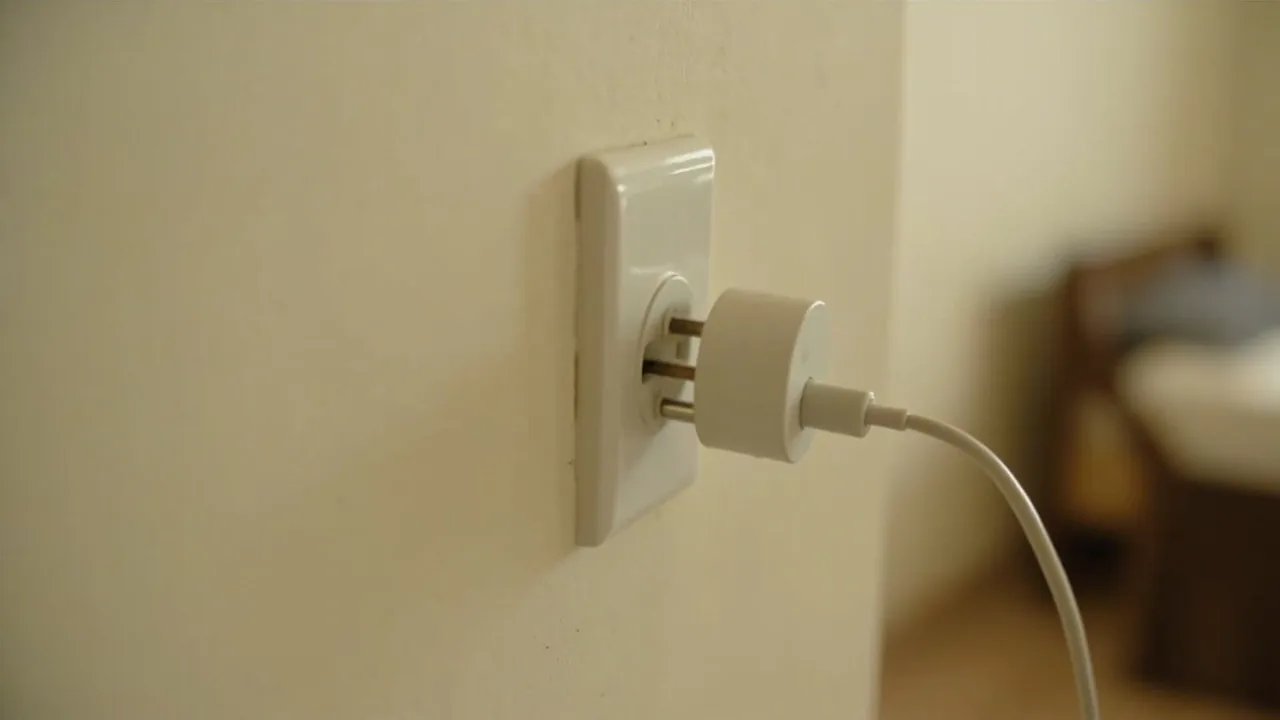
Flying from India to Manila? Before you pack, sort the Philippines power plug adapter Indian plug compatibility, because Indian Type C/D/M plugs do not fit Philippine Type A/B sockets without one. This guide covers the Philippines power plug adapter Indian plug question plus SIM, terminal fee, and the Indian airport checklist.
Direct flights from Delhi or Mumbai to Manila usually run between ₹18,000 (~$186.71) and ₹32,000 (~$331.94) round trip on Cebu Pacific and AirAsia. Booking 6 to 8 weeks out on a Tuesday or Wednesday gives you the best midweek fares. For a full walk-through of arrival procedures, see our NAIA Manila airport guide for Indian travellers.
Before your phone even boots up at NAIA, you need three things sorted: a power adapter that fits Philippine sockets, a SIM card with data, and enough Philippine pesos for the terminal fee you will pay at Manila immigration. This guide covers all three, plus the Indian airport checklist most Filipinos-on-YouTube guides skip.
Quick Answers
| What | Answer | Price (INR) |
|---|---|---|
| Do Indian plugs work in the Philippines? | No, you need a Type A/B/C adapter (India uses Type C/D/M) | ₹400-₹800 (~$4.15-$8.30) for a universal adapter |
| Is the voltage the same as India? | Almost. Philippines runs 220V/60Hz vs India’s 230V/50Hz. Most chargers auto-switch | No converter needed for phones/laptops |
| Do I need a converter for my trimmer/hairdryer? | Yes, if it’s not dual-voltage. Single-voltage 230V Indian appliances can overheat | PHP 800, 2,500 for a step-down converter |
| Cheapest tourist SIM at NAIA? | Globe Tourist SIM (7 days, 6GB) | PHP 46 (~₹69, ~$0.72) + PHP 100/5GB add-on |
| Terminal fee at Manila airport? | Yes, paid in cash (PHP) at the immigration counter | PHP 550 (domestic) / PHP 850 (international) |
Terminal fees cross-checked against MIAA’s published schedule on 2026-07-17.
Indian Plug vs Philippines Plug: The Short Answer
Indian plugs are Type C, Type D, and Type M. Philippine sockets accept Type A, Type B, and Type C.
That overlap is misleading. Type C (the small two-round-pin plug) is the only one that fits both countries, and only in two-pin European sockets. Most Indian appliances ship with the Type D (three large round pins in a triangle) or the modern Type M (three large pins, BS 546 style). Neither fits a Philippine wall outlet. Your phone charger with a detachable USB cable will be fine if you carry a Type C cable, but anything hardwired with a Type D plug (old laptop bricks, heavy extension boards, most Indian hairdryers) will not plug in.
The fix: a universal travel adapter. ₹400 (~$4.15) to ₹800 (~$8.30) at Amazon India or any airport shop before you fly. The ones with USB-C PD pass-through are worth the extra ₹200 (~$2.07) because they let you charge a laptop and a phone off a single adapter. If you are also heading to Cebu or Moalboal, pack the adapter — rural Philippine guesthouses rarely stock spares.
Voltage: 220V vs 230V, and Why Your Trimmer Might Cook
This is the part most travel blogs skip, and it is the part that burns out your appliances.
India runs 230V at 50Hz. The Philippines runs 220V at 60Hz. The 10V difference is small enough that most modern electronics handle it. Phone chargers, laptop bricks, camera batteries, e-reader adapters: all rated 100 to 240V at 50/60Hz, so they auto-adjust. You are safe.
The danger zone is single-voltage Indian appliances: the classic Philips trimmer, a BaByliss hair dryer, a Morphy Richards iron, a curling wand you bought in Mumbai. These are hard-wired for 230V/50Hz. Plug one into a Philippine wall and one of three things happens:
- It runs slightly slow, no harm done (some motors).
- It runs hot and the thermal fuse blows within minutes (most heating appliances).
- It pops, sparks, or trips the hotel room breaker (worst case, thermal damage).
The safe option for these items is a step-down converter (220V/240V to 110V/120V), which costs PHP 800 to 2,500 in Manila. The cheaper hack: just leave the hairdryer at home and use whatever your hostel or Airbnb provides. Most Philippine guesthouses stock cheap dual-voltage dryers for tourists. For a beard trimmer that costs ₹2,000, a ₹600 converter in India before flying is the smarter buy.
Subodh’s Pro Tip: Flip your phone charger and laptop brick over. Look for the small text that says “Input: 100-240V ~ 50/60Hz.” If you see that range, you never need a converter for that device. Pack a two-slot Type C cable and you are done.
Power Adapter Shopping: What to Buy Before You Fly
Three options, ranked by Indian-traveller value:
- Universal adapter with USB-C PD (₹600-₹1,200 (~$6.22-$12.45)): One adapter covers 150+ countries, charges a laptop, and lasts a decade.
- Philippines-specific Type A/B adapter (₹250-₹400 (~$2.59-$4.15)): Smaller, cheaper, single-use. Buy if you only ever travel to the Philippines.
- Type C European plug (₹150-₹300 (~$1.56-$3.11)): Your phone charger’s existing cable probably already fits a Type C socket. If your charger has a detachable cable, you may not need anything. Test it at home before you fly.
Skip the multi-pack of five adapters from AmazonBasics. One good universal adapter is cheaper than five flimsy ones, and the universal one works for every Southeast Asia trip you take after this.
SIM Card at NAIA Manila: Globe vs Smart
The cheapest tourist SIM at Ninoy Aquino International Airport is the Globe Traveler SIM, sold at the Globe kiosk in all three terminals after you clear immigration. It costs PHP 46 (~₹69, ~$0.72) for the SIM card itself plus a default data allocation, then you can load extra data on top.
Globe Tourist SIM options (7-day validity):
| Pack | Data | Price | Best for |
|---|---|---|---|
| GoSURF50 | 1GB | PHP 50 | Light WhatsApp users |
| GoSURF99 | 4GB | PHP 99 | Maps + Instagram |
| GoSAKTO + 5GB add-on | 5GB | PHP 100 add-on | Heavy Grab / Google Maps users |
| GoALL30 (7 days) | 6GB | PHP 300 | Best value for a week in Manila + Cebu |
PHP 46 (~₹69, ~$0.72) for the SIM + PHP 100 (~₹150, ~$1.56) for a 5GB add-on is the cheapest realistic combo for a 5 to 7 day trip. Total: PHP 146 (~₹219, ~$2.28).
Smart Tourist SIM options:
Smart’s equivalent is the Smart Traveller SIM, usually priced PHP 50 for the card with a smaller default data allocation. Coverage on Smart is stronger in provincial islands (Palawan, Bohol, Siargao), while Globe tends to win in Manila and Cebu city centers. If you are staying in Manila for 2 days then flying to Cebu or Boracay, pick the carrier that matches where you are spending the most nights.
For travellers who land at ungodly hours, miss the kiosk, or want to skip the airport SIM queue entirely, Get Nomad eSIM gives you a QR-code-activated data plan before you board the flight in Delhi. Same carriers, no physical swap, and it works the moment the plane’s wheels touch the runway. For a full Philippines customs and duty-free allowance breakdown, check what you can bring in before you land.
What to Do When You Land at NAIA
Step by step, from seat belt sign off to Grab pickup:
- Fill out the immigration card on the plane. Blue or black pen in your cabin bag. You will need: passport number, flight number, address of first hotel, and your profession.
- Pay the terminal fee at the counter just before the immigration booths. PHP 550 (~₹825, ~$8.57) for domestic connections, PHP 850 (~₹1,275, ~$8.82) for international departures. Cash only, Philippine pesos. ATMs are past this counter, so break a ₹9,640 (~100 USD) bill at the airport forex before you reach this point if you forgot to bring PHP. Our Philippines travel tax explainer breaks down where this fee goes.
- Immigration line. Indians get a 30-day visa-free stamp, extendable at any Bureau of Immigration office for PHP 3,030/month. The officer will ask for: passport (6+ months validity), return ticket, hotel booking for first night, and a smiling face. Have these on your phone or printed.
- Baggage claim. Free trolleys just before the belts.
- Customs. Green lane if you have nothing to declare. Red lane if you brought more than USD 10,000 in cash or commercial goods.
- Exit to Arrivals Hall. SIM kiosks are immediately on your right (Globe) and left (Smart). Forex counters and ATMs line the wall. Grab pickup zone is one floor up at the departure level for Terminals 1 and 3, ground floor for Terminal 2.
Safety Alert: NAIA has had periodic reports of unofficial porters and taxi touts approaching tourists before they reach the legitimate Grab lane. Walk past anyone who grabs your bag before you ask. The Grab app is the most widely used ride-hailing option at NAIA, alongside Joyride and MOVE IT which also operate at the airport.
Getting to Manila City Centre from NAIA
| Mode | Price (PHP) | Price (₹) | Time | Verdict |
|---|---|---|---|---|
| Grab Car | PHP 250, 400 | ~₹375-₹600 (~$3.89-$6.22) | 30, 60 min | Best for 2+ travellers with luggage |
| Airport Taxi (coupon) | PHP 300, 500 | ~₹450-₹750 (~$4.67-$7.78) | 30, 60 min | Fixed price, pay at the coupon booth |
| UBE Express Bus | PHP 150, 250 | ~₹225-₹375 (~$2.33-$3.89) | 60, 90 min | Cheapest, drops you in Pasay/Makati |
| Jeepney from Roxas Boulevard | PHP 13, 20 | ~₹20-₹30 (~$0.21-$0.31) | 90+ min | Authentic, only if you have zero luggage |
Grab from NAIA Terminal 3 to Makati runs PHP 250 to 400 depending on traffic. From Terminal 1, add PHP 50 to 100. The UBE Express bus is the cheapest option if you are staying in Pasay or Makati and travelling light.
Indian Airport Checklist (Before You Leave Delhi or Mumbai)
What immigration at the Indian departure terminal asks for:
- Printed return ticket (onward ticket to a third country). E-tickets on your phone usually work, but a printout ends all arguments.
- Hotel booking confirmation for the first night. Booking.com PDF printout is fine.
- Forex card or cash proof. The RBI allows up to USD 3,000 cash declaration-free; above that, declare at the red channel. Most Indian travellers carry ₹48,202 (~500 USD) to 1,000 in cash for emergencies.
- Visa status printout for the Philippines. Indians do not need a visa for stays under 30 days, but having your return ticket and hotel booking ready saves 10 minutes of fumbling at the Manila counter.
- Web check-in for Cebu Pacific and AirAsia. Both airlines charge per kilo for checked bags above 7 kg, and the counter rate is roughly 2x the online rate. Pay for baggage online 24 hours before departure.
- Blue or black pen in your cabin bag. You need it for the immigration card on the plane, and no one ever has one.
Safety Alert: The Bureau of Immigration in Manila has cracked down on visa overstays in 2026. Travellers who stayed past 30 days without an extension face fines up to PHP 50,000 and blacklisting from future Philippine entries. If you fall in love with Palawan and want to stay longer, extend at a BI office before day 30, not after.
Best Time to Book Flights India to Manila
The cheapest months to fly India to Manila are February to early April and late August to October, outside Filipino school holidays and Indian wedding season. December, January, and the May to July monsoon window push prices up by 30 to 50%.
Day of the week matters more than people think. Tuesday and Wednesday departures from Delhi and Mumbai are consistently PHP 2,000 to 4,000 cheaper than Friday and Sunday flights on Cebu Pacific’s midweek promo fares. Set a Google Flights alert 8 weeks out and book when the price drops below ₹20,000 (~$207.46) round trip.
SIM Card Alternatives to the Airport Kiosk
If the NAIA kiosk queue is 30 minutes long (it is, between 6 PM and 10 PM), three alternatives:
- eSIM before you fly. Get Nomad eSIM and activate via QR code while still on WiFi at Delhi airport. By the time you land, your phone has data and you walk straight past the kiosk to Grab.
- Globe or Smart store in the mall. Any SM Mall, Robinsons Galleria, or Greenbelt has a Globe/Smart store with English-speaking staff and the same SIM at the same price.
- 7-Eleven convenience store. Sells Smart and Globe prepaid SIMs for PHP 40 to 50 (~₹60-₹75, ~$0.62-$0.78), though tourist data packs may need to be loaded separately via the carrier’s app.
Indian and Vegetarian Food in Manila: The Backup Plan
After two weeks of sinigang and adobo, most Indian travellers crave a dal-chawal fix. Manila has more Indian restaurants than you would expect, clustered around Makati, Quezon City, and BGC.
For a quick, budget fix, Seven Mannah Indian Fusion Food (4.8 stars) charges PHP 300 to 500 per person and reviewers specifically call out the chicken biryani. For a more upscale butter-chicken-and-naan dinner, Royal Indian Curry House in Quezon City (4.7 stars) runs around PHP 1,700 per person, closer to fine dining than backpacker. If you are staying in BGC, Queens at Bollywood (4.6 stars) does Punjabi and Mughlai dishes in a family-friendly setting, and it is halal.
For local Filipino food on the way out of Manila, Kantina Manila (4.9 stars) is a solid pick for sisig and adobo cooked the traditional way, sourcing ingredients locally.
Currency and Daily Budget in Manila
1 PHP ≈ ₹1.5 (1 INR ≈ 0.67 PHP).
| Daily spend | Budget (PHP) | Budget (₹) |
|---|---|---|
| Hostel dorm | PHP 400, 700 | ~₹600-₹1,050 (~$6.22-$10.89) |
| Street food (3 meals) | PHP 55, 120 | ~₹82-₹180 (~$0.85-$1.87) |
| Jeepney + MRT | PHP 50, 100 | ~₹75-₹150 (~$0.78-$1.56) |
| SIM data (per day) | PHP 15, 45 | ~₹23-₹68 (~$0.24-$0.71) |
| Beer (San Miguel, local bar) | PHP 60, 100 | ~₹90-₹150 (~$0.93-$1.56) |
| Daily total | PHP 700, 1,200 | ~₹1,050-₹1,800 (~$10.89-$18.67) |
Manila is roughly the same daily cost as Bangkok once you are inside the city, with slightly cheaper beer and slightly pricier dorms.
If you are also flying via Cebu Pacific, check our Cebu Pacific baggage allowance guide for 2026 weight limits and fees.
FAQ
Do Indian plugs work in the Philippines without an adapter?
No. Indian plugs are Type C/D/M, Philippine sockets are Type A/B/C. The only overlap is Type C, which most modern phone chargers use. Anything with a Type D or Type M plug needs an adapter or a replacement cable.
Is the voltage the same as India? Do I need a converter?
Almost. Philippines is 220V/60Hz, India is 230V/50Hz. Phones, laptops, cameras, and any charger labelled “Input: 100-240V” work fine. Hairdryers, trimmers, irons, and curling wands bought in India are usually single-voltage 230V and risk burning out. Carry a step-down converter for those, or use the hostel’s loaner.
What is the cheapest tourist SIM at NAIA?
Globe Traveler SIM at PHP 46 (~₹69, ~$0.72) for the card, then PHP 100 (~₹150, ~$1.56) for a 5GB add-on. Total: PHP 146 (~₹219, ~$2.28) for a week of data. Smart Traveller is comparable but tends to have weaker Manila coverage.
Can I use an Indian debit card or UPI in Manila?
UPI does not work in the Philippines. Indian Visa and Mastercard debit cards work at ATMs but with a PHP 200 to 250 per-transaction foreign fee. Carry a forex card loaded with USD or PHP for the best rates, and keep PHP 3,000 to 5,000 cash for the terminal fee, jeepneys, and small eateries.
Do I need a visa for the Philippines as an Indian?
No, for stays under 30 days. The visa-free stamp is given on arrival. Extendable at any Bureau of Immigration office for PHP 3,030/month if you fall in love with the place.
How much is the terminal fee at Manila airport?
PHP 550 (~₹825, ~$8.57) for domestic connections, PHP 850 (~₹1,275, ~$8.82) for international departures. Cash, Philippine pesos, paid at the counter before immigration. Terminal fee is separate from the visa, since the visa is free.
Should I book a SIM online or buy at the airport?
At the airport is fine if you land before 10 PM. After 10 PM, the Globe kiosk in Terminals 1 and 3 closes and you are stuck with Smart or a hotel WiFi night. An eSIM activated before the flight removes the question entirely.
