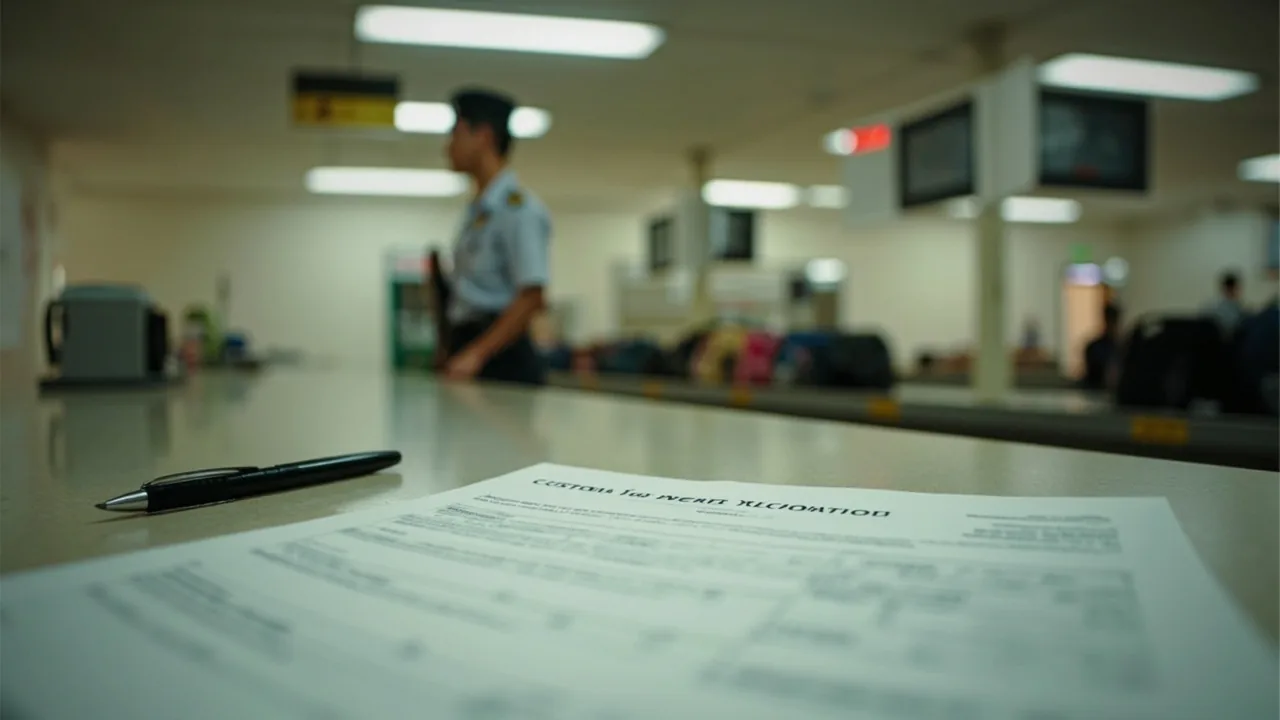
Philippines Customs & Duty-Free Allowance for Indians: Cigarettes, Alcohol, Cash & Mangoes Rules
Verified against the official Bureau of Customs (Philippines) and Bureau of Internal Revenue (BIR) publications this month, cross-checked with current traveller reports from NAIA Terminal 3 and Mactan-Cebu International departures. Philippine duty-free rules apply uniformly at every international terminal (NAIA 1, 2, and 3 in Manila, plus Mactan-Cebu, Clark, Davao, and Kalibo), so the numbers below hold whether you’re flying out of Manila or Cebu.
Quick Answers
| What | Answer | Price (INR) |
|---|---|---|
| Cigarette allowance (leaving Philippines) | 200 sticks (1 carton) duty-free; up to 600 sticks total with duty paid | ₹1,500-₹2,500 (~$15.56-$25.93) |
| Alcohol allowance (leaving Philippines) | 2 bottles (up to 1L each) duty-free; up to 4 bottles total with duty | ₹2,000-₹4,000 (~$20.75-$41.49) |
| Foreign currency you can carry out | PHP 10,000 and/or USD 10,000 (equivalent) without declaration | — |
| Dried mangoes / food pasalubong | Allowed, but no meat, dairy, or fresh fruit | ₹200-₹800 (~$2.07-$8.30) |
| Duty-free liquor at NAIA / Mactan-Cebu | Available past security; accepts USD, PHP, and major cards | ₹1,200-₹12,000 (~$12.45-$124.48)+ |
What Indians Need to Know About Philippines Customs on the Way Out
Philippines duty free allowance leaving cigarettes alcohol differs from arrival rules in your next country. The Philippines runs a relaxed customs system, but the rules for leaving are stricter than arrival. Indian travellers flying out of Manila or Cebu mostly care about three things: what they can carry in checked luggage, what they can buy past security, and how much foreign cash triggers a customs declaration.
This guide covers leaving the Philippines. Arrival rules in India (the customs form, the ₹50,000 cash declaration, and the food import rules) are a separate system enforced by Indian Customs at the first port of entry, so I’ll touch on those only where they directly affect what you bring out of Manila. For the full departure process including immigration and baggage rules, see Philippines airport departure procedures. If you need exit clearance details, check Philippines exit requirements for foreigners and Indians.
Duty-Free Cigarette Allowance Leaving the Philippines
The standard duty-free cigarette allowance for departing Filipino residents and foreign visitors is 200 sticks, or one sealed carton. That’s the baseline. If you’ve been smoking your way through Cebu’s 7-Eleven stock for two weeks, you can technically bring up to 600 sticks (three cartons), but anything beyond the first carton attracts duty, which is calculated on the cost, insurance, and freight (CIF) value of the goods.
Here’s the practical breakdown:
- 1-200 sticks: completely duty-free. This is what you bring in your checked bag without filling any form or paying any tax.
- 201-600 sticks: dutiable at the Bureau of Internal Revenue rate. For Indian travellers, this almost never matters because Indian Customs limits you to 200 sticks on arrival anyway, so bringing more than one carton out of Manila is throwing money at duty you can’t recover.
- Loose cigarettes (roll-your-own, bidi): counted differently. Up to 250 grams of tobacco products are duty-free, then duty kicks in above that.
If you’re thinking about stuffing a second carton into your bag “just in case friends at home want some,” skip it. The savings on three cartons of Marlboros won’t cover the duty, and your haul will likely get flagged or held at Indian Customs anyway. Stick to one carton.
Subodh’s Pro Tip: Philippine brand cigarettes (Fortune, Hope, Marlboro Philippines) are cheaper inside the duty-free shop than at city sari-sari stores. If you want exactly one carton for personal use, buy it past security, where it’s sold in plain sealed packaging that is already customs-cleared. No receipt shuffling at NAIA.
Duty-Free Alcohol Allowance Leaving the Philippines
The alcohol allowance runs two bottles, up to one litre each, at 100% proof strength or below. So:
- 2 bottles wine, OR
- 2 bottles spirits (whiskey, rum, gin, vodka) at standard 40% ABV, OR
- A mix of the two
Anything beyond that requires you to file a declaration and pay duty. For Indian travellers, two bottles is the practical ceiling you’ll want to operate under, because Indian Customs limits arriving passengers to 2 litres of alcoholic beverages and a similar two-bottle allowance. Any extra bottles bought at NAIA’s duty-free will technically attract Indian import duty based on value and quantity when you land at Hyderabad, Bengaluru, or Mumbai.
Safety Alert: Alcohol in glass bottles must be in checked luggage. Cabin-bag pours from security will get your bag searched and the bottle confiscated. Pack liquids at the bottom of your checked bag, wrapped in two layers of clothing, inside a sealed plastic bag. This applies on the flight out of Manila and on the flight into India.
Foreign Currency You Can Take Out (Cash Limits)
This is the question Indian travellers ask most, and the answer is straightforward. The Philippines operates on the Bangko Sentral ng Pilipinas (BSP) rule, which mirrors global norms set by the Financial Action Task Force (FATF):
- PHP 10,000 in local currency AND/OR USD 10,000 (or equivalent in any foreign currency) can be carried out of the Philippines without declaring it. These are separate limits - PHP 10,000 for Philippine pesos and USD 10,000 for foreign currency.
- Anything above that must be declared to the Bureau of Customs at the green/red lane on departure. You’ll fill out a BSP Foreign Currency Declaration Form and present it at the airport customs desk.
- There is no cap above the declared amount. You can take PHP 500,000 out, you just have to fill the form and have supporting documents (forex card statement, bank withdrawal slip, etc.) showing the legitimate source.
The catch is the equivalent wording. If you have, say, USD 11,000 in cash, you must declare even though the USD component is over the cap; you can still take it out cleanly with the form filled. The same applies to INR, AED, or any other currency, with the cap calculated on total foreign currency equivalent.
For Indian travellers, the practical implication is that most people don’t need to worry. If you’re carrying the equivalent of PHP 50,000-100,000 (roughly a few thousand dollars worth) for the trip and returning home with what’s left, you walk through the green lane and that’s it. If you’re carrying the kind of cash someone carries to buy a property or start a business, you declare.
Subodh’s Pro Tip: When you convert leftover PHP back to USD at the airport, do it before the customs desk. The forex kiosks at NAIA have decent rates for small amounts. Walk in with PHP 30,000, walk out with USD 530 or so, and you’ll be safely under the declaration threshold even if you have foreign cash from a stopover trip previously. Avoid the airport money changers inside the secured arrivals area; the in-town ones have better rates by 1-2 percent.
Dried Mangoes & Food Pasalubong: What Clears Customs
This is where most Indian travellers worry for no reason. The Philippines is famous for dried mangoes (specifically 7D Dried Mangoes brand and its competitors), and they’re one of the most popular pasalubong gifts you can carry. Here’s what flies and what doesn’t:
Allowed without declaration:
- Dried mangoes (sealed commercial packaging): perfectly fine, both leaving the Philippines and entering India. Pack in a hard container, the dried fruit is sticky and will glue your clothes together if a pouch breaks in transit.
- Dried banana chips (sealed): same deal as dried mangoes.
- Packaged local snacks: Piattos chips, Boy Bawang, Choc-Nut, Polly Pocket candies, Otap, Barquillos, and most commercial bakery goods.
- Sealed canned goods: includes tuyo (dried fish in oil), bagoong (shrimp paste), and other local delicacies. Less than 5kg usually walks through without a question.
- Coffee (sealed commercial packaging): Philippine coffee beans and ground coffee are fine.
- Canned meat spreads like Ma Ling or China Cola: allowed.
Needs declaration or restriction:
- Meat products in un-sealed or fresh form: banned on flights to most countries. Don’t try to bring homemade tapa, fresh longganisang Lucban, or unprocessed poultry.
- Fresh mangoes: technically allowed for personal use, but Indian agricultural rules can hold them at the airport. Bring dried, not fresh, to skip the risk.
- Dairy products (cheese, fresh milk): typically allowed in sealed commercial form under 5kg, but Indian Customs sometimes pulls cheese.
- Exotic items (balut, dinuguan, etc.): not recommended; the smell alone will get your bag flagged. Skip these unless you need to share the experience.
Quantity limit:
- Up to 10kg of food items without needing a special permit. Above 10kg, customs may inspect and could require a phytosanitary certificate for some products.
For Indian travellers, the safe move is buying sealed dried mangoes (typically PHP 200-500 per box depending on size and brand), keeping them in a sealed plastic bag inside your checked luggage, and treating anything sticky or smelly as risky. The big commercial brands (7D, Bright, Philippine Brand) are professionally packaged for international transport, which is why they’re sold at every duty-free shop. Those will pass Indian Customs cleanly when you land.
Duty-Free Shops at NAIA and Mactan-Cebu: What Indians Should Buy
NAIA Terminal 3 (the main international departures terminal for Cebu Pacific and Philippine Airlines flights) and Mactan-Cebu International (also Cebu Pacific) have fully stocked duty-free shops past immigration. You pay in PHP at near-parity rates, and most accept major cards including RuPay, Visa, and Mastercard. For baggage allowance details on your specific airline, see Cebu Pacific international baggage allowance. Price comparisons with the duty-free shops in Bangkok, Singapore, or Kuala Lumpur depend heavily on the brand, but spirits and tobacco are usually 10-20% cheaper in Manila than in Bangkok’s King Power, which makes a Manila duty-free stop worthwhile if you’re transiting onward.
Here’s the typical price range in the duty-free for items Indians buy most:
| Item | Approximate Price (PHP) |
|---|---|
| Marlboro / Philip Morris carton | 600-1,000 |
| Tanduay Rhum 5-year | 350-600 |
| Jack Daniel’s Old No. 7 | 1,200-1,800 |
| Johnnie Walker Black Label | 2,400-3,200 |
| Macallan 12-year | 4,500-6,000 |
| Hershey’s / Cadbury chocolate box | 400-900 |
| Swarovski crystal small items | 2,000+ |
| IMARAI / Bench clothing | 1,500-5,000+ |
When shopping, all these items still count against your normal 2 bottles / 200 sticks duty-free allowance. They are sold as sealed, duty-paid inventory, so the limits work the same way as it does for goods you bring in your luggage. The receipt you get from the duty-free shop stays with your boarding pass, and Indian Customs may want to see it on landing.
Customs Declaration: When You Need to Fill the Form
The Bureau of Customs declaration rules at NAIA and Mactan-Cebu are simple. The green and red lane signage works like every other international airport. Take the green lane if:
- You’re not carrying more than PHP 10,000 in foreign currency total, AND
- You’re not carrying more than 10kg of food items, AND
- You’re not carrying items for commercial resale (cases of branded goods, multiple identical high-value items, etc.)
Take the red lane if any of the above applies. The red lane is also taken for any commercial shipments or anything that exceeds the standard alcohol/cigarette allowance.
The honest truth from travellers passing through NAIA Terminal 3 in 2026: most don’t get stopped at red unless the bag looks suspicious or contains unusually large amounts of something. A backpacker carrying a bag with one carton of cigarettes, two bottles of alcohol, ten boxes of dried mangoes, and a sealed can of bagoong will most likely walk through green without anyone opening the bag. Indian Customs will then check you on arrival at Chennai, Mumbai, Delhi, or Hyderabad, and that’s typically the moment more stringent checks happen.
Safety Alert: Indian Customs at Cochin and Chennai have been stepped up for passengers arriving from Manila and Cebu in the past year or so, particularly on alcohol and tobacco. Two bottles and one carton is your safe landing combo; anything beyond is a 50-50 whether you’ll be waved through or sent to the red channel.
Quick-Reference Checklist Before You Fly Out of Manila or Cebu
- Cigarettes: under 200 sticks in checked luggage = green lane.
- Alcohol: under 2 bottles (under 1L each at normal ABV) = green lane.
- Cash: under PHP 10,000 / ₹964,037 (~10,000 USD) in foreign currency = green lane.
- Food: under 10kg of sealed commercial goods = green lane.
- Excessive items: red lane, declare everything honestly.
- Travel tax paid (separate from tickets; see Philippines travel tax explained).
- Immigration clearance smooth (see NAIA Manila airport guide Indian travelers).
- eSIM / physical SIM picked up earlier in trip (Get Nomad eSIM for ₹482-₹2,892 (~5-30 USD) plans covering Philippine data).
- Cash exchanged to USD or INR for the flight home (preferably done while still in town, not at airport rates).
Common Edge Cases at NAIA Departures
A few specifics that don’t fit the standard checklist:
Transit flights with two stops: If you’re transiting through Manila on the way home (say, Cebu to Manila to Mumbai), customs in Manila is the customs declaration point. The next flight to India is treated as a domestic-style extension from Manila. So if you buy your duty-free at the Mactan-Cebu duty-free and then fly to Manila, that duty-free stays with you and customs in Manila sees it as part of your carry-on/checked inventory.
Bringing gifts for relatives in India: Gifting personal-use items to family members is allowed within reason. Bringing 20 boxes of dried mangoes labelled “gifts” is borderline commercial and can be questioned. Travel small for personal use, ship commercial quantities via proper courier.
Travelling with children under 18: Minors travelling without parents need an affidavit of support or a DSWD travel clearance. Customs doesn’t usually check this; immigration might. Confirm before departure.
Declared values above PHP 50,000: Above this threshold, you’ll be asked about provenance, particularly for foreign currency. Have a forex card statement, wire transfer record, or bank slip ready. Foreign passport holders rarely get held up here for modest amounts, but expect extra questions if carrying significant currency.
Bringing back Filipino handicrafts: Burl wood items, Capiz shell decor, and some tribal items require CITES clearance if they’re carved from protected wood. A regular wooden spoon or decorative plate is fine; a large antique or carved shell inlay might get delayed.
FAQ
Can I bring back 2 bottles of Tanduay and 1 bottle of scotch from Cebu duty-free? Yes, that’s the standard 2-bottle allowance. Two bottles maximum in total, regardless of brand or origin, as long as each is under 1L and under 100 proof strength.
How strict is the PHP 10,000 / ₹964,037 (~10,000 USD) cash rule at NAIA? The rule is the law and is consistently enforced, but for typical backpacker amounts (PHP 5,000-30,000), the BSP rarely asks for proof of source below the threshold. If you carry slightly over the threshold, declaring takes five minutes at the customs desk and the process is straightforward.
Will Indian Customs confiscate my dried mangoes? No, sealed commercial dried mangoes always clear Indian Customs. Just keep the original 7D or Bright packaging sealed and labelled. Customs usually only stops fresh mangoes, raw meats, and unprocessed dairy.
Can I bring more than 1 carton of cigarettes if I pay the duty? Yes, up to 600 sticks with full duty paid. Beyond that, it’s treated as commercial importation. Most Indians don’t bother because the effective duty rate is high enough to wipe out the savings.
Is the duty-free shop in NAIA cheaper than the one in Cebu? Usually yes, but only marginally. NAIA Terminal 3 has more variety and slightly better wine and spirits pricing. Cebu’s Mactan duty-free caters more to Korean and Chinese flights and stocks more confectionery than alcohol.
Do I need to declare Philippine pesos at exit? No. PHP is the local currency. You can leave with whatever amount of PHP you want, though no one would, because no use for it anywhere else. Foreign currency is what gets declared; PHP is just walked out.
Can I bring durian chips past customs? Yes, sealed durian chips are fine. Fresh durian in your bag is not allowed on most flights (cabin smell restrictions), but sealed commercial products are welcome at both Philippine exit and Indian entry customs.
Subodh’s Take
The Philippine customs system is more relaxed than Indian Customs, but the trick is matching it with what Indian Customs will accept when you land home. A clean trip is one carton, two bottles, less than ₹964,037 (~10,000 USD) cash, and a stack of sealed dried mangoes inside a hard-sided suitcase. Anything beyond that is tempting customs attention on both ends, and the duty you pay on the way out rarely gives a meaningful saving on the way in.
