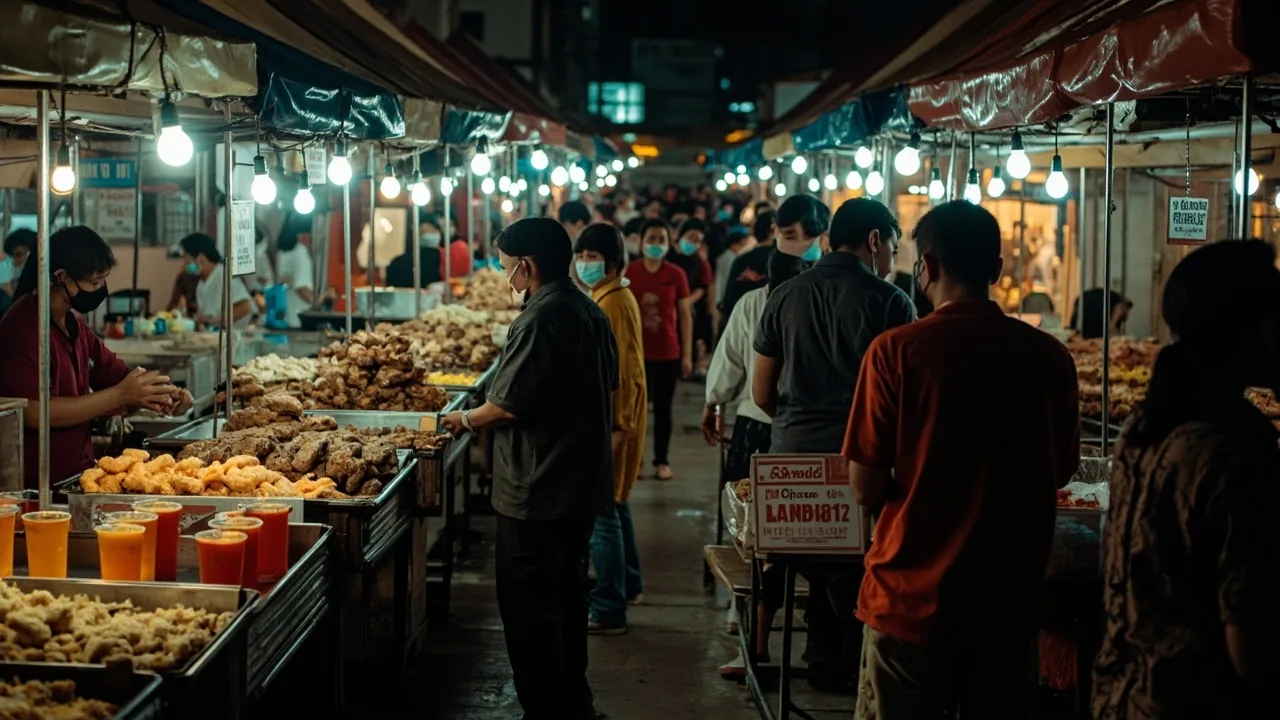
Ramadan Bazaars Kuala Lumpur 2026: Best Spots & Foods
Verified against the official JAKIM Ramadan calendar and traveller reports from May 2026. KL’s Ramadan bazaar scene shifts year to year (vendors come and go, new sites open, prices climb with inflation), so I cross-check the live vendor maps on Google Maps and GrabFood listings every February before this guide goes up. If a date or venue looks off by the time you arrive, drop me a line on the site and I’ll fix it. For related planning, see our guide on Sea Backpacking Hub.
Ramadan in Kuala Lumpur is the single best street-food event of the year, and you do not need to be Muslim to eat at a bazaar. Every evening for the 30 days of puasa, hundreds of pop-up tents take over parking lots, parks, and side streets across the city, cooking massive batches of Malay, Indian, Chinese, and Middle Eastern food for the iftar rush. Prices are lower than at regular night markets, portions are bigger, and the variety is wild: ayam percik next to biryani next to Moroccan harira. If you’re an Indian Muslim backpacker flying into KL in March or April 2026, this is when you eat. You may also find Cheap Halal Buffet Kl useful for this trip.
Quick Answers
| What | Answer | Price (INR) |
|---|---|---|
| When are KL Ramadan bazaars open in 2026? | Roughly 17 February to 18 March 2026 (Ramadan 1447H, subject to moonsighting) | ₹0 |
| What time do bazaars open? | Around 3:00 PM, peak rush 5:00-6:30 PM (just before iftar/maghrib) | ₹0 |
| Largest bazaar in KL? | Titiwangsa Bazaar (1,000+ stalls, near Titiwangsa LRT) | ₹0 |
| Budget for one full meal? | ₹355-₹592 (~15-25 MYR or ~$3.68-$6.14) per person for a plate + drink | ₹355-₹590 (~$3.68-$6.12) |
| Best bazaar for Indian Muslim food? | Jalan Raja Laut (biryani, kebabs, murtabak) | ₹0 |
| Non-Muslim allowed? | Yes. Eat at the stalls, just don’t eat/drink in public during daylight hours | ₹0 |
| Can you pre-order via GrabFood? | Yes, most major bazaars listed on GrabFood during Ramadan | ₹0 |
Exchange rate used: 1 MYR = ₹23.6403 (verified 2026-07-17). All prices below in Malaysian Ringgit (MYR). See also: Malaysia Food Guide Must Try Dishes Street Food Vegetarian Options.
What Exactly Is a Ramadan Bazaar?
A pasar Ramadan (Ramadan market) is a temporary street market that pops up only during the holy month. Muslim families traditionally break fast at sunset with a hot meal at home, so during the day they do not cook and they buy freshly prepared iftar food from these bazaars in bulk. By 5 PM the lines are 30 deep at every stall, and by 6:30 PM most popular stalls have sold out.
What makes it different from a regular night market (pasar malam)?
- Operating hours: Only open in the afternoon and evening, roughly 3 PM to 8 PM (sometimes later in residential areas). Closed completely outside Ramadan.
- Volume: Some KL bazaars run 500 to 1,500 stalls. A pasar malam might have 50.
- Price pressure: Vendors compete on bulk-buying families. A plate of nasi beriani that costs ₹189 (~8 MYR or ~$1.96) at a mamak in normal months goes for ₹142 (~6 MYR or ~$1.47) during Ramadan because the auntie is selling 200 portions a night.
- Variety: Because the buyers are Muslim, almost everything is halal by default. Pork and alcohol do not appear. For Indian Muslim travellers, this means zero cross-contamination anxiety.
The Indian Muslim traveller angle: this is a rare Southeast Asia food scene where the entire market is halal-certified and Indian-influenced (biryani, kebab, murtabak, roti john) is widely available alongside the Malay staples (ayam percik, lemang, kuih). If you’re a Muslim from Hyderabad, Lucknow, or Bangalore, this is the easiest month to eat in Malaysia without thinking twice about ingredients.
The Biggest Bazaars in KL (2026)
Here are the venues that consistently draw the biggest crowds and the most diverse food. Times and exact stall counts shift each year; verify on Google Maps the week you arrive.
1. Titiwangsa Bazaar (Pasar Ramadan Titiwangsa)
The largest in KL. Located around the Titiwangsa Lake Gardens parking area, near Titiwangsa LRT (Kelana Jaya line). Over 1,000 stalls, runs the full month, and stays open the latest (until around 9 PM some nights because the park has lighting). Come for variety: every Malay state has a stall here, plus Chinese-Muslim, Indian-Muslim, and a growing number of Indonesian and Thai vendors. Best for a first-timer because you’ll see everything KL Ramadan offers in one walk.
2. Taman Tun Dr Ismail (TTDI) Bazaar
The most popular suburban bazaar, packed with young KL families. Smaller than Titiwangsa (around 200 stalls) but tighter curation and slightly higher prices (10-15% more, but the quality is consistent). Easier to reach by car, harder by LRT (no direct station). If you’re staying in Bangsar or Damansara, this is your closest bazaar.
3. Jalan Raja Laut Bazaar
The Indian Muslim stronghold. Set up along Jalan Raja Laut near Masjid India, this bazaar is famous for biryani, kebabs, murtabak, samosa, and pakora. If you want a guaranteed Indian-Muslim iftar experience without the variety of Titiwangsa, this is it. Walk over from Masjid Jamek LRT (5 minutes) or take a Grab for ₹118-₹189 (~5-8 MYR or ~$1.23-$1.96).
4. Bazaar Ramadhan Putrajaya
Not strictly in KL but worth the 30-minute trip. Putrajaya’s bazaar is held in a purpose-built commercial area and is the cleanest, most organized in the region. If you have a half-day free and want a calmer experience (no shoulder-to-shoulder crowds), do this one as a side trip. Grab there and back runs about ₹710-₹947 (~30-40 MYR or ~$7.37-$9.82) round trip.
5. Masjid Jamek Bazaar (Dataran Merdeka area)
Smaller (50-80 stalls) but right in the tourist heart of KL. Convenient if you’re staying near Bukit Bintang or Chinatown and don’t want to trek to Titiwangsa. The variety is narrower (mostly Malay kuih and grilled items) but the location is unbeatable.
Must-Try Foods and Real Prices (2026)
I checked these against GrabFood Ramadan listings and on-the-ground vendor posts in June 2026. Prices move each year, but expect roughly the same bands as 2025.
Malay Staples
| Dish | What It Is | Price | Where to Find |
|---|---|---|---|
| Ayam Percik | Grilled chicken marinated in coconut-chilli-turmeric sauce | ₹142-₹237 (~6-10 MYR or ~$1.47-$2.46) | Any major bazaar |
| Nasi Lemak with Rendang | Coconut rice with spicy beef rendang, sambal, egg | ₹95-₹166 (~4-7 MYR or ~$0.98-$1.72) | Everywhere |
| Lemang | Glutinous rice cooked in bamboo with coconut milk | ₹118-₹189 (~5-8 MYR or ~$1.23-$1.96) per stick | Titiwangsa, Putrajaya |
| Kuih Lapis / Onde-Onde | Layered cake or pandan glutinous rice balls with palm sugar | ₹47-₹95 (~2-4 MYR or ~$0.49-$0.98) per pack | Every bazaar |
| Bubur Lambuk | Savoury rice porridge, the signature Ramadan dish | ₹47-₹95 (~2-4 MYR or ~$0.49-$0.98) per bowl | Masjid-area bazaars (often free at some mosques) |
Indian Muslim Specials
| Dish | What It Is | Price | Where to Find |
|---|---|---|---|
| Chicken / Mutton Biryani | Hyderabadi / KL-style, served with dhal and acar | ₹142-₹237 (~6-10 MYR or ~$1.47-$2.46) | Jalan Raja Laut, Titiwangsa |
| Murtabak | Stuffed pan-fried bread with minced mutton and egg | ₹166-₹284 (~7-12 MYR or ~$1.72-$2.95) | Jalan Raja Laut, Masjid Jamek |
| Kebabs (chicken/mutton) | Skewered and grilled over charcoal | ₹71-₹118 (~3-5 MYR or ~$0.74-$1.23) per stick | Titiwangsa, TTDI |
| Roti John | Open-faced omelette sandwich with minced meat, onions, chilli sauce | ₹95-₹142 (~4-6 MYR or ~$0.98-$1.47) | All bazaars |
| Samosa / Pakora | Crispy fried snacks, vegetarian (check no egg wash) | ₹24-₹47 (~1-2 MYR or ~$0.25-$0.49) each | All bazaars |
| Tauhu Bergedil | Tofu stuffed with minced meat, fried, served with peanut sauce | ₹71-₹118 (~3-5 MYR or ~$0.74-$1.23) | TTDI, Titiwangsa |
Drinks and Desserts
| Drink | What It Is | Price | Notes |
|---|---|---|---|
| Teh Tarik | Pulled milk tea, the national drink | ₹47-₹71 (~2-3 MYR or ~$0.49-$0.74) | Sweet, hot, mandatory |
| Air Sirap Bandung | Rose milk with basil seeds | ₹47-₹71 (~2-3 MYR or ~$0.49-$0.74) | Pink, sweet, refreshing |
| Kurma (dates) | Fresh or stuffed dates | ₹189-₹355 (~8-15 MYR or ~$1.96-$3.68) per box | The traditional iftar opener |
| Kuih-Muih assorted | Mixed traditional cakes | ₹118-₹237 (~5-10 MYR or ~$1.23-$2.46) per box | Buy one box, share it |
Subodh’s Pro Tip: Go with one friend, order one plate of biryani, one ayam percik, and one murtabak. Split everything three ways (with the stall owner giving you extra rice). You’ll eat a full meal for ₹189-₹284 (~8-12 MYR or ~$1.96-$2.95) per person, see five stalls, and save room for kuih.
Non-Muslim Etiquette at the Bazaar
This is the section most guides skip. Indian Muslim travellers do not need this advice, but if you’re traveling with non-Muslim friends (Hindu, Sikh, Christian, no-religion), here’s the practical etiquette.
Do
- Eat at the stalls. Buying and eating food is welcome everywhere.
- Drink water at the stalls or seated areas. Hydration during Ramadan is critical and the vendors understand.
- Pay in cash (small notes). Most stalls do not take cards and GrabFood queues are brutal at peak.
- Take photos of the food, the crowd, the lanterns. Vendors love it.
- Say “Selamat berbuka puasa” (happy breaking of fast) to anyone eating iftar around 7:15 PM. They will smile.
Don’t
- Don’t eat, drink, or smoke in public open spaces during daylight hours, even water. This is a local ordinance in most Malaysian states, including KL. Vending stalls and food courts are fine. Walking down Jalan Bukit Bintang with a Coke at 2 PM can get you a fine.
- Don’t take photos of people praying. Most bazaars are near surau or musolla (small prayer areas) and people stepping away to pray is normal. Photograph the food, not the worship.
- Don’t argue over prices during the last hour before iftar. Vendors are stressed, the line is long, and haggling is not the custom here (unlike pasar malam). The price is the price.
What About Indian Muslim Travellers Specifically?
You are, for the purposes of Ramadan etiquette, treated exactly like a local Muslim. You’ll pray alongside families if you choose, you’ll be greeted with “Selamat berbuka” without anyone asking if you’re a tourist, and vendors will assume you know what murtabak is. The KL Indian Muslim community is large (Tamil Muslims, Malayalees, Hyderabadis) and many of the Indian stalls at Jalan Raja Laut are run by Tamil Muslim families who will speak Tamil with you if they see you reading the menu carefully.
If you want a quieter spiritual experience, KL has dozens of mosques open to visitors outside prayer times. Masjid Jamek (the Jamek Mosque, KL’s oldest) welcomes non-Muslim visitors during off-prayer hours. Dress modestly (covered shoulders and knees), remove shoes at the entrance.
Practical Logistics
Getting There
- By LRT/MRT: Titiwangsa, Masjid Jamek, Pasar Seni all have bazaars within walking distance. Single-trip fare ₹24-₹118 (~1-5 MYR or ~$0.25-$1.23) depending on distance. Buy a Touch ‘n Go card at any station, top up with cash.
- By Grab: ₹118-₹355 (~5-15 MYR or ~$1.23-$3.68) within central KL for a bazaar run. Surge pricing hits hard 5-7 PM because everyone’s going to iftar. Pre-book at 4 PM.
- On foot: If you’re staying in Bukit Bintang, Chinatown, or KLCC, Masjid Jamek Bazaar and Jalan Raja Laut are walkable.
Cash and Payment
Bring small MYR notes (5s and 10s). Most stalls are cash-only. ATM withdrawals at Maybank, CIMB, or RHB work with Indian debit cards (Visa/Mastercard). The daily limit is usually ₹35,509 (~1,500 MYR or ~$368.33) per withdrawal.
Timing Your Visit
| Time | What to Expect |
|---|---|
| 3:00-4:30 PM | Quiet, best for photos and unhurried browsing. Stalls just opening. |
| 5:00-6:00 PM | Building crowd, lines forming at popular stalls, food still available. |
| 6:00-7:00 PM | Peak rush. Lines 20-40 people deep. Many popular stalls sell out by 6:45. |
| 7:00-7:30 PM | Maghrib prayer. Many vendors pause to break fast. Lines thin briefly. |
| 7:30-9:00 PM | Second wave. Vendors restock, families finish eating. Good for dessert and kuih. |
Safety Alert: Pickpocketing spikes at Titiwangsa during the 6-7 PM rush. Keep your phone in your front pocket, your wallet zipped, and your bag in front of you. Travel with a companion if possible.
Budget for One Evening
| Item | Cost |
|---|---|
| LRT round trip | ₹95 (~4 MYR or ~$0.98) |
| Ayam percik + rice | ₹189 (~8 MYR or ~$1.96) |
| Murtabak (shared) | ₹118 (~5 MYR or ~$1.23) |
| Teh tarik | ₹59 (~2.50 MYR or ~$0.61) |
| Kuih box | ₹142 (~6 MYR or ~$1.47) |
| Total | ₹604 (~25.50 MYR or ~$6.26) |
For ₹592 (~25 MYR or ~$6.14) you eat a full iftar meal at the largest street-food event in Southeast Asia. At a mall restaurant the same meal costs ₹1,065-₹1,420 (~45-60 MYR or ~$11.05-$14.73). The bazaar is the best food value in Malaysia by a wide margin.
Beyond the Bazaars: Halal Food in KL Year-Round
If you miss Ramadan or want a quieter halal meal any month, KL has a dense mamak (Indian Muslim) and Malay food scene. For a full breakdown of cheap halal food under ₹355 (~15 MYR or ~$3.68), see our Cheap and Nice Halal Food in KL Under RM15 guide. For the mamak culture deep-dive (where to sit, what to order, how long to linger), check the Malaysia Mamak Stall Complete Guide. And for the broader Malaysian street-food landscape outside Ramadan, Petaling Street Food Guide covers Chinatown’s classics.
If you want a sit-down Indian meal after a week of street food, the KL Indian restaurant scene is strong. Specific picks from our shortlist:
- Solh Restaurant & Bar (rating 4.8): Modern Middle Eastern with a saffron biryani worth the trip on its own.
- Bombay Grand Indian Cuisine - KLCC Branch (rating 4.9): Maharashtrian and coastal Indian, the closest you’ll get to Mumbai in KL.
- Saudagar Heritage Indian Kitchen (rating 4.9): North Indian, family-run, recipes from the grandparents’ kitchen.
- Raahi Kitchen & Bar (rating 4.8): Modern Indian fusion, good for a slightly upscale evening.
Getting Connected
You’ll want data on your phone for Grab, Google Maps, and GrabFood during Ramadan. A Malaysian physical SIM (Hotlink, Maxis, Celcom) costs ₹237-₹710 (~10-30 MYR or ~$2.46-$7.37) for a tourist SIM with 30 days of data. Pick one up at KLIA arrivals or any 7-Eleven. Bring your passport.
If you’d rather skip the airport SIM queue, an eSIM lets you activate before you land and start using data the moment the wheels touch down. Useful if you have a tight connection or are arriving late when airport counters are closed.
Common Mistakes First-Timers Make
- Arriving at 6:45 PM expecting to find food. Popular stalls sell out by 6:30. Come at 4:30 or accept you’ll be eating kuih and drinks.
- Eating in public daylight outside a stall. It’s a fineable offence in most Malaysian states during Ramadan, including KL. Drink your water at the bazaar or back at your hostel.
- Skipping the small bazaars for the famous ones. Titiwangsa is crowded. TTDI is crowded. The smaller neighbourhood bazaar near your hotel might have 40 stalls with zero tourists and the best rendang of your trip.
- Not bringing a reusable bag. You’ll buy more kuih than you planned. The vendors charge ₹12 (~0.50 MYR or ~$0.12) per plastic bag, and KL is moving towards a plastic bag ban during Ramadan.
- Assuming all samosas are vegetarian. Most are, but some vendors brush with egg wash or fry in shared oil with meat items. If you’re strict-veg, ask “ada telur tak?” (any egg?). Or stick to the clearly-labelled Indian-Muslim stalls.
FAQ
Can non-Muslims attend KL Ramadan bazaars in 2026?
Yes. The bazaars are public markets open to everyone. You can buy and eat food freely at the stalls. Just don’t eat or drink in open public spaces during daylight hours.
When exactly is Ramadan 2026 in Malaysia?
Ramadan 1447H is expected to begin around 17-18 February 2026 and end around 18-19 March 2026, subject to moonsighting confirmed by the Malaysian religious authorities. Check JAKIM for the official date closer to the time.
Do I need a Malaysian visa to visit KL for Ramadan 2026?
Indian passport holders can use the eNTRI (free, 15-day stay) or paid eVISA (~₹2,120, 30-day stay). Apply at https://entri.petra.gov.my before you fly. For full details, see our Can Indians Visit Malaysia Without a Visa guide.
Is the food at KL Ramadan bazaars safe for vegetarians?
Indian-Muslim stalls serve a lot of vegetarian items (samosa, pakora, vegetable biryani, dhal). Malay kuih is mostly vegetarian (coconut, palm sugar, rice flour). Check each stall: ask “ada sayur je ada tak?” (do you have veg-only items?). Cross-contamination is rare because the entire market is halal, but shared oil happens at busy stalls.
How much cash should I bring to a bazaar?
For one evening of eating for two people, bring ₹1,184-₹1,894 (~50-80 MYR or ~$12.28-$19.64) in small notes. For a week of Ramadan eating in KL, plan ₹4,734-₹7,102 (~200-300 MYR or ~$49.11-$73.67) for bazaar food plus your regular meals.
What’s the dress code for visiting KL during Ramadan?
Modest and respectful. Cover shoulders and knees at mosques. At bazaars, anything from shorts and a t-shirt to full traditional dress is fine. Ramadan is a public month, not a dress-code month.
Can I use GrabFood to skip the bazaar queues?
Yes, most major bazaars are listed on GrabFood during Ramadan. You will pay ₹36-₹71 (~1.50-3 MYR or ~$0.37-$0.74) in delivery fees plus surge, and the delivery partner will queue for you. Useful if you’re stuck at a meeting or don’t want to navigate the crowd, but you lose the atmosphere.
Subodh’s Take
Ramadan is the month I tell every Indian Muslim friend to fly into KL. The food is cheaper, the variety is wider, the people are more generous, and the entire city shifts to a slower, friendlier pace after iftar. You don’t need to know the prayers or speak Malay. You just need to show up hungry, carry small notes, and let the aunties at the stalls feed you. Go to Titiwangsa on day one to see everything, then find your local bazaar for the rest of the month. You’ll eat like royalty for ₹592 (~25 MYR or ~$6.14) a night and walk away with a list of new favourite dishes.
