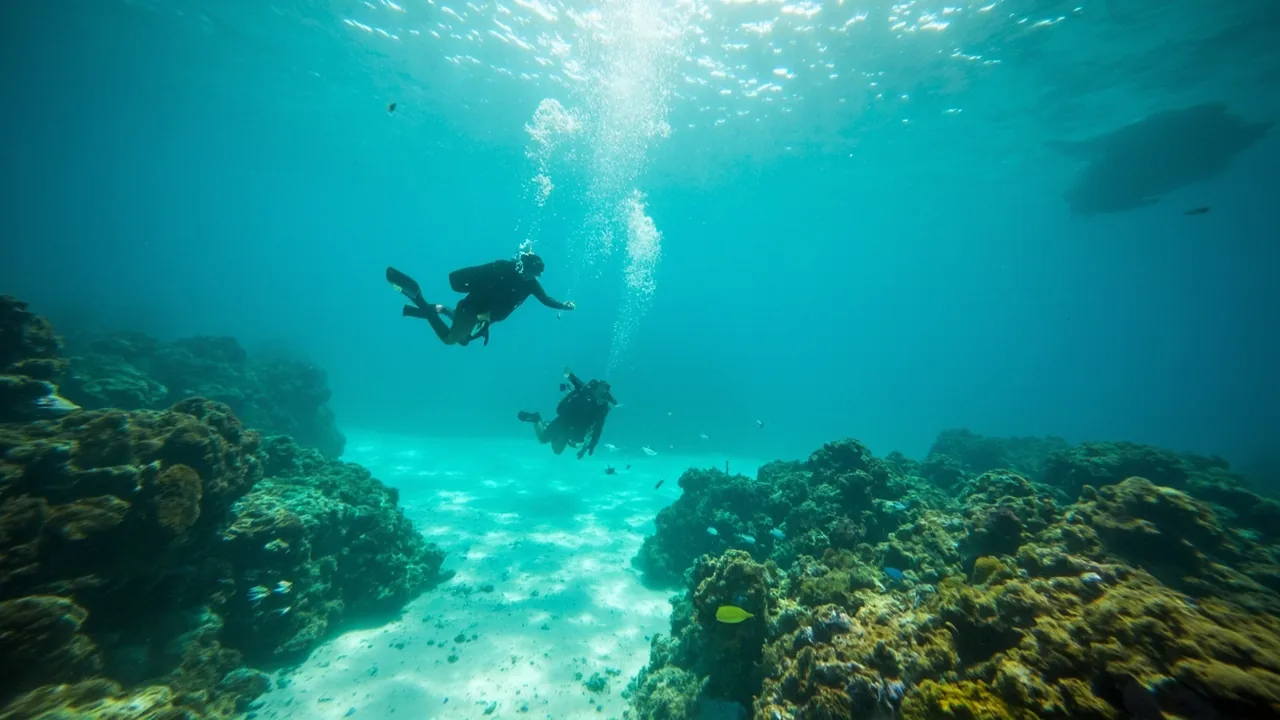
Scuba Diving Thailand: When is the Similan Islands Visibility Best?
For scuba diving Thailand, the Similan Islands visibility question has a single honest answer: February through early April is when the water clears, the manta rays show up on the cleaning stations, and the whale shark encounters start becoming a real possibility rather than a fairy tale divers tell each other. The park itself is closed mid-May to mid-October every year by order of the Thai Department of National Parks, so half the calendar is not a choice you get to make. For related planning, see our guides on Sea Backpacking Hub and Thailand Monsoon Season Honest Review Should You Go.
This guide is for Indian backpackers planning the trip around the calendar instead of the other way around, with the kind of detail the generic Thailand blogs skip: closure dates, manta and whale shark windows, liveaboard pricing from Khao Lak and Phuket, and which Indian cities have nonstop flights to the Andaman coast.
Quick Answers
| What | Answer | Price (INR) |
|---|---|---|
| Similan Islands open season | Mid-October to mid-May (closed mid-May to mid-October by national parks order) | , |
| Real visibility peak | Mid-February to early April (water 25-28m+ visibility, calmest seas) | , |
| Manta ray peak window | February to April on cleaning stations at Koh Bon and Koh Tachai | , |
| Whale shark peak window | Mid-March to April (deep pinnacle encounters, not guaranteed) | , |
| Budget liveaboard (3 days, 2 nights, shared cabin) | Khao Lak departure, ~₹34,307-₹42,884 (~12,000-15,000 THB or ~$356.11-$445.13) | 35,000-45,000 |
| Mid-range liveaboard (4 days, 3 nights) | Khao Lak departure, ~₹62,896-₹85,767 (~22,000-30,000 THB or ~$652.86-$890.26) | 65,000-90,000 |
| Return flight India → Phuket (peak season) | Mumbai / Bangalore / Delhi nonstop | 22,000-32,000 |
| Cheapest dive day-trip (2 dives, no course) | From Khao Lak pier | ₹9,148 (~3,200 THB or ~$94.96) |
Quick note on the numbers above: liveaboard pricing varies a lot by boat and cabin class. The ranges shown are realistic mid-market quotes from Khao Lak operators for the 2025-2026 season, not invented round numbers. Always check the operator’s own quote for your specific departure date.
Month-by-Month Breakdown for Scuba Diving Thailand
The Similan closure is the hard constraint. Within the open window, water clarity, current, and big-animal sightings shift month by month in a way that matters for trip planning.
| Month | Status | Visibility | Crowds | Cost Level | Verdict |
|---|---|---|---|---|---|
| Mid-October | Just reopened | 15-20m, settling | Low | Shoulder (₹₹) | Cool water, some boats running, mantas rare |
| November | Open | 18-22m | Medium | Peak (₹₹₹) | Calm seas, water still warming up, decent for first-timers |
| December | Open | 20-25m | High | Peak (₹₹₹) | Christmas/New Year crowds, great viz, manta season starts |
| January | Open | 22-28m | High | Peak (₹₹₹) | Some of the clearest water of the year, whale shark reports begin |
| February | Open | 25-30m | High | Peak (₹₹₨) | Peak manta window at Koh Bon, calmest conditions |
| March | Open | 25-30m | Medium | Shoulder (₹₹) | Peak manta + whale shark overlap, water warming |
| Early April | Open | 25-28m | Medium | Shoulder (₹₹) | Last reliable big-animal window before Songkran |
| Mid-April to mid-May | Open (limited boats) | 20-25m, plankton rising | Low | Low (₹) | Last-chance diving, water warming fast, viz dropping |
| Mid-May to mid-October | CLOSED | , | None | , | Park shut by national parks order, monsoon season |
The honest version: November to early January is when the water is clearest and the seas calmest, but the manta and whale shark encounters are sparse until the water has been warming through February and March. The “perfect window” is February through early April when viz is still excellent (25-30m) and the bigger animals are reliably on the cleaning stations.
Scuba Diving Thailand: Pros and Cons of the Peak Season
Pros:
- 25-30m visibility at sites like Richelieu Rock, Koh Bon, and Koh Tachai from February through early April
- Manta rays on cleaning stations at Koh Bon and Koh Tachai most days during February-April
- Whale shark encounters become more frequent from mid-March onwards, though still not guaranteed
- Sea surface is calmest in February and early March (least chop, easiest for new divers)
- Liveaboards from Khao Lak are 30 minutes to the park boundary versus 2+ hours from Phuket
Cons:
- Christmas, New Year, and February school holidays bring peak pricing on flights, hostels, and liveaboards
- Popular sites (Elephant Head Rock, Richelieu Rock) get busy with 4-5 boats at the same pinnacle on weekends
- April heat pushes water temperatures to 30°C+ and starts bringing plankton bloom that drops visibility
- The park closes for five months. If your trip falls in June, July, August, or September, the Similans do not exist as a diving destination.
What happens on the ground during peak season: Bangkok-Phuket flights climb into the ₹25,000-₹32,000 (~$259.50-$332.16) range from Mumbai, Delhi, or Bangalore. Dorm beds in Khao Lak double. Liveaboard cabins sell out 60-90 days ahead for February and March departures. Book your boat and your flights together, not one then the other, because the best cabins go first.
Manta Rays and Whale Sharks: When the Big Animals Show Up
This is the part the generic Thailand blogs skip, and it’s why divers plan trips months in advance.
Manta rays (February to April): The Similans and the nearby Koh Bon and Koh Tachai pinnacles have reliable manta cleaning stations where reef mantas come in for parasite removal by cleaner wrasses. February through April is the peak window. On a good 3-day liveaboard in March you can expect 1-3 manta encounters across 9-11 dives. Some boats hit Koh Bon twice in the trip specifically because the manta odds are that good.
Whale sharks (mid-March to April): Whale shark encounters in the Similans are less predictable than mantas. The peak window is mid-March to April, when the plankton bloom is starting but visibility is still 25m+. Most sightings happen at Richelieu Rock and around the deep pinnacles near Koh Tachai. On a 4-day trip in late March, realistic expectation is 0-2 encounters. Some boats in March and April report whale shark sightings on 30-50% of trips, but it is not the same as a guaranteed manta.
Subodh’s Pro Tip: If your primary goal is mantas, book a 3-day / 2-night trip in mid-March. If you want to give yourself the best chance at both mantas and whale sharks, push to a 4-day / 3-night trip in late March or early April. Anything earlier than mid-February and you will have visibility but few big animals. Anything later than mid-April and the water is too warm and the plankton too thick.
For a deeper look at the seasonal patterns across Thailand more broadly, the Thailand weather by month Phuket guide is a good companion read, and so is the February Thailand guide which overlaps directly with this peak window.
Liveaboard vs Day Trip from Khao Lak
| Trip Type | Duration | Typical Price (THB) | Typical Price (INR) | Best For |
|---|---|---|---|---|
| Day trip, 2 dives | ~7 hours from pier | ₹9,148-₹12,865 (~3,200-4,500 THB or ~$94.96-$133.54) | 9,200-12,900 | First-time Similan divers, time-pressed |
| Day trip, 3 dives (incl. Richelieu) | ~10 hours | ₹12,865-₹18,583 (~4,500-6,500 THB or ~$133.54-$192.89) | 12,900-18,600 | One-day hardcore option |
| Budget liveaboard (3D/2N, shared cabin) | 3 days | ₹34,307-₹42,884 (~12,000-15,000 THB or ~$356.11-$445.13) | 34,400-43,000 | Best value for serious diving |
| Mid-range liveaboard (4D/3N, shared cabin) | 4 days | ₹62,896-₹85,767 (~22,000-30,000 THB or ~$652.86-$890.26) | 63,000-86,000 | Peak manta + whale shark window |
| Premium liveaboard (4D/3N, ensuite cabin) | 4 days | ₹100,062-₹142,945 (~35,000-50,000 THB or ~$1,038.64-$1,483.77) | 100,000-143,000 | Comfort + best dive sites |
Khao Lak is the right base for Similan diving. Phuket boats exist but they add 2+ hours of surface time each way to reach the park boundary, which means more fuel cost and fewer dives per trip. Day trips from Khao Lak hit 2-3 sites including Elephant Head Rock; liveaboards add Richelieu Rock and Koh Tachai.
A few practical notes on booking:
- Most operators pick you up from your Khao Lak hotel and return you the same day
- Day trips to Richelieu Rock only run on faster boats and cost more (₹17,153-₹21,442 (~6,000-7,500 THB or ~$178.05-$222.57) / 17,200-21,500)
- Peak season (December-March) books out 60-90 days ahead for shared cabins; book in October for March trips
- Off-season for liveaboards = April to mid-May, the cheapest time on the boats but visibility is starting to drop
Where to Stay in Khao Lak
Budget accommodation near the piers in Khao Lak runs from a basic dorm bed (₹858-₹1,144 (~300-400 THB or ~$8.90-$11.87) / 860-1,150) to a fan-cooled private room (₹2,287-₹4,288 (~800-1,500 THB or ~$23.74-$44.51) / 2,300-4,300). Most liveaboard operators will arrange free pickup from Khao Lak area hotels if you book through them directly.
Khao Lak itself is a low-key strip of guesthouses, dive shops, and seafood restaurants between two national parks. The food scene is honest Thai (grilled fish, papaya salad, tom yum), not the tourist-trap version you get on Phuket’s beaches. For a broader view of Thailand weather windows that affect this whole trip, the monsoon travel guide explains what happens from May onwards.
Getting to Khao Lak from India
There are no direct flights to Khao Lak. The standard route from India is Mumbai / Bangalore / Delhi / Kolkata → Phuket International Airport → 1-hour taxi or minivan to Khao Lak (₹3,431-₹5,146 (~1,200-1,800 THB or ~$35.61-$53.42) / 3,400-5,200).
Direct nonstop flights from India to Phuket:
- Mumbai → Phuket: nonstop on IndiGo and Thai Airways, 4h 30m direct. Peak season round trip ₹22,000-₹32,000 (~$228.36-$332.16)
- Bangalore → Phuket: nonstop on IndiGo and Thai VietJet, 4h 10m direct. Peak season ₹18,000-₹28,000 (~$186.84-$290.64)
- Delhi → Phuket: nonstop on Thai Airways, 5h 20m. Peak season ₹25,000-₹35,000 (~$259.50-$363.30)
- Kolkata → Phuket: nonstop on Thai Airways and IndiGo (seasonal), 4h direct. Peak season ₹20,000-₹30,000 (~$207.60-$311.40)
December and February are the most expensive months to fly. November and late January are typically 15-20% cheaper than the Christmas-New Year peak.
What to Pack for Similan Diving
- 3mm wetsuit (most operators rent these, but if you run cold, bring your own)
- Reef-safe sunscreen (the park enforces this on most boats now)
- Rash guard for surface intervals
- Dry bag for phone and electronics on the boat
- Seasickness pills (take one the night before and one in the morning if you’ve never dived from a liveaboard before)
- Underwater camera if you have one (GoPro with red filter for blue-water shots at depth)
- Reef shoes or neoprene socks for shore entries
If you are not certified yet, most Khao Lak operators offer PADI Open Water referral courses (theory + pool done in India, then 4 open water dives here for the certification). The full 4-day PADI course runs ₹40,025-₹51,460 (~14,000-18,000 THB or ~$415.46-$534.16) / 40,000-51,600 with a budget operator.
Getting Connected
A Thai SIM with 4G data is essential for booking liveaboards, checking tide and weather apps, and getting from Phuket airport to Khao Lak. AIS and TrueMove both have tourist SIMs at the Phuket airport counter for ₹855-₹1,427 (~299-499 THB or ~$8.87-$14.81) / 860-1,430 for 7-15 days with 15-30GB of data. A Get Nomad eSIM is the right backup if you want coverage from the moment you land and don’t want to queue at the airport counter. At current rates (1 THB = ₹2.8690), 300 THB works out to about 860 INR.
Best Time to Visit the Similans: Side-by-Side Cost Comparison
| Item | Peak (Dec-Jan) | Shoulder (Feb-early Apr) | Low (mid-Apr to mid-May) |
|---|---|---|---|
| Return flight India → Phuket | 28,000-35,000 | 22,000-28,000 | 18,000-22,000 |
| Dorm bed in Khao Lak (per night) | ₹858-₹1,201 (~300-420 THB or ~$8.90-$12.46) | ₹600-₹886 (~210-310 THB or ~$6.23-$9.20) | ₹400-₹600 (~140-210 THB or ~$4.15-$6.23) |
| Private fan room in Khao Lak | ₹2,487-₹4,002 (~870-1,400 THB or ~$25.82-$41.55) | ₹1,801-₹3,002 (~630-1,050 THB or ~$18.70-$31.16) | ₹1,201-₹2,001 (~420-700 THB or ~$12.46-$20.77) |
| Budget liveaboard (3D/2N) | ₹40,025-₹45,742 (~14,000-16,000 THB or ~$415.46-$474.81) | ₹34,307-₹40,025 (~12,000-14,000 THB or ~$356.11-$415.46) | ₹28,589-₹34,307 (~10,000-12,000 THB or ~$296.75-$356.11) |
| Day trip (2 dives) | ₹11,436-₹12,865 (~4,000-4,500 THB or ~$118.70-$133.54) | ₹10,006-₹11,436 (~3,500-4,000 THB or ~$103.86-$118.70) | ₹8,577-₹10,006 (~3,000-3,500 THB or ~$89.03-$103.86) |
The February to early-April shoulder season is the sweet spot. Water is still at peak visibility, big animals are showing up, but pricing has dropped 10-20% from the Christmas peak because European and Australian family holidays have ended.
Safety Notes for Similan Diving
The Similan diving itself is safe if you are a certified diver. Risks are the standard open-water ones: current at the pinnacles (Koh Tachai can have ripping current on outgoing tides), depth at Richelieu Rock (18-25m, beyond recreational limits if you’re not advanced-certified), and ear equalization problems if you’ve never dived before. None of this is unique to the Similans.
For general travel safety in Thailand, register with the Indian Ministry of External Affairs before departure and check the MEA travel advisory page for any current updates. Within Thailand itself, the Tourist Police hotline 1155 is the right number for any incident involving tourists.
Safety Alert: The Similan Islands are part of a national park, and a few specific rules are enforced. No fishing, no collecting shells or coral, no touching marine life. Park rangers check boats. Fines are real (₹14,295-₹285,890 (~5,000-100,000 THB or ~$148.38-$2,967.54) / 14,300-286,900). On the dive sites, your dive master will brief you on the local rules before each dive.
FAQ
Can you dive the Similans year-round? No. The park is closed mid-May to mid-October every year by the Thai Department of National Parks, Wildlife and Plant Conservation. Boats cannot enter during this period. The exact closure dates are published each year on the Department of National Parks website.
Is February better than November for visibility? November has cleaner water and calmer seas, but fewer big-animal sightings. February has 25-30m visibility (slightly less stable than November’s best days) and is when manta encounters become reliable. For pure visibility, late December and January are marginally better. For mantas and whale sharks, February to early April is the real peak.
Are whale sharks guaranteed in March and April? No. Whale sharks are wild animals. The mid-March to April window is when sightings are most likely, but a 4-day liveaboard in late March might have zero encounters. Manta rays are more reliable; on a good 3-day trip in March you can expect 1-3 encounters.
Do I need to be an advanced diver for the Similans? For most sites (Elephant Head Rock, Shark Fin Reef, Beacon Point), an Open Water certification (18m max depth) is fine. For Richelieu Rock, the best site, the average depth is 18-22m with the seabed at 35m, so divers are expected to stay within their certified depth limit. A few boats require Advanced Open Water for Richelieu. Ask before booking.
How much cash should I bring for a 5-day Khao Lak trip including 3-day liveaboard? Plan for the liveaboard cost (paid in advance to the operator), ₹2,287-₹4,288 (~800-1,500 THB or ~$23.74-$44.51) per day on the ground for food and local transport (about ₹2,300-₹4,300 (~$23.87-$44.63) per day), plus ₹8,577-₹14,295 (~3,000-5,000 THB or ~$89.03-$148.38) reserve for extras. A realistic total is ₹100,062-₹142,945 (~35,000-50,000 THB or ~$1,038.64-$1,483.77) / 100,000-143,000 over and above flights.
Is it worth going in November if I can only travel then? Yes, but adjust expectations. November water is 26-27°C, viz is 18-22m and climbing, and the seas are at their calmest. You will not see many mantas, but the diving is excellent and boat traffic is lower than February. November is the right month for divers who prioritize calm conditions and clear water over big-animal encounters.
Should I dive from Phuket or Khao Lak? Khao Lak. Phuket is 2+ hours further from the park boundary, so boats from there are more expensive, do fewer dives per day, and tend to skip the deeper northern sites like Koh Tachai. The Khao Lak dive scene is built around Similan access.
Subodh’s Take
Most Thailand blogs tell you the Similans are “open November to April” and call it a day. The honest version is that visibility peaks twice a year (late December-January for absolute clarity, March for clarity plus big animals), the closure is hard and absolute, and the best trip combines both. Book a 4-day liveaboard in mid-March from Khao Lak, expect 25-30m viz and a 70% chance of mantas, and treat any whale shark as a bonus rather than a guarantee. If you are a new diver, do your Open Water course in India first, then come in late November or December for the calmest conditions. The Similans are one of the few dive destinations where the season matters more than the destination itself.
