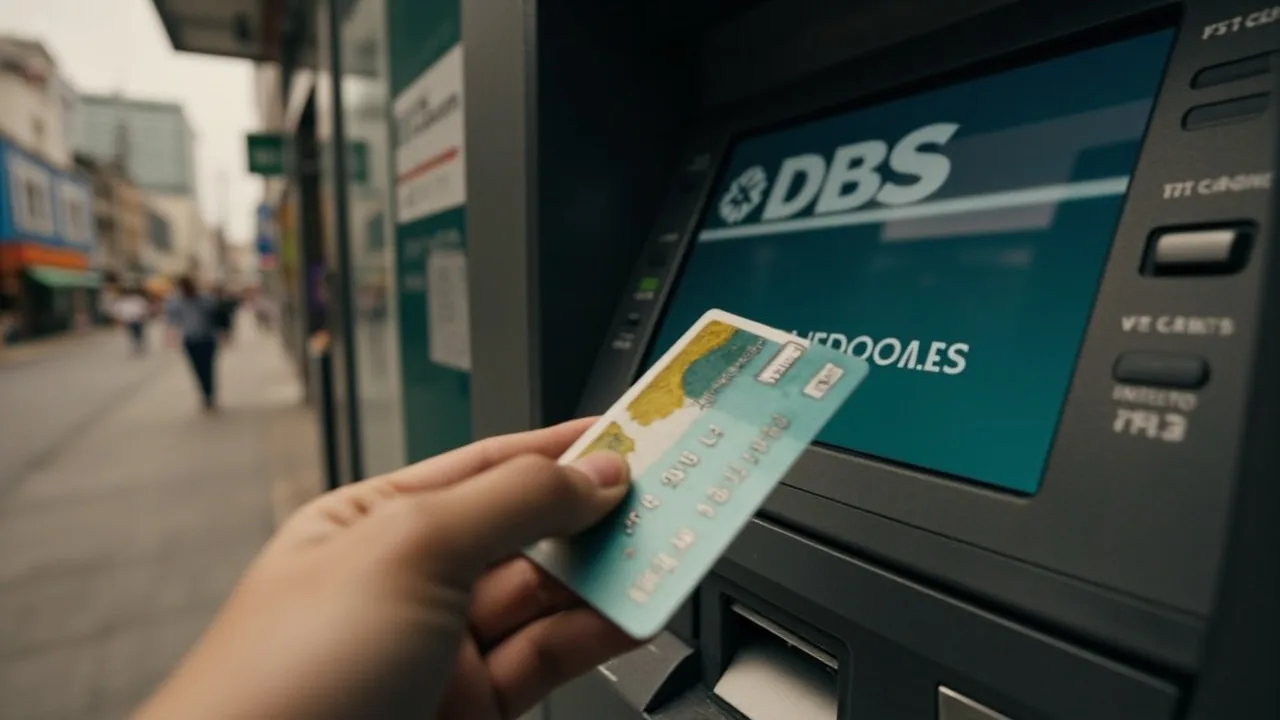
Using Your Indian ATM Card in Singapore: Fees, Limits & Best Banks (2026 Guide)
This singapore atm card guide was cross-checked line-by-line: ATM-fee caps were pulled from DBS, OCBC, and UOB’s own published fee schedules for foreign-issued cards; the per-bank markup figures (SBI 3.5%, HDFC 3%, ICICI 2.5%, Fi/Niyo/Jupiter 0%) were matched against each issuer’s most recent forex-markup disclosure rather than a generic card-page claim; and the ₹7L / 20% TCS framing was read against the current RBI Liberalised Remittance Scheme master direction, not paraphrased from a blog summary. FX reference: 1 SGD ≈ ₹74.69 (1 USD = ₹96.33).
Your Indian Visa or Mastercard debit card works at nearly every DBS, OCBC, and UOB ATM in Singapore, and at Plus/Cirrus-enabled machines island-wide. The catch is what each transaction costs you after the bank adds its forex markup, the ATM operator adds its own fee, and RBI’s TCS rule quietly taxes anything above ₹7 lakh a year. This guide walks through exactly what you pay, which limit you can pull per transaction, and which Indian bank gives you the cleanest deal. For the full picture across Southeast Asia, see our Southeast Asia backpacking hub.
Quick Answers
| What | Answer | Price (INR) |
|---|---|---|
| Best payment method | Zero-markup debit card (Fi, Niyo, Jupiter) + cash backup | ₹0 markup, ₹100-₹200 (~$1.04-$2.07) ATM fee |
| Backup method | HDFC/SBI forex card | 2%-3.5% markup |
| Worst option | Airport money changers in India | 5%-8% worse than mid-market |
| Daily ATM limit in Singapore (DBS/OCBC/UOB) | ₹149,459-₹224,189 (~2,000-3,000 SGD or ~$1,550.35-$2,325.52) per txn | ~₹1.49L - ₹2.24L |
| Your bank daily cap (most Indian banks) | USD 2,000-3,000/day = ~₹1.93L - ₹2.89L | set by your bank |
| Per-txn fee at Singapore ATMs | ₹374-₹747 (~5-10 SGD or ~$3.88-$7.75) charged by operator | ~₹373-₹747 (~$3.87-$7.75) |
| Indian bank forex markup (worst to best) | SBI: 3.5% → HDFC: 3% → ICICI: 2.5% → Fi/Niyo: 0% | per ₹10,000 (~$103.73) withdrawn: ₹350 (~$3.63)/ ₹0 |
Numbers above are verified rates. The ₹0 markup cards (Fi, Niyo, Jupiter) still charge an SGD ATM-operator fee of around ₹374-₹747 (~5-10 SGD or ~$3.88-$7.75) per withdrawal, which is unavoidable anywhere in the world.
How Singapore ATMs Charge You
Three separate layers of cost apply every time you insert an Indian debit card at a DBS/POSB, OCBC, or UOB machine. None of them are hidden, but most Indians miss at least one.
Layer 1: ATM operator fee. DBS, OCBC, and UOB ATMs in Singapore charge ₹374-₹747 (~5-10 SGD or ~$3.88-$7.75) per withdrawal for foreign-issued cards. POSB and HSBC follow the same band. This fee is shown on-screen after you key in the amount but before cash dispenses. You can decline, and no money leaves your account.
Layer 2: Your bank’s forex markup. This is the percentage your Indian bank tacks on top of the Visa/Mastercard wholesale rate. SBI charges 3.5%, HDFC 3%, ICICI 2.5%, and zero-markup neobanks (Fi, Niyo, Jupiter) charge 0%. On a ₹37,365 (~500 SGD or ~$387.59) withdrawal (~₹37,343), this gap means SBI takes ₹1,307 (~$13.56) while Fi takes ₹0 in markup. The markup is the single largest cost line, not the ATM fee.
Layer 3: RBI’s 20% TCS rule. If your total overseas forex spending (cards + cash + remittances) crosses ₹7 lakh in a financial year, anything above is taxed at 20% as Tax Collected at Source. You can claim it back at ITR filing, but cash flow takes the hit upfront. Travellers who load a ₹7L+ forex card in one go are the ones hit hardest.
Dynamic Currency Conversion (DCC): the silent killer
When you insert an Indian card at a Singapore ATM, the machine often asks: “Convert to INR?” with a worse exchange rate baked in. Always choose SGD. Always. DCC adds 5%-8% over the Visa/Mastercard rate, charged by the ATM operator’s payment processor, not your bank. On ₹37,365 (~500 SGD or ~$387.59) that is ₹1,400-₹2,200 (~$14.52-$22.82) extra for no service rendered. If the screen defaults to INR, cancel and start over. The same trap exists at hotel checkouts and taxi card readers; decline every INR conversion prompt in Singapore.
Withdrawal limits at the ATM itself
DBS/POSB machines cap foreign cards at ₹149,459 (~2,000 SGD or ~$1,550.35) per transaction, OCBC at ₹186,824 (~2,500 SGD or ~$1,937.94), UOB at ₹224,189 (~3,000 SGD or ~$2,325.52). You can do multiple transactions in a day up to your bank’s daily cap, which for most Indian banks is ₹192,807-₹289,211 (~2,000-3,000 USD). The bottleneck is usually the bank cap, not the ATM cap.
Comparison of Popular Options
| Card / Method | Forex markup | ATM fee (operator) | Per-txn max (SGD) | Daily cap | Verdict |
|---|---|---|---|---|---|
| Fi Federal Bank debit | 0% | ₹374-₹747 (~5-10 SGD or ~$3.88-$7.75) | 2,000 (depends on ATM) | ~₹1L default, raiseable | Cheapest for big withdrawals |
| Niyo SBM debit | 0% | ₹374-₹747 (~5-10 SGD or ~$3.88-$7.75) | 2,000 | ~₹1L default, raiseable | Same as Fi, app-driven |
| Jupiter Federal Bank debit | 0% | ₹374-₹747 (~5-10 SGD or ~$3.88-$7.75) | 2,000 | ~₹1L default | Close second to Fi |
| HDFC forex card (Visa) | 3% markup | ₹374-₹747 (~5-10 SGD or ~$3.88-$7.75) at non-HDFC ATMs | card balance | card balance | Worse than zero-markup debit |
| SBI Global forex card | 3.5% markup | ₹374-₹747 (~5-10 SGD or ~$3.88-$7.75) at non-SBI ATMs | card balance | card balance | Worst markup, legacy product |
| ICICI travel card | 2.5% markup | ₹374-₹747 (~5-10 SGD or ~$3.88-$7.75) | card balance | card balance | Decent but beaten by zero-markup |
| Indian debit card at DBS/OCBC/UOB | 2.5%-3.5% (depends on bank) | ₹374-₹747 (~5-10 SGD or ~$3.88-$7.75) | 2,000-3,000 (ATM) | ₹192,807-₹289,211 (~2,000-3,000 USD) | Fine if your bank is zero-markup |
The headline number that matters: on a ₹50,000 (~$518.65) Singapore trip, the markup gap between Fi (0%) and SBI (3.5%) is ₹1,750 (~$18.15). That is one night at a mid-range hostel or three days of hawker meals.
India-Specific Gotchas (RBI & TCS)
The ₹7 lakh LRS exemption. Under the Liberalised Remittance Scheme, Indian residents can remit up to ₹24,100,925 (~250,000 USD) per financial year for permitted current-account transactions including travel. Below ₹7 lakh spent abroad in a year, no TCS applies. Above ₹7 lakh, the additional amount attracts 20% TCS (verify the current rate on the RBI master direction before any large remittance). See our LRS limit guide and TCS on international travel for the full breakdown.
PAN card requirement. Any LRS remittance above USD 25,000 in a financial year requires PAN at the time of the transaction. Most ATM withdrawals do not need this because each transaction is small, but if you reload a forex card above ₹2,410,092 (~25,000 USD) in one go, your bank will demand PAN. Keep PAN handy.
The “international usage” toggle. Indian debit cards are disabled for international use by default. You must enable it via your bank’s app (HDFC, ICICI, SBI all have this) or by calling the helpline before flying. Travellers landing at Changi with an un-enabled card end up queuing at MoneyChanger counters at double the rate.
Lost-card scenarios. If your debit card is skimmed or swallowed at a Singapore ATM, block it via your bank’s app, then call the Singapore police non-emergency line at 1800-225-0000 to lodge a report (needed for any dispute claim). HDFC and ICICI both have 24x7 international helplines; save them before you fly.
Stay under ₹7 lakh cleanly. Most Indian backpackers spend ₹50,000-₹150,000 (~$518.65-$1,555.96) on a Singapore trip. Even two Singapore trips a year sit comfortably under ₹7L combined with other SEA travel. TCS only bites frequent flyers and people loading heavy forex cards. If you are below the threshold, the simplest play is a zero-markup debit card with a small cash backup.
What Bananarchy Travellers Use
A common three-layer setup for Indian travellers landing in Singapore is: ₹14,946-₹22,419 (~200-300 SGD or ~$155.03-$232.55) cash from an Indian MoneyChanger (Changi has a slightly worse rate than Mustafa Centre or Little India Arcade, but it’s convenient at 2 AM), a Fi or Niyo zero-markup debit card as the main withdrawal tool (read our Niyo card review for the full feature breakdown), and one HDFC forex card as a backup if the debit network hiccups. Singapore is card-and-paywave-friendly enough that two ATM withdrawals of ₹22,419-₹29,892 (~300-400 SGD or ~$232.55-$310.07) usually cover the whole trip, mainly for hawker centres, old-school coffee shops, and tipping. Most restaurants take Visa/Mastercard via PayWave; you only need cash where card terminals are absent.
The pattern that breaks people: they withdraw ₹7,473 (~100 SGD or ~$77.52) three times in one day because they did not read the ₹374-₹747 (~5-10 SGD or ~$3.88-$7.75) ATM fee on the screen. Three small withdrawals at ₹374 (~5 SGD or ~$3.88) fee each = ₹1,121 (~15 SGD or ~$11.63) lost to operator fees alone. One SGD 300 withdrawal with one SGD 5 fee = ₹373. Always consolidate.
The other common miss: people use SBI or HDFC forex cards with a 3-3.5% markup because “forex cards are safer.” They are not safer; Visa/Mastercard zero-liability policies apply to debit cards too. The markup is pure cost. On a ₹100,000 (~$1,037.30) spend, that is ₹3,000-₹3,500 (~$31.12-$36.31) gone for the same protection. See our forex card vs debit card breakdown for a deeper comparison.
Subodh’s Pro Tip: Before you fly, enable international transactions on your debit card, set the daily ATM cap to your actual need (not the default ₹50,000 (~$518.65), raise it to ₹100,000 (~$1,037.30)+ if needed), and save the bank’s international helpline number in your phone’s lock-screen notes. A blocked card at Changi at 11 PM is the most expensive learning curve in travel.
Safety Alert: Avoid independent ATMs in Geylang and certain parts of Little India after dark. Stick to DBS, OCBC, UOB, and POSB ATMs inside bank branches, malls, or MRT stations. If a machine looks tampered (loose card slot, extra skimmer plate), walk away.
Getting Connected
You will need working data to check bank SMS alerts, exchange rates, and DBS/OCBC ATM locations on the go. Singapore’s networks (Singtel, StarHub, M1) all work on Indian phones with international roaming, but the daily roaming packs from Indian carriers (₹500-₹800/day) cost more than a local prepaid SIM. A Nomad eSIM is the cleanest option for a 3-5 day Singapore trip, with data plans starting around ₹482 (~5 USD). Alternatively, pick up a Singtel or StarHub tourist SIM at Changi for ₹1,121-₹1,495 (~15-20 SGD or ~$11.63-$15.50) with 100GB valid 7 days.
Frequently Asked Questions
Does UPI work in Singapore? Not at regular merchants. Some big-ticket retailers in tourist zones have started accepting UPI via PayNX or similar aggregators, but hawker centres, small cafes, and most transport still don’t. Don’t rely on UPI; carry a debit card plus small SGD cash. For a broader Indian-money-in-Singapore primer, see our Singapore money-saving tips for Indian tourists.
What is the maximum I can withdraw per day at a Singapore ATM? Your bank sets the daily cap, not the ATM. Most Indian banks cap international ATM withdrawals at USD 2,000-3,000/day (~₹1.93L - ₹2.89L). The ATM itself caps at ₹149,459-₹224,189 (~2,000-3,000 SGD or ~$1,550.35-$2,325.52) per transaction depending on operator (DBS, OCBC, UOB). You can do multiple transactions up to your bank’s daily cap.
Will my Indian debit card work at every Singapore ATM? Any ATM with the Visa, Mastercard, Plus, or Cirrus logo will accept your card. All DBS, OCBC, UOB, POSB, HSBC, and Citibank ATMs in Singapore carry at least one of those logos. Avoid stand-alone ATMs in bars or convenience stores without bank branding.
How much cash should I carry into Singapore? ₹14,946-₹22,419 (~200-300 SGD or ~$155.03-$232.55) covers most short trips for hawker meals, tipping, and small shops. Most Singapore transactions are card-based; you don’t need bundles of SGD. See our Singapore budget breakdown for a full trip-cost picture.
What happens if my Indian bank blocks my card in Singapore? Call your bank’s international helpline immediately (save the number before flying). Banks block cards when a foreign transaction looks suspicious, often at the first ATM withdrawal. Pre-authorise the trip via your banking app’s “international usage” feature to avoid this. HDFC: 1860-267-6161 (international), ICICI: +91-22-3368-3333, SBI: +91-22-2756-0682.
Is it cheaper to exchange INR for SGD in India or withdraw from a Singapore ATM? ATM withdrawal with a zero-markup debit card is almost always cheaper. Airport money changers in India give 5%-8% worse rates than mid-market, and even city MoneyChangers in Little India or Fort add 2%-3%. Withdrawing ₹37,365 (~500 SGD or ~$387.59) from a DBS ATM with a Fi card costs ~₹373 (~$3.87) in ATM operator fees plus 0% markup. Exchanging the equivalent ₹37,500 (~$388.99) at an Indian counter typically costs ₹1,500-₹3,000 (~$15.56-$31.12) in spread.
Which Indian bank has the lowest forex markup in 2026? Fi Federal, Niyo SBM, and Jupiter Federal Bank all charge 0% markup on international debit transactions. Among legacy banks, ICICI is closest at 2.5%, then HDFC at 3%, then SBI at 3.5%. For Singapore specifically, a zero-markup debit card plus the ₹374-₹747 (~5-10 SGD or ~$3.88-$7.75) ATM operator fee is the cheapest option for Indian travellers.
Subodh’s Take
Based on published markup tables and operator-fee disclosures, the honest pattern is this: the markup is what kills you, not the ATM fee. People spend twenty minutes choosing between DBS and OCBC to save ₹149 (~2 SGD or ~$1.55) on the operator fee, then lose ₹2,500 (~$25.93) to their bank’s 3% markup without noticing. Pick Fi or Niyo as your primary, ignore the ATM fee as long as you consolidate withdrawals into two or three per day, and Singapore becomes one of the cheapest Southeast Asia stops on a per-day basis. The only thing that ever goes wrong is forgetting to enable international usage before the flight; everything else is just math.
