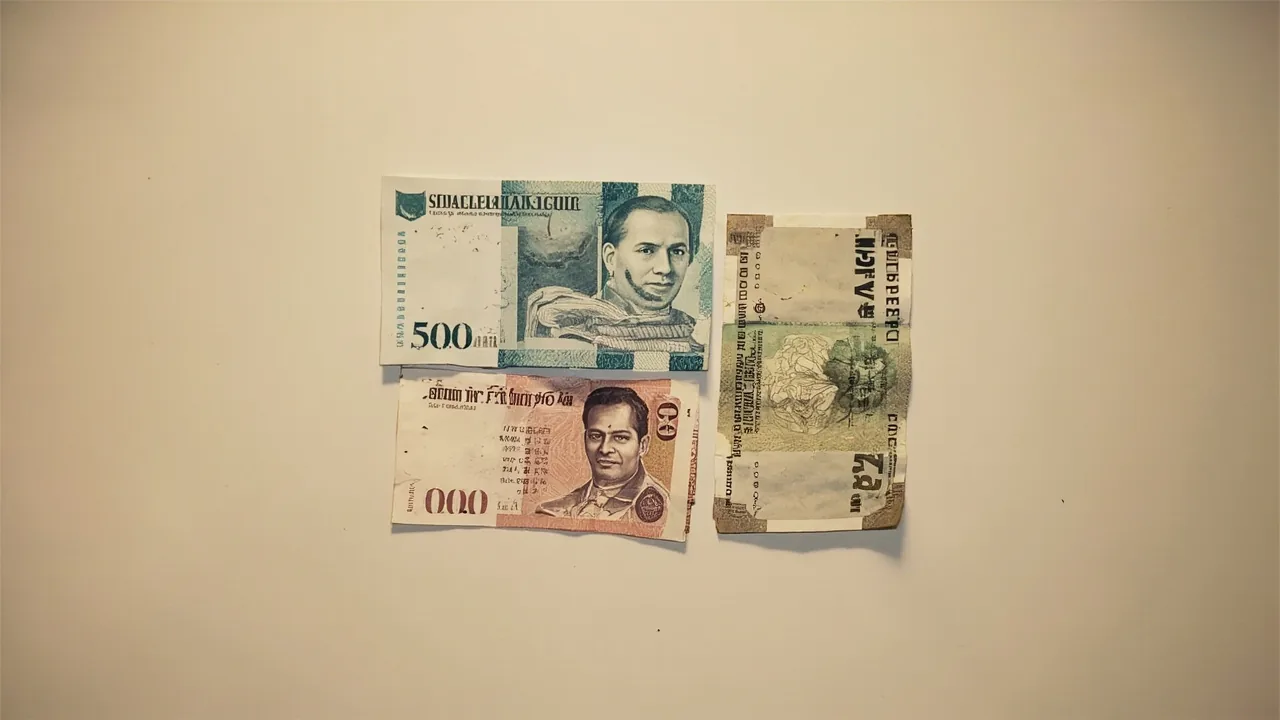
Singapore Dollar vs Indian Rupee: Which One is Stronger and What It Means for Your Wallet
If you’re comparing the singapore dollar vs indian rupee today, the rate drives every rupee that leaves your bank account. As of today, 1 SGD = ₹74.69 (~$0.78), which makes the Singapore Dollar roughly 7.5x stronger than the Indian Rupee on a per-unit basis.
This guide is built around the RBI’s Liberalised Remittance Scheme rules and the rates charged by Indian banks, forex cards, and money changers in July 2026. We don’t use stale 2023 or 2024 numbers.
Quick Answers
| What | Answer | Price (INR) |
|---|---|---|
| Today’s rate (1 SGD) | 1 SGD = ₹74.69 | ₹74.69 (~$0.78) |
| What ₹1 lakh buys in SGD | ₹100,000 (~$1,037.30)= ₹100,063 (~1,339 SGD or ~$1,037.96) | ₹100,000 (~$1,037.30) |
| 5-year trend | Rupee depreciated ~7% against SGD | ₹74.69 (~$0.78) |
| Cheapest way to convert in India | Online forex card (Niyo/BookMyForex multi-currency) | ~0.5%–1.5% markup |
| Worst option | Airport money changer at Changi | 4%–7% worse than mid-market |
| LRS limit for Indians | USD 250,000 / financial year | ₹2,40,82,350 (~$250,000) |
Verified 2026-07-18 at 1 INR = 0.0134 SGD (1 SGD = ₹74.6855 or ~$0.78).
How the Singapore Dollar vs Indian Rupee Rate Is Set
The rate you see on Google or XE is the mid-market rate, the midpoint between the buy and sell prices on the global foreign exchange market. It’s a benchmark, not what you pay.
What you pay depends on four layers:
1. The mid-market rate. This floats continuously. On 18 July 2026, it’s 1 SGD = ₹74.6855 (~$0.78).
2. The interbank rate. Banks like SBI, HDFC, ICICI, and Axis add a margin on top of this when they sell you foreign currency. This margin is called the TT (Telegraphic Transfer) selling rate, and for SGD it sits around ₹76.50-₹77.50 (~$0.79-$0.80) at most Indian banks today, roughly 2.5%–4% above mid-market.
3. The forex card rate. Niyo, BookMyForex multi-currency cards, and HDFC forex cards typically lock in rates within 0.5%–1.5% of mid-market if you load money when the rate is favourable. Some cards (Niyo Global, Fi) advertise zero markup, which means they pass through the Visa/Mastercard wholesale rate with no extra layer.
4. The cash/exchange counter rate. Airport counters at Changi, Thomas Cook branches in India, and unlicensed money changers in Little India can add 4%–8% on top of mid-market, depending on the denomination and how busy they are.
The rupee’s value against the Singapore Dollar is driven by a few big factors: the RBI’s interest rate decisions (higher Indian rates tend to support the rupee), Singapore’s MAS monetary policy (the Monetary Authority of Singapore manages SGD against a basket, not the USD alone, which makes SGD-INR less volatile than USD-INR), oil prices (India imports most of its crude, so spikes hurt the rupee), and capital flows (FII selling in Indian markets pulls rupees out and weakens them).
For a deeper dive on rupee mechanics abroad, read our UPI abroad in SE Asia guide. For the regulatory side of moving money out, see our LRS limit explainer.
10-Year SGD vs INR Trend: Has the Rupee Gotten Weaker?
Yes, but not as dramatically as you might think, and not in a straight line.
- 2016: 1 SGD ≈ ₹48 (~$0.74)
- 2018: 1 SGD ≈ ₹51 (~$0.76)
- 2020 (COVID crash): 1 SGD ≈ ₹54 (~$0.72)
- 2022: 1 SGD ≈ ₹61 (~$0.82)
- 2024: 1 SGD ≈ ₹62 (~$0.81)
- 2026 (today): 1 SGD ≈ ₹74.69 (~$0.78)
Over 10 years, the rupee has depreciated roughly 55% against the Singapore Dollar. Compare that to the USD-INR pair over the same period (₹67 ($0.69) to ₹96.33 ($1), about 44%), and you’ll see SGD has been a slightly stronger store of value than USD for Indians. This is because Singapore has run tighter monetary policy, kept inflation consistently low (around 2%–3% per year), and maintained a current account surplus, all of which support the SGD.
For Indian travellers, this trend means your Singapore trip costs more in rupee terms every year you delay. A ₹50,000 (~$518.65) trip in 2016 would cost roughly ₹78,000 (~$809.10) today at the same SGD spend. This is one of the few times where the cliché “travel while you’re young” is financially literal.
Inflation and Purchasing Power Parity (PPP): The Real Story
The exchange rate tells you what one currency buys in another. Purchasing power parity tells you what your money buys in daily life.
Big Mac Index (July 2026, approximate):
- Singapore: A Big Mac costs about ₹486 (~6.50 SGD or ~$5.04)
- India: A Big Mac costs about ₹200 (~$2.08)
The implied PPP exchange rate is around ₹30–₹35 ($0.31-$0.37) per SGD, far below the actual ₹74.69 ($0.77). This means a Singaporean visiting India finds India cheap; an Indian visiting Singapore finds Singapore expensive. The gap is the “real” cost of Singapore for Indian wallets.
For day-to-day spending:
- A kopitiam (coffee shop) meal in Singapore: ₹374-₹598 (~5-8 SGD or ~$3.88-$6.20)
- An MRT/bus ride: ₹112-₹187 (~1.50-2.50 SGD or ~$1.16-$1.94)
- A budget hotel dorm bed: ₹2,616-₹4,110 (~35-55 SGD or ~$27.13-$42.63) per night (₹2,614-₹4,107 (~$27.12-$42.60))
- A mid-range restaurant dinner for two: ₹4,484-₹7,473 (~60-100 SGD or ~$46.51-$77.52)
Versus India:
- A thali at a local joint: ₹150-₹300 (~$1.56-$3.11)
- A metro ride in Delhi/Bengaluru: ₹10-₹60 (~$0.10-$0.62)
- A budget hostel dorm bed: ₹2,616-₹4,110 (~$27.14-$42.63) per night
- A mid-range restaurant dinner for two: ₹800-₹1,500 (~$8.30-$15.56) Singapore costs roughly 3x to 4x what India does for the same category of goods, which tracks with the Big Mac PPP gap. The exchange rate exaggerates this (₹74.69 per SGD (~$0.78) looks scary), but on the ground it feels like a 3-4x premium rather than a 75x premium.
What It Means for Indian Travellers, Students, and Businesses
For tourists: Every SGD you spend costs you ₹74.69 (~$0.77) today. A 5-day Singapore trip at a comfortable backpacker level (hostels, hawker food, public transport, one paid attraction) runs about ₹59,784-₹89,676 (~800-1,200 SGD or ~$620.14-$930.21). At a mid-range level (3-star hotel, restaurants, taxis), expect ₹134,513-₹186,824 (~1,800-2,500 SGD or ~$1,395.31-$1,937.94). Plan for the higher end if you’re travelling in December or during the F1 week, when hotel rates triple.
For students: NUS, NTU, SMU, and INSEAD tuition runs ₹1,494,594-₹4,483,782 (~20,000-60,000 SGD or ~$15,503.49-$46,510.48) per year (₹1,493,710-₹4,481,130 (~$15,494.32-$46,482.97)). Monthly living costs in Singapore are ₹112,095-₹186,824 (~1,500-2,500 SGD or ~$1,162.76-$1,937.94), excluding tuition. Parents remitting money under LRS should factor in the rupee’s gradual decline: a SGD 2,000/month allowance that cost ₹122,000 (~$1,265.51) in 2020 now costs ₹149,371 (~$1,549.43).
For businesses: Indian IT services firms, pharma exporters, and SMEs paying Singapore vendors see margin compression every time the rupee weakens. A 5% rupee depreciation on a ₹7,472,970 (~100,000 SGD or ~$77,517.46) annual invoice adds ₹373,427 (~$3,873.58) to the cost in rupee terms. Most Indian firms hedge 50%–70% of forward SGD exposure through banks.
How to Convert Singapore Dollar to Indian Rupee in India (Without Losing 5% to Spread)
This is where the competitive gap matters. Most generic “SGD vs INR” articles stop at “1 SGD = ₹74.69 (~$0.78) today” and leave you to figure out the rest. Here’s what works in 2026:
1. Online Forex Cards (Cheapest for Most Travellers)
Niyo Global and BookMyForex multi-currency cards are the two main options. You load INR through UPI or netbanking, they convert at rates within 0.5%–1.5% of mid-market, and you spend in SGD at wholesale Visa/Mastercard rates abroad.
- Markup: 0.5%–1.5% above mid-market
- ATM withdrawal fee: ₹100-₹250 (~$1.04-$2.59) per transaction (~$1.04–$2.60) on Niyo; free on some BookMyForex cards up to a limit
- Reload time: Instant via UPI
- Best for: Trips of 3+ days, anyone spending more than ₹37,365 (~500 SGD or ~$387.59)
2. Zero-Markup Debit Cards (Fi, Jupiter, Niyo Equitas)
For Indians who don’t want to load a separate forex wallet, Fi Federal Bank, Jupiter Federal Bank, and Niyo Equitas debit cards offer zero-markup foreign currency transactions. You spend directly from your INR balance at Visa’s wholesale rate, plus a 1%–3.5% GST on the cross-currency fee.
- Markup: 0% on the rate itself, with a typical 1%–3.5% cross-border card-network conversion charge
- ATM withdrawal fee: ₹100-₹300 (~$1.04-$3.11)
- Daily limit: ₹50,000-₹100,000 (~$518.65-$1,037.30) depending on the card variant
- Best for: Short trips, online shopping from Singapore-based retailers
3. Bank Wire / TT (Best for Large Amounts)
For tuition payments, property purchases, or business invoices, bank telegraphic transfer beats cash or cards. SBI, HDFC, ICICI all offer TT, but rates include a 1.5%–3% margin plus a flat ₹500-₹2,000 (~$5.19-$20.75) SWIFT fee.
- Markup: 1.5%–3% above mid-market
- SWIFT fee: ₹500-₹2,000 (~$5.19-$20.75) per transfer
- Best for: Amounts above ₹373,648 (~5,000 SGD or ~$3,875.87)
4. Cash Exchange (Avoid for Anything Other Than Emergency Float)
Thomas Cook, Centrum Direct, and airport counters are convenient but expensive. Rates run 4%–7% above mid-market for cash, plus they charge a flat ₹200-₹500 (~$2.07-$5.19) service fee on small transactions. Never exchange more than ₹7,473-₹14,946 (~100-200 SGD or ~$77.52-$155.03) in cash; use a card for the rest.
- Markup: 4%–7%
- Service fee: ₹200-₹500 (~$2.07-$5.19)- Best for: Arrival night, taxi from Changi, hawker centre cash
5. Money Changers in Little India / Mustafa Centre
Mustafa Centre and other Little India money changers often beat airport rates by 1%–2%, but you’re still paying 2%–5% above mid-market. They also report transactions over ₹747,297 (~10,000 SGD or ~$7,751.75) to the authorities, which can trigger questions on the way out.
For regional context, see our SE Asia backpacking hub and our Thailand ATM withdrawal guide for parallels on the fees structure.
Comparison: How Each Option Stacks Up on a ₹1 Lakh Conversion
| Method | SGD you receive | Effective markup | Total cost (INR) | Verdict |
|---|---|---|---|---|
| Mid-market (theoretical) | ₹100,063 (~1,339 SGD or ~$1,037.96) | 0% | ₹100,000 (~$1,037.30) | The benchmark, not buyable |
| Niyo/BookMyForex card | ~₹98,643 (~1,320 SGD or ~$1,023.23) | ~1.4% | ₹101,400 (~$1,051.83) | Cheapest practical option |
| Fi/Jupiter debit card | ~₹98,045 (~1,312 SGD or ~$1,017.03) | ~2.0% | ₹102,000 (~$1,058.05) | Good for short trips |
| Bank TT (SBI/HDFC) | ~₹97,522 (~1,305 SGD or ~$1,011.60) | ~2.5% + SWIFT | ₹103,000 (~$1,068.42) | Best for >₹373,648 (~5,000 SGD or ~$3,875.87) |
| Airport money changer | ~₹94,533 (~1,265 SGD or ~$980.60) | ~5.5% | ₹105,500 (~$1,094.36) | Only for emergencies |
| Mustafa Centre cash | ~₹96,401 (~1,290 SGD or ~$999.98) | ~3.7% | ₹103,700 (~$1,075.68) | Decent for cash top-up |
The pattern: every rupee you can avoid converting through airport counters and bank TT saves you roughly ₹2,000–₹5,000 (~$21–$52) per lakh. For a ₹5 lakh remittance over a year (typical for a Singapore student), that’s ₹10,000-₹25,000 (~$103.73-$259.33) back in your pocket.
India-Specific Gotchas: RBI, TCS, and PAN
Three regulatory hurdles bite Indians moving money abroad:
1. TCS (Tax Collected at Source) at 20%: Outward remittances under LRS above ₹7 lakh per financial year attract 20% TCS on the amount exceeding ₹7 lakh. For education loans taken from a financial institution, the TCS rate drops to 0.5% above ₹7 lakh. This TCS is refundable when you file your ITR, but it locks up cash for months.
2. LRS limit of USD 250,000 per financial year: That’s about ₹24,082,350 (~$249,807.32) at today’s rate. This is a hard cap across all foreign remittances combined, not per transaction. Track every TT, forex card load, and gift card purchase.
3. PAN card mandatory: Any outward remittance requires PAN. Aadhaar alone is insufficient.
For full details, see our TCS international travel guide and LRS limit explainer.
What Bananarchy Travellers Do
Most of our backpackers don’t go to Singapore on the Thailand-Vietnam-Laos-Cambodia loop, since it’s an expensive add-on. But for the ones who do (typically a 3-night side trip from Kuala Lumpur or a standalone short break), the pattern is consistent:
- Load ₹22,419-₹37,365 (~300-500 SGD or ~$232.55-$387.59) in cash at Mustafa Centre or a Little India money changer for hawker centres, MRT top-ups, and small vendors who don’t take cards
- Use a Niyo Global or Fi debit card for everything else, with UPI auto-reload from a savings account
- Avoid Changi Airport money changers completely, even on arrival; the rate is 4%–7% worse than Mustafa Centre and you’ll lose more in one transaction than you saved by skipping a 10-minute cab
- Withdraw ₹14,946-₹22,419 (~200-300 SGD or ~$155.03-$232.55) from a UOB or DBS ATM on day 2 if cash runs low; DBS ATMs accept major card networks and the fee is 0%–₹149 (~2 SGD or ~$1.55) per transaction
Subodh’s Pro Tip: Singapore is the one country in Southeast Asia where you can almost skip cash entirely. Hawker centres are moving to PayNow and SGQR, MRT uses SimplyGo contactless cards, and even 7-Eleven takes Visa Wave. Carrying more than ₹14,946 (~200 SGD or ~$155.03) in cash is a habit from Thailand or Vietnam, not a Singapore necessity.
Getting Connected
You’ll need data the moment you land to check exchange rates, bank alerts, and Grab (Singapore’s ride-hailing app). Pick up a Singtel hi!Tourist SIM at Changi for ₹1,345 (~18 SGD or ~$13.95) for 7 days with 100 GB, or grab a Nomad eSIM before you fly and activate on landing.
If you need help navigating Changi or understanding which SIM to pick, our Getting Connected in Singapore guide walks through it step by step.
FAQ
Is the Singapore Dollar stronger than the Indian Rupee?
Yes. 1 SGD = ₹74.69 (~$0.78) as of 18 July 2026, making the Singapore Dollar roughly 7.5x stronger per unit. However, “stronger” is misleading for travel; what matters is that your rupee buys less in Singapore than it does at home. By purchasing power parity, Singapore costs meaningfully more than India for most everyday categories, with the headline Big Mac gap implying roughly 3-4x for comparable basket items.
Will the rupee recover against SGD in 2026?
Most forecasts don’t show a sharp recovery. If the RBI holds rates and Singapore’s MAS keeps SGD tight, expect 1 SGD in the ₹73–₹78 (~$0.76–$0.81) range for the rest of 2026. A meaningful rupee rally would require either a sharp RBI rate hike (unlikely with India’s growth concerns) or a global risk-off event that hits SGD harder than INR (also unlikely given Singapore’s safe-haven status).
Can Indians convert SGD back to INR in Singapore?
Yes, but the rates are bad. Singapore money changers charge 2%–5% above mid-market for INR buy-back, and most won’t touch INR at all. Better to spend your remaining SGD at Changi (the airport has good food courts that accept major currencies) or keep small SGD notes for your next trip. If you have over SGD 200 left, convert at Mustafa Centre before flying out.
Is it cheaper to carry cash, forex card, or use a debit card in Singapore?
Forex card (Niyo/BookMyForex) is cheapest for most travellers, with markup of 0.5%–1.5%. Zero-markup debit cards (Fi, Jupiter) are a close second at 1%–2% effective after GST. Airport cash exchange is the most expensive at 4%–7%. The difference between best and worst on a ₹1 lakh spend is about ₹5,000 (~$51.87).
How much SGD can I carry into Singapore?
There’s no limit on foreign currency you’re carrying in, but you must declare amounts above SGD 20,000 (₹14,93,710) on arrival. In practice, carry ₹22,419-₹37,365 (~300-500 SGD or ~$232.55-$387.59) max; Singapore is one of the least cash-dependent economies in Asia.
Does UPI work in Singapore?
UPI does not work at Singapore merchants directly. However, RuPay cards are accepted at some ATMs and POS terminals, and Singapore’s PayNow links to Indian UPI through select partner banks (DBS, ICICI Singapore branch). For full details, read our UPI abroad guide.
What is the cheapest way to send money from India to Singapore?
For amounts under ₹2 lakh per year, BookMyForex or Niyo Global card loads work best. For larger amounts (tuition, business), bank TT through SBI or HDFC at 1.5%–3% above mid-market plus a flat SWIFT fee. Wise (TransferWise) is also competitive for personal transfers at 0.4%–0.7% markup.
