Solo Budget Travel in Southeast Asia: Complete Guide for Indian Backpackers
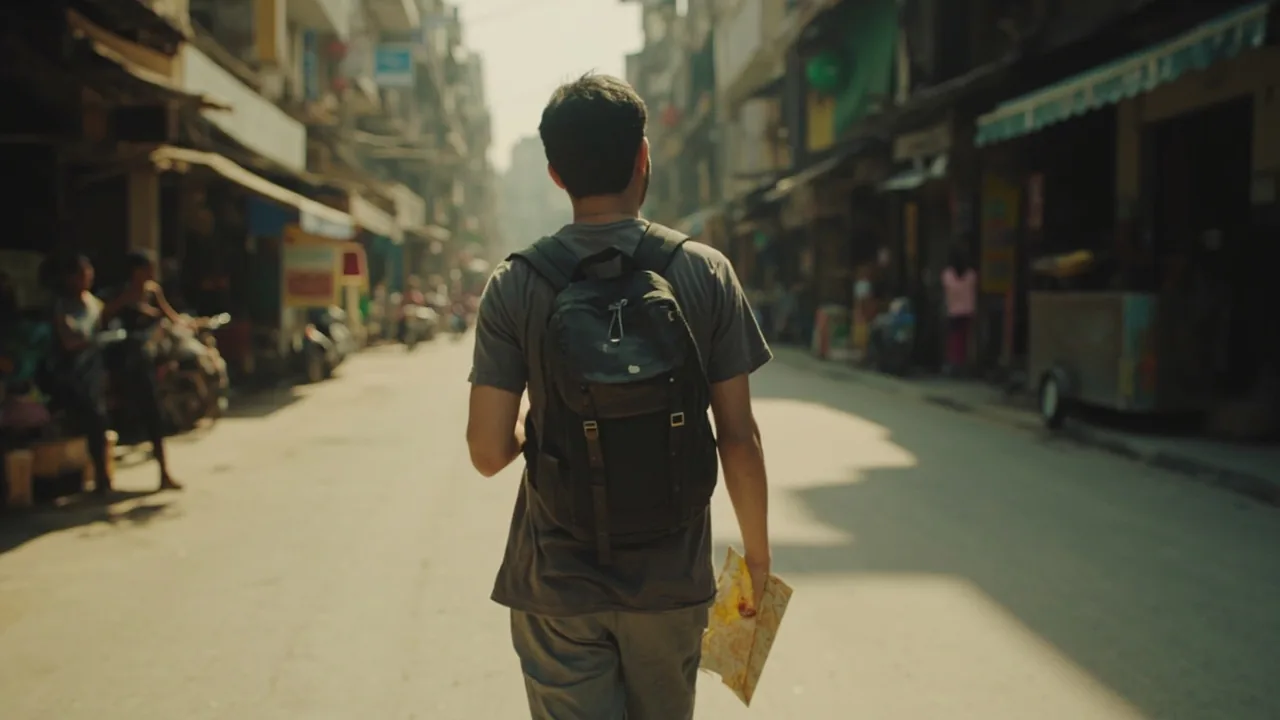
Solo budget travel in Southeast Asia is the easiest version of backpacking you can pick. The region is built around a single backpacker circuit, the hostels are set up for solo arrivals, and the cost gap between India and SEA is wide enough that even a careful budget feels generous compared to a domestic Indian trip. You will not be alone. You will not be unsafe if you use your head. Planning the wider region? Our Southeast Asia backpacking hub covers the full multi-country route.
Quick Answers
| What | Answer | Price (INR) |
|---|---|---|
| Cheapest SEA country for solo Indians | Vietnam (street food + dorms) | ~₹30,000/month (₹3,683 (~1,000,000 VND or ~$38.20)) |
| Average dorm bed | 6-10 bed mixed dorm in Bangkok/Hanoi | ~₹900 (~300 THB) |
| Solo female safety | Generally safe in tourist zones, dress modestly at temples, use Grab after dark | Free, just awareness |
| eSIM for solo travellers | Nomad eSIM (regional plan) | ~₹800 (~$8.29) for 5 GB / 30 days |
| Travel insurance | SafetyWing Nomad | ~₹5,900/month |
Planning your first SEA loop? See our 10-day Vietnam itinerary from India on a budget.
The Solo Travel Vibe
Southeast Asia is, weirdly, the least lonely place on Earth to travel alone. Almost every traveller you meet in a Thai hostel lobby, a Vietnamese sleeper bus, or a Bali co-working space is in the same boat: alone, a bit nervous, looking for someone to share a plate of pad thai with. The backpacking infrastructure here was purpose-built for that person.
The “Banana Pancake Trail” (the loop from Bangkok through Chiang Mai, down into Laos, across Vietnam, and over to Cambodia) exists because thousands of solo travellers walked it before you. The hostels along the route know you are coming. The overnight buses have guesthouse touts waiting at 5 a.m. The cooking classes expect you to show up without a friend. The whole region runs on a shared rhythm that pulls solo arrivals into groups within 24 hours of landing.
Subodh’s Pro Tip: If you want to maximise the social side, time your arrival in Bangkok or Hanoi on a Friday evening. Hostels are loudest Thursday to Saturday, and the common room is a cheat code for meeting people on day one.
How to Meet Other Backpackers
Meeting people on the road is a skill, but the barrier in SEA is almost zero. Here is what works:
Stay in social dorms, not hotels. The single biggest mistake solo Indian travellers make is booking a private guesthouse “because it’s only ₹500 (~$5.18) more.” You will save ₹500 (~$5.18) and feel isolated by hour three. A 6-10 bed dorm in a social hostel has built-in people who already want to chat. Look for hostels with a common kitchen, a bar, and an organised activity board.
Join the free walking tours. Most major hostels in Bangkok, Hanoi, and Bali offer a free morning walk led by a local guide. They run Thursday to Sunday, leave at 10 a.m., and are the single best two hours of your trip for meeting other backpackers. You will end up at lunch together.
Book group day-trips through your hostel. The Halong Bay boat tour from Hanoi, the Chiang Mai jungle trek, the Angkor Wat sunrise tuk-tuk run from Siem Reap: these are all designed for solo travellers. Hostels bundle 8-15 people onto minibuses and the group forms on the drive. If a hostel offers a tour, book it.
Use the WhatsApp and Facebook groups. Every major SEA city has a backpacker WhatsApp group (“Bangkok Backpackers 2026,” “Hanoi Solo Travellers”) and a matching Facebook group. Search the city name + “backpackers” on Facebook, or ask in your hostel lobby for the WhatsApp invite link. They are goldmines for finding people to grab dinner with or share a Grab car to the airport.
Safety Alert: Couchsurfing still works in SEA, but the scene has shifted toward paid “experiences” and away from free stays. Use it for meetups, not for housing, unless you have multiple verified references.
For more on the social mechanics, see making friends while solo traveling in Southeast Asia.
Safety for Solo Female Travellers
SEA is, on the whole, one of the safer regions in the world for solo female travellers, but that does not mean you can ignore the basics. The risk profile is different from India, and the worst incidents usually come from tourists who forgot they were in a different country.
Dress code. In Thailand, Vietnam, Cambodia, and Laos, the dress code at temples is strict: shoulders and knees covered. Most major temples (Wat Pho, Angkor Wat, Luang Prabang temples) will refuse entry or rent you a sarong if you show up in shorts. In beach areas (Koh Samui, Phu Quoc, Bali), anything goes. In conservative Muslim areas of Malaysia and Indonesia (Aceh, parts of Java), cover shoulders and knees even in the street.
Night safety. Walking alone at 2 a.m. In Khao San Road or Pub Street is fine in a group, sketch solo. Tuk-tuk back to your hostel before midnight, then switch to Grab or Bolt for anything later. Both apps let you share your live trip with a friend back home, which your mother will appreciate.
Transport. Use Grab and Bolt in cities. They fix the price upfront, track the route on GPS, and show you the driver’s name and plate. Street tuk-tuks in Bangkok and Phnom Penh will quote tourists 5x the local rate. The Grab estimate is the real price.
Solo dining. Eating alone is normal here, but the setup is different from India. Hawker centres and food courts have shared long tables. Sit next to whoever’s there. Travellers report that most “solo traveller loneliness” happens at restaurants with single tables, not at hawker centres. See solo dining in Southeast Asia for the full breakdown.
Before departure, check the Indian MEA travel advisory at mea.gov.in and your destination country’s own advisory page. Both update within hours of any real incident.
Budgeting for Solo Travellers
The single biggest budget myth about solo travel is that it costs twice as much as travelling with a partner. It does not, because the main shared expense (accommodation) is already split in a dorm bed, and the secondary one (food) is cheap enough that doubling it is still under ₹200/day. The real single-traveller penalty is transport: you pay full tuk-tuk fares, full Grab rides, and full tour prices without splitting.
Here is how solo Indian travellers spend a day in the budget mid-range (Hanoi, Bangkok, Bali):
| Item | Solo Cost (Local) | Solo Cost (INR) |
|---|---|---|
| Dorm bed (6-bed mixed) | ₹861 (~300 THB or ~$8.94) | ₹900 (~$9.33) |
| Three street-food meals | ₹718 (~250 THB or ~$7.45) | ₹720 (~$7.46) |
| One café coffee | ₹230 (~80 THB or ~$2.38) | ₹230 (~$2.38) |
| Two Grab rides | ₹689 (~240 THB or ~$7.15) | ₹690 (~$7.15) |
| One temple/attraction entry | ₹574 (~200 THB or ~$5.96) | ₹575 (~$5.96) |
| One beer at hostel bar | ₹287 (~100 THB or ~$2.98) | ₹290 (~$3.01) |
| Daily total | ~₹3,360 (~1,170 THB or ~$34.85) | ~₹3,400 (~$35.24) |
At this pace, a 30-day trip costs around ₹100,000 (~$1,036.47) plus flights, which puts solo SEA comfortably under the cost of most domestic Indian tours.
Single-supplement hack: Many hostels charge a small single-supplement fee for tours (typically 20-40% extra). The hack is to ask the hostel if they have a group going that day, then book onto the group tour. Hostels do this every day, and they prefer it because it fills the minibus.
Private room math: A private room in a Hanoi or Chiang Mai guesthouse is ₹1,723-₹3,446 (~600-1,200 THB or ~$17.87-$35.74). At ₹2,010 (~700 THB or ~$20.85), it is roughly double the dorm cost. Solo travellers who need quiet for work or sleep should budget this in, but know that you are paying for solitude, which is the opposite of what solo SEA travel is good for.
Getting Connected
A working SIM or eSIM is non-negotiable for solo travel: Google Maps, Grab, hostel WhatsApp groups, and your family’s daily “are you alive?” message all need data. The two practical options are:
Physical SIM. Buy at the airport on arrival (AIS in Thailand, Viettel in Vietnam, Smart in Cambodia, Lao Telecom in Laos). Costs ~₹861 (~300 THB or ~$8.94) for 30 days / 15 GB. Requires your passport and 5 minutes at the counter.
eSIM. If you want data the moment the plane lands and don’t want to queue at the airport counter, Get Nomad eSIM. The SEA regional plan covers all 7 countries, ~₹800 (~$8.29) for 5 GB / 30 days, activates by QR code, and runs on local networks once you land. Best for solo travellers who want zero friction on arrival.
Subodh’s Pro Tip: Buy a local SIM in Thailand or Vietnam for the heavy lifting (cheap, fast, unlimited options). Add Nomad eSIM as backup when you cross into Laos, Cambodia, or Indonesia where physical SIMs are pricier and slower.
Common Solo Mistakes Indians Make
Mistake 1: Booking hotels “to be safe.” What people think: “A private room is safer than a dorm.” What happens: You pay 2x, you meet no one, and you eat every meal alone in your room. Fix: Stay in a social dorm for at least the first 4 nights in any city. Switch to a private room only if you need to reset, and only for 1-2 nights.
Mistake 2: Sticking only to other Indian groups. What people think: “I’ll be more comfortable with people who speak Hindi.” What happens: You never hear English being mispronounced beautifully by a Brazilian, you never eat someone’s grandmother’s recipe from Lisbon, and you miss the actual point of solo travel. Fix: Aim for a 50/50 mix. If you find yourself in an all-Indian group for more than 48 hours, switch hostels.
Mistake 3: Overpacking a full-size suitcase. What people think: “I’ll need two pairs of jeans and four kurtas.” What happens: You drag 23 kg through Bangkok BTS, up Chiang Mai stairs, into a sleeper bus, and curse yourself on day two. Fix: Pack 40 litres or less. Most solo SEA travellers run on a 35-45L backpack. You’ll wear the same three t-shirts on rotation. Laundry is 50 THB/kg (~₹145) everywhere.
Mistake 4: Not telling family your daily plan. What people think: “I’ll message when I have wifi.” What happens: Your mother calls your cousin in Delhi, your cousin calls you, you miss a call, and by hour 24 there’s a small search party forming on WhatsApp. Fix: Send a one-line message each morning with your city and hostel name. It takes 30 seconds and saves your family three sleepless nights.
Mistake 5: Booking all hostels in advance. What people think: “Locking in accommodation saves money.” What happens: You end up in a quiet hostel because you booked it from your bedroom in Pune, while the social hostel 200 metres away is full of people you’d love. Fix: Book the first 2 nights in each new city. Ask the hostel staff where to go next, then book the next place from there with current traveller feedback.
FAQ
Is Southeast Asia safe for solo female Indian travellers? Yes, with the usual urban precautions. The tourist corridors in Thailand, Vietnam, Bali, and Singapore are among the safest in the world for solo women. Stick to Grab after dark, dress modestly at temples, and avoid walking alone in unfamiliar areas after 1 a.m. Check the Indian MEA advisory (mea.gov.in) before departure.
Will I get bored travelling alone? Not in SEA. The hostels, day tours, cooking classes, and bus rides are designed to pull solo travellers into groups. Travellers report making close friends within 48 hours of arrival in Bangkok, Hanoi, and Bali. The opposite risk is over-socialising and not getting enough alone time.
How do I manage my bags when going to the restroom at airports/train stations? Carry-on luggage with a luggage strap is the standard SEA solo kit. For sleeper buses, your bag goes under the bus (locked with a small padlock) and you carry a daypack with passport, phone, wallet, and a change of underwear into the cabin. Hostels have lockers (bring your own padlock).
Should I book tours or go solo for sightseeing? Book day-trips through your hostel for the social component (Halong Bay, Angkor Wat, Chiang Mai elephant sanctuaries). Walk around cities alone, that’s where you find the real stuff.
Is solo travel more expensive than travelling with a partner? Roughly 1.3x to 1.5x the per-person cost, not 2x. The single penalty is transport (no one to split a tuk-tuk with) and tour single supplements. Dorms and street food cost the same whether you’re alone or with five people.
Subodh’s Take
You’ll land in Bangkok or Hanoi alone, slightly jet-lagged and slightly nervous. By the time you’ve checked into your dorm, walked to the nearest hawker stall, and sat down with your pad thai, you’ll have at least three conversations going. By day three, you’ll have a group WhatsApp with people from four countries planning the next leg together. That’s the actual reality of solo budget travel in Southeast Asia. The cost is real, the safety is real, and the friend-making machine has been running for thirty years. Just take the flight.
For a deeper look at the social mechanics, read our solo travel guide for introverts in Southeast Asia.