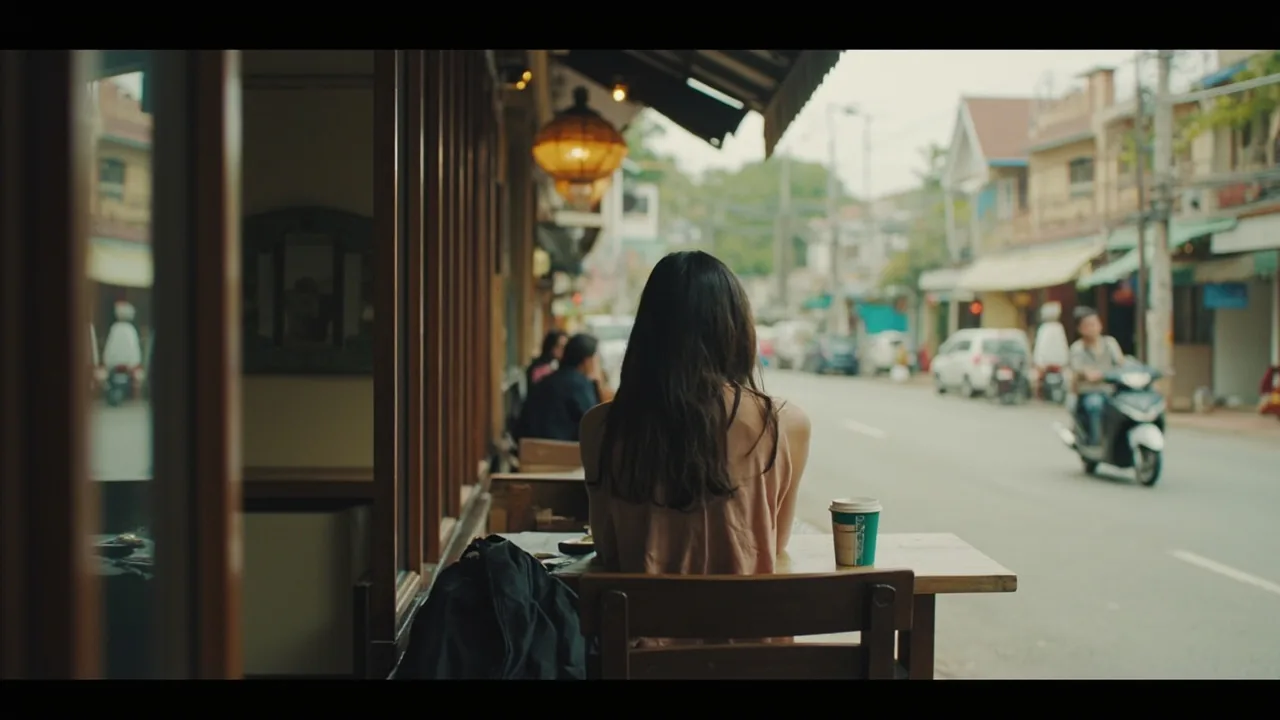
Solo Travel for Introverts in Southeast Asia: A Practical Guide
Southeast Asia is, honestly, the easiest region on earth to travel solo as an introvert. You get the solitude you came for, and the socialising happens on tap, in small, opt-in doses, so you never have to perform “on” for anyone. The backpacking infrastructure is built around dorm beds, common kitchens, and day-trips, which means you can spend a whole afternoon reading by a hostel pool, then drift into a group dinner without anyone finding that strange. For related planning, see our guide on Sea Backpacking Hub.
[Internal link: solo travel for introverts starts from a related place: nervous first-timers. This piece assumes you’ve already decided you want to go and just need to know how.]
Quick Answers
| What | Answer | Price (INR) |
|---|---|---|
| Is solo travel in Southeast Asia good for introverts? | Yes. Small group sizes, low social pressure, and English widely spoken. | , |
| Cheapest dorm bed per night | Thailand/L Laos around ₹715-₹1,287 (~250-450 THB or ~$7.42-$13.35) / ₹258-₹558 (~60,000-130,000 LAK or ~$2.67-$5.80) | ₹717 (~250 THB or ~$7.43) |
| Average daily budget (introvert-style, mostly self-catering) | Thailand or Vietnam | ₹2,300-3,400 (~800-1,200 THB or ~$24-36) |
| Best eSIM for solo female introverts (Nomad) | Region-wide 5GB/30 days | , |
| Indian tourist visa | Thailand & Indonesia are visa-free for Indians; Vietnam e-visa around ₹1,700 (~$17.65) | , |
Subodh’s Pro Tip: Recharge days are a feature, not a failure. Plan a 2-night stop every week where you do nothing but read, swim, and order room service. Your future social self will thank you.
Is Solo Travel Good for Introverts? The Honest Answer
It is, but only if you build the trip around your energy budget, not an extrovert’s Instagram reel.
The mistake most introvert-first-timers make: they copy a 14-day Thailand loop from a YouTuber who vlogged every hostel bar crawl, then feel broken when they don’t want to do the pub-crawl night three. That isn’t a sign you’re bad at solo travel. It’s a sign the route isn’t built for someone who needs down time between social inputs.
A trip built for introverts looks different:
- Smaller dorm rooms (4-6 beds, not 12) so you have one familiar circle, not a revolving door.
- Longer stays per city (3-4 nights minimum), so you don’t meet-new-people-every-day burnout.
- Pick one social activity per day max (a walking tour, a cooking class), then retreat to your bunk or a café.
- Daytime socialising, evening solo. Cafés, co-working spaces, and cooking classes run during the day. Hostel bars run at night. Pick your window.
The introvert superpower on this trail is that everyone travels alone. The dinner-for-one shame you carry in India (will people think I have no friends?) doesn’t exist in Chiang Mai or Hoi An. Eating alone at a noodle stall is the default. Travelling alone is the default. You blend in faster than you would in Goa.
[Internal link: If your worry is more “I’ll panic” than “I’ll be lonely”, solo travel with anxiety covers the breathing-room side of this. The social side below assumes your anxiety is manageable.]
The Solo Travel Vibe on the Banana Pancake Trail
The “Banana Pancake Trail” is the informal name for the well-worn backpacker route through Thailand, Laos, Vietnam, and Cambodia, with side branches into Malaysia and Indonesia. It exists because the infrastructure lines up: cheap dorms, cheap buses, similar traveller demographics, and a shared English-language backpacker culture.
For introverts, three things about this trail matter more than the route itself:
- Routes are reverse-engineerable. Everyone takes roughly the same path: Bangkok to Chiang Mai to Luang Prabang to Hanoi to Hoi An to Ho Chi Minh to Siem Reap. The first-time solo traveller asks “where do I go?”, gets the same five answers from every hostel, and stops second-guessing.
- Hostels are calibrated for low-effort social. Communal dinners, common kitchens, and board games are designed so you don’t have to initiate conversations. You just sit there, and someone asks where you’re headed next.
- Travellers move in slow waves. The same cohort loops the same route on roughly the same schedule, so you keep running into the same people in different cities, which takes the cold-introduction sting out.
The vibe is not a party hostel (those exist, and you can avoid them). The vibe is a library with a fridge and someone offering you a mango.
Safety Alert: Choose hostels with female-only dorm options if that’s your comfort zone. Most mid-range hostels in Bangkok, Chiang Mai, Hanoi, and Hoi An have one. They’re priced within ₹100 (~$1.04) of mixed dorms and worth the quieter sleep.
Where to Stay: Hostels That Don’t Drain You
Choosing the right hostel is the single biggest introvert decision of the whole trip. Here are the personality types that work, named generically because specific hostel recommendations vary by month and availability:
| Hostel type | Best for | Typical dorm price | What to expect |
|---|---|---|---|
| Small library-style hostel (20-40 beds, no bar) | Pure recharge | ₹715-₹1,287 (~250-450 THB or ~$7.42-$13.35) / ₹258-₹558 (~60,000-130,000 LAK or ~$2.67-$5.80) | Quiet by 10pm, work-friendly common area, no group events |
| Mid-size with communal dinner (60-100 beds) | Low-effort social | ₹858-₹1,429 (~300-500 THB or ~$8.90-$14.84) / ₹301-₹644 (~70,000-150,000 LAK or ~$3.12-$6.69) | Optional family-style dinner at 7pm, easy to skip |
| Co-living / colive space (private rooms, shared kitchen) | Solo female introverts, longer stays | 8,000-15,000 THB/week | Private bedroom, group dinners a few nights a week |
| Party hostel with rooftop bar | Skip entirely | ₹572-₹1,001 (~200-350 THB or ~$5.94-$10.39) | Loud until 2am; great for extroverts, draining for introverts |
[Internal link: For a deeper breakdown of dorms vs colives vs private rooms, see solo accommodation in Southeast Asia.]
How to pick a hostel in 30 seconds without burning out:
- Filter hostels by “quiet” or “library” in the listing.
- Read the last 10 reviews, not the star rating. Look for words like “calm”, “chill”, “good for working”.
- Avoid any listing whose photos show a pool party.
- Book 2-3 nights at your first hostel in each city, not 1. Moving every night is exhausting even for extroverts.
Stay22 links for these property types slot into the “Book” column on the booking platform you’re using; the property categories above stay stable across the region, so the same search filters work in Bangkok, Hanoi, and Bali.
How to Meet People Without Trying Too Hard
The introvert question isn’t “where do I find people?” It’s “where do I find people in a setting where silence is acceptable?”
Five tested options, in order of low-to-high social pressure:
- Hostel common kitchen at breakfast. Rice, eggs, and coffee is the universal conversation starter. You don’t even need a full sentence, just “Is that the soy sauce?” works.
- Book a half-day walking tour on day one. Tours are structured, you don’t have to make small talk, and at the end, two or three people usually suggest lunch. Three hours of company, not eight.
- Drop into a co-working space for one day. Even if you don’t work, you’ll find other laptop-people who want company.
- Cooking class. Side-by-side chopping is a low-eye-contact social activity, ideal for introverts.
- Skip: Couchsurfing meetups, hostel bar crawls, Tinder. They’re loud, fast, and you’ll dread them.
Subodh’s Pro Tip: The phrase that does 80% of your social heavy lifting is “Where are you headed next?” Every solo backpacker wants to talk about their route, has strong opinions, and will fill three minutes while you just nod. You leave the conversation feeling like a chatterbox.
Safety for Solo Female Introverts
The gender-specific layer of introvert travel is real, and worth addressing directly. Solo female introverts have a narrower comfort zone to manage: recharging alone at a beach bar, walking home from a tour at 11pm, sharing a 6-bed dorm with five strangers.
Here’s what’s accurate as of 2026:
- Day safety: SEA cities (Bangkok, Chiang Mai, Hanoi, HCMC, Kuala Lumpur, Singapore, Bali hubs) are safe enough that solo women walk around during the day without thinking twice. Petty theft (phone-snatching from motorbikes, bag-slashing in markets) is the realistic concern, not assault. Use a crossbody bag with a zip, keep your phone in your front pocket.
- Night safety: Don’t walk alone on quiet streets after 11pm. Grab and Bolt work in every major city; the fare from a central hostel to most places runs ₹229-₹429 (~80-150 THB or ~$2.37-$4.45), which is cheap enough to never walk alone.
- Dorm choice: Female-only dorms exist in every major hostel hub and run roughly the same price as mixed (usually ₹29-₹66 (~8,000-18,000 VND or ~$0.30-$0.69) more per night). Worth it.
- Dress code: Beach and tourist areas: anything goes. Temples and mosques: shoulders and knees covered, easy to manage with a scarf in your daypack. Rural Laos and Cambodia: a step more conservative than Bangkok.
For current, jurisdiction-specific alerts, check the Indian Ministry of External Affairs travel advisory (mea.gov.in) before you fly. Conditions shift and the advisory is updated more often than any blog can be.
[Internal link: For the dining-alone gender-specific angle, solo dining in Southeast Asia covers how to sit down at a restaurant alone without flagging yourself as a tourist.]
Budgeting for Solo Introverts: The Small Premium
Solo introvert travel costs a little more than solo extrovert travel, because you choose smaller dorms and private rooms over party hostels, and you don’t get to split tuk-tuks with strangers.
Realistic Asia-wide daily budget for a solo introvert (modest comfort, mostly self-catering or street food, one small social activity per day):
| Item | Thailand | Vietnam | Cambodia | Indonesia (Bali) |
|---|---|---|---|---|
| 4-bed dorm (smaller, quieter) | ₹858-₹1,429 (~300-500 THB or ~$8.90-$14.84) | ₹367-₹661 (~100,000-180,000 VND or ~$3.81-$6.86) | ₹771-₹1,349 (~8-14 USD) | ₹646-₹1,345 (~120,000-250,000 IDR or ~$6.70-$13.96) |
| Food (street + one café) | ₹572-₹1,144 (~200-400 THB or ~$5.94-$11.87) | ₹294-₹551 (~80,000-150,000 VND or ~$3.05-$5.72) | ₹578-₹1,156 (~6-12 USD) | ₹430-₹968 (~80,000-180,000 IDR or ~$4.47-$10.05) |
| Transport (Grab, not tuk-tuk) | ₹286-₹715 (~100-250 THB or ~$2.97-$7.42) | ₹147-₹367 (~40,000-100,000 VND or ~$1.52-$3.81) | ₹193-₹482 (~2-5 USD) | ₹269-₹646 (~50,000-120,000 IDR or ~$2.79-$6.70) |
| Sim/data | ₹143-₹286 (~50-100 THB or ~$1.48-$2.97) | ₹110-₹220 (~30,000-60,000 VND or ~$1.14-$2.29) | ₹96-₹289 (~1-3 USD) | ₹161-₹323 (~30,000-60,000 IDR or ~$1.68-$3.35) |
| One social activity | ₹858-₹2,001 (~300-700 THB or ~$8.90-$20.77) | ₹551-₹1,469 (~150,000-400,000 VND or ~$5.72-$15.25) | ₹963-₹2,408 (~10-25 USD) | ₹538-₹2,152 (~100,000-400,000 IDR or ~$5.58-$22.34) |
| Daily total | ₹2,716-₹5,575 (~950-1,950 THB or ~$28.19-$57.87) | ₹1,469-₹3,268 (~400,000-890,000 VND or ~$15.25-$33.92) | ₹2,601-₹5,684 (~27-59 USD) | 380,000-1,010,000 IDR |
For Thailand: at current rates (1 INR = 0.349 THB, so 1 THB ≈ ₹2.8690), the daily total of 950-1,950 THB is roughly ₹2,725-5,595. For Vietnam: at current rates (1 INR = 268 VND, so 1,000 VND ≈ ₹3.73), the daily total of ₹1,469-₹3,268 (~400,000-890,000 VND or ~$15.25-$33.92) is roughly ₹1,492-₹3,320 (~$15.49-$34.46).
Solo pricing premiums you’ll pay:
- 4-6 bed dorms cost 30-50% more per bed than 10-12 bed dorms. Worth it.
- Private rooms in colives cost more than party-hostel dorms. Also worth it for recharge.
- Single supplement on group tours is real. Most day-tours (cooking classes, island trips) charge per person with no single supplement. Multi-day tours (Ha Long Bay, Angkor Wat 3-day) often do. Check before booking.
- No “split the cab with strangers” savings if you’re not party-hostelling. You’ll pay full tuk-tuk fare on your own more often than not.
Total Southeast Asia trip for 3 weeks: roughly ₹60,000-₹95,000 (~$622.80-$986.10) all-in including flights from India, visa fees where applicable, and travel insurance.
[Internal link: For a country-by-country breakdown, see solo budget travel, it has India-to-SEA comparison charts.]
Getting Connected (and Why It Matters More for Introverts)
Solo introvert travel runs on data. Maps when you miss a turn, Grab when you don’t want to negotiate a tuk-tuk, Google Translate when the menu has no English, and a quick WhatsApp home when an unfamiliar city feels too quiet at 10pm.
Two options:
- Physical SIM: Buy at the airport on arrival. Thailand’s AIS tourist SIM is reliable, comes with 8-day data, runs ₹855 (~299 THB or ~$8.87). Other countries similar.
- eSIM (Nomad): Region-wide data plan, no airport queue, activates before you land. This is what I’d recommend for solo introverts because the airport-SIM counter after a 4-hour flight is the worst 10 minutes of your first day. One-time setup, then it just works. Get Nomad eSIM
Safety Alert: Send your check-ins. Solo introverts tend to “I’ll just tell mum when I land” because they don’t want the social labour of a long message. Send it anyway. A 10-second WhatsApp to family with your hostel name and room number takes the safety margin from “probably fine” to “fine”.
Common Solo Mistakes Indians Make
Five mistakes I see over and over, and what they cost you:
1. Booking a private hotel room “to feel safe”
What happens: You spend 5 days alone in a windowless room with no chance to meet anyone. Better: Book a small (4-6 bed) female-only dorm for the first 2 nights. If you like it, stay. If not, switch to a private room. Don’t pre-commit to 5 days of isolation.
2. Clinging to other Indian travellers from minute one
What happens: You only hang out with other Indians, miss the full backpacker social exposure, then feel stuck when they leave. Better: Mix. Sit with the Indian couple for breakfast, then join the German solo traveller’s cooking class. The mix is the whole point.
3. Overpacking
What happens: You carry a 20kg backpack up three flights of hostel stairs, sweat through your intro shirt, and arrive at the common room too tired to socialise. Better: Cap it at 12kg. Southeast Asia has laundry everywhere (5-10 THB/₹55-₹110 (~15,000-30,000 VND or ~$0.57-$1.14) per kg), so pack half what you think you need.
4. Sticking rigidly to a 7-country-21-day itinerary
What happens: You move cities every 2-3 days, meet someone you like, lose them, repeat. Introvert exhaustion peak by day 10. Better: 3-4 nights minimum per city, with one 5-7 night stop as a true recharge.
5. Under-eating because eating alone feels weird
What happens: You skip dinner rather than face a restaurant alone, end up snacking on 7-Eleven onigiri, lose energy. Better: Night markets and street-food stalls have shared counters. Sit at the counter, not a table. Eating next to strangers requires zero small talk.
[Internal link: For the full introvert-on-a-budget angle, solo budget travel in Southeast Asia has more breakdowns.]
The Quietest, Most Introvert-Friendly Routes
Not every SEA city is introvert-friendly. Here’s the personality map:
Easiest for introverts (calm, walkable, English widely spoken, cafés everywhere):
- Chiang Mai, Thailand, small-city scale, cafe culture, slow
- Hoi An, Vietnam, lantern-lit, walkable, low nightlife
- Luang Prabang, Laos, quiet, evening monk procession, few vehicles
- Penang (George Town), Malaysia, food, calm, easy introverts
- Da Nang area, Vietnam, beach town without the party scene
Manageable with planning (bigger, busier, but introvert-doable):
- Bangkok, Thailand, pick a riverside or Ari neighbourhood, not Khao San
- Hanoi, Vietnam. Old Quarter is intense; stay near Hoan Kiem Lake
- Singapore. MRT everywhere, introvert paradise if budget allows
- Ubud, Bali, yoga-and-café vibe, introvert-coded
Skip on a first solo introvert trip:
- Khao San Road, Bangkok (party street)
- Full Moon Party islands on full-moon nights
- Vientiane after dark (limited safe evening transport options)
[Internal link: For a deeper Vietnam route, see Vietnam solo trip itinerary.]
Subodh’s Take
Introvert solo travel in Southeast Asia is the easiest version of solo travel you can do as an Indian first-timer. The infrastructure is set up for it, the English is everywhere, and the culture doesn’t read “eating alone” as a sad story. You will leave alone, you’ll likely make two or three friends within the first three days without trying, and you will have days where you don’t speak to anyone, and that’s fine too. The banana pancake trail is built for someone like you. Just take the flight.
FAQ
Is solo travel in Southeast Asia good for introverts?
Yes. It’s probably the best region in the world for introverts: small cities, calm cafés, low-stakes hostels, and English everywhere. You can choose social or solo in any given hour without anyone noticing.
Will I get bored travelling alone?
If you build the trip around café culture, day-tours, and 3-night city stays, no. If you cram 6 cities into 7 days with no downtime, yes, introverts burn out faster than extroverts on tight schedules. The fix is the schedule, not the trip.
How do I meet people as an introvert without feeling fake?
Use the lowest-effort social contexts: communal hostel dinners, half-day walking tours, cooking classes. You don’t have to host a party, you just have to show up where other people also showed up to be social.
Is Southeast Asia safe for solo female Indian travellers?
For daytime tourism and well-lit central districts, yes, with the usual petty-theft awareness (crossbody bag, no phone on the table at cafés). Avoid walking alone on quiet streets after 11pm; Grab and Bolt are cheap and available. Check mea.gov.in for current advisories.
How much money should I budget for a 3-week solo introvert trip?
Around ₹60,000-₹95,000 (~$622.80-$986.10) all-in from India, including return flights, dorm beds in 4-6 bed rooms, street food plus one café meal daily, transport via Grab/Bolt, and a couple of paid day-tours. Calmer countries (Laos, Cambodia) sit at the lower end; Singapore and Bali sit at the upper end.
What if I panic mid-trip and just want to go home?
Build that into the plan. Take the first 3 days in a low-key city (Chiang Mai or Penang), not Bangkok. If you still want to fly home by day 7, you haven’t lost much money, and flights from Bangkok to India are plentiful. Most first-time solo introverts find the panic fades by day 4; you just need a soft place to start.
Is it weird to travel alone at 30+?
It is not weird anywhere on this trail. Solo travellers in SEA span from 19 to 70. You’ll be in good company.
