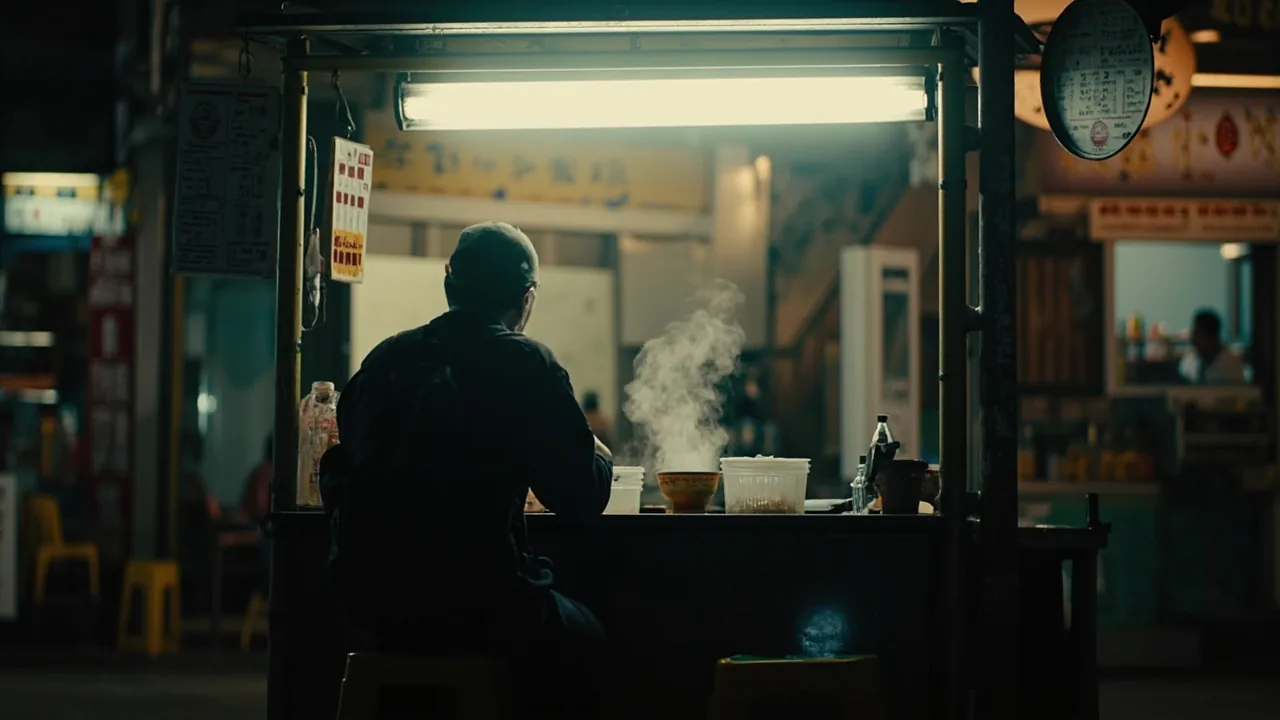
Solo Dining in Southeast Asia: A Backpacker’s Guide
Eating alone is the one part of solo travel that makes otherwise confident backpackers quietly Google “is it weird to eat alone at a restaurant” at 7 pm in a foreign city. Let me close that tab for you: in Southeast Asia, solo dining is not weird, it is the default. The region’s food culture is built around small portions, quick turnover, and shared plastic stools at hawker stalls where nobody cares if you’re travelling with three friends or zero. You will eat more meals alone here than you ever did in India, and you will enjoy most of them. The trick is knowing which venue types reward a solo diner and which ones feel slightly uncomfortable, then leaning into the first group. For related planning, see our guide on Sea Backpacking Hub.
Subodh’s Pro Tip: The single best move for a nervous solo diner is to skip the sit-down restaurant for the first night and start with a hawker centre or night market. You will be surrounded by families, aunties, and other solo eaters, the food comes in two-bite portions, and the bill stays under ₹286 (~100 THB or ~$2.97). It is the world’s lowest-stakes introduction to eating out alone.
Quick Answers
| What | Answer | Price (INR) |
|---|---|---|
| What does “solo dining” mean? | Eating a full meal alone at a restaurant, stall, or hawker centre, by choice or by circumstance | No premium |
| Is solo dining awkward in Southeast Asia? | No, the region’s food culture is built around quick, individual meals | No premium |
| Cheapest solo meal in Thailand? | A bowl of noodles or rice at a street stall | ₹114-₹172 (~40-60 THB or ~$1.19-$1.78) |
| Cheapest solo meal in Vietnam? | A bowl of pho or banh mi from a sidewalk stall | ₹92-₹147 (~25,000-40,000 VND or ~$0.95-$1.52) |
| Cheapest solo meal in Indonesia? | Nasi goreng or mie goreng from a warung | ₹81-₹134 (~15,000-25,000 IDR or ~$0.84-$1.40) |
| Solo-friendly restaurant type #1? | Hawker centres and night markets (Singapore, Malaysia, Bangkok) | ₹373-₹746 (~5-10 SGD or ~$3.87-$7.74) / ₹188-₹353 (~8-15 MYR or ~$1.96-$3.67) / ₹143-₹286 (~50-100 THB or ~$1.48-$2.97) |
| Solo-friendly restaurant type #2? | Street food stalls with a few plastic stools (everywhere) | ₹86-₹229 (~30-80 THB or ~$0.89-$2.37) / ₹73-₹184 (~20,000-50,000 VND or ~$0.76-$1.91) |
What Solo Dining Means
If you have ever typed “solo dining means” into Google, you have probably been served a mix of etiquette articles, dating-app takes, and restaurant chains pitching “communal tables.” Strip all that away and the term is simple: it is just one person, sitting down to a meal, by themselves, at a place where food is served.
What changes is the why, and the why is different for backpackers than it is for office workers in Manhattan.
- You are travelling alone and need to eat. This is the most common version. You arrive in Hanoi at 9 pm, your hostel is a 15-minute walk away, and the only thing between you and sleep is dinner.
- You want to try a specific dish. Some of the best food in Southeast Asia lives at tiny one-dish shops that seat six people total. You go alone because the dish is the goal.
- You want to people-watch or think. Solo meals are one of the few remaining unstructured hours of the day. A long lunch at a hawker centre with a book or a journal is a legitimate activity, not a sad one.
- You split from your group for the day. Even on group trips, you will eat 30-50% of your meals alone because somebody always has a different schedule.
None of these versions are embarrassing, and in Southeast Asia, none of them draw attention. Local diners eat alone constantly. Singapore’s hawker centres are full of office workers and retirees eating solo at shared tables. Bangkok’s street stalls are full of moto-taxi drivers eating a quick bowl of noodles between rides. Hanoi sidewalks are full of solo diners on tiny plastic stools. You blend right in.
Why Southeast Asia Is the Easiest Place on Earth to Eat Alone
Three structural reasons:
1. The food is portioned for one person. A bowl of pho is a single serving. A plate of nasi goreng is a single serving. A skewer of satay is sold by the stick. Most Southeast Asian food is built around the assumption that one hungry person will order one or two items and eat them right now. Indian food, by contrast, is structurally communal: a thali invites sharing, and a single person ordering one feels like a waste. That mental shift disappears the moment you cross the border.
2. Eating is a fast, casual activity. Nobody lingers over a 90-minute meal in a street-stall setting. Average seat time at a hawker centre is 20-30 minutes. You order, you eat, you pay, you leave. There is no awkwardness because the whole transaction is short.
3. Shared tables are normal. In hawker centres in Singapore, Malaysia, and parts of Bangkok, you will routinely be asked “excuse me, can I share this table?” by a stranger. It is expected. If you are sitting alone at a four-person table and a local auntie wants a seat, she will ask. You will say yes. You will both go back to your own meals. This is not networking, it is just how the room works.
Subodh’s Pro Tip: If the shared-table idea makes you uncomfortable, the trick is to grab a single-stall eatery or a small street-side shop instead. You will get your own stool, your own counter, your own corner, and the staff will treat you like a regular after two visits. In Hanoi, these are called “quán cóc”, sidewalk shops with 4-6 stools and one menu on the wall.
Solo-Friendly Venue Types, Ranked
Not every restaurant works for solo diners. Here is the honest ranking from easiest to most awkward.
Tier 1: Effortless (start here)
Hawker centres and food courts. Singapore’s Maxwell, Lau Pa Sat, and Chinatown Complex. Bangkok’s Chinatown (Yaowarat) and Or Tor Kor. Kuala Lumpur’s Jalan Alor and Lot 10’s rooftop. Penang’s Gurney Drive and Lebuh Chulia. Ho Chi Minh’s Ben Thanh and street grids around District 1. You walk in, you pick a stall, you point at what looks good, you sit at any open seat. The whole thing takes 15 minutes. No reservations, no waiting, no eye contact with a host stand.
Street food stalls with stools. Anywhere in Hanoi, Bangkok, Chiang Mai, Hoi An, Penang, Bali, or Vientiane. Look for a stall with a row of plastic stools, a steamer or wok in front, and a small sign or no sign at all. Sit down, ask “what’s good?”, eat, pay cash. ₹86-₹229 (~30-80 THB or ~$0.89-$2.37), ₹73-₹184 (~20,000-50,000 VND or ~$0.76-$1.91), or ₹81-₹161 (~15,000-30,000 IDR or ~$0.84-$1.68) for a full meal.
Coffee shops and cafes. Especially the third-wave coffee scene in Singapore, Kuala Lumpur, Bangkok, and Bali. Solo laptop work is the norm here, and a single customer ordering one coffee and one pastry gets zero attention. A few hours of work plus a meal is a perfectly acceptable use of the space.
Tier 2: Comfortable
Casual local restaurants with counter seating. Vietnamese “quán bún” (noodle shops) and Indonesian “warung” (small family-run eateries) often have a counter or a row of small tables where solo diners fit naturally. You order at the front, take a seat, eat, pay on the way out.
Indian restaurants catering to backpackers. Bangkok’s Banglamphu area, Chiang Mai’s Night Bazaar zone, Hanoi and HCMC’s backpacker districts all have Indian restaurants that see solo Indian travellers daily. This is where you go when you are homesick, vegetarian, or just need a guaranteed veg meal. Phad thai at 7-Eleven does not count, please don’t do that. Solo Travel in Southeast Asia: Practical Tips covers more on finding veg food.
Tier 3: Works, but with caveats
Mid-range sit-down restaurants. A Thai or Vietnamese restaurant with table service and a menu of 80 items can feel slightly awkward solo, especially at peak dinner hours when couples and families are around. The trick is to go at off-peak times (6 pm or 9 pm) or sit at the bar counter if they have one.
Hotel restaurants. Avoid for solo dinners. Empty dining rooms amplify the “one person, one table” feeling and the bill is usually 3-4x what a hawker centre charges for the same quality.
Subodh’s Pro Tip: The “2-person minimum” charge is almost mythical in Southeast Asia. Almost every restaurant will serve one person. If you ever see a sign demanding two diners, walk out and eat next door.
The Vegetarian and Indian-Food Question
If you are vegetarian, the solo dining question gets a tactical layer: you cannot just point at the most interesting-looking stall, because half the menu may be off-limits.
In practice, the Indian backpacker veg-food routine looks like this:
- Breakfast: hostel breakfast (often included) or a fruit stall or a banana pancake from a street vendor. ₹86-₹172 (~30-60 THB or ~$0.89-$1.78), ₹55-₹92 (~15,000-25,000 VND or ~$0.57-$0.95), ₹118-₹188 (~5-8 MYR or ~$1.22-$1.96).
- Lunch: vegetarian versions of local food, vegetable pho, pad pak (Thai stir-fried greens), gado-gado (Indonesian peanut salad), or chap chay at a hawker stall. ₹114-₹229 (~40-80 THB or ~$1.19-$2.37), ₹110-₹184 (~30,000-50,000 VND or ~$1.14-$1.91), ₹97-₹134 (~18,000-25,000 IDR or ~$1.01-$1.40).
- Dinner: rotate between an Indian restaurant (₹429-₹858 (~150-300 THB or ~$4.45-$8.90), ₹184-₹367 (~50,000-100,000 VND or ~$1.91-$3.81), ₹589-₹1,178 (~25-50 MYR or ~$6.11-$12.23)) and one fully vegetarian local spot if you can find one. Bangkok, Singapore, and Kuala Lumpur have the strongest veg scenes.
- Snacks: fruit, veg spring rolls, vegetarian pad thai (request “no egg, no fish sauce”), Indian sweets from sweet shops in Little India districts.
For more on the social side of eating alone, Making Friends While Solo Travelling is worth a read once you have the food part sorted.
Safety and Stigma, Honestly
The two worries every Indian traveller has before eating alone in Southeast Asia: will I look strange, and will I be unsafe?
Stigma: less than you think. Solo diners are normal everywhere in the region. The one place you might feel self-conscious is a fancy restaurant in Singapore or Kuala Lumpur at 8 pm on a Saturday night, full of couples on dates. The fix is timing (6 pm or 9:30 pm) or venue type (skip the date-night restaurant, go to the food court upstairs in the same mall).
Safety: street food and hawker centres are safer for solo diners than quiet side-street restaurants. The reasons are practical. A hawker stall has 10 staff visible, 50 other diners, bright lighting, and a high turnover. A side-street shop with one waiter and no other customers has none of those signals. Solo travellers report more sketchy situations at empty sit-down places than at busy food courts, which is the opposite of what intuition suggests. Eat where it is busy, eat where the light is good, eat where locals are eating. That is the rule.
Safety Alert: The one common solo-dining scam across the region is the “menu with no prices” restaurant where tourists are charged 5-10x the local rate after the meal. The fix is not specific to solo dining, it is universal: look for a menu with prices, or order what the table next to you ordered, or eat where the prices are posted on the wall.
For female travellers specifically, the practical note is that solo meals at hawker centres and night markets are some of the safest hours of the day for women travellers. The crowds, the lighting, and the family-friendly atmosphere make harassment rare. If you want a deeper dive, Solo Travel in Southeast Asia for Women and Solo Travel with Anxiety cover the broader safety picture.
Connecting with People Through Food
One of the underrated parts of solo travel is that food is the easiest conversation starter on the planet. You will bond with strangers over meals more than over anything else.
- Hostel common dinners. Many hostels in Bangkok, Chiang Mai, Hanoi, and Bali run optional group dinners at a local restaurant. Show up, sit down, you have 6-10 new friends.
- Food tours. Group walking tours of street food districts are everywhere and tend to be 80% solo travellers. ₹2,287-₹4,288 (~800-1,500 THB or ~$23.74-$44.51) / ₹1,836-₹3,305 (~500,000-900,000 VND or ~$19.06-$34.30) / ₹2,577-₹5,154 (~600,000-1,200,000 LAK or ~$26.75-$53.50) / ₹1,445-₹2,890 (~15-30 USD) for a half-day.
- Cooking classes. Bangkok, Chiang Mai, Hoi An, and Luang Prabang all have group classes where you spend 4 hours making 3-4 dishes with 8-12 other travellers.
- “What’s good here?” Asking the staff or the diner next to you is the universal opener. You will end up with a half-hour conversation and a new friend.
Subodh’s Pro Tip: If you are shy, the easiest solo-dining social hack is to bring a small notebook or a book. Reading at a hawker centre makes you approachable without trying, and “what are you reading?” is a low-stakes opener for the curious traveller beside you.
Staying Connected (SIM and Wi-Fi)
You will want data for three things during solo meals: maps back to the hostel, translation of menu items, and a check-in message to family. Both physical SIMs and eSIMs work, but eSIMs skip the airport-counter line.
For eSIMs, Get Nomad eSIM covers Thailand, Vietnam, Indonesia, Malaysia, Singapore, Cambodia, and Laos on regional plans starting around ₹482-₹963 (~5-10 USD) per week. Physical SIMs from AIS (Thailand), Viettel (Vietnam), Smartfren (Indonesia), and CelcomDigi (Malaysia) are ₹96-₹482 (~1-5 USD) for a week of data. Either works fine.
Common Solo-Dining Mistakes
Mistake 1: Waiting until 9 pm to find food. Solo diners get more options at 6-7 pm than at 9:30 pm, because stall owners start closing once the rush is over. Earlier is also safer and cheaper.
Mistake 2: Picking the “international” menu over the local one. That pad thai, pho, or nasi goreng at the same stall is 30-50% cheaper than the spaghetti carbonara. And the local dish is what you came for.
Mistake 3: Sitting in the back corner. If you sit facing a wall, you look lonely and nobody approaches. Sit at a counter, sit facing the street, or sit in the middle of the hawker centre. You will be surprised who says hi.
Mistake 4: Over-ordering out of guilt. One bowl is enough. One plate plus a drink is enough. Two dishes is a feast. Southeast Asian portions are sized for one person, full stop.
Mistake 5: Skipping street food out of fear. Travellers report this constantly: “I avoided the busy stall with no English menu and went to the empty restaurant with the laminated menu.” The busy stall is almost always safer, cheaper, and better.
Budget for Solo Meals
| Meal | Thailand | Vietnam | Indonesia | Malaysia | Singapore |
|---|---|---|---|---|---|
| Breakfast | ₹114-₹229 (~40-80 THB or ~$1.19-$2.37) | ₹73-₹129 (~20,000-35,000 VND or ~$0.76-$1.33) | ₹81-₹161 (~15,000-30,000 IDR or ~$0.84-$1.68) | ₹118-₹236 (~5-10 MYR or ~$1.22-$2.45) | ₹298-₹597 (~4-8 SGD or ~$3.10-$6.19) |
| Lunch | ₹172-₹343 (~60-120 THB or ~$1.78-$3.56) | ₹110-₹220 (~30,000-60,000 VND or ~$1.14-$2.29) | ₹108-₹215 (~20,000-40,000 IDR or ~$1.12-$2.23) | ₹188-₹353 (~8-15 MYR or ~$1.96-$3.67) | ₹448-₹895 (~6-12 SGD or ~$4.65-$9.29) |
| Dinner (local) | ₹229-₹429 (~80-150 THB or ~$2.37-$4.45) | ₹147-₹294 (~40,000-80,000 VND or ~$1.52-$3.05) | ₹134-₹269 (~25,000-50,000 IDR or ~$1.40-$2.79) | ₹283-₹589 (~12-25 MYR or ~$2.93-$6.11) | ₹597-₹1,119 (~8-15 SGD or ~$6.19-$11.61) |
| Indian dinner | ₹429-₹858 (~150-300 THB or ~$4.45-$8.90) | ₹220-₹441 (~60,000-120,000 VND or ~$2.29-$4.57) | ₹215-₹430 (~40,000-80,000 IDR or ~$2.23-$4.47) | ₹471-₹942 (~20-40 MYR or ~$4.89-$9.78) | ₹895-₹1,865 (~12-25 SGD or ~$9.29-$19.36) |
| Coffee | ₹143-₹257 (~50-90 THB or ~$1.48-$2.67) | ₹92-₹184 (~25,000-50,000 VND or ~$0.95-$1.91) | ₹81-₹161 (~15,000-30,000 IDR or ~$0.84-$1.68) | ₹188-₹353 (~8-15 MYR or ~$1.96-$3.67) | ₹373-₹597 (~5-8 SGD or ~$3.87-$6.19) |
| Daily food total | ₹715-₹1,429 (~250-500 THB or ~$7.42-$14.84) | ₹441-₹918 (~120,000-250,000 VND or ~$4.57-$9.53) | 80,000-150,000 IDR | 40-80 MYR | 25-50 SGD |
At current FX (1 THB = 2.87 INR, 1 VND = 0.0037 INR, 1 IDR = 0.0054 INR, 1 MYR = 23.59 INR, 1 SGD = 74.76 INR), a daily food budget of 250-500 THB in Thailand works out to roughly ₹720-₹1,435 (~$7.47-$14.90). Solo meals are cheap.
For a deeper breakdown of daily costs across the region, Solo Budget Travel in Southeast Asia covers it in detail.
Subodh’s Take
Eating alone in Southeast Asia is one of those things backpackers stress about for the first three days and then never think about again. By the second week, you will have a “your table” at a noodle shop in Hanoi, a favourite coffee counter in Chiang Mai, and a go-to banana pancake stall in Bali. Solo dining stops being a thing you do and becomes the texture of the trip. The food is the reward, and the absence of company does not subtract from it. If anything, the absence makes you more attentive, more present, more likely to remember the bowl of pho you ate on a tiny stool at 7 am on a Hanoi sidewalk for the rest of your life. Yaar, that is the whole point.
FAQ
Is solo dining weird in Southeast Asia? No. Local diners eat alone at hawker centres and street stalls every day. You will blend in completely.
What is the cheapest place to eat alone in Southeast Asia? Street food stalls with a few plastic stools. A full meal is ₹86-₹229 (~30-80 THB or ~$0.89-$2.37) in Thailand, ₹73-₹184 (~20,000-50,000 VND or ~$0.76-$1.91) in Vietnam, or ₹81-₹161 (~15,000-30,000 IDR or ~$0.84-$1.68) in Indonesia.
Can a vegetarian eat alone in Southeast Asia? Yes. Every country in the region has vegetarian options at hawker centres, and Indian restaurants exist in every major backpacker city. Plan ahead with Solo Travel for Introverts in Southeast Asia.
Is it safe for solo female travellers to eat alone at night? Yes at hawker centres and night markets, which are crowded, well-lit, and family-friendly. Avoid empty side-street restaurants after 9 pm.
How do I meet other travellers while eating alone? Stay in social hostels (which run group dinners), take group food tours or cooking classes, and sit at shared tables in hawker centres. Solo dining is the easiest place to start a conversation.
Do I need to tip at a hawker stall? No. Hawker stalls, street food, and most casual local restaurants are no-tipping. Sit-down mid-range restaurants may add a 10% service charge. Check the bill.
What if I do not speak the language? Point at what the next table ordered, point at a picture, or say the dish name with a question mark. Travellers report this works in 90% of cases. Otherwise, Google Translate’s camera mode reads printed menus in real time.
