Solo Female Hostel Guide: Safest & Most Social Hostels in Southeast Asia (2026)
Southeast Asia is one of the easiest regions for solo female travel. The hostels below combine 24-hour reception, female-only dorm options, real social programming, and locations where you can walk back at midnight without thinking twice. This guide covers Bangkok, Chiang Mai, Hanoi, Ho Chi Minh City, Bali (Canggu and Ubud), Singapore, Kuala Lumpur, and Phnom Penh. For the full region overview, the Southeast Asia backpacking hub covers routes, budgets, and country-by-country logistics.
Subodh’s Pro Tip: Before you book, filter Hostelworld or Booking.com by “female-only dorm” and read the most recent 20 reviews, not the average score. A 9.2 from 2019 means nothing. A 8.6 from last week with comments about reception staff and lighting in the dorm tells you everything.
Quick Answers
| What | Answer | Price (INR) |
|---|---|---|
| Cheapest female-only dorm bed in SEA | Mad Monkey Bangkok, dorm bed from ₹1,005 (~350 THB or ~$10.43) | ₹1,005 (~$10.43) |
| Average female-only dorm across SEA | 6-8 bed female dorm, hostel with social common area | ₹1,149-₹2,010 (~400-700 THB or ~$11.91-$20.85) equivalent |
| Standard mixed 8-bed dorm | Most social, biggest variety of travellers | ₹718-₹1,436 (~250-500 THB or ~$7.45-$14.89) equivalent |
| Best city for first-time solo female travellers | Chiang Mai, Thailand | — |
| Best city for female digital nomads | Canggu, Bali | — |
| Safest night transport for solo women | Grab or Bolt, never street tuk-tuks after dark | ₹172-₹574 (~60-200 THB or ~$1.79-$5.96) per ride |
| Female-only dorm capacity at top picks | 4-8 beds per room | — |
The Solo Travel Vibe
The Banana Pancake Trail, the informal route that links Bangkok, Chiang Mai, Hanoi, Hoi An, Ho Chi Minh City, Phnom Penh, Siem Reap, and Vang Vieng, exists because solo travel here is so frictionless that friendships form within hours. You arrive at a hostel at 2 PM, you have three friends by 8 PM, and one of them is joining you on a sleeper train the next morning. That is not aspirational. That is Tuesday.
What makes this region work for solo women specifically is the hostel culture itself. The best hostels in SEA are not budget hotels with bunk beds bolted in. They are social spaces with daily programming, communal kitchens where people cook, and bar areas designed to make eye contact easy. You are not paying for a bed. You are paying for a built-in social circle.
For the broader mechanics of solo travel in this region, read first-time solo travel in Southeast Asia. This guide assumes you have the basics down and is focused on the female-specific hostel pick.
How to Pick a Hostel as a Solo Woman
The four filters that matter, in order of importance for female solo travellers:
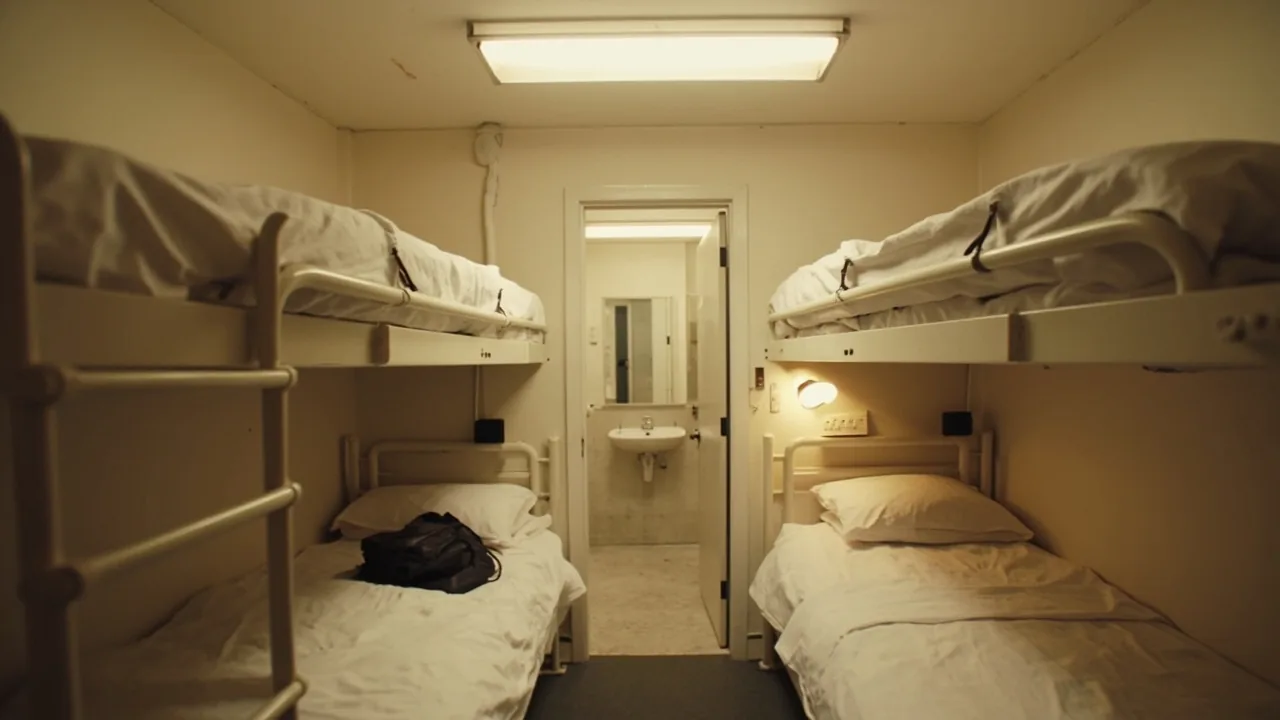
1. Female-only dorm availability. Not as a checkbox, as a real option. The best hostels reserve an actual 4-8 bed female-only room. Mixed 8-bed dorms are fine, but having the female-only option for the nights you need it (the first two nights in a new city, the nights before a long bus, the nights after a long bus) is a safety net you will use.
2. 24-hour reception with secured entry. Not a locked door at 11 PM. A real person at a desk, key-card access after midnight, and CCTV in the stairwell. This is standard at the hostels below, but worth confirming.
3. Social programming without forced party vibes. Free walking tours, family dinners, pub crawls with opt-in signs, board-game nights. You want a hostel where the social space is active but you can also take your book to the rooftop and not be bothered.
4. Location you can walk from at midnight. Within 10 minutes of the hostel on foot, you should have at least one well-lit street with open convenience stores or 24-hour cafes. If the hostel requires a tuk-tuk from the main road, that is a yellow flag.
For the broader accommodation question (hostels vs colives vs private), the solo accommodation guide covers the tradeoffs in detail.
Safest & Most Social Hostels by City
Bangkok, Thailand
Bangkok is loud, hot, and chaotic. The hostels that work for solo women balance that energy with calm dorms and structured social time.
Move On Hostel Bangkok (near Khao San). Female-only 4-bed dorm, smaller property so staff learn your name. Family-style dinners every night at 7 PM where everyone pays ₹574 (~200 THB or ~$5.96) and eats together. Best hostel in Bangkok if your priority is a small, tight social group rather than a 200-bed party factory.
Female-only dorm beds in Bangkok run ₹1,005-₹1,866 (~350-650 THB or ~$10.43-$19.36) per night depending on season and property.
Chiang Mai, Thailand
Chiang Mai is the most consistently recommended city in SEA for first-time solo female travellers, and the hostels here are why. The Old City is compact, walkable, and the entire backpacker scene is calibrated for people who arrive alone.
Female-only dorm beds in Chiang Mai run ₹861-₹1,436 (~300-500 THB or ~$8.94-$14.89) per night.
Hanoi, Vietnam
Hanoi is a louder, denser version of Chiang Mai. The hostels that work for solo women here have interior courtyards that buffer street noise, and sit in the Old Quarter where everything is walkable.
Female-only dorm beds in Hanoi run ₹737-₹1,289 (~200,000-350,000 VND or ~$7.64-$13.37) per night.
Ho Chi Minh City, Vietnam
HCMC (Saigon) is more spread out than Hanoi, and the District 1 backpacker zone is where you want to be. The hostels here are taller, newer, and more polished than the Hanoi Old Quarter properties.
The Common Room Project (District 1). Female-only 6-bed dorm, rooftop pool, co-working space. This is the most polished hostel in Saigon and the price reflects it (closer to ₹2,210 (~600,000 VND or ~$22.92)). Worth it if you want a digital-nomad-meets-social-backpacker vibe.
M Hotel Saigon (District 1). Female-only 8-bed dorm, budget option in a good location. Clean, functional, not as much social programming as the Common Room Project but the price is right (around ₹921 (~250,000 VND or ~$9.55)).
Female-only dorm beds in HCMC run ₹921-₹2,210 (~250,000-600,000 VND or ~$9.55-$22.92) per night.
Bali (Canggu and Ubud), Indonesia
Bali’s hostel scene is younger and more digital-nomad-coded than mainland SEA. The hostels here lean toward pool-and-coworking rather than dorm-and-bar, which suits female solo travellers who want a mix of social and focused work time.
Female-only dorm beds in Bali run ₹1,072-₹2,411 (~200,000-450,000 IDR or ~$11.12-$25.01) per night.
For the deeper Bali logistics, the Indonesia solo trip 2026 guide covers routes and budget.
Singapore
Singapore is the most expensive city on this list by a wide margin, but also the safest and most efficient. Hostels here are smaller, cleaner, and more functional than social.
Beary Best Hostel (Chinatown). Female-only 6-bed dorm, smaller property, near Chinatown MRT. Rooftop terrace. Good price for Singapore (around ₹3,363 (~45 SGD or ~$34.88)).
Female-only dorm beds in Singapore run ₹2,989-₹4,857 (~40-65 SGD or ~$31.01-$50.39) per night.
Kuala Lumpur, Malaysia
KL sits between Singapore’s polish and Bangkok’s chaos. Bukit Bintang is the backpacker zone, and the hostels here are some of the best value in SEA.
The Travel Hub (Chinatown). Female-only dorm available, smaller property, social kitchen culture. Good for longer stays.
Mingle Hostel (Bukit Bintang). Female-only 4-bed dorm, newer property, on-site cafe that is also the social space.
Female-only dorm beds in KL run ₹829-₹1,657 (~35-70 MYR or ~$8.59-$17.19) per night. For the full breakdown, best social hostels in Kuala Lumpur has the deeper list.
Phnom Penh, Cambodia
Phnom Penh is the city travellers report the most mixed feelings about for solo women, partly because the hostel scene is smaller and the city is more spread out than Bangkok or Chiang Mai. The hostels below are the picks where safety and social programming are both real.
Onederz Hostel Phnom Penh (Riverside). Female-only 6-bed dorm, rooftop bar with river views, daily free walking tours. The most polished hostel in Phnom Penh and the safest pick for a first-time visitor.
Mad Monkey Phnom Penh (BKK1 area). Female-only dorm available, bigger social programming, party-leaning. Be aware: BKK1 is the backpacker zone and the area around the hostel can feel loud at night.
Female-only dorm beds in Phnom Penh run ₹771-₹1,446 (~8-15 USD) per night.
Social vs. Quiet Vibe: Which Pick When
The hostels above cluster into two vibes, and choosing between them is half the trip.
Social / party hostels (Mad Monkey properties, Lub d Bangkok Silom, Common Room Project Saigon, Beary Best Singapore, the larger Chiang Mai properties). Free walking tours daily, family dinners, bar crawls, on-site bar that’s the social centre. You will meet 5-10 people a day without trying. Downside: noise, occasional pressure to drink, dorms that don’t darken until 1 AM.
Quiet / wellness hostels (Hostel by Bed Chiang Mai, Little Charm Hanoi, Pande Garden Ubud, the smaller KL properties). Yoga or meditation in the morning, communal kitchen as the social hub, smaller properties (40-80 beds vs 200+). You meet people but at a slower pace. Downside: if you arrive on a quiet night, you might not meet anyone for 24 hours.
The honest answer: most solo women do their first 2-3 nights in a social hostel, then move to a quieter one for a long base. This is the cheapest way to get both.
For deeper social mechanics beyond the hostel itself, the making friends while solo travelling guide covers meetups, day-trips, and apps.
Dorm vs. Private Room Tradeoff for Solo Women
The math is straightforward. A female-only dorm in Bangkok runs ₹1,005-₹1,866 (~350-650 THB or ~$10.43-$19.36). A private room in a guesthouse runs ₹2,297-₹4,307 (~800-1,500 THB or ~$23.83-$44.68). Over 10 nights, that is ₹14,358-₹28,715 (~5,000-10,000 THB or ~$148.93-$297.86) saved by going dorm. That is half a week of food and transport.
The catch is that dorm sleep quality is variable. If you are a light sleeper, the math changes. Two nights of bad sleep in a 6-bed dorm will ruin a day in ways that a private room never will.
The pattern that works for most solo women: dorm for the first 2-3 nights in a new city (when you want social energy anyway), then a private room if you are staying 5+ nights and need to rest. Hostels make this easy because most let you switch room types mid-stay.
Safety Specifics for Solo Female Travellers
The standard backpacker safety advice applies, with three India-specific additions:
Transport after dark. Use Grab or Bolt, never street tuk-tuks or unmarked taxis after 9 PM. This is not paranoia. Reported incidents in Bangkok and Phnom Penh cluster around late-night street tuk-tuks and unmetered taxis. Grab shows you the driver’s name, plate, and route on your family’s phone via share-trip. Cost is ₹172-₹574 (~60-200 THB or ~$1.79-$5.96) per ride in Bangkok, ₹110-₹295 (~30,000-80,000 VND or ~$1.15-$3.06) in HCMC, similar in the other cities.
Dress code. Modest shoulders and knees at temples anywhere in SEA. Beyond temples, dress how you would in Goa, not how you would in Mumbai. Beach areas and hostels are relaxed. Rural areas and government buildings are not. The bigger safety issue is signalling, not clothing: a solo woman in activewear with a phone out in a quiet neighbourhood at 11 PM is a different signal than the same woman in a long skirt walking through a well-lit market at 7 PM.
Walking alone. Bangkok, Chiang Mai, Hanoi Old Quarter, HCMC District 1, Singapore, and Bukit Bintang KL are all walkable at midnight with normal caution. Phnom Penh, Vientiane, and most of Bali outside Canggu/Ubud/Seminyak are not. This is not a value judgement, it is what travellers consistently report. Adjust route planning accordingly.
For the broader question of safety culture across the region, the solo travel for women in Thailand piece covers Bangkok and Chiang Mai in detail.
Safety Alert: Always check your government’s official travel advisory before departure. For Indian travellers, the MEA travel advisory page at mea.gov.in is the authoritative source. Border regions and specific provinces can have periodic advisories that a guidebook from 2024 will not reflect.
Budgeting for Solo Female Travellers
The single-person budget dynamics here are different from a couple’s budget in three ways:
Accommodation. Dorms are cheaper than private rooms, but more than that, a female-only dorm at a social hostel is cheaper than the same hostel would be at the male-only dorm. This is not a thing in SEA. The price is the same. The benefit is real.
Transport. You split Grab rides with hostel mates. A ₹431 (~150 THB or ~$4.47) Grab from the airport becomes ₹215 (~75 THB or ~$2.23) if you find one other person on the same flight, which at a social hostel you will, within 30 minutes of arrival.
Tours. Single supplement fees on day-trips (Muay Thai class, cooking school, island boat trip) are 30-50% extra at some operators. Book through your hostel’s tour desk instead of online, and the single-supplement usually disappears because the hostel is sending 6-10 people and the operator fills the boat.
A solo female traveller running a social-hostel-and-dorm setup across Bangkok, Chiang Mai, Hanoi, HCMC, and Bali can do 5 cities in 21 days on roughly the same budget a couple would spend in 2 cities in 14 days. The solo budget travel guide has the per-country breakdown.
Getting Connected
Reliable data matters more for solo travellers than for groups, because you are the only one checking in with family back home. Maps, Grab, translation, and share-trip all need data, and the SIM card you buy at the airport covers all of it.
Physical SIM at Bangkok Suvarnabhumi, Hanoi Noi Bai, or Bali Ngurah Rai airport costs ₹574-₹861 (~200-300 THB or ~$5.96-$8.94) for 15-30 days with 15-30 GB. Counter staff set it up in 5 minutes.
eSIM is faster (no queue, no passport swap) and works before you land. For solo female travellers specifically, having data the moment the plane touches down is the single biggest practical safety upgrade you can buy. Get Nomad eSIM covers Thailand, Vietnam, Indonesia, Singapore, Malaysia, and Cambodia on regional plans from around ₹1,928 (~20 USD) for 5 GB / 30 days.
Common Mistakes Solo Indian Women Make
Booking private rooms in boutique hotels for the whole trip. You will save money, but you will be alone. Solo travel’s social energy comes from the dorm and the common area. A private room turns you into a tourist. A dorm bed turns you into a backpacker.
Sticking to other Indian groups at the hostel. Indian travellers are everywhere in SEA hostels and it is easy to default to hanging out only with them. This is comfortable and a wasted opportunity. The reason most solo travellers come to SEA is to meet people from places they would never visit otherwise. Force yourself out of the language comfort zone for at least the first three days in each new city.
Overpacking. A 40L backpack is the solo female traveller’s sweet spot. Anything bigger becomes a liability on sleeper trains, motorbike rentals, and tuk-tuk transfers. If you cannot carry your own bag up three flights of stairs without sitting down, you have packed too much.
Skipping travel insurance. Solo means no one is sharing the cost of an emergency. A motorbike accident in Pai or a stomach infection in Hanoi can run ₹143,575-₹574,300 (~50,000-200,000 THB or ~$1,489.31-$5,957.24) in private hospital bills. Insurance is the single cheapest risk mitigation in your budget.
Booking the cheapest hostel in the city without checking the location. A ₹574 (~200 THB or ~$5.96) dorm in a sketchy alley is not cheaper than a ₹1,149 (~400 THB or ~$11.91) dorm on a main road. It is more expensive in every way that matters.
Subodh’s Take
You will arrive in Bangkok alone and slightly anxious. Within a day of checking into a social hostel, you will have a group dinner with people from three different countries. By the sleeper train to Chiang Mai a few nights later, some of them will still be on the same route. By Hanoi, a few will have dropped off and new faces will have joined. That is how SEA hostel travel works, the social infrastructure is built into the hostels, and the social math works in your favour from the moment you land.
FAQ
Is Southeast Asia safe for solo female travellers? Yes, with normal caution. Bangkok, Chiang Mai, Hanoi, HCMC, Singapore, KL, and Bali (Canggu/Ubud) are all well-trodden solo female routes with established hostel infrastructure. The bigger risks are transport-related (late-night street tuk-tuks, motorbike rentals without a license) than people-related.
Are female-only dorms available in SEA hostels? Yes, at most mid-range and up hostels in Bangkok, Chiang Mai, Hanoi, HCMC, Singapore, KL, and Bali. Filter by “female-only dorm” on Hostelworld and confirm in the most recent reviews because some properties list the option but rarely have it physically available.
What is the cheapest safe hostel option for a solo woman? A female-only 6-8 bed dorm in Chiang Mai at ₹861-₹1,149 (~300-400 THB or ~$8.94-$11.91). The cheapest cities are Chiang Mai, Hanoi, and Canggu Bali.
Will I get bored travelling alone? Only if you book private rooms and skip the common areas. The hostels in this guide are social by design. You will be annoyed by how many people want to talk to you, not bored.
Which month is best for solo female travel in SEA? November to February is the cool, dry season across Thailand, Vietnam, and Cambodia. March-May is hot but manageable. June-October is wet season, cheaper, fewer tourists, but with daily rain windows. For female-only dorm availability specifically, book 2-3 weeks ahead in November-December and February-March, walk-ups are fine the rest of the year.
How do I handle my bags when going to the restroom at airports or stations? Pack a small crossbody or waist pouch with passport, phone, and one credit card. Leave the main backpack locked at a luggage storage counter (every major SEA airport and most train stations have them for ₹144-₹431 (~50-150 THB or ~$1.49-$4.47) per day). Never leave your main bag unattended, even for two minutes.
Is it awkward to eat alone at hostels? No. Hostel common areas are designed for solo diners. Family-style dinners, communal kitchen breakfasts, and shared tables at the on-site cafe are the norm. Eating alone at a hostel is the default; eating alone at a street stall is also fine. For more on the dining side, solo dining in SEA covers the specifics.
