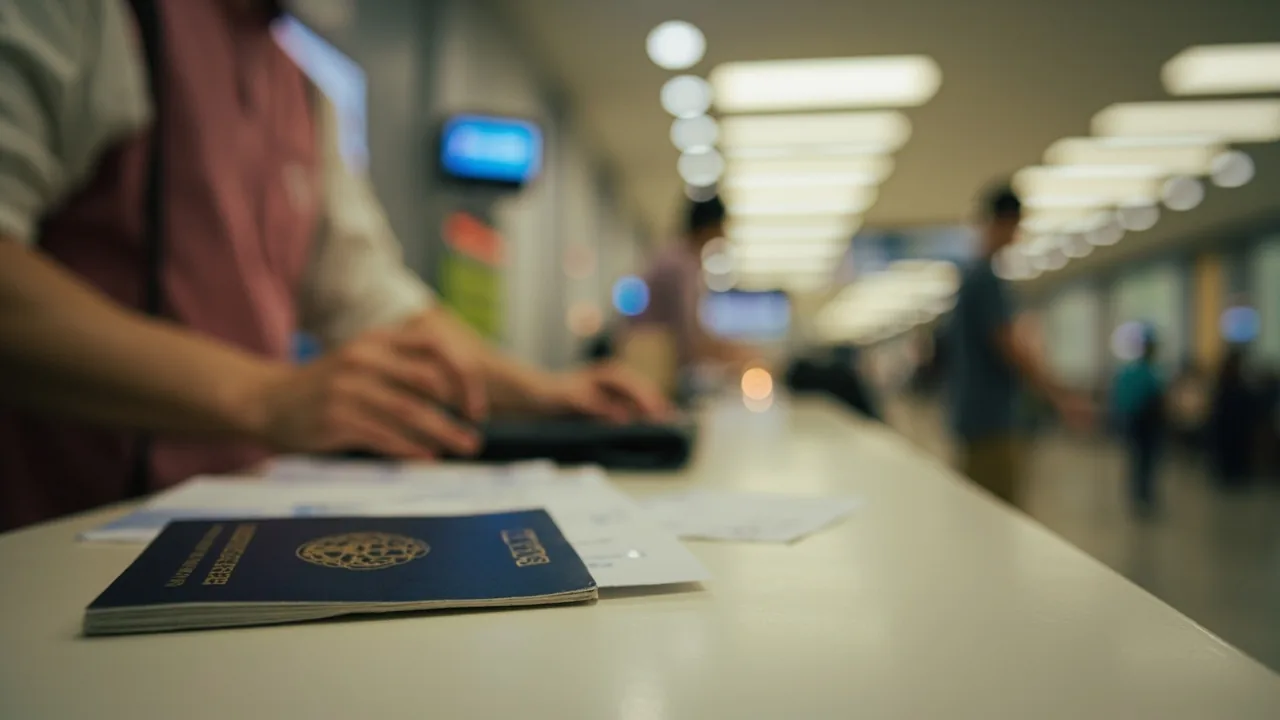
South & Southeast Asia Visa Guide 2026: On-Arrival, eVisa & Schengen Options for Indian Travelers
This south Asia visa guide covers visa-free and visa-on-arrival entry for Indians across Southeast Asia, with the exact days, fees, and forms you need. Schengen still applies if your trip includes a European leg. Rules checked against Thai MFA, Vietnamese immigration portal (xuatnhapcanh.gov.vn), Cambodia evisa.gov.kh, Singapore ICA, and Malaysia MDAC as of 22 July 2026; specific fees cross-checked with the IATA Timatic traveller database for Indian passport holders.
The single mistake that costs Indian backpackers the most money is paying for an e-visa they don’t need. The second is assuming a Schengen visa lets them into Southeast Asia (it doesn’t, but it does get the Philippines). Both are covered below.
Quick Answers
| What | Answer | Price (INR) | Fee | Form / portal |
|---|---|---|---|---|
| Thailand | Visa-free (tourism) | 60 days | 0 THB | None, but TDAC arrival form mandatory from 2025 |
| Thailand (fallback VoA) | Visa on arrival | 15 days, extendable +30 | ₹5,738 (~2,000 THB or ~$59.44) | TDAC form at immigration |
| Vietnam | e-Visa | 90 days, multiple entry | ~₹2,413 (~25 USD) | Official portal only |
| Cambodia | VoA | 30 days | ₹2,500 (~30 USD) | evisa.gov.kh |
| Cambodia | e-Visa | 30 days | ₹3,000 (~36 USD) | evisa.gov.kh |
| Laos | e-Visa or VoA | 30 days | ₹2,896-₹4,054 (~30-42 USD) | laoevisa.gov.la |
| Malaysia | e-Visa or VoA | 30 days | ₹2,703-₹3,379 (~28-35 USD) | Window at KLIA / mdac entry form |
| Singapore | e-Visa (ICA) | 30 days | ~₹2,243 (~30 SGD / ~$23.24) | Authorized agent or Apply for Singapore eVisa |
| Indonesia (Bali) | VoA or e-VOA | 30 days, extendable +30 | ₹2,686 (~500,000 IDR or ~$27.83) | evisa.imigrasi.go.id |
| Philippines | Visa-free (Schengen/UK/US visa holders) | 14 or 30 days | 0 PHP | Bring valid Schengen/US/UK visa |
| Sri Lanka | ETA / Free ETA promotion | 30 days | ₹0-₹2,896 (~0-30 USD) | eta.gov.lk |
| Nepal | No visa required (Indo-Nepal treaty) | 6 months | 0 INR | Valid passport |
| Maldives | Visa on arrival | 30 days | Free | Immigration form on plane |
Schengen reminder for Indians: no Southeast Asian country accepts a Schengen visa in place of their own visa. Schengen only gets you the Philippines under its “verified entry” rule. If your trip ends in Europe, you must apply separately at VFS Global or the relevant consulate.
Visa Types Compared
Visa-free entry
Six Southeast Asian and two South Asian destinations let Indians in without any pre-application: Thailand (60 days), Sri Lanka (free ETA window, 30 days), Nepal (current rule), the Maldives (30 days, form filled on the plane), and a handful of smaller states. The 60-day Thai rule has been extended multiple times since its 2024 reinstatement and is current as of 22 July 2026, but check the Thai MFA page within 7 days of departure because the duration has changed three times in two years.
Visa-free is the cheapest and fastest option, but it also has the strictest exit rules. Overstay fines in Thailand run ₹1,434 (~500 THB or ~$14.86) per day (capped at ₹57,380 (~20,000 THB or ~$594.43)), in Indonesia ₹5,372 (~1,000,000 IDR or ~$55.65) per day, and in Vietnam it’s a flat ₹92,025 (~25,000,000 VND or ~$953.34) fine plus possible blacklisting on repeat offences.
Visa on arrival (VoA)
VoA is what you fall back to when a country has tightened visa-free rules or you’re transiting through a country that never had visa-free for Indians in the first place. The classic 2026 examples:
- Thailand VoA: ₹5,738 (~2,000 THB or ~$59.44), 15-day stay, extendable once for 30 days at Chiang Mai or Bangkok immigration. You also need a TDAC form, a recent bank statement (often minimum ₹57,380 (~20,000 THB or ~$594.43) equivalent per person, though enforcement is inconsistent at land borders), and proof of onward travel.
- Cambodia VoA: ₹2,500 (~30 USD) at Phnom Penh, Siem Reap, and all major land borders. Bring a passport photo, USD bills (not riel), and a printed hotel booking or host letter.
- Indonesia VoA: ₹2,686 (~500,000 IDR or ~$27.83) paid at the airport counter, valid 30 days, extendable once at an immigration office. Bali’s Ngurah Rai has dedicated VoA counters that move faster than the e-VOA queue.
- Laos VoA: ₹2,896-₹4,054 (~30-42 USD) depending on nationality, available at Wattay (Vientiane), Luang Prabang, and the Friendship Bridge. Cash only, USD preferred.
eVisa
EVisas are pre-applied, paid online, and printed before you fly. They’re useful when (a) the country doesn’t offer VoA at your specific border, (b) you want to skip airport queues, or (c) you need a multiple-entry visa for a multi-country trip.
- Vietnam eVisa: 90-day multiple-entry, ₹2,413 (~25 USD). The single most useful visa for backpackers looping Thailand → Laos → Vietnam → Cambodia, since one eVisa covers re-entries. Apply at the official portal only, never through a third-party reseller that charges 3x the fee.
- Cambodia eVisa: ₹3,000 (~36 USD), valid 90 days for entry, 30-day stay. The Siem Reap airport immigration line moves faster for eVisa holders.
- Laos eVisa: ₹2,896-₹4,054 (~30-42 USD), 30-day stay. Critical for land border crossings like the Huay Xai / Chiang Khong crossing, where VoA windows sometimes close without warning.
- Singapore eVisa: ~₹2,243 (~30 SGD or ~$23.24) for Indians, processed in 1–3 working days through an authorized agent or via the official ICA-linked partner. Singapore does not offer VoA to Indians.
- Malaysia eVisa: ₹2,703-₹3,379 (~28-35 USD), 30 days, plus the mandatory MDAC (Malaysia Digital Arrival Card) submitted within 3 days of arrival.
Schengen and how it intersects with Southeast Asia
Schengen is the elephant in the room for Indian backpackers planning a multi-continent trip. Schengen visas are issued by the country where you’ll spend the most nights; the standard tourist fee is €90 (about ₹8,700), processing takes 15 working days (up to 45 in peak season), and you need biometrics, travel insurance, a confirmed itinerary, and a bank statement showing roughly €45 per day of stay.
The Philippines has a rule that Indian passport holders with a valid Schengen, US, or UK visa can enter visa-free for 14 days. Travellers report this works smoothly at Manila and Cebu if you have a printed visa copy and onward ticket. It does not extend to other Southeast Asian countries, even though many blogs claim otherwise.
Step-by-Step: How to Apply (Vietnam eVisa, the most common multi-country trip)
- Decide your entry date. Vietnam eVisas are valid 90 days from approval, so time your application to 2–3 weeks before entry.
- Go to the official portal. The single legitimate site is the Vietnamese immigration portal (xuatnhapcanh.gov.vn). Avoid sites that charge ₹4,826 (~50 USD)+ for the same form.
- Upload documents. Passport scan (clear, full page, all 4 corners), passport photo (white background, no glasses, 4x6 cm), and your intended entry date.
- Pay the fee. ₹2,413 (~25 USD) by international card. Some Indian cards decline on the government portal; a forex card or PayPal-linked card usually works.
- Wait 3 working days. You’ll receive a PDF approval letter. Print it, and print a backup copy.
- At the airport. Show the printed eVisa at the visa-on-arrival-style counter (separate from the visa-free lines), get the entry stamp, and proceed.
For Thailand’s visa-free entry (no application needed), the only step is the TDAC arrival form: free, online, submitted within 72 hours of arrival. It’s not a visa, it’s just a digital arrival card, but skipping it has cost travellers ₹1,434 (~500 THB or ~$14.86) fines.
Cambodia eVisa (shorter flow)
- Apply at evisa.gov.kh
- Upload passport + photo
- Pay ₹3,000 (~36 USD) total
- Receive approval by email within 3 days
- Print two copies
- Show at the dedicated eVisa counter on arrival
Singapore eVisa (shorter flow)
- Use Apply for Singapore eVisa or an authorized agent
- Submit passport, photo, return ticket, hotel booking
- Pay ~₹2,243 (~30 SGD or ~$23.24)
- Receive approval in 1–3 working days
- Print and carry
At the Airport / Border
For Indian passport holders, immigration checks follow a fairly consistent pattern across Southeast Asia. At Bangkok Suvarnabhumi, you’ll queue in the “Visa on Arrival / Visa Exemption” lane, hand over your passport plus the printed TDAC QR code, and the officer will stamp you in for 60 days. At Bali’s Ngurah Rai, head to the VoA counter on the left after the visa-free line, pay ₹2,686 (~500,000 IDR or ~$27.83) in cash or card, and proceed. At Hanoi Noi Bai, find the “E-visa” lane (it’s often poorly marked, ask any official), show your printed Vietnam eVisa, and the officer scans the barcode.
Land border crossings are where Indian travellers report the most inconsistent experiences. The Poipet (Cambodia) and Aranyaprachet (Thailand) border has been reported to ask for proof of funds (₹28,690 (~10,000 THB or ~$297.22) or ₹28,959 (~300 USD) equivalent) on the way into Cambodia, even though the rule is officially not enforced for eVisa holders. The Friendship Bridge between Laos and Thailand generally processes without questions, but the Huay Xai crossing has been known to refuse VoA during Thai public holidays.
Documents that get checked but travellers often forget: passport validity of at least 6 months from entry date, one or two blank pages per country, printed onward ticket (even a cheap AirAsia booking to a third country satisfies this), and a printed hotel booking or host confirmation for at least the first night.
Extensions & Overstay
Most Southeast Asian countries allow one extension of 14 to 30 days, applied at the central immigration office in the capital or major tourist hub.
- Thailand: 30-day extension at Chiang Mai or Bangkok immigration, ₹5,451 (~1,900 THB or ~$56.47) fee. Apply at least 7 days before your current stay expires. Overstay fine is ₹1,434 (~500 THB or ~$14.86) per day, capped at ₹57,380 (~20,000 THB or ~$594.43).
- Vietnam: 30-day extension through a Vietnamese visa agent, fee roughly ₹4,826-₹7,722 (~50-80 USD), takes 5–7 working days. Overstay fine is ₹92,025 (~25,000,000 VND or ~$953.34) plus possible blacklisting.
- Indonesia: 30-day extension at any immigration office (Denpasar, Jakarta), fee ₹5,372 (~1,000,000 IDR or ~$55.65). Overstay fine ₹5,372 (~1,000,000 IDR or ~$55.65) per day.
- Cambodia: 30-day extension at the Department of Immigration in Phnom Penh, ₹3,750 (~45 USD). Overstay fine ₹965 (~10 USD) per day.
- Laos: 30-day extension at the Immigration Department in Vientiane, ₹193 (~2 USD) per day extension fee.
Above the fine threshold, repeated overstay or working on a tourist visa can trigger a blacklisting of 1–5 years. The blacklist is enforced at that country’s ports and may cause entry refusal on future trips to the same country.
Common Mistakes & Rejection Reasons
1. Paying for a third-party “Thailand eVisa” service. Thailand does not charge Indians for visa-free entry and does not offer an eVisa to Indians in 2026. Scam sites charge ₹1,500-₹3,000 (~$15.54-$31.08) for a service that produces nothing. Travellers report showing up at the airport with a fake PDF and being denied boarding.
2. Name mismatch between passport and eVisa application. Aadhaar names in India often include the father’s name, while passports drop it. If your eVisa says “Ravi Kumar Sharma” and your passport says “Ravi Sharma,” your eVisa gets rejected at the airport. Match exactly.
3. Not checking passport blank pages. Vietnam eVisa entry stamp takes a full page. Cambodia takes half a page. Singapore and Indonesia are similar. If you have only two blank pages and you’re doing a four-country trip, you’ll run out before you get home.
4. Booking the cheapest eVisa through a reseller. Sites ranking on Google Ads often charge 4–5x the official fee for the same Vietnam or Cambodia eVisa. The official portal is the only one you need. If you must use a third party (the Singapore eVisa must go through an authorized agent), use Apply for Singapore eVisa.
5. Assuming Schengen visa gets you SEA countries. The Philippines is the only Southeast Asian destination where a valid Schengen, US, or UK visa gives Indians visa-free entry. Thailand, Vietnam, Cambodia, Malaysia, Indonesia, Laos, and Singapore do not accept Schengen in place of their own visa.
6. Arriving on a one-way ticket. Several countries officially require proof of onward travel. Even if it’s not checked at smaller airports, the Bangkok, Bali, and Singapore lines do ask. Book a refundable or cheap onward ticket before you fly.
Getting Connected
Indian travellers need connectivity the moment they clear immigration to call a Grab, book a hotel, or pull up a map. The cheapest physical SIM at the arrival airport in Bangkok is AIS at ₹858 (~299 THB or ~$8.89) for 15 days of 15GB data; in Bali, Telkomsel at ₹1,074 (~200,000 IDR or ~$11.13) for 10GB; in Hanoi, Viettel at ₹736 (~200,000 VND or ~$7.63) for 4GB/day. Bring your passport, no other documents needed.
For Schengen legs, European eSIMs from regional providers run €5–20 per week depending on the country and data bundle.
Safety & Advisory Notes
Indian travellers should consult the MEA travel advisory page (mea.gov.in) before departure, particularly for Myanmar, certain parts of the Thailand deep south, and the Cambodia. Thailand land border region where tensions have been reported periodically. Most of Southeast Asia is safe for Indian tourists, but the generic categories to watch are: petty theft in tourist-heavy areas (Bangkok Khao San, Bali Kuta, Ho Chi Minh District 1), scooter rental scams (Phuket, Bali, Vang Vieng), and ATM skimming at independent booths. Use bank-affiliated ATMs inside bank lobbies or 7-Eleven, and never hand your passport to a scooter rental without a written receipt. For a real-time country-specific advisory, the destination’s own government tourism site is the most reliable source.
FAQ
Do Indians need a visa for Thailand in 2026? No, Indians get 60-day visa-free entry. Just submit the TDAC arrival form online within 72 hours of arrival. See the Thailand visa rules for Indians for the current end date of this rule.
Can I get a Vietnam visa on arrival with an Indian passport? No, Vietnam dropped VoA for Indians before the 2023 eVisa rollout. Apply for the eVisa at xuatnhapcanh.gov.vn at least 3 working days before departure. Full step-by-step on the Vietnam visa for Indian passport holders page.
How does a Schengen visa help me in Southeast Asia? Only the Philippines accepts a valid Schengen, US, or UK visa for visa-free entry. See the Philippines visa for Indians with Schengen/UK/US visa page for details.
What’s the cheapest visa for a four-country SEA trip? Thailand (free) + Cambodia eVisa (₹3,000 (~36 USD)) + Vietnam eVisa (₹2,413 (~25 USD)) + Laos eVisa (₹2,896-₹4,054 (~30-42 USD)). Total around ₹8,700 (~91 USD) for the four countries. Read the SEA visa comparison for Indian passport holders for the side-by-side breakdown.
How many blank passport pages do I need for a four-country trip? At least 4 blank pages, ideally 6. Each entry and exit stamp uses half a page on average.
Can I extend my Vietnam tourist visa? Yes, 30 days, applied through a Vietnamese visa agent, fee roughly ₹4,826-₹7,722 (~50-80 USD). The Vietnam 90-day e-visa guide covers extensions in detail.
Do I need a separate visa for Bali? Yes, Bali is part of Indonesia. Indians get VoA or e-VOA for 30 days, extendable +30. The Indonesia VoA guide has the full procedure.
Subodh’s Take
The single biggest mistake I see Indian backpackers make is paying a “visa agent” in India for visas that are free or ₹2,413 (~25 USD) online. Thailand is free for Indians, Singapore is ~₹2,243 (~30 SGD or ~$23.24) through an authorized agent, and Vietnam is ₹2,413 (~25 USD) on the government portal. Any service charging ₹5,000 (~$51.80)+ for these is either reselling the same form or, worse, scamming. Apply yourself on the official portal, carry a printed PDF, and bring a passport photo for the few countries that still want one at the airport. The second-most-common mistake is treating Schengen as a magic Southeast Asia pass. It’s not, but the Philippines does accept it, so if your itinerary ends in Manila on the way to a European trip, the Schengen visa pays for itself. Beyond that, the region is among the easiest in the world for an Indian passport, and there’s no reason to pay an agent a rupee more than the official fee.
