Southeast Asia Adventure Activities: The Complete 2026 List
Southeast Asia is the cheapest, most concentrated patch of serious adventure travel on the planet. A single loop from northern Thailand down through Laos, Vietnam, and Cambodia gives you jungle trekking, world-class diving, limestone cliff climbing, multi-day river kayaking, and motorbike road trips, mostly under ₹4,000 (~$41.52) a day once you’re there. This is the complete list of what to do, where to do it, what it costs in 2026, and what to skip. For related planning, see our guide on Sea Backpacking Hub.
What Counts as an “Adventure Activity” in Southeast Asia?
An adventure activity here means any experience where the main draw is physical effort, exposure to weather or terrain, or operating a vehicle/boat/kayak yourself rather than watching someone else do it. Day tours to temples and food walks are great travel, but they aren’t what you’re searching for when you type this query. Everything below fits the broader definition: trekking, diving, climbing, caving, whitewater, surfing, sailing, motorbiking, and jungle survival courses.
Quick Answers
| What | Answer | Price (INR) |
|---|---|---|
| Cheapest adventure activity | Chiang Mai jungle trek (1 night) | ₹3,500-₹5,500 (~$36.33-$57.09) |
| Most expensive | Liveaboard dive trip (3-4 nights) | ₹35,000-₹55,000 (~$363.30-$570.90) |
| Best for first-timers | Northern Thailand jungle trekking | , |
| Best for serious divers | Thailand or Philippines liveaboard | , |
| Best for climbers | Tonsai/Railay, Thailand | , |
| Best for sea-based trips | El Nido, Palawan or Komodo, Indonesia | , |
| Best month overall | November to February (dry across most of SEA) | , |
| Wettest / riskiest months | June to October in much of SEA | , |
Exchange rate at time of writing: 1 USD ≈ ₹96.53. 1 THB ≈ ₹2.87, 1 VND ≈ ₹0.0037, 1 LAK ≈ ₹0.0043, 1 KHR ≈ ₹0.024.
The Complete Bucket List, by Country
Thailand: Trekking, Diving, Climbing, Sea Activities
Chiang Mai jungle trekking (1-3 nights). This is the entry-level adventure activity in Southeast Asia and the cheapest on the list. You hike through Doi Inthanon or Doi Suthep foothills, stay in Hmong or Karen villages, and raft down a river on day two. Prices run ₹2,859-₹5,718 (~1,000-2,000 THB or ~$29.68-$59.35) per day all-in, including homestay, guide, food, and rafting. Operators in Old City Chiang Mai run daily departures. The two-night version is the sweet spot: long enough to feel remote, short enough that beginners aren’t cooked.
Tonsai and Railay rock climbing (Krabi). Railay Beach is one of the few places on earth where limestone cliffs drop straight into turquoise sea, and the climbing here is beginner-friendly enough that you can get on real routes your first afternoon. A half-day guided session with shoes and harness is ₹3,431-₹4,288 (~1,200-1,500 THB or ~$35.61-$44.51); a two-day course is around ₹10,006 (~3,500 THB or ~$103.86). Most operators cluster on Tonsai, with shops opening every morning on the beach. The limestone is sharp on the hands, so beginners usually wear gloves or use lots of chalk.
Koh Tao diving (open water certification). Koh Tao issues more PADI Open Water certs per year than anywhere else on earth, mostly because the course is cheap and the drop-offs are full of life. A 3-4 day Open Water course runs ₹27,160-₹35,736 (~9,500-12,500 THB or ~$281.92-$370.94) including dorm, equipment, and four open-water dives. The island has dozens of schools, but quality varies wildly. Travelers report that the bigger shops have more consistent boats and instructors.
Koh Samui and Koh Phangan sea activities. Beyond the full-moon parties, the islands on the east coast run full-day snorkel and kayak trips around the Ang Thong Marine Park. A day trip including kayaking, snorkeling, lunch, and a hike to a viewpoint lake runs ₹7,147-₹10,006 (~2,500-3,500 THB or ~$74.19-$103.86). Half-day kayak rentals are ₹1,429-₹2,287 (~500-800 THB or ~$14.84-$23.74) if you want to paddle yourself around sheltered bays.
See Koh Tao diving tours on GetYourGuide
Vietnam: Sea Kayaking, Motorbike Loops, Cave Treks
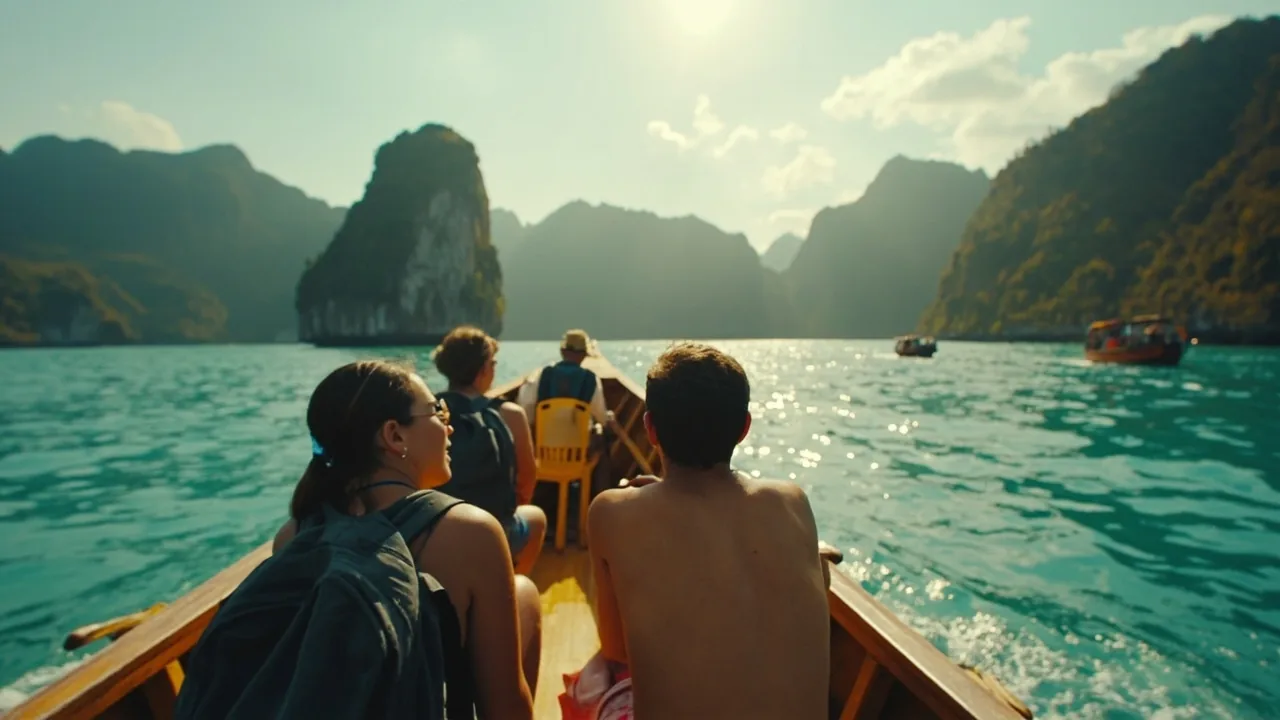
Ha Long Bay sea kayaking. Most travellers see Ha Long Bay from a junk boat, which misses the point. The bay has thousands of karst islands, and a half-day kayak tour paddles you through limestone arches, hidden lagoons, and floating villages that the cruise ships can’t reach. A day kayak tour from the mainland runs ₹3,305-₹5,508 (~900,000-1,500,000 VND or ~$34.30-$57.17); an overnight boat with kayaking included is ₹9,180-₹16,524 (~2,500,000-4,500,000 VND or ~$95.29-$171.52). The deeper you go into Bai Tu Long (the less-touristed northern section), the cleaner the water.
Sapa motorbike road trip. The loop from Hanoi to Sapa and back through the northern highlands is the most popular self-drive adventure in Vietnam. You ride through terraced rice fields, mountain passes, and ethnic-minority villages. Rentals in Hanoi run ₹918-₹1,836 (~250,000-500,000 VND or ~$9.53-$19.06) per day for a semi-automatic 150cc bike. The Ha Giang loop further north is harder and more remote, but the roads are now paved enough that beginners can do it if they take it slow.
Phong Nha cave trekking and jungle caving. Phong Nha has the largest caves in the world, including Son Doong (the only place on the list that needs a year of planning and serious money). Easier alternatives: the Paradise Cave day walk (₹734 (~200,000 VND or ~$7.62) entry), or a half-day jungle trek into Nuoc Mooc with swimming in clear pools (₹1,285 (~350,000 VND or ~$13.34)). For real caving with rope work and dark passages, book a 1-day Wild Horizons tour from ₹9,180 (~2,500,000 VND or ~$95.29).
Hoi An sea activities. The coast near Hoi An has decent surf from September to March, and stand-up paddleboarding on the Thu Bon River year-round. Cua Dai beach hosts a small but growing surf scene. Half-day surf lessons run ₹2,570-₹3,672 (~700,000-1,000,000 VND or ~$26.68-$38.12). SUP rental is ₹734 (~200,000 VND or ~$7.62) per hour.
Laos: Kayaking, Trekking, River Tubing
Mekong slow boat and kayaking (Huay Xai to Luang Prabang). The Mekong between the Thai border and Luang Prabang is the classic Laos river trip. Most people take the slow boat (covered in Mekong slow boat), but you can also kayak the same stretch over 4-5 days. Multi-day kayak expeditions with camping on sandbanks run ₹19,328-₹27,918 (~4,500,000-6,500,000 LAK or ~$200.62-$289.78) including guide, gear, food, and permits. Travellers report that the rapids below Pak Beng are the highlight.
Nong Khiaw jungle trekking. The village of Nong Khiaw sits between the Nam Ou River and a wall of karst cliffs. Half-day treks to viewpoints cost ₹430-₹644 (~100,000-150,000 LAK or ~$4.46-$6.69); full-day treks through Hmong villages are ₹859-₹1,288 (~200,000-300,000 LAK or ~$8.92-$13.37). The 100-Waterfalls trek (a longer route up the limestone) is a harder adventure activity and needs a guide, around ₹1,503 (~350,000 LAK or ~$15.60).
Vang Vieng climbing, kayaking, and caving. Vang Vieng is the small town that turned from party destination into Southeast Asia’s adventure hub. Limestone karst surrounds the town, the Nam Song River runs through the middle, and the lagoons are spring-fed and deep enough for cliff jumping. Half-day climbs with a guide are ₹644-₹1,074 (~150,000-250,000 LAK or ~$6.69-$11.15). River kayaking is ₹430-₹644 (~100,000-150,000 LAK or ~$4.46-$6.69) for half a day. Tubing on the river is ₹258-₹344 (~60,000-80,000 LAK or ~$2.67-$3.57) if you want the cheapest lazy version of the same route.
Cambodia: Sea-Based Trips, Jungle Treks, Cycling
Koh Rong and Koh Rong Samloem sea activities. Cambodia’s southern coast has two islands with decent snorkelling and beach kayaking. Ferries from Sihanoukville run ₹17-₹24 (~700-1,000 KHR or ~$0.17-$0.25) one-way. Half-day kayak rental is ₹119-₹190 (~5,000-8,000 KHR or ~$1.24-$1.98); full-day snorkel trips are ₹357-₹595 (~15,000-25,000 KHR or ~$3.71-$6.18). The diving here is OK but not on par with Thailand or Indonesia. Most travellers come for the bioluminescent plankton, visible off Long Beach on dark nights. Note: USD cash is the working currency here. 1 USD ≈ ₹96.53 at time of writing.
Cardamom Mountains jungle trekking. The Cardamoms in southwest Cambodia are one of the last intact rainforests in mainland Southeast Asia. Multi-day treks with overnight camping run ₹19,268-₹33,719 (~200-350 USD) per person, organized by a handful of operators based in Phnom Penh or Koh Kong. Two-day treks visit waterfalls and wildlife hides; longer expeditions include river kayaking. This is a real expedition, not a walk in the woods, and operators require a minimum group size.
Phnom Penh to Siem Reap cycling. The flat highway between Phnom Penh and Siem Reap is the easiest multi-day cycling route in Cambodia. Around 320 km over 3-4 days, mostly on quiet national roads. Bike rental is ₹482-₹963 (~5-10 USD) per day. Tour operators offer supported versions from around ₹33,719 (~350 USD) including a support van, mechanic, and hotels.
Indonesia and Philippines (Add-Ons for Serious Adventurers)
These two countries sit outside the standard Thailand-Vietnam-Laos-Cambodia loop but are worth flagging because they have the best sea adventure trips in the region.
Komodo liveaboard diving (Indonesia). Komodo National Park is on every serious diver’s list: manta rays, drift dives, and the world’s largest lizards on the shores. A 3-4 night liveaboard runs ₹77,071-₹144,508 (~800-1,500 USD) including all diving, food, and cabin. The boats depart from Labuan Bajo on Flores.
El Nido, Palawan (Philippines). El Nido runs day-long sea activities: island-hopping by bangka boat, lagoon kayaking, and cliff jumping. Tour A (Big Lagoon, Small Lagoon, Secret Lagoon, Shimizu Island) runs 1,400 PHP. Book direct on the beach the night before; third-party bookings add commission. Most tours include lunch, mask, snorkel, and kayak.
How Much Does an Adventure Trip to Southeast Asia Cost?
A backpacker doing 3-4 adventure activities per week across SEA spends roughly ₹2,500-₹4,500 (~$25.95-$46.71) per day including hostels, food, and one paid activity. The activity costs are the variable that swings the budget most: a Koh Tao Open Water course adds ₹11,000 (~$114.18) to one week’s spending, a Komodo liveaboard adds ₹80,000-₹150,000 (~$830.40-$1,557). A practical split: 40% activities, 30% accommodation, 20% food, 10% local transport.
For a complete breakdown of trip costs and how to keep them in line, see SE Asia trip cost from India. Daily budget planning also gets covered in SE Asia at 5,000 per day.
Common Mistakes Indians Make on Adventure Trips
Booking the cheapest jungle trek in Chiang Mai. The ₹2,287 (~800 THB or ~$23.74) “jungle trek” is cheap because it skips lunch, packs 20 people into one minivan, and visits the same elephant camp every time. Real treks cost ₹3,431-₹4,288 (~1,200-1,500 THB or ~$35.61-$44.51) per day. Travellers report that the cheap ones feel rushed and the elephant interactions are not ethical. Pay the difference.
Skipping travel insurance. Most trekking, diving, and motorbike operators in SEA require proof of insurance that covers the activity. Standard policies from Indian insurers usually do not. Get a policy that explicitly covers adventure sports before you go. Get SafetyWing travel insurance covers Indian travelers from ~$62/month (~₹5,900).
Not checking the season. Northern Vietnam motorbike roads flood in July-August. Komodo liveaboards don’t run in January-February because of rough seas. Similan Islands close for the monsoon. Always confirm the activity is in season before booking flights. Detailed seasonal patterns in Vietnam peak season guide and the Thailand articles below.
Not learning to ride before renting a motorbike in Vietnam. Scooter rental shops in Vietnam and Bali rent to anyone with cash and a passport copy, no license check. The first 100 km on a Vietnamese highway is where most accidents happen. If you’ve never ridden a geared bike, do a half-day training session first. Travellers report that Pai in northern Thailand is the best place to learn because traffic is light.
Carrying the wrong cash. Indonesia and Cambodia prefer cash; Vietnam and Thailand accept cards in cities but not in trekking areas. Carry ₹4,817-₹9,634 (~50-100 USD) in clean, undamaged notes as backup. More on this in Best forex card India.
What Most Guides Don’t Tell You
Most “sea activities for adults” are family-friendly. Kayaking, SUP, and beginner snorkel trips in El Nido, Koh Samui, and Phuket all welcome adults with zero experience. The age cutoff for diving is 10-12 years old, depending on the certification body, and the age ceiling for most activities is “as long as you can physically do it.” If you’re a healthy adult, you don’t need to be fit to start.
The cheapest months are also the worst. June to October is low season everywhere except parts of Bali. Rain closes mountain treks, seas get too rough for dive boats, and many small operators shut down. If your dates are fixed, plan around the country that’s in season. Vietnam north is great March-April and September-November; Thailand and Cambodia are best December-February.
Some activities need advance booking. Komodo liveaboards and Son Doong trips need 2-6 months lead time. Open Water dive courses on Koh Tao can be booked the day before. Motorbike rental is walk-in anywhere. The hard-to-book stuff is the small-group expeditions and the liveaboards.
Your Indian phone SIM will not work. Most Indian SIMs charge 100+ INR per day for international roaming. Buy a local SIM on arrival at the airport (₹855 (~299 THB or ~$8.87) / ₹734 (~200,000 VND or ~$7.62) for 8 days with 15 GB) or an eSIM before you fly. Get Nomad eSIM gives you data the moment you land.
Border crossing between countries needs planning. Most backpackers cross the Thailand-Laos border at Chiang Khong / Huay Xai (the Mekong slow boat), and the Cambodia-Vietnam border at Bavet / Moc Bai. Both are well-trodden. The trickier crossings (Cambodia-Laos via Stung Treng, or Vietnam-Laos via Nam Phao) need a guide and proper documentation. See Mekong slow boat for the most common crossing.
Subodh’s Take
Here’s the honest part: most “must-do adventure activities” lists are written by people who went on one guided tour and padded the rest. The actual bucket list for Southeast Asia is short, and most of the value is in doing two or three things well rather than ticking boxes. A four-country loop with one trek in Thailand, one dive course in Koh Tao, and one multi-day kayak in Laos is a stronger trip than rushing ten half-done activities. Pick three. Do them properly.
FAQ
What’s the cheapest adventure activity in Southeast Asia? A 1-day Chiang Mai jungle trek with rafting, starting around ₹2,859 (~1,000 THB or ~$29.68). Nong Khiaw half-day treks in Laos are similar.
Is Southeast Asia safe for adventure travel? Generally yes for the activities above with registered operators. Beyond dress code and night safety, check your government’s official travel advisory (for Indians, mea.gov.in) and the destination country’s own advisory site before departure. Adventure sports have inherent risk, which is why insurance that covers them is non-negotiable.
Do I need a license to rent a scooter in Vietnam or Bali? Legally, yes. In practice, scooter rental shops rent to anyone with a passport copy and cash. Indian licenses are not accepted in Vietnam; an International Driving Permit is recommended. If you crash without one, your insurance will not pay out.
Can I learn to dive with zero experience in Southeast Asia? Yes. Koh Tao (Thailand), Gili Trawangan (Indonesia), and a few places in the Philippines run PADI Open Water courses every day. No prerequisite experience needed. The medical requirement is basic: you fill out a form and answer questions about asthma, heart conditions, and ear issues.
When is the best month to do a multi-country adventure trip? November to February is the dry season across most of mainland SEA (Thailand, Cambodia, Vietnam south, Laos). March-April is hotter but still dry. June to October is monsoon in most places. For Indonesia, April to October is dry.
What adventure activities can I do on a strict vegetarian diet? Almost all of them. Most adventure operators do not feed you, or they feed you local food. India-friendly guides and homestays can usually arrange dal, rice, and vegetables. Veg travellers should specify when booking. Avoid hostel kitchens, which we cover more in the related guides.
