Mekong Slow Boat: Chiang Rai to Luang Prabang
The two-day Mekong slow boat from Chiang Rai to Luang Prabang costs around ₹3,156 (~1,100 THB or ~$32.76) for the local boat (Huay Xai to Luang Prabang leg, the actual river section) and about ₹18,000-₹55,000 (~$186.56-$570.06) depending on cabin class if you book a luxury Mekong cruise. The local boat is a backpacker rite of passage; the luxury option is a floating hotel. Same river, completely different experience. First-timers from India often pair this with our broader Southeast Asia trip cost breakdown before locking in dates. Planning the wider region? Our Southeast Asia backpacking hub covers the full multi-country route.
Prices and schedules verified against current 12go fares on 17 July 2026.
What Is the Mekong Slow Boat?
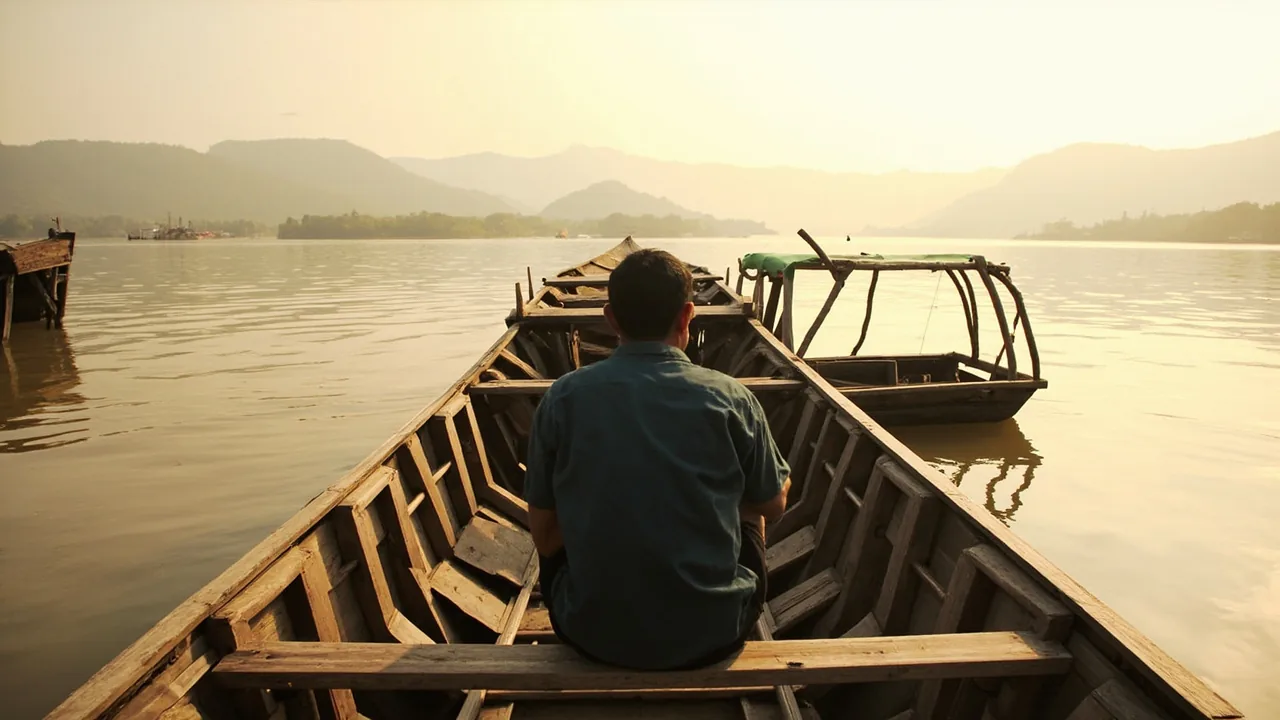
The “Mekong slow boat” refers to the long-tail wooden boats that run the Mekong River between Huay Xai (Laos border town opposite Chiang Rai) and Luang Prabang. The full trip from Chiang Rai in Thailand to Luang Prabang in Laos has three stages: a minivan from Chiang Rai to the Thai border, a tuk-tuk across the bridge to Huay Xai, and then two days on the boat downriver with an overnight stop in Pakbeng. Total journey: about 2 days, 1 night on shore, 9–10 hours of river time.
It’s one of the cheapest ways for an Indian backpacker to enter Laos and arrives right in the centre of UNESCO-listed Luang Prabang without a flight. Before you head to the border, brush up on how to carry money to Thailand and beyond from India so you’ve got the right mix of baht, kip, and USD.
Quick Answers
| What | Answer | Price (INR) |
|---|---|---|
| Local slow boat (Huay Xai → Luang Prabang, 2 days) | Long-tail boat with Pakbeng overnight | ₹3,156 (~1,100 THB or ~$32.76) |
| Pakbeng overnight (basic guesthouse, per night) | Shared room, fan, cold shower | ₹344-₹646 (~80,000-150,000 LAK or ~$3.58-$6.71) |
| Luxury Mekong cruise (private cabin, 2 days) | Private cabin, all meals, guides | ₹29,862-₹55,871 (~310-580 USD) |
| Chiang Rai → Huay Xai border minivan | Shared van, 3 hrs including border | ₹1,004-₹1,291 (~350-450 THB or ~$10.42-$13.40) |
| Lao visa on arrival (Indian passport) | Bring USD cash, photos, passport | ₹2,890-₹4,046 (~30-42 USD) |
| Slow boat departure days | Daily (local), set days (luxury) | , |
| Total budget version, end-to-end | Chiang Rai to Luang Prabang | ~₹6,500 (~$67.37) |
| Total luxury version, end-to-end | Chiang Rai to Luang Prabang | ~₹62,000 (~$642.61) |
Prices in this article use the on-the-ground currency you pay in. At the current rate (1 THB ≈ ₹2.87), 1,100 THB works out to roughly ₹3,156 for the local boat leg.
Step-by-Step: How to Take the Mekong Slow Boat
Day 0: Chiang Rai to the Thai-Laos Border
-
Book the Chiang Rai → Huay Xai minivan. This is almost always bundled with your slow boat ticket if you book through a Chiang Rai hostel or 12go. The van picks you up at 7:30–8:00 AM from your hostel or the bus station.
- Cost: ₹1,004-₹1,291 (~350-450 THB or ~$10.42-$13.40) if booked standalone; usually included if you book the slow boat package.
- Time: 3 hours including a coffee stop.
- Book: Book on 12go
-
Cross the Thai border at Chiang Khong. You’ll get off the van, walk to immigration, get your Thai exit stamp, and walk across the 4th Friendship Bridge into Laos. The tuk-tuk across the bridge is ₹143 (~50 THB or ~$1.49) per person, included in most packages.
-
Arrive in Huay Xai by 1:00 PM. Your slow boat ticket will tell you which pier to be at, usually the main one on the Mekong riverfront. If you’re arriving from Chiang Rai same-day, you’ll make the boat departure. If not, there’s a basic guesthouse strip in Huay Xai.
Day 1: Huay Xai to Pakbeng
-
Board the slow boat by 11:30 AM. Tickets are checked at the pier. Local boats are wooden long-tails with bench seats and a roof. There’s no reserved seating, just first come, first served.
- Cost: ₹3,156 (~1,100 THB or ~$32.76)
- Time on water: 8–9 hours, departure 11:30–12:00, arrival Pakbeng 6:00–7:00 PM.
- Book: Book on 12go
-
Pack for the boat properly. Bring a small daypack with water (2 litres minimum), sunscreen, a hat, snacks, headphones, a power bank, and a layer for the wind. The boat has no food sold on board; the only stop is a riverside village around lunchtime where vendors climb on selling instant noodles and grilled fish.
-
Overnight in Pakbeng. The boat docks at 6:00 PM. You’ll be approached by guesthouse touts on the pier. The standard traveller guesthouse is ₹344-₹646 (~80,000-150,000 LAK or ~$3.58-$6.71) for a basic fan room with shared bathroom. Most guesthouses include breakfast. Book one that says “slow boat ticket holders” if you want the riverfront strip.
- Cost: ₹344-₹646 (~80,000-150,000 LAK or ~$3.58-$6.71) per night.
Day 2: Pakbeng to Luang Prabang
-
Board again at 8:00–8:30 AM. Same boat, same crew, same bench. The second day is more scenic than the first: karst cliffs, fishing villages, occasional elephants on the riverbank.
-
Arrive Luang Prabang by 5:00–6:00 PM. The boat docks at the main pier in Luang Prabang, five minutes’ walk from the night market. You’ll need a tuk-tuk to most guesthouses; agree on ₹86 (~20,000 LAK or ~$0.89) before getting in.
Book the second leg: Book on 12go
Total Budget Version: Chiang Rai → Luang Prabang
| Item | Cost |
|---|---|
| Chiang Rai → Huay Xai minivan + border | ₹1,004-₹1,291 (~350-450 THB or ~$10.42-$13.40) |
| Slow boat Huay Xai → Pakbeng | ₹3,156 (~1,100 THB or ~$32.76) |
| Pakbeng guesthouse | ₹344-₹646 (~80,000-150,000 LAK or ~$3.58-$6.71) |
| Slow boat Pakbeng → Luang Prabang | ₹3,156 (~1,100 THB or ~$32.76) |
| Meals on the boat (2 days) | ₹430-₹717 (~150-250 THB or ~$4.47-$7.45) worth of snacks |
| Tuk-tuk from pier to Luang Prabang hostel | ₹86 (~20,000 LAK or ~$0.89) |
| Total | ~₹6,500 (~$67.37) |
The Luxury Option: Mekong River Cruises
If the budget slow boat sounds like a hard day on a wooden bench, the luxury Mekong cruise is the same river in air-conditioned cabins with a private balcony, three meals a day, and a guide. Two main operators run Chiang Rai to Luang Prabang:
Luxury Mekong cruise (2-day, multi-operator):
- Private cabin with ensuite bathroom
- All meals included (Lao, Thai, French)
- Guided shore excursions to riverside villages
- Sun deck, bar, wifi (patchy)
- Cost: ₹29,862-₹55,871 (~310-580 USD) depending on cabin class
- Departures: Fixed days, usually Tuesday and Friday
- From India: ~₹30,000-₹55,000 (~$310.94-$570.06) per person for a 2-day cruise
A mid-range 3-day version with overnight in a Pakbeng lodge runs ₹38,532-₹67,431 (~400-700 USD). The luxury cruises depart from the Thai side (Chiang Khong pier), so you skip the immigration shuffle at Huay Xai. The boat is technically Thai-registered, you get a Thai exit stamp before boarding, and the Laos immigration comes to you at the Luang Prabang pier. It’s a noticeably more comfortable experience for older travellers, couples, or anyone with a bad back.
Subodh’s Pro Tip: If you only have the budget for the local boat but want a less crowded ride, book the first day on the slow boat from Huay Xai and the second day on the Mekong Sun or similar (you can buy a one-day cruise from Pakbeng to Luang Prabang for about ₹8,670 (~90 USD)). Best of both worlds: budget first day, luxury second.
Common Mistakes Indians Make
Mistake 1: Skipping the Lao visa pre-check. Indian passports get visa-on-arrival at the Huay Xai border, but it costs ₹2,890-₹4,046 (~30-42 USD) in clean USD bills (no folds, no tears), plus one passport photo. Carry exact USD and check the current operating hours before you travel.
Mistake 2: Booking the slow boat from Chiang Mai directly. Chiang Mai to Luang Prabang via slow boat is a 3-day ordeal with a stopover in Chiang Rai. Most hostels in Chiang Mai will sell you this as a single ticket, but it’s two different trips. Book the Chiang Mai → Chiang Rai leg separately on the Thailand sleeper train (12 hrs, ~₹1,800 (~$18.66)) and then the Chiang Rai → Luang Prabang boat on its own.
Mistake 3: Bringing too much luggage. The local slow boat has limited dry space under the bench and no luggage hold. A full 60-litre backpack is awkward. Pack a 40-litre max for this leg and store the rest at your Chiang Rai hostel (most charge 50 THB/day).
Mistake 4: Exchanging Thai Baht for Lao Kip in Chiang Rai. The Chiang Rai money changers give terrible LAK rates. Wait until the Huay Xai pier, where there are three or four legitimate exchange booths with rates within 1–2% of the official rate. Better still, carry a forex card built for Indian travellers for Thai expenses and withdraw LAK from a Huay Xai ATM.
Mistake 5: Not booking Pakbeng accommodation in advance during peak season. November to February is busy; if you arrive in Pakbeng without a booking, the only options are the touts at the pier, and you’ll pay 30–50% more than online rates. Book ahead through your hostel in Chiang Rai or via 12go.
What Most Guides Don’t Tell You
The slow boat ticket bought in Thailand is the same as the ticket bought in Huay Xai. Don’t pay a Chiang Rai hostel ₹4,304 (~1,500 THB or ~$44.68) if you can walk to the pier in Huay Xai and pay ₹3,156 (~1,100 THB or ~$32.76) yourself. The difference is the hostel includes the Chiang Rai → border minivan. If you’re already in Chiang Rai, that’s worth about ₹1,148 (~400 THB or ~$11.91). If you’re in Huay Xai already, just buy at the pier.
Pakbeng has no ATM. There used to be one but it’s been broken for over a year, travellers report. Bring enough Lao Kip or Thai Baht from Huay Xai to cover your guesthouse and meals. Guesthouses accept Thai Baht, Lao Kip, and sometimes USD, but the rate is worse than Huay Xai.
Drinking water is not included on the local slow boat. The vendors at the village stop charge ₹43 (~10,000 LAK or ~$0.45) for a 1.5-litre bottle. Bring your own from Huay Xai (₹22 (~5,000 LAK or ~$0.22) at any minimart).
There’s a faster boat option. A “speed boat” Huay Xai → Luang Prabang runs the same route in about 6 hours. Skip it.
FAQ
Is the Mekong slow boat safe for solo female Indian travellers? Yes. It’s one of the most heavily backpacker-trafficked routes in Southeast Asia. You’ll be on a 60–80 person boat with tourists and a few locals. Pakbeng is the only slightly quiet stretch. Travellers report feeling safe throughout.
Do I need a visa for Laos on the slow boat? Yes. Indian passport holders get visa-on-arrival at the Huay Xai border before boarding. Bring ₹2,890-₹4,046 (~30-42 USD) in clean USD cash, one passport photo, and your passport with at least 6 months validity.
Can I do the Mekong slow boat in one day? Not the Huay Xai → Luang Prabang full route. The Pakbeng overnight is built into the schedule. You can do Huay Xai → Pakbeng as a day trip (about 8 hours on the river) but most people continue.
What’s the best time of year for the Mekong slow boat? November to February is dry season and the most popular. River levels are stable, weather is cool (15–28°C), and boats run daily. June to October is rainy season with high water and occasional cancellations. Peak rainy season (July. August) can bring strong currents and reduced visibility.
Is the luxury cruise worth the extra money? If you have a bad back, are travelling with parents, or just don’t want two long days on a wooden bench: yes. If you’re a backpacker on a budget and you enjoy the cultural detail of meeting other travellers: no, the local boat is half the fun.
Can I book the slow boat on the day? Yes, walk-in tickets at Huay Xai pier work. But during November to February, the boat can sell out 1–2 days ahead, especially after a holiday weekend. Book 2–3 days ahead for peace of mind.
What should I pack for the slow boat? Small daypack with 2 litres of water, sunscreen, hat, snacks, headphones, power bank, light jacket, toilet paper (the boat toilet runs out by Day 2), and your passport. Total weight kept under 8 kg is comfortable. For the full route checklist, see our Southeast Asia packing list.
Getting Connected: SIM Cards on the Route
Thai SIM cards work until the moment you cross into Laos. Once you’re on the river, you lose Thai signal, and Laos signal is patchy until Luang Prabang. Two options:
Physical Lao SIM (Unitel or Lao Telecom): Available at the Huay Xai pier kiosks for about ₹215 (~50,000 LAK or ~$2.24) with 10 GB of data, valid 7 days. The seller activates it on the spot. Coverage on the Mekong itself is weak; you’ll get 3G at Pakbeng and 4G in Luay Prabang.
eSIM: If your phone supports eSIM, Get Nomad eSIM Laos plans start around ₹867 (~9 USD) for 5 GB valid 7 days. Activate before you leave Chiang Rai and you’re online the moment you cross. The physical SIM is fine for budget backpackers; the eSIM is worth it if you need Maps.me working throughout the boat journey.
Where to Eat Before and After the Slow Boat
The slow boat itself doesn’t have food, so eat properly in Chiang Rai before leaving (lunch at the hostel or a street stall) and stock snacks. In Pakbeng, the riverside restaurants all serve similar menus: fried rice, noodle soup, grilled fish. Expect ₹108-₹172 (~25,000-40,000 LAK or ~$1.12-$1.79) per meal.
In Chiang Rai before departure:
- Joonlapak (rating 4.8) for traditional Thai, good if you want a proper sit-down meal the night before.
- India At Chiang Rai , North - South Indian Vegan Veg Non Veg Gluten Free Halal Meat Restaurant (rating 4.9) if you need one last thali before a stretch of limited Indian food on the boat.
- IROHA Ramen & Izakaya Chiang Rai (rating 4.9) for a quick ramen bowl.
- Kunda Vegetarian Vegan Burger Cafe Chiang Rai (rating 4.9) for a veg fix.
In Luang Prabang after arrival:
- M&M RESTAURANT INDIAN HALAL FOOD (rating 4.8) for the first proper Punjabi meal in two days.
- Manda de Laos (rating 4.6) for Lao cuisine in a proper setting if you want to try local food.
- JINLU RESTAURANT (rating 4.8) if you’re tired of noodles and want Chinese comfort food.
At the Chiang Rai night before the boat: If you’re staying a night in Chiang Rai after arriving from elsewhere, RIBS&CO (rating 4.7) is a known slow-cooked American barbecue spot if you want a treat before a budget two-day stretch.
Subodh’s Take
The slow boat is one of those routes that’s been written about so much that first-timers expect a dreamy river cruise and sometimes get a long wooden bench, a 6 AM Pakbeng wake-up, and noodle fumes from the village stop. It is what it is: cheap, scenic, a genuine backpacker experience, and the cheapest way into Luang Prabang. If that sounds fun, do the budget version. If it sounds miserable, a luxury Mekong cruise is genuinely lovely, and ₹30,000-₹55,000 (~$310.94-$570.06) for two days of cabin, meals, and shore excursions is fair value compared to a hotel + flights alternative. Either way, take the slow boat over the speed boat.
If you’re still planning the wider trip, our first Southeast Asia trip from India walkthrough covers visas, SIMs, and budgeting in one place.
