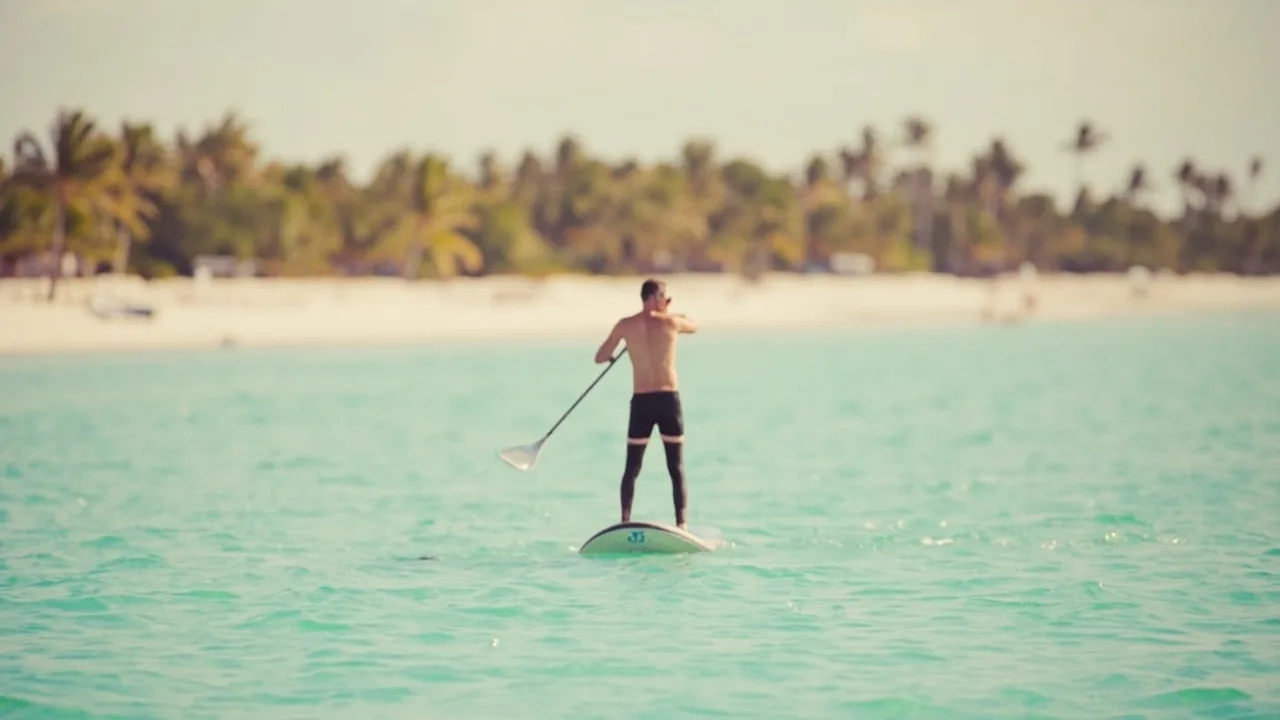
SUP in Boracay: Where to Paddle, When to Go & Is It Safe?
Stand up paddleboarding in Boracay is safe from roughly December through May, and the best spot is Bulabog Beach on the east side of the island because the wind switches to the west in those months and leaves the lagoon flat as glass. The months to avoid for SUP are June, July, August, and September, when the habagat (southwest monsoon) turns the same water into shore-break chop with two-meter swell running straight onto the reef. If you go in those four months, you can still paddle, but you’ll be doing it on the calmer west-facing coves (Puka and Diniwid) in the early morning before the wind picks up, and you should not be on a board in open water. For related planning, see our guides on Sea Backpacking Hub and How to Travel to Philippines Cheap.
Quick Answers
| What | Answer | Price (INR) |
|---|---|---|
| Best season for SUP | December to May (amihan, NE monsoon) | , |
| Months to avoid | June to September (habagat, SW monsoon) | , |
| Best beginner spot | Bulabog Beach (east lagoon, protected in amihan) | , |
| Most photogenic spot | Puka Beach (north tip, clear water, no boats) | , |
| Calm alternative in low season | Diniwid Beach (small cove, west-facing) | , |
| Typical board rental | 1 hr SUP rental, includes leash and vest | ₹590 (~350 PHP or ~$6.23) |
| Group lesson | 1.5-2 hr, usually 2-4 students, with coach | ₹2,021-₹3,032 (~1,200-1,800 PHP or ~$21.35-$32.03) |
| Skill needed for Bulabog in amihan | None for the inner lagoon | , |
| Skill needed for open sea (any month) | Confident swimmer, prior SUP time | , |
Prices above are on-the-ground retail in PHP. At the current rate of 1 PHP ≈ ₹1.78, 350 PHP ≈ ₹623.
What Is Stand Up Paddleboarding?
Stand up paddleboarding (SUP) is surfing’s slower cousin: you stand on a wide, thick board (usually 9 to 12 feet, sometimes 14 for touring) and propel yourself with a single long paddle, blade angled forward. There’s no wave required. The whole appeal is gliding across flat water at your own pace, looking down at the reef under your feet, and steering with small paddle strokes instead of a rudder. In Boracay, SUP splits into two completely different activities. One is calm-water flat-water paddling in a sheltered lagoon, which anyone who can swim 50 meters can do on their first try. The other is open-sea paddling along a coastline with current, wind chop, and boat traffic, which is a real skill and should be treated like sea kayaking, not like a yoga class.
If you’re coming from India, the closest equivalent is the kayaking you can do at Marine Drive in Goa or in the backwaters around Alleppey, except you’re standing up and the water is much clearer.
Step-by-Step: How to SUP in Boracay
1. Pick the right month
The Philippines has two main wind systems, and Boracay’s paddleability flips between them. From late November through May, the amihan (northeast monsoon) blows from the east. That wind piles up waves on Boracay’s east-facing Bulabog Beach, but it leaves the entire west side of the island calm. From June through October, the habagat (southwest monsoon) flips the wind direction. Now the west side gets the chop and the east side flattens out, but Bulagbog is also Boracay’s main kiteboarding and windsurfing beach, so you’ll be sharing the lagoon with people being dragged around by kites at 25 knots. There is no month when Boracay’s entire coastline is calm. Pick your month to match your beach.
For SUP specifically:
| Month | Wind system | SUP conditions |
|---|---|---|
| November (late) | Amihan starting | Good, building |
| December to February | Amihan (peak) | Excellent, west side flat |
| March to May | Amihan weakening | Good, occasional glassy mornings |
| June | Habagat starting | Mixed, only early AM on west |
| July to September | Habagat (peak) | Poor for SUP, dangerous on west |
| October | Habagat ending | Mixed, occasional good windows |
Safety Alert: July, August, and September are when most ocean rescues and drownings happen around Boracay. The combination of habagat swell, rip currents at White Beach, and tourists who don’t read the flag system makes these months the worst possible time to learn SUP. If your travel dates are locked to these months, stick to the Bulabog lagoon (it’s the only sheltered water on the island in habagat) and paddle within 50 meters of the beach.
2. Choose your spot based on month
For amihan season (December to May), the SUP spots ranked from beginner-friendly to intermediate:
Bulabog Beach, inner lagoon. This is the default SUP spot on Boracay for most of the year. The beach itself faces east, so during amihan it gets hammered by wind and waves, but inside the lagoon (the area between the reef line and the shore) the water is shallow, flat, and protected. Rental shops line the beach, boards cost 350 PHP for an hour, and the lagoon is small enough that a beginner can never drift far from shore. If you’ve never SUPed before, this is where you start.
Puka Beach, north tip. Two kilometers north of the main White Beach area, Puka is the photogenic option. The water here stays clearer because there’s almost no boat traffic and the surrounding resorts are low-rise. During amihan mornings, the water is glassy enough to see starfish on the sand below your board. The trade-off is no rental shops on the beach itself, so you have to bring your own inflatable or arrange a drop-off.
Diniwid Beach, west-facing cove. Tiny cove between White Beach and Puka, accessible on foot over a small headland from Station 1. Diniwid stays calmer than White Beach during habagat because the cove walls block some swell, but it’s still a west-facing beach, so it’s not a habagat-season SUP spot. Use it as an early-morning calm-water option in the shoulder months (June, October).
For habagat season (June to September), your only realistic SUP option is Bulabog’s lagoon in the early morning before the wind builds. By 11 AM the wind is usually strong enough that beginners should not be on a board. Treat this as a “sunrise only” activity in those months.
3. Rent a board, or take a lesson
You have three options:
Walk-up rental. The SUP rental shops along Bulabog Beach rent boards by the hour. The standard rate is 350 PHP for one hour, 500 PHP for two hours, with a leash and a life vest included. No reservation needed. You pay cash, get the board, and paddle. This is fine if you’ve SUPed before and you’re staying in the lagoon.
Group lesson. Most shops also run 1.5 to 2 hour group lessons, typically 1,200 to 1,800 PHP for two to four students. You learn stance, paddle technique, turning, and how to fall safely. Worth it for first-timers, less so for anyone who’s spent time on a board.
Private guide. For a multi-hour open-water tour, expect to pay 2,500 to 4,000 PHP for a private guide with a boat support vehicle. These usually go around the island’s northern cape, with paddling in the morning when wind is lowest. Travelers report these are worth the money if conditions are calm.
Subodh’s Pro Tip: Rent from a shop, not from a beach vendor walking around with a board. The shops give you a proper leash, a coastguard-approved PFD, and a board that’s been rinsed that morning. Beach-vendor boards often have sun-damaged foam, dried-out valves on inflatables, and no leash at all. The price difference is 50 PHP. Spend it.
4. Read the conditions before launching
Three things to check before you get on the board:
- Wind speed. If it’s blowing more than 12 knots (which feels like a steady push on your face), beginners should not be on a board in open water. The Bulabog lagoon is fine up to about 18 knots because the reef breaks the chop.
- Tide. Boracay has a tidal range of about 1 to 1.5 meters. Low tide at Bulabog exposes coral heads that can scratch the bottom of inflatable boards. Aim for mid-tide or higher on your first session.
- Flag system. Philippine beaches fly colored flags: green (safe), yellow (caution), red (no swimming). The flag system is for swimming, not SUP specifically, but treat red as a hard no for both. Boracay’s lifeguards are posted at White Beach Station 1, 2, and 3, not at Bulabog or Puka, so at the SUP spots you are responsible for your own decision.
5. Fall the right way
This is the part nobody tells first-timers. SUP falls are not like surfing falls. When you fall off a SUP, you fall flat onto the water from standing height, and the board (which is bigger than you) shoots out in some random direction attached to your ankle via the leash. The technique is to fall flat (not headfirst), cover your head with your arms as you hit the water, and let the leash run out. Don’t try to grab the board on the way down. If you fall sideways, slap the water flat with your whole arm to push the board away from your head.
The water in Bulabog lagoon is shallow enough that you can stand up after a fall, so the consequences of a bad fall are low. Open water is different. Practice the fall in the lagoon before you paddle out.
Common Mistakes First-Time SUPers Make in Boracay
Paddling out into open sea on day one. Bulabog lagoon is not the open sea. The lagoon is knee-to-waist deep, sheltered by reef, and 100 meters wide. The open sea past the reef line at Bulacay starts at 5 meters deep, has boat traffic, and has current. Paddle in the lagoon for at least an hour before you even think about going past the reef.
Going out at noon during habagat. The wind builds through the morning and peaks around 1 to 3 PM. If you paddle at noon in July, August, or September, you’ll spend half the session fighting the wind back to shore. Sunrise, sunrise, sunrise.
Wearing flip-flops on the board. You will fall off. When you do, you do not want a flip-flop floating in the lagoon next to you. Wear water shoes or go barefoot on the board. Coral cuts on Boracay’s reef get infected fast.
Not bringing a dry bag. Even in calm water, your phone and wallet need to be in something waterproof. A simple 10-liter dry bag costs 200 PHP at any shop on the main road. It will save your trip.
Underestimating the sun. The Philippines sun is equatorial, and there’s no shade on the water. Reef-safe sunscreen (the kind that doesn’t kill coral, which Boracay enforces at some beaches), a long-sleeve rash guard, and a hat with a strap. You’ll be on the water for two hours in direct sun with no break.
What Most Guides Don’t Tell You
Bulabog’s lagoon is Boracay’s kite school, not a SUP-only beach. From December to May, the lagoon is full of kiteboarding students being dragged across the water at speed, with lines that can cut you. SUPers and kiteboarders share the same flat water, and the kites always have right of way. The rule at Bulabog is to stay close to the shore on the SUP side, and never cross the line where the kite students are launching and landing. If you’re renting from a shop, ask them which side of the lagoon they want you on.
The Philippines outside Boracay has better SUP, depending on what you want. Siargao, two hours by plane south, is the country’s SUP capital now. Cloud 9’s inner lagoon is flat year-round, the water is clearer than Boracay, and the SUP scene is more developed. El Nido in Palawan has kayak-SUP hybrids you can take into the Bacuit lagoons, which are protected from both monsoon systems. If your Philippines itinerary is more than a week, consider doing SUP in two places: Boracay for the training wheels, then Siargao or El Nido for the better water. This article on Boracay vs Vietnam for budget covers the cost comparison.
The “Boracay closure” of 2018 changed the island permanently. Boracay was shut for six months in 2018 for environmental cleanup. Since reopening, the island has a hard cap on daily arrivals, no more new resorts, and a strict single-use-plastic ban. SUP rental shops now use paper cups and wooden paddles are standard. This is good for the water quality, which means clearer SUP than five years ago.
Indian travelers with a Philippines visa should double-check entry rules. Indian passport holders get a 14-day visa-free entry to the Philippines if you have a valid US, Japanese, Australian, Schengen, Canadian, or Singapore visa or permanent residence. Otherwise you need to apply for a Philippines visa in advance at the embassy in Delhi. The 14-day rule is enough for Boracay but tight if you also want to add Siargao or Palawan.
Where SUP Fits in Your Philippines Trip
If you’re island-hopping after Boracay, the Philippines SUP scene splits into three tiers:
Tier 1, beginner-friendly flat water. Boracay’s Bulabog lagoon (December to May), Coron’s Kayangan Lake (year-round, no waves, glass-clear), El Nido’s Big Lagoon (year-round, but check tide).
Tier 2, intermediate open-water paddling. Siargao’s Cloud 9 inner reef (year-round, more experienced paddlers), Boracay’s Puka Beach coastline (December to May, watch boat traffic), Panglao Island near Bohol (year-round, sheltered).
Tier 3, advanced only. Boracay’s open west coast during habagat, Siargao’s Pacific coast during habagat, the coastlines around Batanes (year-round, serious swell and cold water).
For a first SUP trip in the Philippines, do Bulabog for the lesson, then either stay in Boracay and move to Puka, or fly to Siargao for the second week. Both work.
What to Pack for SUP in Boracay
You don’t need much. Reef-safe sunscreen, a rash guard or long-sleeve swim shirt, water shoes, a strap for your sunglasses, a 10-liter dry bag, and a GoPro if you have one. Most rental shops provide the leash, PFD, and paddle.
If you’re on a longer Southeast Asia trip and want to bring your own inflatable SUP, the 10’6” all-around boards from Fanatic, Red Paddle Co, and Body Glove are the standard. They pack into a backpack, weigh about 9 kg, and inflate in 5 minutes. In Boracay you can leave them at your hostel between sessions. For a packing list that covers Southeast Asia in general, see packing list for Southeast Asia.
Staying Connected for SUP Trip Planning
You’ll want data on the beach to check wind conditions, flag status, and tide charts. Two options for an Indian traveler:
Local SIM. Globe and Smart both have tourist SIMs at Caticlan Airport (the gateway to Boracay). A 7-day SIM with 8 GB data runs about 300 PHP. Buy at the airport kiosk, not from a random vendor outside.
eSIM. If you don’t want to swap your Indian SIM, Get Nomad eSIM gives you a Philippines data plan you activate before you fly. Useful if you’re also adding Siargao or Manila after Boracay.
For a broader breakdown of money and data costs on a Southeast Asia trip, see Southeast Asia trip cost from India.
Is SUP in Boracay Safe?
Yes, in the right months, in the right spots, at the right time of day. December through May, sunrise to about 10 AM, in Bulabog’s lagoon or Puka Beach, with a leash and a PFD, SUP in Boracay is about as safe as it gets. You can put a complete beginner on a board in the Bulabog lagoon in February and they will be fine.
Open-sea paddling along Boracay’s coastline is a different risk profile. Current, boat traffic, wind chop, and the absence of lifeguards at the SUP spots mean you need real swimming ability (200 meters open water minimum), previous board time, and ideally a partner. Treat it like sea kayaking, not like a yoga class.
Habagat season (June to September) is the dangerous window. The same west-facing beaches that are flat in February become surf breaks in July. Currents at White Beach rip south along the shore, and the lifeguard flag system goes red most afternoons. If your only chance to do SUP is during these months, limit yourself to Bulabog’s lagoon at sunrise and don’t try to go past the reef.
Safety Alert: For current safety conditions and any specific advisories affecting Caticlan or Boracay, check the Indian Ministry of External Affairs travel advisory page at mea.gov.in and the Philippine Department of Tourism’s Boracay page before departure. Conditions and advisories change between seasons, and this article is not a substitute for an up-to-date government advisory.
Subodh’s Take
Stand up paddleboarding in Boracay is one of the cheapest, easiest “wow, I’m doing this in Southeast Asia” activities you can book, but only if you go in the right four months. If your dates are flexible, aim for January to March for the calmest water and best photos. If your dates are locked to a July wedding in Manila or a September work trip, you can still paddle at sunrise in the Bulabog lagoon, just don’t expect Boracay’s iconic west-side sunsets to come with flat water. The SUP is the activity, the wind is the constraint, and the two trade off against each other every month of the year. Pick the month first, the spot second, and the rental shop third.
FAQ
When is the calmest water for SUP in Boracay?
Late December through early March, during the peak of the amihan (northeast monsoon). The wind blows offshore on the west side, leaving White Beach, Puka, and Diniwid flat. Bulabog’s lagoon is also flat in this period, sheltered from the easterly wind.
Can I do SUP in Boracay in August?
Yes, but only in Bulabog’s inner lagoon in the early morning (before 9 AM). Do not paddle on the west-facing beaches in August. The habagat brings 2 to 3 meter swell, rip currents, and afternoon thunderstorms. The lagoon is the only safe SUP option in the habagat months.
Do I need to know how to swim for SUP in Boracay?
For the Bulabog lagoon in calm conditions, you should be able to swim 50 meters and tread water for 5 minutes. The lagoon is shallow enough that you can stand, so a non-swimmer can do it with a PFD on. For open-sea paddling, you need to be a confident open-water swimmer and have prior SUP time. Don’t paddle open water on your first session.
How much does a SUP lesson cost in Boracay?
Group lessons run 1,200 to 1,800 PHP for 1.5 to 2 hours with two to four students, board and PFD included. Private lessons run 2,500 to 4,000 PHP for 2 to 3 hours. Walk-up hourly rental without instruction is 350 PHP per hour.
Is SUP safer than kiteboarding in Boracay?
For beginners, yes. SUP involves no speed, no lines, and a controlled fall. Kiteboarding at Bulabog involves being pulled at 20 to 30 knots, with the risk of being lifted and dragged. If your goal is a beginner-friendly water sport on Boracay, SUP is the lower-risk option. Kiteboarding is for people who already have water-sports background.
Should I bring my own SUP to the Philippines?
Only if you’re going to multiple islands and want to paddle in different places. If it’s just Boracay, rent. Bringing a 10’6” inflatable from India is doable (it goes as checked luggage on most airlines, weight around 9 kg), but the rental options on Bulabog are good enough that it doesn’t pay off for a single-island trip.
Where else in the Philippines is good for SUP?
Siargao’s Cloud 9 inner lagoon (year-round flat water, more developed SUP scene than Boracay), Coron’s Kayangan Lake (year-round, freshwater, no waves), El Nido’s Big Lagoon in Palawan (year-round but tide-dependent). For a longer Philippines itinerary, consider doing two SUP spots instead of one.
