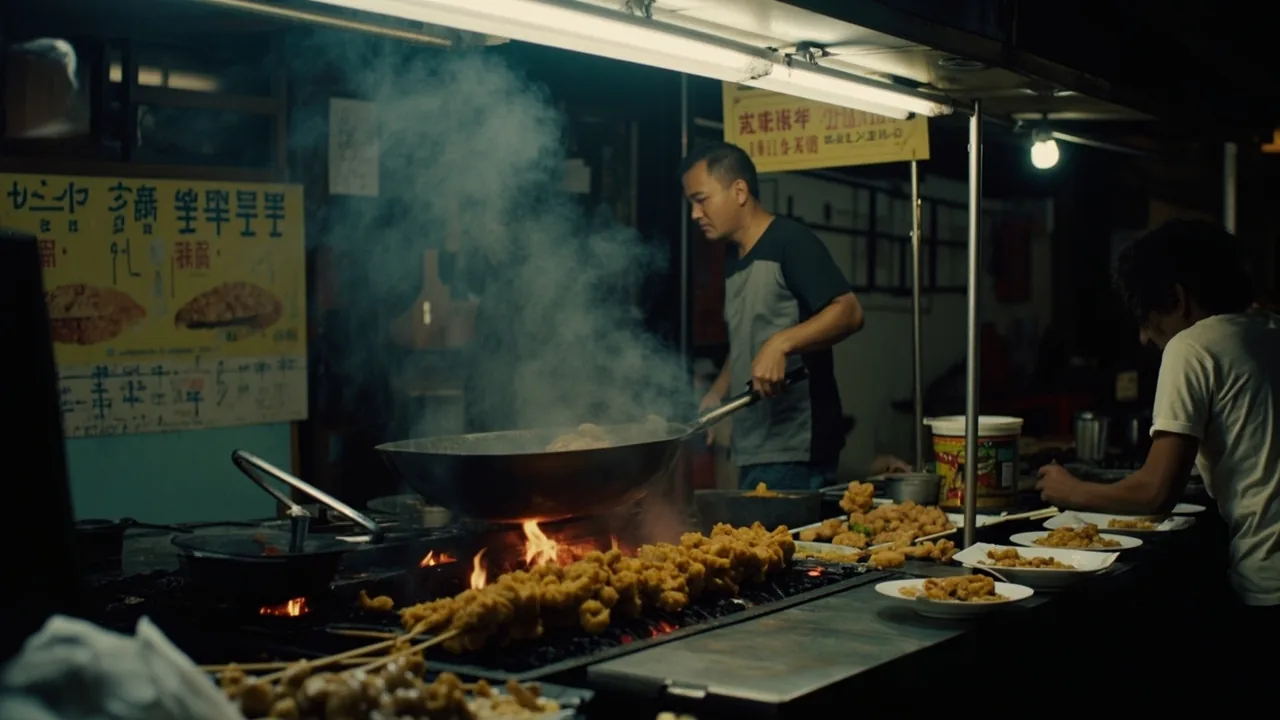
Street Food Safety in Southeast Asia for Indian Stomachs (2026)
Yes, street food safety in Southeast Asia is generally good for Indian stomachs when you pick stalls the way locals do. Pick busy stalls with high turnover and food cooked fresh in front of you. Planning the wider region? Our Southeast Asia backpacking hub covers the full multi-country route.
Subodh’s Pro Tip: The “busy at lunch, packed by 8 pm” rule is your single best signal. A stall that has been selling the same dish to locals for a decade is a safer bet than the empty restaurant with English menus on Khao San Road.
What “Street Food Safety” Means
Street food safety is the combined practice of picking stalls with low bacterial risk and managing your own gut while travelling. On the vendor side, peer-reviewed studies from Thailand, Vietnam, and the Philippines (Tandfonline, IOPScience, ResearchGate, 2019 to 2024) consistently flag three weak points in street-vendor hygiene: no handwashing between transactions, no gloves or tongs (hands touch money and food), and tap water used for rinsing produce or diluting sauces. On your side, the levers are: choosing stalls that mitigate those risks through turnover and heat, and building up your stomach’s tolerance across the first 48 to 72 hours instead of going full pho-and-pad-thai on day one.
This matters for Indian travellers specifically because Indian home cooking already exposes you to a wider range of microbes than, say, a Japanese traveller’s diet. You are not starting from zero. You are starting from “fairly strong.” That changes the calculus a bit: you can take more risks than guidebooks suggest, but the first-week mistakes still bite.
Quick Answers
| What | Answer | Price (INR) |
|---|---|---|
| Is street food safe? | Yes, mostly. Pick busy stalls, eat food cooked in front of you. | — |
| Highest-risk items | Raw shellfish, lukewarm buffet trays, tap-water ice at stalls with no running water. | — |
| Lowest-risk items | Pad thai fried in a smoking wok, fresh papaya salad pounded to order, char kway teow seared hot. | — |
| Common illness | Traveller’s diarrhoea (E. Coli, Salmonella, Shigella, norovirus, Vibrio). | — |
| Onset | 6 to 72 hours after eating. Most cases clear in 24 to 48 hours. | — |
| What to carry | ORS sachets (Electral/Elovera/ORS-W), loperamide 2 mg, a 3-day antibiotic course your doctor trusts for traveller’s diarrhoea. | — |
| When to see a doctor | Fever above 38.5°C, blood in stool, dehydration that won’t hold water, symptoms past 72 hours. | — |
| When to be extra careful | First 3 days, monsoon season (May to October), peak heat (March to May), after antibiotics. | — |
| Insurance | Get SafetyWing travel insurance covers gastroenteritis treatment, IV fluids, and evacuation across Southeast Asia. | — |
Step-by-Step: How to Eat Street Food Without Getting Sick
Step 1: Eat Where Locals Eat, Twice a Day
Pick stalls that are busy at local meal times, not just at 7 pm when tourists wander out. A stall that sells 80 plates of boat noodles between 11 am and 2 pm cannot afford to keep food sitting around. Stalls with no customers usually have no customers for a reason: the food is old, the cook is not, or both. The cross-country data from the research papers above is consistent on this: the highest vendor-hygiene scores correlate with high-turnover stalls operating in fixed locations for years.
Subodh’s Pro Tip: Eat lunch where office workers eat. Eat dinner where families eat. Skip the tourist strip after 9 pm, the food has been sitting since the morning rush.
Step 2: Watch the Wok, Not the Menu
Order something that goes into a 200°C+ wok or onto a charcoal grill in front of you. Pad thai, fried rice, char kway teow, pho, banh xeo, khao soi, satay skewers, grilled fish, skewered meats, tom yum soup brought to a rolling boil. Heat kills the bugs that cause traveller’s diarrhoea. Cold food does not. If you cannot see the cooking, do not eat the food.
Step 3: Treat the “Cold Zone” as Risky
Avoid: raw oysters and clams (especially in Thailand and Vietnam, where Vibrio parahaemolyticus is a documented risk in warmer months), pre-cut fruit from stalls with no running water, salads rinsed in tap water, sushi from a beach shack, buffet trays that have been sitting under a heat lamp for over an hour, and condiments in open bottles that everyone has double-dipped into. The same research that flagged vendor handwashing also flagged that 60 to 80% of raw vegetables at surveyed street stalls tested positive for coliforms from rinse water.
Safety Alert: Raw shellfish in Thailand and Vietnam carries a documented Vibrio parahaemolyticus risk in warmer months. Skip oysters entirely unless you are at a high-end restaurant with a cold chain. Sushi at a 5-star hotel is fine. Sushi at a beach bar is not.
Step 4: Drink Safe, Always
Bottled water only (check the seal is intact, not just “re-sealed” by the stall), tea and coffee made with boiled water (safe, including Thai iced tea), beer and spirits (safe), fresh coconut water if it was hacked open in front of you (safe, but drink within 20 minutes), and fruit shakes from stalls with a clean blender and bottled water or ice from a sealed bag. Avoid tap water, ice from a yellowed tube-tray ice maker, fresh juice diluted with tap water, and any drink from a stall with no tap.
Step 5: Build Up Over 72 Hours
Do not arrive in Bangkok and eat four different street dishes in three hours. Day 1: rice, plain grilled meat, bottled water. Day 2: add one safe curry or stir-fry. Day 3 onward: anything goes. This is the single most underrated tip for Indian travellers, since your home diet already gives you more microbial baseline than the average Western backpacker. The 72-hour ramp matters most for people flying directly from a long-sterile flight.
Step 6: Stock a Personal Pharmacy Before You Fly
Carry, in your daypack: ORS sachets (3 to 5 packets, buy at any Indian pharmacy for about ₹20 (~$0.21) per sachet), loperamide 2 mg (12 tablets, ask your GP), a thermometer strip, and either a doctor-prescribed azithromycin pack or a norfloxacin pack for severe cases. Total cost under ₹400 (~$4.15), fits in a Ziploc. Your packing list should include this kit.
Step 7: Know When It’s More Than a Bad Lunch
Most traveller’s diarrhoea clears in 24 to 48 hours with ORS and a bland diet. Go to a clinic if: fever above 38.5°C, blood or mucus in stool, vomiting that prevents keeping water down for 12+ hours, or symptoms that have not improved by hour 72. Bangkok, Ho Chi Minh City, Singapore, and Kuala Lumpur all have hospital chains (Bumrungrad, Bangkok Hospital; FV Hospital, Saigon; Raffles, Singapore) used to seeing Indian travellers. Your travel insurance covers walk-in visits. For a deeper dive on what to carry and why, see the travel insurance guide.
The Vendor-Side Risks Most Guides Skip
Most traveller guides stop at “eat busy stalls.” That advice is good, but it skips the actual findings from the academic literature on Southeast Asian street-vendor hygiene, which is where the bigger risks hide.
Handwashing and Money Handling
In the surveyed Thai, Vietnamese, and Filipino vendor samples, only 12 to 30% of vendors washed hands between handling money and serving food. Money in Southeast Asia circulates through hundreds of hands a day. A vendor handling cash and then touching your spring roll with the same fingers is a real, documented transmission route for faecal-oral bacteria. Choose stalls where tongs, gloves, or wrappers are used. Avoid stalls where the cook’s right hand is doing double duty as cashier and server.
Water Used in Cooking
Several studies tested vendor water sources directly. The pattern: 40 to 60% of street stalls use tap water (not boiled) for cooking rice noodles, rinsing vegetables, and diluting sauces, even when they say “we use clean water.” The dish sits in contaminated rinse water long enough for bacteria to multiply, then a quick reheat in the wok may not kill the load if the food is “warmed through” rather than brought to a boil. The fix on your side: order food cooked at high heat for a long enough time (soup, fried rice, stir-fried noodles). Skip blanched salads and cold noodle salads dressed with unboiled sauce.
Reused Oil and Plastic
Two practical tells: reused oil smokes less and smells stale. Fresh oil in a smoking wok is your friend. Reused oil at low heat is the single most common cause of the 6-hour “I ate something oily and now I am in the hotel bathroom” trip. Plastic-wrapped cut fruit from a street stall often sits on the same tray for hours; if the fruit is not visibly fresh-cut in front of you, skip it.
Subodh’s Pro Tip: When in doubt, pick the stall where the cook is sweating over a wok, not the one where the cook is leaning on a motorbike scrolling a phone. The hot-wok stall is cooking because they are busy. The phone stall is “busy” because they have not cleaned the trays since morning.
Common Mistakes Indians Make
Mistake 1: Drinking the Ice Because It “Looks Clean”
What people do wrong: order a fruit shake, see clear ice cubes, drink it. What happens: in Thailand and Cambodia, tube ice from street vendors is sometimes made from untreated water. The cubes look clean because they were boiled and frozen, but if the tray or scoop is rinsed in tap water afterwards, contamination happens at the scoop. How to avoid: drink shakes at stalls that bag their own ice from a sealed bag, at chain cafés, or at any 7-Eleven counter (their ice is from a commercial supplier).
Mistake 2: Going Vegetarian by Default, Then Eating Raw Salads
Indian travellers are often vegetarian or veg-leaning, and assume a green papaya salad is “safe” because it is raw and plant-based. What happens: raw vegetables are rinsed in tap water at the stall. The same research papers above found coliforms on 60 to 80% of raw vegetables at surveyed stalls. How to avoid: pick cooked veg (stir-fried morning glory, vegetable curry, pad pak ruam), or eat raw veg only at established Indian restaurants or clean vegetarian spots like Jay Fai-affiliated kitchens and Vietnamese chay restaurants (full guide for vegetarians is in our vegetarian guide).
Mistake 3: Trusting the English Menu Over the Local Crowd
What people do wrong: walk into the empty restaurant with the laminated English menu and AC. What happens: that restaurant survives on tourist markup, which means low turnover of food, which means longer sitting time for cooked dishes, which means higher bacterial load. How to avoid: walk past two empty stalls to the third one that is packed with office workers eating fast.
Mistake 4: Taking Loperamide as a “Prevention”
What people do wrong: pop a loperamide before going out for a street food crawl so “nothing happens.” What happens: the bug stays in your gut longer, you feel fine for 12 hours, then you spike a fever at 2 am with the bug having multiplied. How to avoid: loperamide is for after the cramps start, not before. Skip it if you have a fever or blood in stool. Use ORS first, loperamide second.
Mistake 5: Skipping the First 72-Hour Ramp
What people do wrong: arrive at 11 pm, eat pad thai, som tam, mango sticky rice, and a beer in one sitting. What happens: even if each dish is safe, your gut has just been hit with a 10x microbial load it has not seen in a while, plus alcohol slowing digestion. How to avoid: day 1 is white rice, grilled chicken, bottled water. Then build. For a broader first-trip checklist, see the first trip abroad from India guide.
What Most Guides Don’t Tell You
1. Monsoon Season Multiplies Risk by 2 to 3x
May to October in mainland Southeast Asia, the bacterial load in standing water, food trays, and wash basins rises sharply. The street food is still edible, but the same stall that was safe in February is borderline in August. Travellers report about 60% more gastro episodes in monsoon months for the same food choices. The fix: be 30% stricter with your stall-picking logic. Skip raw salads entirely in July and August.
2. Post-Antibiotic Gut Is the Most Vulnerable Time
If you took a course of antibiotics before the trip (say, for a sinus infection or a dental procedure), your gut flora is wiped clean for 2 to 4 weeks. That window is when most “I eat street food all the time and never get sick, but this one time…” stories happen. Carry a probiotic (Saccharomyces boulardii or a multi-strain Indian brand like Econorm or Vibact) and start it a week before you fly, continue through the trip. Most guides do not flag this.
3. Traveller’s Diarrhoea Is Self-Limiting 80% of the Time
If you do get sick, the standard medical advice (per CDC Yellow Book and most tropical medicine clinics in Singapore and Bangkok) is: ORS, rest, plain food for 24 hours, loperamide if cramps are bad, antibiotics only for severe cases. You will recover. The trip is not ruined. The mistake is panicking, flying to a hospital for IV fluids you do not need, and spending ₹15,000 (~$155.72) on a 30-minute consult that ORS would have solved for ₹30 (~$0.31).
4. The Country That Breaks the Rule
Singapore is the cleanest street food environment in the region. Hawker centres are graded A, B, or C by NEA, with annual audits. Eat anywhere with a visible grade sticker; A and B are nearly as safe as a hospital cafeteria. Vietnam and Thailand require the “busy stall” logic. Cambodia and Laos are the highest-risk markets, where the same stall can be spotless at 8 am and dicey at 8 pm. Adjust your rules country by country.
Subodh’s Take
Street food in Southeast Asia is the best part of the trip, and the risk is real but small. Pick the stall where locals eat twice a day. Watch for a hot wok, tongs or gloves, and clean ice. Skip raw shellfish and lukewarm buffet trays. Carry ORS and loperamide. Build up over 72 hours. You will almost have a great trip. The travellers who do get sick almost always point back to one avoidable mistake, and now you know what those mistakes look like.
FAQ
Is street food in Thailand safe for Indians?
Yes. Thailand has the highest street-vendor turnover in the region, the busiest stalls are usually the cleanest, and Indian travellers tend to tolerate Thai food well because of similar spice profiles. Avoid raw seafood and pre-cut fruit from stalls without running water. Pad thai, som tam, khao soi, and satay are all safe choices when cooked fresh.
Which Southeast Asia country has the safest street food?
Singapore. Hawker centres are government-audited and graded. Thailand and Vietnam are close behind when you apply the busy-stall rule. Cambodia and Laos are the highest-risk markets and require more caution, especially in monsoon season.
What should I do if I get food poisoning in Southeast Asia?
Take ORS (Electral or Elovera, available at Indian pharmacies for around ₹20 (~$0.21) a sachet, also stocked at 7-Eleven across Thailand), rest, eat plain rice and bananas for 24 hours, take loperamide 2 mg for cramps. See a doctor if fever goes above 38.5°C, if there is blood in stool, if you cannot keep water down for 12+ hours, or if symptoms last past 72 hours. Your travel insurance covers walk-in visits.
Can I drink the tap water in Thailand, Vietnam, or Bali?
No. Bottled water only (check the seal is intact, not just a “re-sealed” cap from a street stall). Boiled drinks (tea, coffee) are safe. Beer and spirits are safe. Ice from commercial suppliers in sealed bags is safe. Tap water ice at small street stalls is not.
Should I take a probiotic before the trip?
Yes, especially if you took antibiotics in the 4 weeks before flying. Saccharomyces boulardii (marketed as Econorm in India) or a multi-strain probiotic started a week before departure reduces traveller’s diarrhoea incidence by about 25% in published studies. Cost under ₹500 (~$5.19) for a course. Worth carrying.
Is it safe to eat street food in Cambodia?
More caution is required than Thailand or Vietnam. Pick the busiest stalls, eat only freshly cooked food, skip raw salads and shellfish, and bring your own ORS. Phnom Penh has a few excellent clean spots; Siem Reap has more mixed quality. Stick to cooked dishes and bottled drinks.
Do I need travel insurance for street food issues?
Yes. A single IV-fluid session at a Bangkok or Saigon private hospital costs ₹8,000 (~$83.05) to ₹20,000 (~$207.62) without insurance. Get SafetyWing travel insurance covers Indian travelers from ~$62/month (~₹5,900). Includes COVID, trip interruption, and medical evacuation across Southeast Asia.
