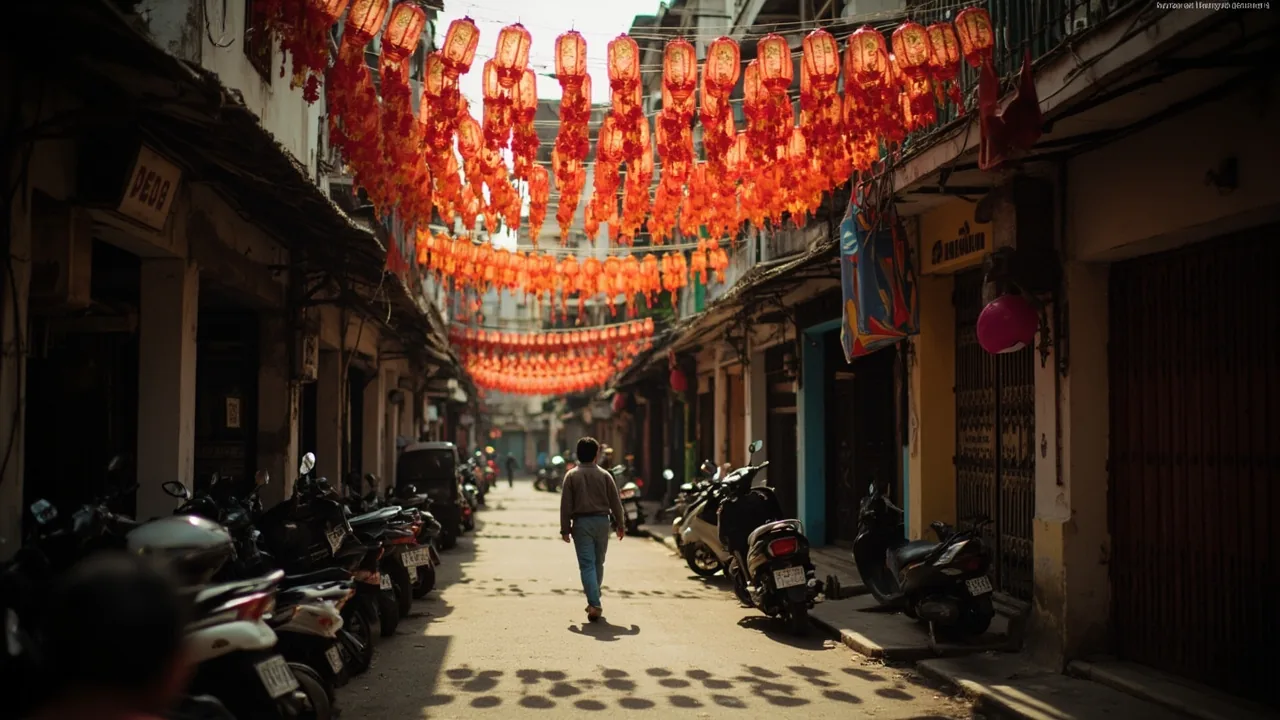
Tet Vietnam Holiday: Go or Skip (2026 Honest Guide)
This vietnam tet holiday travel guide covers the contradictions most travellers miss. Most backpackers either skip Vietnam entirely for two weeks or arrive expecting a 24/7 party. Both are wrong, and figuring out which kind of wrong matters for your wallet and your sanity. For related planning, see our guide on Sea Backpacking Hub.
If you are reading this in November or December and planning a January or February trip, this is the only Tet guide you need. If you are already booked for late January 2027, scroll down to the survival checklist.
Quick Answers
| What | Answer | Price (INR) |
|---|---|---|
| When does Tet 2026 fall? | 16-22 February (official holidays, businesses reopen 23 Feb) | Free to read |
| Do trains run during Tet? | Yes (extra services added), but sell out 4-6 weeks ahead | ₹4,420 (~1,200,000 VND or ~$45.84) Hanoi-Da Nang sleeper |
| Do buses run during Tet? | Mostly halt 28 Jan to 2 Feb (peak days), reduced outside that | ₹1,289 (~350,000 VND or ~$13.37) Hanoi-Sapa |
| Do hostels stay open? | Foreigner-oriented ones yes (they know backpackers come), budget guesthouses often close | ₹737 (~200,000 VND or ~$7.64) dorm bed/night |
| Is street food available? | Yes, even on New Year’s Eve, but most local pho stalls close 1-3 days | ₹129 (~35,000 VND or ~$1.34) for pho |
What Tet Is (and Why Backpackers Get Confused)
Tet Nguyen Dan, the Lunar New Year, is the single biggest event on the Vietnamese calendar. It is not a public holiday in the way Diwali is in India (a few days off, then life resumes). Tet is more like a full-system shutdown. Families travel home, businesses close, and the country hits pause for about a week. In 2026, the official public holiday runs 16-22 February, but in practice the quiet period stretches from roughly 28 January (the day everyone starts leaving the cities) to 5-7 February (the day everyone is back at work and complaining about it).
The thing backpackers misunderstand is the rhythm. There are three distinct phases:
- Pre-Tet rush (late January): Cities get chaotic. Markets are packed. People are buying kumquat trees, peach blossoms, and enough bánh chưng (square sticky rice cakes) to feed an army. Prices on transport out of the cities spike.
- New Year’s Eve and Day 1-3 (around 16-19 Feb): The country goes silent. Hanoi and Ho Chi Minh City feel almost deserted. Shops shuttered, streets empty, the only noise is fireworks and lions drums in front of whatever shops are open.
- Post-Tet reopening (from 23 Feb onwards): Things come back online, but slowly. The first day back is famously sluggish because everyone has a hangover and no one wants to be at work.
The Tet festival traditions and customs you will see woven through this: ancestral altars set up in every home and shop, red and gold decorations on doorways, li xi (lucky money in red envelopes) handed to children, fireworks over the Han River in Da Nang and Hoan Kiem Lake in Hanoi (the Da Nang fireworks are the bigger show, typically), flower streets like Bach Dang in HCMC turning into a rioty of marigolds and peach blossoms in the days before, and bánh chưng trays stacked in markets. If you time it right, the Bach Dang Flower Street in District 1 (HCMC) is worth a walk even if you skip everything else. It runs about a week before Tet, lights up at night, and is one of the few times locals and tourists genuinely mingle.
Month-by-Month Breakdown
Tet falls in late January or February depending on the lunar calendar. Here is how the whole season plays out for a backpacker:
| Month | Weather | Crowds | Cost Level | Verdict |
|---|---|---|---|---|
| December | Cool north (15-20°C), warm south (28-32°C) | Medium | Shoulder (₹₹) | Good time to arrive before the rush |
| Early January | Same as Dec | Low | Shoulder (₹₹) | Calm, best for slow travel |
| Mid January | Slight drizzle in north | Rising | Rising (₹₹₹) | Pre-Tet bookings starting |
| Late January | Cool, humid | high (departing locals) | Peak (₹₹₹₹) | Transport out of cities sold out |
| Early February | Cool, occasional rain | Lower | High (₹₹₹) | Locals gone, some businesses close |
| Mid February (Tet week) | Cool north, warm south | Lowest of the year | Mixed (₹₹-₹₹₹) | The famous “ghost town” week |
| Late February | Warming up | Returning | Shoulder (₹₹) | Things reopen, prices normalise |
| March | Warmer, drier | Medium-high | Shoulder (₹₹) | Sweet spot after Tet |
For context, our month-by-month Vietnam guide goes deeper on weather patterns if you are weighing other windows.
Tet Vietnam Travel: Pros and Cons
Pros:
- Hanoi and HCMC become unusually quiet, you can walk down Bui Vien or Ta Hien without playing human dodgems
- Photogenic: kumquat trees, peach blossoms, red lanterns on every storefront
- Street food that stays open during Tet is usually the best stuff (operators who bother to stay open are serious about their craft)
- Prices drop on accommodation in cities once locals leave (hostels know backpackers still come)
- You get to see a side of Vietnam tourists usually miss: the family rituals, the altars, the way the whole country shifts gear
Cons:
- Most local restaurants, convenience stores, and small businesses close for 3-7 days
- Buses between cities mostly stop running 28 Jan to 2 Feb
- Trains run but get fully booked weeks in advance, both directions
- Domestic flights are packed and expensive as everyone rushes home before Tet
- SIM card top-ups and some banking services pause
- You cannot visit certain attractions (some pagodas close, museums sometimes shorten hours)
The pros/cons block is the scannable summary. The reality: Tet week is the best time to be in Vietnam if you are the kind of traveller who likes stillness, empty cafes, and slow mornings. It is the worst time if you planned a chaotic two-week sprint hitting Hanoi, HCMC, Da Nang, and Sapa. The transport math does not work. Between 28 January and 2 February, buses vanish, and trains cost more because demand spikes. The sweet spot for a backpacker who wants Tet vibes but still functional logistics is to arrive in Vietnam in early January, settle in somewhere, and just stay put through Tet rather than trying to move around during the shutdown.
Where to Stay During Tet
Tet is one of those times where the big foreigner-oriented hostels stay open specifically because they know backpackers still come. Booking ahead is still wise, but you won’t get locked out the way you would at a budget guesthouse. Here is where to look:
| Hostel | City | Vibe | Dorm/Night | Book |
|---|---|---|---|---|
| Little Charm Hanoi Hostel | Hanoi | Old Quarter, social, rooftop bar | ₹921 (~250,000 VND or ~$9.55) | Check prices |
| The Common Room Project | HCMC | District 1, design-led, coworking | ₹1,031 (~280,000 VND or ~$10.70) | Check prices |
| Tribee Bana Hostel | Da Nang | Beach-adjacent, quieter | ₹737 (~200,000 VND or ~$7.64) | Check prices |
| Funtastic Da Nang Hostel | Da Nang | Riverside, party-leaning | ₹810 (~220,000 VND or ~$8.40) | Check prices |
| Sapa Unique Hostel | Sapa | Mountain views, ethnic minority tours | ₹663 (~180,000 VND or ~$6.88) | Check prices |
Subodh’s Pro Tip: Da Nang is the sleeper pick for Tet. Most locals have gone home to other provinces, the beach is empty, the Han River fireworks show is one of the biggest in the country, and the foreigner-oriented hostels stay open. You get the cultural experience without the dead-city vibe.
How to Get Around During Tet
This is the section most Tet guides skip. Trains and buses during Tet are not “reduced,” they are a specific pattern you need to plan around.
Trains: Vietnam Railways adds extra services in the week before Tet and the week after. They sell out fast. For Hanoi to Da Nang, the most popular sleeper route, book at least 4-6 weeks ahead for Tet week. For Hanoi to Sapa (the overnight train to Lao Cai), same story. For a deeper look at Tet timing in the calendar, our visiting Vietnam in February guide breaks down what to expect that month. Booking opens 60 days before departure. Tickets on the official dsvn.vn site or via 12go for Hanoi-Da Nang or 12go for the Sapa route. For a sense of how Tet fits into the wider Vietnam calendar, see our visiting Vietnam in March guide on the post-Tet sweet spot.
Buses: Long-distance buses mostly halt around 28 January and resume around 2 February. Some operators run skeleton services on the worst-affected days. If you must travel by bus, expect to take whatever is available, the comfortable sleeper buses are the first to stop. Open-tour bus routes (the tourist-oriented ones) usually run reduced schedules but do operate during Tet week.
Flights: Domestic flights are the worst option during Tet for budget travellers. Prices triple, every seat is taken by Vietnamese flying home, and even paying premium does not guarantee you get on. Avoid if possible.
Motorbikes: Renting a bike and riding yourself is a solid Tet option if the weather holds. Roads are empty (everyone else is at home eating bánh chưng), petrol stations stay open, and you can move between cities on your own schedule. Just check weather forecasts daily.
For more on transport patterns across the year, our Vietnam by month guide covers the full picture.
What to Pack for Tet Travel
Tet falls in winter for northern Vietnam, so pack for two seasons in one trip:
- Light jacket or hoodie for Hanoi and Sapa nights (10-15°C, can drop to 8°C in the mountains)
- Rain jacket or compact umbrella for the drizzle common in Feb
- Long pants if you plan to visit pagodas (dress code required, knees and shoulders covered)
- Red or bright item of clothing (optional, but Tet is about red and gold, locals appreciate the effort)
- Small gifts from India if you are staying with a homestay family during Tet (chocolates, tea, anything wrapped nicely)
- Cash in VND (ATMs run out fast in the days before Tet as everyone withdraws for li xi and shopping)
- Power bank (some shops close, fewer charging spots)
- Printout of your hostel booking (WiFi can be patchy, paper is reliable)
Season Costs Comparison
Tet is unusual: some things get more expensive, some get cheaper. Here is the breakdown:
| Item | Pre-Tet Rush (late Jan) | Tet Week (16-22 Feb) | Post-Tet Normal (March) |
|---|---|---|---|
| Flight from India | ₹32,000 (~$331.67) | ₹38,000 (~$393.86) | ₹22,000 (~$228.02) |
| Domestic flight (Vietnam) | ₹12,890 (~3,500,000 VND or ~$133.71) | ₹16,574 (~4,500,000 VND or ~$171.92) | ₹6,629 (~1,800,000 VND or ~$68.77) |
| Train sleeper (Hanoi-Da Nang) | ₹5,524 (~1,500,000 VND or ~$57.31) | ₹6,629 (~1,800,000 VND or ~$68.77) | ₹4,051 (~1,100,000 VND or ~$42.02) |
| Long-distance bus | ₹1,473 (~400,000 VND or ~$15.28) | Mostly not running | ₹1,289 (~350,000 VND or ~$13.37) |
| Dorm bed (city centre) | ₹1,031 (~280,000 VND or ~$10.70) | ₹737 (~200,000 VND or ~$7.64) | ₹810 (~220,000 VND or ~$8.40) |
| Private room | ₹2,210 (~600,000 VND or ~$22.92) | ₹1,657 (~450,000 VND or ~$17.19) | ₹1,842 (~500,000 VND or ~$19.10) |
| Bowl of pho | ₹147 (~40,000 VND or ~$1.53) | ₹184 (~50,000 VND or ~$1.91) | ₹129 (~35,000 VND or ~$1.34) |
| Beer (bia hơi, fresh draft) | ₹55 (~15,000 VND or ~$0.57) | ₹74 (~20,000 VND or ~$0.76) | ₹44 (~12,000 VND or ~$0.46) |
The pattern is clear: dorm beds and private rooms get cheaper during Tet week because locals have gone home and hostels drop rates to attract remaining foreign travellers. Flights and trains get more expensive because demand is through the roof. Budget your fixed costs (accommodation, food) knowing they will dip, and your transport costs knowing they will spike.
Tet Dos and Don’ts (Cultural Stuff That Matters)
- Do wish people “Chúc Mừng Năm Mới” (Happy New Year) if they wish you first. It is the equivalent of “Happy Diwali” back home.
- Don’t sweep the house on New Year’s Day. Sweeping is believed to sweep the luck out.
- Don’t wear all black or white to a Tet gathering. Red, yellow, pink are festive colours.
- Do give li xi (lucky money) to children if you are staying with a family, even small amounts. ₹74-₹184 (~20,000-50,000 VND or ~$0.76-$1.91) notes in a red envelope are the norm.
- Don’t visit someone’s home without an invitation during Tet. The first three days are strictly family time.
- Do accept food and drinks when offered. Refusing is considered rude.
- Don’t take photos of ancestor altars in private homes without asking.
- Do visit a pagoda on the first or second day of the new year. It is one of the main Tet traditions and locals do it in huge numbers. Tran Quoc Pagoda in Hanoi and Linh Ung Pagoda in Da Nang are the most-visited.
What to Do During Tet If You Stay
The whole country does not shut, just most of it. Here is what stays running and what is worth doing:
- Flower streets: Bach Dang in HCMC (District 1, along the Saigon River) is the headline one. Nguyen Hue Walking Street gets a flower street setup too. Both run about a week before Tet and are free.
- Pagodas: Most open on the first three days of the new year, with crowds. Tran Quoc (Hanoi), Linh Ung (Da Nang), and the Jade Emperor Pagoda (HCMC) are the go-tos.
- Tet markets: Pre-Tet markets in the days before are the real cultural experience. The ones around Hoan Kiem Lake in Hanoi and Cho Lon in HCMC are the best. They run until about 28-30 January.
- Fireworks: Major cities do official fireworks on New Year’s Eve. Da Nang over the Han River is the most spectacular, free, and visible from the riverside.
- Beaches: Empty during Tet week. Da Nang, Nha Trang, Mui Ne all function as ghost towns of their summer selves. Great if you want peace.
- Cafés: Foreigner-oriented and tourist-area cafes stay open. Local coffee shops often close for 1-3 days.
If you are flying into the country right before Tet, our February weather guide has the temperature and rain breakdown.
Getting Connected
SIM cards work fine during Tet but the official Viettel/Mobifone stores may close 1-2 days. Buy your SIM at the airport on arrival (the kiosks stay open even during Tet), or grab an eSIM before you land. The eSIM option means you arrive connected, which matters because Tet week is exactly when you need Google Maps and Grab the most, with closed shops and shifted routes. Get Nomad eSIM before departure if you want zero hassle.
Safety During Tet
Vietnam is one of the safer Southeast Asian countries for travellers, but Tet week has its own patterns worth knowing:
- Petty theft rises slightly in tourist areas during Tet week because pickpockets know foreign travellers carry extra cash for li xi and gifts.
- Drink spiking incidents at Tet parties are reported by travellers every year. Stick to bottled beer, watch your glass.
- Road safety is better during Tet week because there are far fewer motorbikes on the road. Crossings get easier.
- Drink driving spikes after Tet as people celebrate. Avoid motorbike rentals on New Year’s Eve and Day 1.
- Tensions in border regions: Check the Indian MEA travel advisory at mea.gov.in and Vietnam’s own government advisory site for current conditions before departure.
Safety Alert: If you are considering a motorbike trip during Tet, double-check your travel insurance covers riding. Most standard policies exclude motorbike incidents above 50cc, and Tet week is the worst time to be underinsured because hospitals are on skeleton staff.
FAQ
Is it a bad idea to travel to Vietnam during Tet?
Not bad, just different. The cities go quiet, most local businesses close for 3-7 days, and transport between cities gets harder. If you plan around the shutdown, arrive early, settle in, and accept that you cannot do a fast-paced multi-city sprint, Tet can be a genuinely rewarding time to be here. If you want the full backpacker circuit running at full speed, come in March or November instead.
Do buses still run during Tet in Vietnam?
Long-distance buses mostly halt around 28 January (the day before the pre-Tet rush peaks) and resume around 2 February. Open-tour bus companies usually run reduced schedules. The bus network is not reliable during the worst of Tet, plan your intercity travel for before 25 January or after 5 February.
Can I get a SIM card during Tet?
Yes. Airport SIM kiosks stay open even on New Year’s Day. Viettel, Mobifone, and Vinaphone all have airport counters at Noi Bai (Hanoi) and Tan Son Nhat (HCMC). Official store top-ups may pause for 1-2 days during the peak of Tet, but the SIM itself works through the holiday.
What should I not do during Tet in Vietnam?
Don’t sweep the house on New Year’s Day, don’t wear all black to gatherings, don’t visit homes without an invitation on the first three days, don’t take photos of private ancestor altars without asking, and don’t argue about money or business during Tet week. Vietnamese take the “no quarrelling” rule seriously.
Is food available during Tet?
Yes, but reduced. Foreigner-oriented restaurants, big hotels, and chains stay open. Local pho stalls and small eateries close 1-3 days. The places that do stay open are usually the best in town because they have to compete for the tiny pool of customers. Stock up on snacks and water before Tet week starts.
Where can I see Tet celebrations as a tourist?
Bach Dang Flower Street in HCMC is the headline pre-Tet attraction (runs the week before). Da Nang’s Han River fireworks on New Year’s Eve are the biggest free show. Pagodas like Tran Quoc (Hanoi) and Linh Ung (Da Nang) are packed on the first three days and worth joining the crowd for.
How much cash should I carry during Tet?
More than usual. ATMs run out in the days before Tet as everyone withdraws for li xi and shopping. Carry at least ₹5,524-₹7,366 (~1,500,000-2,000,000 VND or ~$57.31-$76.41) in cash through Tet week, more if you are staying with a family and want to give li xi to children.
Subodh’s Take
Here is my honest read: Tet is the most overhyped and underappreciated week on the Vietnam backpacking calendar. Most travellers skip it for fear of a dead country, then regret it later when they hear about the empty beaches, the free fireworks, and the flower streets. The trick is to stop trying to backpack during Tet and start trying to be somewhere during Tet. Pick one city, book a hostel with a good common area, accept that your two-week sprint is now a three-week slow stay, and lean into the quiet. You will eat better than you think, spend less than you expected, and see a version of Vietnam that tourists who whiz through in March never see. Just book the train out before 25 January or after 5 February. The 28 January to 2 February window is when you stay put.
