Vietnam in February Weather: Is It Good? Honest Month-by-Month Breakdown
February in Vietnam is a tale of three different countries stacked into one. The south is high dry season, beach-perfect, packed with international visitors chasing the sun. The north is cold, foggy, and quiet, the kind of cold that surprises Indians who packed only for tropical weather. The centre is the awkward middle: warming up but still catching the tail end of the northeast monsoon, with wet days in Hoi An and Da Nang right when you thought you were safe. And then there is Tet. Planning the wider region? Our Southeast Asia backpacking hub covers the full multi-country route.
Tet, the Lunar New Year, usually falls in late January or mid-February. In 2026 it lands on 17 February, which means the second half of the month is a moving country. Shops close, buses run reduced schedules, hostels triple their prices, and streets empty out as everyone goes home to family. If you are planning a February trip, the first decision is: do you want to be in Vietnam during Tet, or do you want to dodge it entirely? This guide, cross-checked with Vietnam’s National Centre for Hydro-Meteorological Forecasting data and traveller reports from January-February 2026, walks you through every region so you can pick the right week and pack the right bag.
Quick Answers
| What | Answer | Price (INR) |
|---|---|---|
| Is February a good month to visit Vietnam? | Yes for south and central highlands, mixed for north, avoid Tet week | ₹0 |
| Average temperature in Hanoi in February | 14-20°C, can drop to 10°C at night | ₹0 |
| Average temperature in Ho Chi Minh City in February | 26-33°C, dry and sunny | ₹0 |
| When is Tet (Lunar New Year) 2026? | 17 February; 15-22 Feb is the chaos window | ₹0 |
| Dorm bed in Hoi An in February (Tet week) | 250,000-400,000 VND/night | ~₹920-₹1,480 (~$9.54-$15.35) |
Prices verified against current hostel booking platforms on 2026-07-17. 1 INR ≈ 270 VND at current rates.
Month-by-Month Breakdown for Vietnam in February (and Adjacent Months for Context)
Vietnam’s weather does not flip cleanly at the calendar’s edge, so here is the full window you’ll be weighing your trip against.
| Month | Weather | Crowds | Cost Level | Verdict |
|---|---|---|---|---|
| November | Dry north, wet south fading | Medium | Shoulder (₹₹) | Great across the board |
| December | Cool north, dry south starting | Medium-high | Shoulder (₹₹) | One of the best months |
| January | Cold north (10-18°C), dry south | High in south | Peak (₹₹₹) | Tet prep begins, book early |
| February (1-15) | Cold north, dry south, central warming | High | Peak (₹₹₹) | Best window for south and central highlands |
| February (16-28) | Tet week, country partly shuts | low (Tet exodus) | Spikes on what’s open | Avoid if possible, or join the festival |
| March | Warm north, dry south, central dry | Rising fast | Peak (₹₹₹) | Excellent across all regions |
| April | Hot everywhere (35°C+ central) | High | Peak (₹₹₹) | Hue gets hottest, avoid midday |
The honest read: If your dates are locked to mid-February because of Indian school holidays or office leave, target the first 10 days and book everything 6-8 weeks ahead. If your dates are flexible, March is objectively the better month, with all three regions behaving well and no Tet disruption. The peak February weeks (especially 8-14 Feb 2026) see flight prices from Delhi and Mumbai running ₹28,000-₹35,000 (~$290.45-$363.06) round trip, compared to ₹18,000-₹22,000 (~$186.71-$228.21) in early February or mid-March.
Regional Weather Breakdown: What February Looks Like
Northern Vietnam (Hanoi, Ha Long Bay, Sapa, Ninh Binh)
February is the coldest month in northern Vietnam, and the cold is damp, not crisp. Hanoi sits at 14-20°C during the day and drops to 10-13°C at night, with a fine mist that locals call “nồm ẩm.” Sapa, Ha Giang, and other highland spots can dip to 5°C at night and sometimes see frost. This is genuinely cold weather for anyone used to Indian winters, and the lack of central heating in most hostels and budget hotels makes it feel colder than the thermometer says.
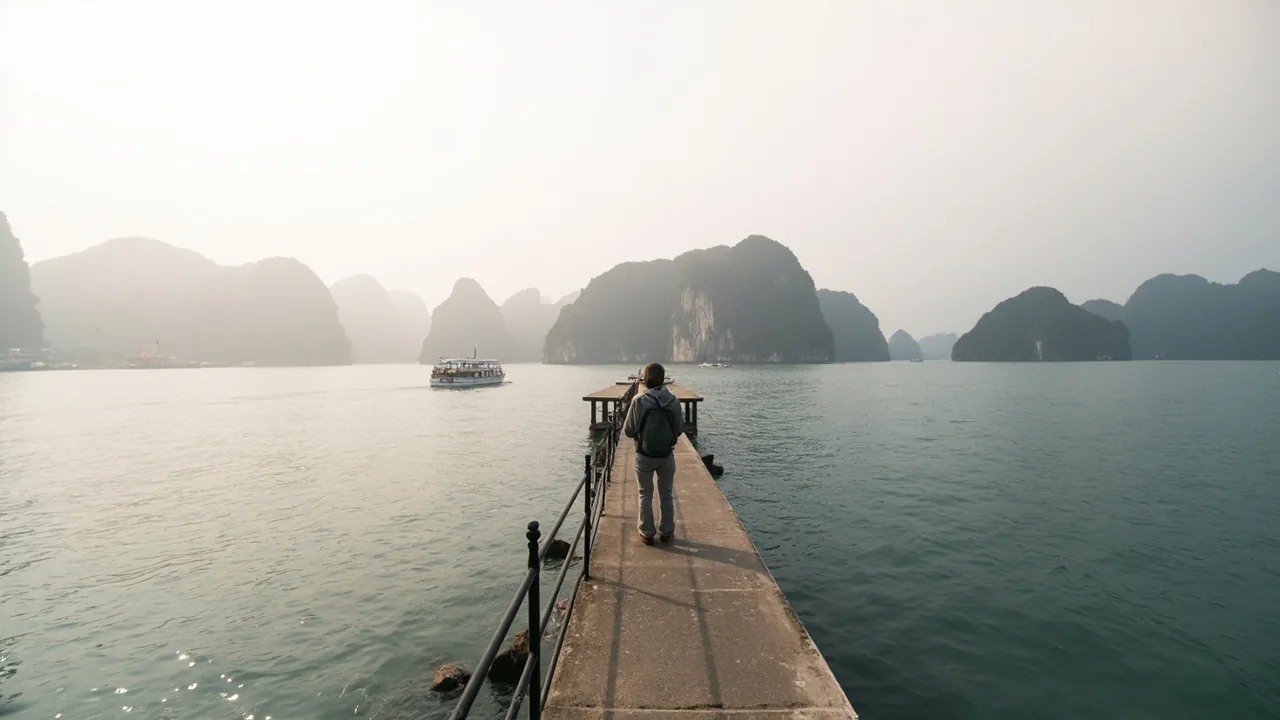
Rain is light in February, mostly drizzle and grey skies. You will get 4-6 sunny days out of 28. Ha Long Bay is famously foggy this month, and tour operators sometimes cancel cruises for low visibility. Travellers report that the Ha Long Bay day tours from Hanoi run only on the days the bay clears, so build buffer days into your itinerary.
Subodh’s Pro Tip: If you are heading to Sapa or Ha Giang in February, pack a real fleece and a windproof shell. The Instagram photos of misty rice terraces are beautiful, but standing on a viewpoint at 7°C with no shelter is genuinely miserable if you only brought a thin hoodie.
Central Vietnam (Da Nang, Hoi An, Hue, Nha Trang)
February is the tricky middle for central Vietnam. The northeast monsoon is weakening but has not fully retreated. Da Nang and Hoi An still see 8-12 rainy days in February, often as cold, persistent drizzle that can last half a day. Temperatures are pleasant at 19-24°C, but humidity runs 75-85% so it feels stickier than the number suggests.
Hue is rainier than Da Nang, with the Perfume River sometimes flooding the low-lying backpacker areas. Nha Trang sits on the weather borderline and gets more sun than Hoi An, averaging 5-7 rainy days in February, making it the better central-coast pick if you want beach time without flying south. For an Indian traveler asking whether they should do central Vietnam in February: yes, but plan indoor backup days in Hoi An (tailoring, cooking class, cafés) and accept that your beach day might be a rainy one. Check the Hue weather and typhoon guide for the flood-risk angle before booking riverside hostels.
Southern Vietnam (Ho Chi Minh City, Mekong Delta, Phu Quoc, Mui Ne)
February is peak season in the south, and for good reason. Ho Chi Minh City sits at 26-33°C with low humidity (60-70%), almost no rain, and clear skies. Phu Quoc and the Mekong Delta are dry and sunny. Mui Ne has its best beach weather of the year. This is the Vietnam you see in the tourism photos.
The catch: everyone knows the south is perfect in February, so prices are at their highest and the popular spots are crowded. Dorm beds in District 1 of HCMC run ₹921-₹1,473 (~250,000-400,000 VND or ~$9.55-$15.28) on peak February dates. Phu Quoc resorts are booked out by Russians, Koreans, and Western families months ahead.
Subodh’s Safety Alert: February in southern Vietnam is hot and sunny, but UV is brutal. Reef-safe sunscreen (50+ SPF) is non-negotiable for Phu Quoc and Mui Ne. Indian travelers used to softer northern sun often underestimate this and end up with burns by day two.
Central Highlands (Da Lat, Buon Ma Thuot, Kon Tum)
Da Lat in February is one of Vietnam’s best-kept secrets for Indian travelers. Temperatures sit at 15-22°C, dry season is in full swing, the pine forests are walkable, and you will find almost no tourists compared to the coastal cities. For anyone tired of the backpacker circuit and wanting cool weather, cheap dorms (₹663-₹1,105 (~180,000-300,000 VND or ~$6.88-$11.46)), and excellent Vietnamese vegetarian food, Da Lat in February punches above its weight. Check the Da Lat weather by month guide for the full picture.
February 2026: Tet Timing and What It Means
Tet (Tết Nguyên Đán) falls on 17 February 2026. The chaos window is roughly 15-22 February, with businesses shutting anywhere from 3 days before to 5 days after. Here is what changes in practice:
- Most local restaurants, shops, and cafes close. The famous banh mi stalls, the family-run pho shops, half the hostels in tourist areas. Many close for the entire week.
- Tourist-oriented businesses stay open but triple prices. Think ₹1,473-₹2,210 (~400,000-600,000 VND or ~$15.28-$22.92) for a dorm bed that costs ₹663 (~180,000 VND or ~$6.88) in normal February. Trips to Ha Long Bay, Phong Nha, and Sapa run at Tet-surcharge rates.
- Transport gets weird. Domestic flights sell out 2-3 weeks ahead and prices spike (Hanoi to Da Nang can hit ₹12,890 (~3,500,000 VND or ~$133.71) one way). Trains book solid. Buses run reduced schedules and many routes have no service 16-19 February.
- Streets empty out. Hanoi and HCMC feel post-apocalyptic on Tet Day 1-3, then erupt with celebrations on Day 4-5 (flower festivals, lion dances, night markets).
My honest take: If this is your one and only Vietnam trip and your dates are fixed to mid-February, do not fight Tet. Instead, book the major tourist cities (Hanoi, HCMC, Hoi An) 8 weeks ahead, stay in mid-range hotels that have Tet packages, and treat Tet itself as a cultural experience. You will see flower markets, lion dances, and bánh chưng being made on sidewalks. It is genuinely one of the most interesting times to be in Vietnam. Just accept that your “backpacking” trip will cost 30-50% more than it would in March.
If you can shift dates even by a week, choose 1-10 February (pre-Tet) or 25 February onward. You get normal prices, full services, and decent weather everywhere except the far north.
[February] Pros and Cons
Pros:
- Southern Vietnam is at its absolute best: dry, sunny, 32°C days
- Da Lat and central highlands are cool and crowd-free
- Tet is a once-in-a-lifetime cultural experience if you lean into it
- Fewer domestic tourists (most Vietnamese travel internationally in February, freeing up spots)
- Tet decorations and flower markets in cities like Hanoi and HCMC are photogenic
Cons:
- Northern Vietnam is genuinely cold and foggy, especially Sapa and Ha Giang
- Hoi An and Da Nang still get rain 8-12 days of the month
- Tet week (15-22 Feb 2026) means closed shops, reduced transport, and inflated hostel prices
- Flights from India to Vietnam peak at ₹32,000-₹38,000 (~$331.94-$394.18) round trip in early Feb
- Cruise cancellations common in Ha Long Bay due to fog
- Tet surcharge on tours and activities adds 20-40% on top of normal rates
On the ground: The price spike is real. A dorm bed that costs ₹663 (~180,000 VND or ~$6.88) in November jumps to ₹1,289 (~350,000 VND or ~$13.37) in early February and 500,000+ VND during Tet week. A bus from Hanoi to Sapa runs ₹921 (~250,000 VND or ~$9.55) normally but hits ₹1,473 (~400,000 VND or ~$15.28) in peak February with Tet surcharge. Flight surcharges apply on Vietnam Airlines and VietJet for travel within the 10-25 February window. Plan your budget assuming 25-40% premium over what you would pay in late March or October.
What to Pack Specifically for February
February in Vietnam is a layering problem because the country stretches 1,650 km from north to south and the climate varies accordingly. Packing for a full north-to-south trip requires more thought than any other month.
For northern Vietnam (Hanoi, Sapa, Ha Giang, Ninh Binh):
- Fleece or warm hoodie (night temperatures drop to 10-13°C in Hanoi, 5°C in Sapa)
- Light rain jacket for drizzly days
- Closed shoes, not sandals, for cobblestone streets and cold
- Scarf for foggy Ha Long Bay cruises
- Layers you can peel off indoors (cafes and restaurants are warm)
For central Vietnam (Da Nang, Hoi An, Hue):
- Light rain jacket (8-12 rainy days expected)
- Quick-dry trousers for damp days
- One warmer layer for Hue evenings (drops to 17-19°C)
- Compact umbrella
For southern Vietnam (HCMC, Phu Quoc, Mui Ne):
- Light cotton and linen only
- High-SPF reef-safe sunscreen
- Sunglasses and a hat
- Swimwear
- One light long-sleeve for air-conditioned restaurants (sometimes set to 18°C)
Universal items:
- Power adapter (Vietnam uses Type A, C, and D plugs)
- Lightweight daypack
- Sandals (thongs or jandals)
- Flip-flops for hostel showers
Season Costs Comparison: Vietnam in February vs Shoulder vs Monsoon
| Item | Peak (Feb) | Shoulder (Mar/Apr) | Low (Aug-Sep) |
|---|---|---|---|
| Flight from India (round trip) | ₹32,000 (~$331.94) | ₹22,000 (~$228.21) | ₹14,000 (~$145.22) |
| Dorm bed Hanoi | ₹921 (~250,000 VND or ~$9.55) | ₹737 (~200,000 VND or ~$7.64) | ₹552 (~150,000 VND or ~$5.73) |
| Dorm bed Hoi An | ₹1,105 (~300,000 VND or ~$11.46) | ₹810 (~220,000 VND or ~$8.40) | ₹479 (~130,000 VND or ~$4.97) |
| Dorm bed HCMC | ₹1,289 (~350,000 VND or ~$13.37) | ₹921 (~250,000 VND or ~$9.55) | ₹663 (~180,000 VND or ~$6.88) |
| Dorm bed Da Nang | ₹1,031 (~280,000 VND or ~$10.70) | ₹737 (~200,000 VND or ~$7.64) | ₹552 (~150,000 VND or ~$5.73) |
| Ha Long Bay day tour | ₹3,499 (~950,000 VND or ~$36.29) | ₹2,762 (~750,000 VND or ~$28.65) | ₹2,210 (~600,000 VND or ~$22.92) |
| Hoi An cooking class | 750,000 VND | 600,000 VND | 450,000 VND |
1 INR ≈ 270 VND at current rates (verified 2026-07-17). Prices are typical mid-range rates; Tet-week surcharges add 30-50% on top of peak numbers.
Getting Connected
You’ll want reliable data for checking weather radar, Grab app, and translation during February travel. A physical SIM from Viettel or Mobifone at the airport costs around ₹737 (~200,000 VND or ~$7.64) for 30 days with 3-5 GB/day. For those who prefer to skip the airport kiosk queue, Get Nomad eSIM gets you data on landing with no SIM-swap hassle, which is helpful when navigating Tet-week transport disruptions and last-minute hostel changes.
What to Eat in Vietnam in February
February is a strong food month across Vietnam. The Tet markets in Hanoi and HCMC sell traditional sticky-rice cakes (bánh chưng, bánh tét) and seasonal fruits like pomelo and persimmon. Here are specific spots worth your time.
In HCMC, A Taste Of Saigon - Old Market is the spot for traditional Vietnamese dishes in a vibrant market setting. A bowl of pho or a vegetarian bún riêu here is the Tet-week sanity-saver when most family shops have shut. For Indian or strict-veg eaters, this place handles the brief well.
In Hoi An, NGON DA NANG specializes in authentic Vietnamese dishes with standout plates like Bún Chả Cá and Bánh Xèo. Their rustic decor and traditional flavors make it a rainy-day rescue when the central coast weather closes in. Vegetarian options are marked.
In Hanoi, Sen Trang An Vietnamese Restaurant focuses on traditional flavors with cultural experience as the backdrop, and Hoang’s Restaurant is the vegan-friendly pick for those wanting plant-based Vietnamese. For backpackers on the Old Quarter circuit, De Tham Restaurant does both Vietnamese and vegetarian food in a casual setting, easy on the wallet.
If you are a strict-veg Indian needing a dal-chawal moment, MẸT Vietnamese Restaurant & Vegetarian Met 2 is your friend. Their vegetarian Vietnamese dishes are popular with both locals and travelers and the menu has the kind of clear veg-marking that makes ordering easy.
FAQ
Is February a good time to visit Vietnam from India?
Yes, with caveats. February is peak season in southern Vietnam (perfect weather), shoulder season in central Vietnam (some rain), and off-season in the far north (cold and foggy). If your itinerary is south-heavy, book for early February to dodge Tet chaos. If you want the whole country behaving well, March is the safer month. See the Vietnam weather by month and region guide for full context.
What is Tet and how does it affect travel in February?
Tet is the Vietnamese Lunar New Year, falling on 17 February 2026. Most local shops, restaurants, and hostels close for 5-10 days around it. Tourist-oriented businesses stay open but charge 30-50% premiums. Flights, trains, and buses book out 2-3 weeks ahead with Tet surcharges. Plan around 15-22 February by either embracing it as a cultural experience or avoiding the country entirely during that week.
Can I swim in the beach in Vietnam in February?
Only in the south. Phu Quoc, Mui Ne, and Vung Tau have warm, swimmable water at 27-28°C in February. Nha Trang is borderline (25-26°C) with some rain. Hoi An and Da Nang beaches are too cold for most Indian travelers at 22-24°C, and the water is rougher. For Mui Ne weather and jeep tours, February is one of the best months.
Is Ha Long Bay worth visiting in February?
It depends on luck. Ha Long Bay is foggy in February, and tour operators cancel 20-30% of cruises for low visibility. The days it clears are gorgeous, but you need a 2-3 day buffer in Hanoi to wait out the bad weather. If you have limited time, skip Ha Long in February and go in March or April instead. For Ninh Binh as a fog-free alternative, that works year-round.
How cold does northern Vietnam get in February?
Hanoi sits at 14-20°C during the day and drops to 10-13°C at night. Sapa and Ha Giang can hit 5°C at night, sometimes with frost. This is damp cold, not the dry cold of Delhi winters, so it feels worse than the temperature suggests. Pack a fleece and a rain jacket, and don’t expect central heating in hostels. Some Indian travelers find this pleasant (a break from north Indian summer), others find it genuinely uncomfortable. Your tolerance depends on what you are used to at home.
Should I book Vietnam flights and hostels early for February?
Yes, ideally 6-8 weeks ahead. Tet-week dates (15-22 February 2026) sell out fastest, especially trains to Sapa and sleeper buses from Hanoi to Da Nang. Flights from Delhi and Mumbai are cheapest 8-10 weeks out and spike sharply inside 4 weeks. Hostels in Hoi An and Phu Quoc for the 8-14 February window book out 6 weeks ahead. Use the Vietnam departure tax and airport guide to plan arrival logistics.
Is Vietnam safe for Indian travelers in February?
Vietnam is generally safe for Indian travelers. Petty theft (bag snatching, phone theft on scooters) is the main risk, especially in HCMC District 1. February weather can cause minor flooding in Hue and Hoi An, which is a nuisance rather than a danger if you avoid riverside budget hostels. For real-time safety updates, check the Indian Ministry of External Affairs travel advisory at mea.gov.in before departure, and register with the Indian embassy in Hanoi if traveling during Tet week.
Subodh’s Take
February is a slightly overhyped month for Vietnam. The south deserves the praise, but if you are pinning your whole trip to mid-February because of school holidays, you are paying peak prices for a country that is partly closed. My honest recommendation: book early February if you want beach time in Phu Quoc or Mui Ne, then move to the central highlands (Da Lat, Kon Tum) for the second week where the weather is perfect and the crowds are gone. Skip the Tet week entirely unless you specifically want the festival experience. March is better across the board for first-timers, but February is still a strong second choice if you pack for three climates.
