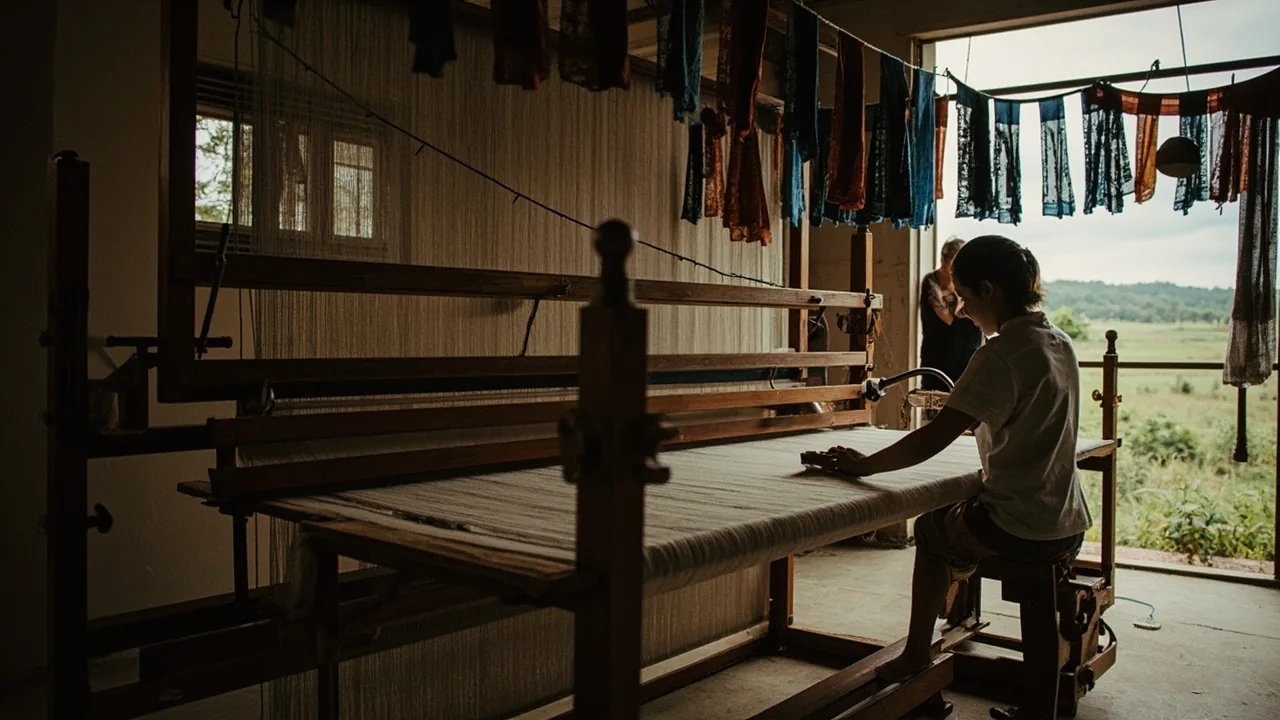
Textile Workshops Near Hanoi: A Backpacker’s Craft Guide (2026)
Textile workshops near Hanoi cluster in two distinct zones: the Red River Delta villages an hour or two west of the city, and the coastal craft hubs of Hoi An, which most backpackers reach by overnight bus or a cheap flight. Day workshops in the Delta run from ₹1,285-₹2,938 (~350,000-800,000 VND or ~$13.34-$30.49); multi-day immersives near Hoi An run ₹5,508-₹16,524 (~1,500,000-4,500,000 VND or ~$57.17-$171.52). You don’t need to book from India. Every workshop below takes walk-ins or WhatsApp bookings, and Indian travellers with vegetarian food requirements will find Hanoi easier than expected. For related planning, see our guide on Sea Backpacking Hub.
The piece below covers where the workshops are, what they teach (loom weaving, natural indigo dyeing, hemp processing), what they cost in Vietnamese dong, and how to get there from central Hanoi without a tour package. I’ve also included the Old Quarter fabric shops where you can buy linen and indigo cloth to take home, plus what to skip.
Quick Answers
| What | Answer | Price (INR) |
|---|---|---|
| Day workshop (Red River Delta) | Loom weaving + natural dye, 4 to 6 hours | ₹1,285-₹2,938 (~350,000-800,000 VND or ~$13.34-$30.49) |
| Multi-day workshop (coastal hubs) | Full immersive, 2 to 4 days | ₹5,508-₹16,524 (~1,500,000-4,500,000 VND or ~$57.17-$171.52) |
| Transport from Hanoi to coastal hubs | Sleeper bus or 1-hour flight | ₹918-₹2,938 (~250,000-800,000 VND or ~$9.53-$30.49) |
| Best time to go | October to April (dry season) | , |
| Where to buy linen in Hanoi | Old Quarter fabric street, Hang Bong | ₹289-₹1,083 (~80,000-300,000 VND or ~$3.05-$11.44)/metre |
| Language barrier | Low; most studios speak basic English | , |
| eSIM for booking on the road | Get Nomad eSIM | , |
1 INR ≈ 269 VND at the time of writing. Don’t get hung up on the rupee figure once you’re there; pay in dong and use a forex card with zero forex markup.
What Is Vietnamese Textile Craft?
Vietnamese textile craft refers to a set of hand-weaving and natural-dyeing traditions practiced in village cooperatives along the Red River Delta (north of Hanoi) and the central coast. The four main techniques backpackers can learn in a short workshop are:
- Loom weaving on a wooden frame loom (khu vực dệt thổ cẩm), producing scarves and table runners.
- Natural indigo dyeing (nhuộm chàm), using fermented leaves from the Indigofera tinctoria plant.
- Hemp processing (sợi gai), the degumming, softening, and spinning of locally grown hemp fibre.
- H’mong batik (in the northern highlands), wax-resist patterns applied with a copper tjanting tool.
Most studios near Hanoi focus on the first three. The H’mong batik tradition sits further north, around Sapa, and is a separate trip. The coastal craft hubs around Hoi An add a fifth technique, silk brocade, but at a higher price point.
Where the Workshops Are
Hanoi itself doesn’t run textile workshops inside the city centre. Every studio sits in one of three zones, and the choice of zone shapes the whole experience.
1. Red River Delta Villages (Closest to Hanoi)
These are the half-day or full-day workshops that backpackers do without leaving their Hanoi hostel. The villages sit 30 to 60 km west of the Old Quarter, in districts like Thuong Tin and My Duc.
The craft here is everyday village weaving: cotton scarves, hemp tote bags, and simple table runners. Studios are small (5 to 15 students per session), family-run, and most teach a single loom-weaving technique plus a basic natural dye session. You won’t see silk brocade or H’mong batik here. What you will see is how a Vietnamese village has woven the same patterns for 200 years, on looms that haven’t changed since the French colonial period.
This is the closest option to Hanoi and the cheapest. Most backpackers do this on a single day trip.
2. Coastal Craft Hubs (Hoi An and Beyond)
A second cluster of studios sits in the central coast, particularly around Hoi An and the surrounding countryside. Travellers report that the workshops here are more polished, with English-speaking instructors, multi-day immersives, and access to silk brocade and higher-end natural dyes. The catch: getting there from Hanoi is an overnight bus or a one-hour flight.
For backpackers already planning to visit Hoi An (most do, it’s one of Vietnam’s highlights), this is where the deeper workshops happen. For backpackers who only have a week in Vietnam and want to stay Hanoi-focused, this is a separate trip, not a day excursion.
3. Northern Highlands (Sapa, Bac Ha)
The H’mong, Dao, and Tay ethnic minority communities around Sapa run textile workshops as part of homestay stays. The craft here is more distinctive (geometric H’mong patterns, indigo-dyed hemp) but the trip is a 6 to 8 hour sleeper train or a 5 to 6 hour bus from Hanoi, so it’s a 2 to 3 day commitment, not a half-day add-on.
If you’re heading to Sapa anyway, the textile workshops there are some of the best in the country. If you’re not, this guide won’t go deep on Sapa workshops, that’s a separate article.
Step-by-Step: How to Book a Textile Workshop Near Hanoi
Step 1: Decide Your Zone
- Half-day available, no extra transport: Red River Delta villages.
- Already going to Hoi An: coastal craft hubs.
- Heading to Sapa: northern highlands.
This guide focuses on the first two, since the Sapa route is a separate trip.
Step 2: Book Direct (Skip the Tour Platforms for Delta Workshops)
For Red River Delta workshops, don’t book through GetYourGuide or Klook. The studios are small, family-run operations, and the online platforms add a 20 to 30% markup. Instead:
- Find the studio on Instagram (search “Hanoi weaving workshop” or “Red River Delta textile”)
- Send a WhatsApp message (most studios list a +84 number)
- Confirm: date, number of people, pickup point in the Old Quarter, food included (yes/no)
- Pay a 30% deposit via bank transfer or cash on arrival
For coastal hubs (Hoi An), you can book through GetYourGuide if you want a packaged experience, or direct via the studio’s website. Both work. See textile workshops near Hanoi tours on GetYourGuide if you prefer one consolidated booking.
Step 3: Sort Transport
For Delta workshops: most studios offer pickup from the Old Quarter for an extra ₹734-₹1,469 (~200,000-400,000 VND or ~$7.62-$15.25) round trip. Worth it if you’re not confident navigating the public bus system.
For coastal hubs: sleeper bus from Hanoi to Hoi An runs ₹918-₹1,836 (~250,000-500,000 VND or ~$9.53-$19.06) and takes 12 to 14 hours. Flight is 1 hour and runs ₹1,836-₹5,508 (~500,000-1,500,000 VND or ~$19.06-$57.17) on VietJet or Bamboo. Book on 12go for both options.
Step 4: Tell Them You’re Vegetarian
This is the part most Western guides skip. Vietnamese village cooking often centres on pork or fish sauce. If you’re vegetarian (and many Indian travellers are, for cultural or religious reasons), tell the studio when you book. The good ones will adjust. The bad ones will serve you rice and stir-fried greens.
Most Red River Delta studios now have a veg option because they’ve hosted enough Indian travellers. The coastal hubs in Hoi An have Indian restaurants within walking distance as backup, including MẸT Vietnamese Restaurant & Vegetarian Met 2, which serves a full vegetarian Vietnamese menu.
Step 5: Bring the Right Stuff
Pack for the workshop:
- Clothes that can get stained (indigo dye doesn’t fully come out of light fabrics)
- Closed-toe shoes (the looms have heavy wooden foot pedals)
- A notebook (you’ll want to sketch the patterns)
- Cash in dong (some studios don’t take card)
For the broader Vietnam trip beyond the workshop, see our packing list for Southeast Asia.
Common Mistakes Indians Make
Mistake 1: Assuming “Hanoi workshop” means inside Hanoi
Most textile studios are 30 to 60 km outside the city. A “Hanoi textile workshop” listing usually includes a 1 to 2 hour minivan ride each way. Budget the time.
Mistake 2: Booking a Hoi An workshop without planning the trip
The best coastal workshops are in Hoi An, but Hanoi to Hoi An is either an overnight bus or a flight. If you only have 4 days in Vietnam and want to spend it in Hanoi, don’t book a Hoi An workshop. You’ll spend half your trip in transit.
Mistake 3: Not telling the studio about dietary restrictions until you arrive
By then, the day’s meal is already prepped and you’re stuck with rice and a single veg side. Mention it at booking.
Mistake 4: Buying “handwoven” scarves in the Old Quarter without checking
Hanoi Old Quarter fabric shops sell a mix of genuine handwoven and machine-made scarves. The genuine ones are heavier, have small irregularities in the weave, and cost 200,000+ VND. The machine-made ones are lighter, perfectly even, and cost ₹184-₹367 (~50,000-100,000 VND or ~$1.91-$3.81). Both look similar at a glance. Check the back of the fabric: handwoven has visible thread irregularities; machine-made is uniform.
Mistake 5: Paying in dollars instead of dong
Some studios quote prices in USD (especially the coastal ones catering to Western tourists). Always ask for the dong price. You almost always get a better rate paying in local currency. For broader money-handling tips, see our guide on carrying money from India abroad.
What Most Guides Don’t Tell You
1. The Indigo Dye Will Stain Your Bag
Even careful dyers end up with blue-stained hands and a faint blue tinge on whatever bag they brought. Bring a bag you don’t mind getting marked, or wrap your everyday bag in a plastic cover before the dye session.
2. The Workshops Run Mornings Only
Most village studios close by 3 PM because the artisans have other work (farming, family). If you book a “full-day” workshop, expect to be back in Hanoi by 5 PM, not 8 PM.
3. The Quality Gap Between Studios Is Huge
The Red River Delta has dozens of “weaving workshop” listings, and roughly a third of them are tourist traps: a single loom in a touristy restaurant, one instructor who speaks five words of English, and a 90-minute “workshop” that’s a sales pitch for the on-site shop. Look for studios with at least 20 Google reviews averaging 4.5+ stars, and check that the instructor’s name is listed (real studios credit their master weaver; tourist traps don’t).
4. The Coastal Hubs Are Better in Rainy Season
Counter-intuitively, the Hoi An craft studios do some of their best work during the October to December rainy season, because the humidity helps the natural dyes set more evenly. Travellers report that autumn workshop pieces have noticeably richer colour. Dry season (February to April) is more pleasant weather but the dye work is slightly less consistent.
5. You Can Commission a Custom Piece
This is the move almost no backpacker knows about. After a workshop, ask the studio if they take custom commissions. Most Red River Delta artisans will, for an extra ₹734-₹1,836 (~200,000-500,000 VND or ~$7.62-$19.06). You sketch what you want (a specific pattern, a specific colour, a specific size), they make it in 2 to 4 weeks, and you either pick it up on your way south or have it shipped to your Hanoi hotel. Useful if you want a tailored scarf or table runner as a gift.
Where to Buy Linen and Indigo Cloth in Hanoi
If you don’t want to do a workshop but still want to bring home Vietnamese textiles, three Old Quarter fabric shops are worth knowing:
Hang Bong Street (the main fabric street)
Hang Bong is Hanoi’s fabric-shopping spine. The shops here sell both finished products and cut-by-the-metre fabric. Genuine Vietnamese linen runs ₹294-₹734 (~80,000-200,000 VND or ~$3.05-$7.62) per metre; heavier handwoven cotton is ₹367-₹918 (~100,000-250,000 VND or ~$3.81-$9.53); natural indigo-dyed cloth starts at ₹551 (~150,000 VND or ~$5.72) per metre and goes up sharply with pattern complexity.
The trick on Hang Bong: walk the full street before buying. Prices vary 2 to 3x between shops for visually identical fabric, and the better shops cluster at the quieter south end of the street, away from the St Joseph’s Cathedral end.
Weekend night market (Hang Dao and surrounding streets)
Friday to Sunday nights, the Old Quarter pedestrian streets turn into a night market. Several stalls sell handwoven scarves, table runners, and hemp tote bags at tourist-friendly prices. The quality is mixed (some genuine, some imported machine-made) but the prices are negotiable and the atmosphere is good for browsing. Our Hanoi night market guide covers this in more detail.
The Hanoi Cafe (for a break, not a shop)
The Hanoi Cafe is on the Old Quarter’s edge, more useful as a coffee stop than a textile destination, but the back room sometimes stocks handwoven pieces from Red River Delta cooperatives. Worth a look if you’re passing through.
Where to Eat Between Workshops
If you’re doing a day trip to a Red River Delta village, lunch is usually included in the workshop fee. If not, or if you want a meal before/after in Hanoi:
For Vietnamese Food
- Hong Hoai’s Restaurant (rating 4.9): family-run, traditional Vietnamese, the kind of place where the menu is short because everything is fresh.
- Hello Hanoi Restaurant (rating 4.9): casual, central, reliable for pho and bun cha.
- May Hanoi Train Street Restaurant (rating 4.9): the train-street experience is its own draw, even if you’re just stopping for coffee.
For Vegetarian or Indian Food
- MẸT Vietnamese Restaurant & Vegetarian Met 2 (rating 4.9): the strongest vegetarian Vietnamese option in the Old Quarter, full menu with meat-free pho, bun, and com dishes.
- Tadka 2 Indian Restaurant Hanoi (rating 4.8): near Train Street, reviewers praise the chicken tikka masala at ₹551-₹1,102 (~150,000-300,000 VND or ~$5.72-$11.43) per person.
- Hill Top Curry Indian Restaurant (rating 4.7): near the backpacker area, chicken korma and fresh naan at ₹551-₹918 (~150,000-250,000 VND or ~$5.72-$9.53) per person.
For broader Vietnam trip planning, including how to budget per day and what to skip, see our Southeast Asia trip cost from India guide.
When to Go
The textile workshop season runs October to April (the dry season), but with two caveats:
- December and January can get cold in the Red River Delta (10 to 15°C), which makes sitting at an open-air loom uncomfortable. Pack layers.
- Tet (Vietnamese Lunar New Year, late January or early February) shuts down almost every village workshop for 1 to 2 weeks. Travellers report showing up to find locked gates. Check the calendar before booking.
For a broader cost breakdown of a Vietnam trip, see our guide on how much money you need for 5 days in Thailand (the Vietnam version applies similarly, with slightly lower prices outside Hoi An).
FAQ
Do I need to speak Vietnamese?
No. Every studio in the Red River Delta and the coastal hubs that takes foreign tourists has at least one English-speaking instructor. In the northern highlands (Sapa), English is patchier, but the homestay format means someone in the family usually speaks enough.
Can I do a textile workshop on a day trip from Hanoi?
Yes, if you book a Red River Delta workshop. The studios handle the transport from the Old Quarter, run a 4 to 6 hour session, and drop you back by 5 PM. Total time investment: 8 to 10 hours including travel.
Are the workshops suitable for beginners?
Yes. Every studio listed above takes beginners. You’ll produce something usable (a small scarf, a tote bag, a dyed piece of cloth) on your first session. Don’t expect museum-quality output, the goal is the experience and the technique, not a portfolio piece.
How long should I budget for a Hoi An workshop trip?
Minimum 2 days, ideally 3 to 4. Day 1 travel from Hanoi, Day 2 workshop, Day 3 explore Hoi An old town (separate trip), Day 4 travel onward or back to Hanoi. Trying to do a coastal workshop as a day trip from Hanoi is not realistic.
Is it worth doing both a Delta workshop and a Hoi An workshop?
Yes, if you have the time. The Delta workshops focus on village-level cotton and hemp weaving; Hoi An adds silk and more polished instruction. Travellers who did both report that the Hoi An workshops feel more professional but the Delta workshops feel more authentic.
Can kids come?
Most studios accept kids 8+, some accept younger. The looms have small moving parts and the natural dye vats are deep, so young children aren’t suitable. Check with the studio when booking.
What happens if it rains?
The Delta workshops have covered pavilions and run in light rain. Heavy rain sometimes cancels outdoor dye sessions. Studios will reschedule or refund if weather forces a full cancellation.
Subodh’s Take
Textile workshops are one of the most underrated things to do in Vietnam. Most backpackers hit Hanoi, do the food tour, see the Old Quarter, and leave without ever sitting at a loom or watching indigo dye ferment in a clay vat. That’s a miss. The craft tradition here is 1,000 years old, the studios are cheap, and the work is genuinely meditative. Book a half-day Red River Delta session on your first full day in Hanoi. If you like it, extend to Hoi An for a deeper experience. If you don’t, you’ve lost a day and ₹2,203 (~600,000 VND or ~$22.87), and you still have a small handwoven scarf to take home.
