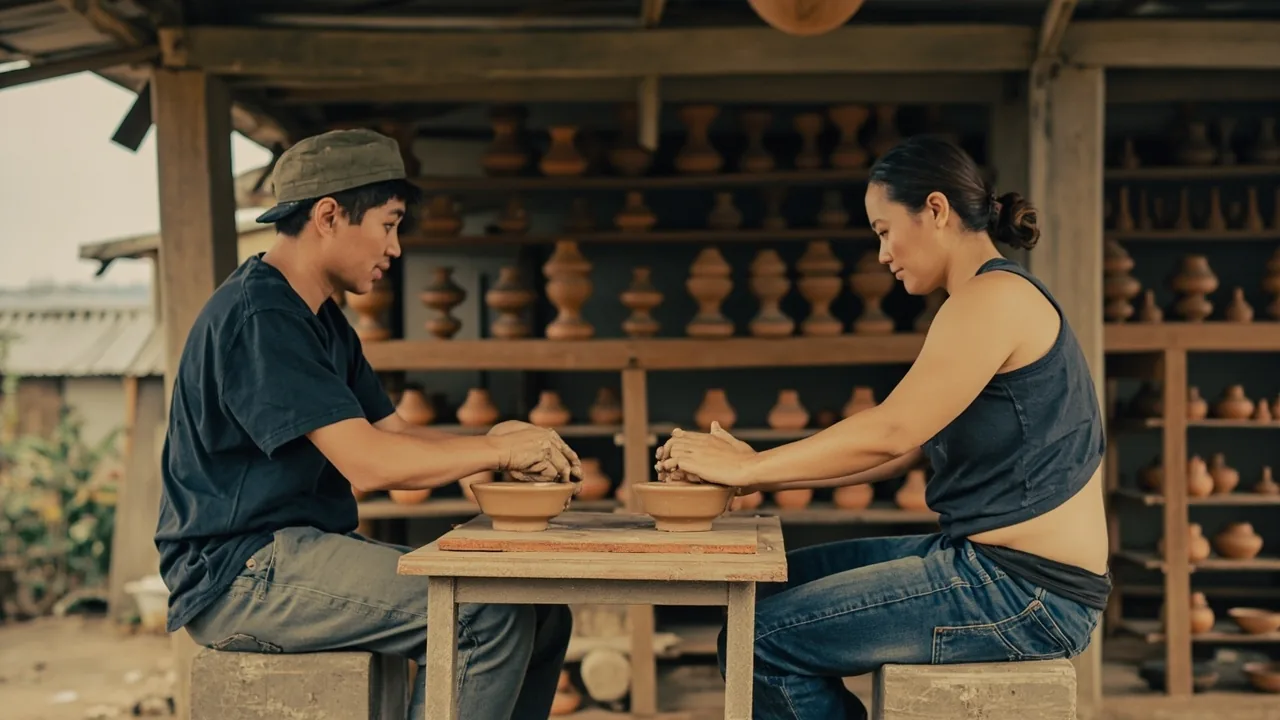
Pottery Classes in Hanoi: Sea-Adjacent Villages Worth the Trip (2026)
Yes, you can take pottery classes in Hanoi without going to Hoi An. The closest artisan village is Bat Trang, 13 km southeast of the Old Quarter. Want pottery by the sea? Coastal villages near Hai Phong are 120 km east, doable in a day. Our SEA backpacking hub covers the full route.
Verified against current GetYourGuide listings and traveller reports from June 2026. Plan your overall budget with a Southeast Asia trip cost from India breakdown so the class and day fit comfortably.
What Is Bat Trang Pottery Village?
Bat Trang is a 700-year-old ceramic craft village sitting on the bank of the Red River, about 13 km southeast of Hanoi’s Old Quarter. It is the most accessible real pottery class option from the city, and the only one you can realistically do as a half-day trip without a tour operator. The village has around 30 working family kilns, dozens of small showrooms, and a handful of studios that open their wheels to walk-in visitors. The pottery tradition here is functional stoneware (jars, teapots, bowls, roof tiles) rather than the decorative export ware Hoi An is known for, but the throwing experience is the same, and the teachers are patient with beginners. Travellers interested in textile workshops by the sea near Hanoi often pair this kind of craft stop with a weaving visit in a nearby village.
The “by the sea” part of your search is a slight stretch for Bat Trang: it sits on a river, not the ocean. If you want a true coastal setting, you have to push further east. I cover that option in Step 3 below.
Quick Answers
| What | Answer | Price (INR) |
|---|---|---|
| Closest village to Hanoi | Bat Trang (13 km) | , |
| Travel time from Old Quarter | 40-60 min by bus or Grab | , |
| Pottery class cost (walk-in) | ₹552-₹1,105 (~150,000-300,000 VND or ~$5.73-$11.46) | ₹555-₹1,110 (~$5.75-$11.50) |
| Pottery class cost (booked tour) | ₹1,842-₹3,315 (~500,000-900,000 VND or ~$19.10-$34.38) | ₹1,850-₹3,330 (~$19.17-$34.51) |
| Class duration | 1.5-3 hours | , |
| Class language | Vietnamese, sometimes basic English | , |
| Best time to go | Weekday morning (8-11 am) | , |
| Piece firing/shipping extra? | Yes, usually ₹368-₹737 (~100,000-200,000 VND or ~$3.82-$7.64) | ₹370-₹740 (~$3.83-$7.67) |
| Coastal pottery option | Do Son area, Hai Phong (120 km) | , |
| Currency note | 1 INR ≈ 270 VND (current rate) | , |
The village does not run a single official class booking portal. Most classes are arranged on the spot at studios along the main lane, or pre-booked through Hanoi-based tour operators and GetYourGuide.
Step-by-Step: How to Take a Pottery Class from Hanoi
Step 1: Decide Your Format (Walk-In vs. Booked Tour)
Walk-in is fine if you are comfortable with some language friction and you want a half-day. You show up at Bat Trang, walk into any studio on the main lane, pay, and someone puts clay in your hands within 10 minutes. The studios have been doing this for foreign tourists for years.
Booked tour is the right call if you want (a) guaranteed English instruction, (b) pickup from your Hanoi hotel, and (c) extras like a market walk or a Red River boat add-on. Tour prices sit between 500,000 and ₹3,315 (~900,000 VND or ~$34.38) per person, which covers transport, the class, and a small piece you take home unfired.
Subodh’s Pro Tip: Book a tour if you only have one day in Hanoi. Book a walk-in if you are already staying a few days and want to keep costs low.
Step 2: Get to Bat Trang
Option A: Grab (easiest). Open Grab, set the destination to “Bát Tràng pottery village.” The ride from the Old Quarter costs ₹479-₹663 (~130,000-180,000 VND or ~$4.97-$6.88) and takes 40-60 minutes depending on traffic. The driver will drop you at the bridge entrance; the village is a 5-minute walk across.
Option B: Bus. Bus 47 runs from Long Bien bus station (next to Long Bien Bridge, Old Quarter side) directly to Bat Trang. Cost is ₹26 (~7,000 VND or ~$0.27) one way. Buses leave every 20-30 minutes from about 5 am to 9 pm. This is the cheapest option but you will be on a local bus with no English signage.
Option C: Tour pickup. Most Hanoi-based pottery tours include round-trip transport from your hotel. Confirm the pickup zone (usually the Old Quarter and Hoan Kiem area) before booking.
If you are heading to the coastal Do Son pottery area instead, the easiest route is a booked tour or a pre-arranged car. Public transport to Do Son is slow and indirect.
Step 3: Choose Between Bat Trang and the Coastal Villages
Bat Trang (river, half-day) is the practical choice. It is the closest, the studios are set up for walk-ins, and the throwing happens in proper workshops rather than beach setups. You will not see the sea, but you will see how the kilns work, the family production lines, and the showroom-quality finished ware.
Coastal option (Do Son / Hai Phong, full day). Do Son is a beach district of Hai Phong city, about 120 km east of Hanoi. The pottery connection is thinner here: there is a small ceramics museum and a handful of studios in nearby villages, but it is not a craft village on the scale of Bat Trang. If your priority is a true beach setting, weigh it against the trade-offs covered in the Hanoi night market weekend guide for evening plans back in the city. Travellers who pick this option do so because they want the sea plus the craft, not because Do Son has the best pottery. If you are set on a beach setting, plan a full day (5-6 hours of driving round-trip) and combine the pottery stop with a Do Son beach lunch.
Safety Alert: Do Son’s beach area has a few fenced-off military zones on the headland. Stay on the public beach, do not photograph restricted buildings, and check the Indian MEA travel advisory for Hai Phong before departure (https://mea.gov.in).
Step 4: At the Studio, What to Expect
- Greet and choose your piece. Most studios offer a bowl, a small cup, or a decorative shape. Choose based on how confident you feel: a bowl is forgiving, a tall cylinder is not.
- Wedging the clay. The teacher will knead the clay with you to remove air bubbles. Skip this and your piece cracks in the kiln.
- Centering and opening. The wheel is hand- or foot-powered depending on the studio. Centering takes most beginners 5-10 minutes alone. The teacher will help.
- Pulling walls. This is the actual pottery part. Most walk-in sessions let you make one or two small pieces.
- Drying and firing. The studio will keep your piece for 2-7 days to dry, then bisque-fire and (optionally) glaze-fire it. You can pick it up later, have it shipped, or just leave it.
The whole hands-on wheel time is usually 30-60 minutes. The rest of the class is instruction, demos, and waiting while the piece dries enough to move.
Step 5: Paying and Getting Your Piece
Walk-in class: ₹552-₹1,105 (~150,000-300,000 VND or ~$5.73-$11.46) per person, paid at the studio, usually cash. Card acceptance is rare in the smaller family studios.
Firing and finishing: ₹368-₹737 (~100,000-200,000 VND or ~$3.82-$7.64) extra per piece if you want it kiln-fired and glazed. Unfired pieces are sometimes free to take.
Shipping: If you cannot return to Hanoi in 2-3 weeks, ask the studio about international shipping. Most will not ship to India; the realistic option for a backpacker is to take a small unfired piece (it survives in a suitcase if wrapped well) or accept that it is a memory.
What Most Guides Don’t Tell You: The “you take home a finished piece” promise on most tour listings is misleading for short-trip travellers. Firing takes 2-3 days minimum, plus a second firing if you want glaze. If you are in Hanoi for under a week, your finished piece will not be ready before you leave. Either extend your stay, take an unfired piece as a souvenir, or accept the photo.
Common Mistakes Indians Make
- Booking a “pottery village” tour that is just a market stop. Some Hanoi day-tours include Bat Trang as a 30-minute showroom visit with no class. Read the itinerary: if it does not say “hands-on class” or “wheel session,” you are just shopping.
- Assuming Hoi An is the only option. Hoi An’s Thanh Ha pottery village is famous, but it is a 16-hour bus ride from Hanoi. If you are already in Hanoi, Bat Trang is the same craft tradition without the detour.
- Wearing clothes you care about. Clay splashes. The studios give aprons, but clay still gets on your sleeves, knees, and shoes. Wear dark colours and closed-toe shoes.
- Paying in USD at the village. Some studios quote prices in dollars to tourists. Always ask for the VND price; at the current rate (1 INR ≈ 270 VND), the dollar quote is usually 20-30% higher than the VND equivalent.
- Skipping the village market after the class. The small lanes behind the main street have a working wholesale market where kilns fire bowls and roof tiles in the open. It is the most photogenic part of Bat Trang and free to walk through.
What Most Guides Don’t Tell You
- There is no official “Bat Trang class” booking site. Studios do not list their prices online and they do not take online bookings. If you want a guaranteed English-speaking class, book through a Hanoi operator or GetYourGuide. If you are fine with mime and pointing, walk in and negotiate at any studio on the main lane.
- Class quality varies wildly. Some studios give a 1-on-1 wheel session with a master potter. Others sit 8 tourists at a long table with a single helper. The studio matters more than the village. Travellers consistently report the smaller family studios (look for one with only 2-3 wheels) give a better experience than the larger showroom-style places.
- The “sea” framing is mostly marketing. Bat Trang is on a river, not the sea. If a tour listing promises you “pottery by the sea” in Hanoi, it is either Do Son (a real beach but a thin pottery scene) or it is just the river being rebranded. Pick based on which experience you want.
- Photography is usually fine but ask first. Most studios allow photos during the class. Some older potters do not like phones in the workspace. A quick “chụp ảnh được không?” (can I take photos?) before you start avoids an awkward moment.
Where to Eat Near Bat Trang
You will be back in Hanoi for a proper meal, but if you want lunch near the village, the family restaurants along the river bank serve basic Vietnamese food (pho, com, grilled fish) for ₹147-₹295 (~40,000-80,000 VND or ~$1.53-$3.06) per dish. Most do not have English menus.
In the Old Quarter after the trip, the local spots worth a stop:
- Hello Hanoi Restaurant for a casual Vietnamese meal before you head back to the hostel.
- The Hanoi Cafe if you want a quiet coffee and to write up your notes.
- Comida Hanoi Restaurant & Cooking Class if you skipped the cooking class and want a more polished meal in a courtyard setting.
For a dal-chawal reset after a clay-covered afternoon, Tadka 2 Indian Restaurant Hanoi near Train Street does a chicken tikka masala for ₹552-₹1,105 (~150,000-300,000 VND or ~$5.73-$11.46) per person, and Hill Top Curry Indian Restaurant hoan kiem Hanoi near the backpacker area has a solid chicken korma and fresh naan at ₹552-₹921 (~150,000-250,000 VND or ~$5.73-$9.55). If you need strict veg, Rutba Indian Restaurant Hanoi - Pure Veg & Jain Food is the right call.
Getting Connected in Hanoi
A local SIM is worth it for the Grab rides to and from Bat Trang, and for translate-app help at the studios. Viettel and Mobifone both sell tourist SIMs at Noi Bai Airport arrivals for ₹368-₹552 (~100,000-150,000 VND or ~$3.82-$5.73) with 3-5 GB of data per day, valid 15-30 days. You need your passport for activation.
If you would rather skip the airport counter, a regional eSIM works the moment you land. Get Nomad eSIM for Vietnam, 1-3 GB plans from a few dollars, activates by QR code.
Where to Stay While Doing This Trip
Hanoi is not short on hostels. The Old Quarter is the most practical base for a Bat Trang day trip because the bus and Grab pickups all start from there. Hoan Kiem, just east of the Old Quarter, is the second-best zone. First-time visitors from India can skim the first trip abroad from India checklist before booking.
When you are picking, look for hostels that include breakfast, have a common area to swap notes with other travellers about their pottery experiences, and are within a 5-minute walk of Hoan Kiem Lake. Newer solo travellers from India often find the solo female travel in Southeast Asia guide useful for hostel etiquette and safety basics. The lake is the easiest Grab pickup point in the city.
The hostel decision matters less for a one-day pottery trip than for a longer stay, but it still matters. A bad location adds 30 minutes each way to your day, which on a 6-hour total experience is real.
Booking a Class Through GetYourGuide
If you want the class pre-arranged with English instruction and hotel pickup, the easiest route is a GetYourGuide listing. Search “pottery classes in Hanoi” and filter by duration (half-day) and language (English). The current listings cluster between 500,000 and ₹3,315 (~900,000 VND or ~$34.38) per person and include Bat Trang transfer plus the wheel session.
Book a Hanoi pottery class on GetYourGuide
If you want to round out the day with a cultural add-on, the Traditional Water Puppet Show Ticket in Hanoi is a 4.6-rated evening option, and the Thang Long Water Puppet Show Ticket - Skip The Line is the same show with queue-skip for tighter schedules.
Other Things to Do in Hanoi the Same Day
If you are doing Bat Trang in the morning, the Old Quarter is 40 minutes back by Grab and easy to combine:
- Walk the Hanoi Old Quarter streets and the weekend night market if it is Friday to Sunday.
- Visit the Hanoi Flagtower near the Old Quarter for the historical layer.
- Catch a show at the Hanoi Opera House if the schedule lines up.
For a slower, hands-on afternoon that matches the pottery mood, the Traditional Vietnamese Massage Workshop is a 5-rated small-group session where you learn the techniques, not just receive them.
Subodh’s Take
Bat Trang is the real answer for pottery classes in Hanoi. The “by the sea” part of the search is mostly wishful thinking: the village sits on a river, and the genuinely coastal pottery scene is a 120 km detour that swallows your day. Go to Bat Trang, take a walk-in class for 200,000 VND, get your hands dirty, and accept that the finished piece will not make it back in your suitcase unless you extend your stay. Hoi An is the destination for serious ceramic shopping, but Hanoi has the better class experience because the studios are smaller and the teachers have time for you.
FAQ
Is Bat Trang pottery village worth visiting from Hanoi?
Yes, especially for a half-day trip. It is 13 km from the Old Quarter, the studios run walk-in classes, and you can combine it with the Old Quarter in one day. The pottery tradition is 700 years old and the family workshops are still active.
How much does a pottery class in Hanoi cost?
Walk-in classes at Bat Trang studios cost ₹552-₹1,105 (~150,000-300,000 VND or ~$5.73-$11.46) per person. Pre-booked tours with English instruction and hotel pickup run ₹1,842-₹3,315 (~500,000-900,000 VND or ~$19.10-$34.38) per person. Firing and finishing your piece adds ₹368-₹737 (~100,000-200,000 VND or ~$3.82-$7.64).
Is Bat Trang by the sea?
No. Bat Trang sits on the Red River, not the coast. The closest coastal pottery option is the Do Son area in Hai Phong, about 120 km east of Hanoi, but the pottery scene there is much smaller than Bat Trang.
Can I take my finished piece home on the plane?
Only if you stay in Hanoi long enough for the piece to dry and fire (2-3 weeks minimum for a glazed piece). Otherwise, take a small unfired piece, wrap it well, and accept that it is a fragile souvenir. Most studios do not ship internationally to India.
Do I need to speak Vietnamese for the class?
For a walk-in, basic phrases help but mime gets you most of the way. The teachers are used to foreign tourists and they know the throwing steps by demonstration. For guaranteed English instruction, book a tour.
Is Bat Trang better than Hoi An for pottery?
Different. Hoi An’s Thanh Ha village is the bigger pottery tourism operation with more decorative ware, but it is a 16-hour bus ride from Hanoi. If you are already in Hanoi, Bat Trang is the right call for a day experience.
What should I wear to a pottery class?
Clothes you do not mind getting stained. Clay splashes on sleeves, knees, and shoes. Closed-toe shoes are better than sandals, and dark colours hide the mess. Aprons are provided.
