Textile Workshops in Sapa: How to Book, What to Expect, and What to Bring Home
Join a textile workshop in Sapa for under ₹1,836 (~500,000 VND or ~$19.06). Most studios are 30 to 60 minutes outside Sapa town in the villages, so the logistics matter more than the booking. For related planning, see Sea Backpacking Hub and Vietnam Budget Trip for Couple.
This article tells you which Sapa workshops are worth your time, what each one costs in VND, how to book direct (no GetYourGuide middleman), how to get from Sapa town to the village studios, and what to expect inside a real Hmong or Dao family workshop. I’ll also cover what to bring back home through Indian customs and which workshops are honest about materials versus which ones are tourist traps charging premium prices for factory-made cloth. You may also find Vietnam Peak Season Guide useful for this trip.
What Is a Sapa Textile Workshop?
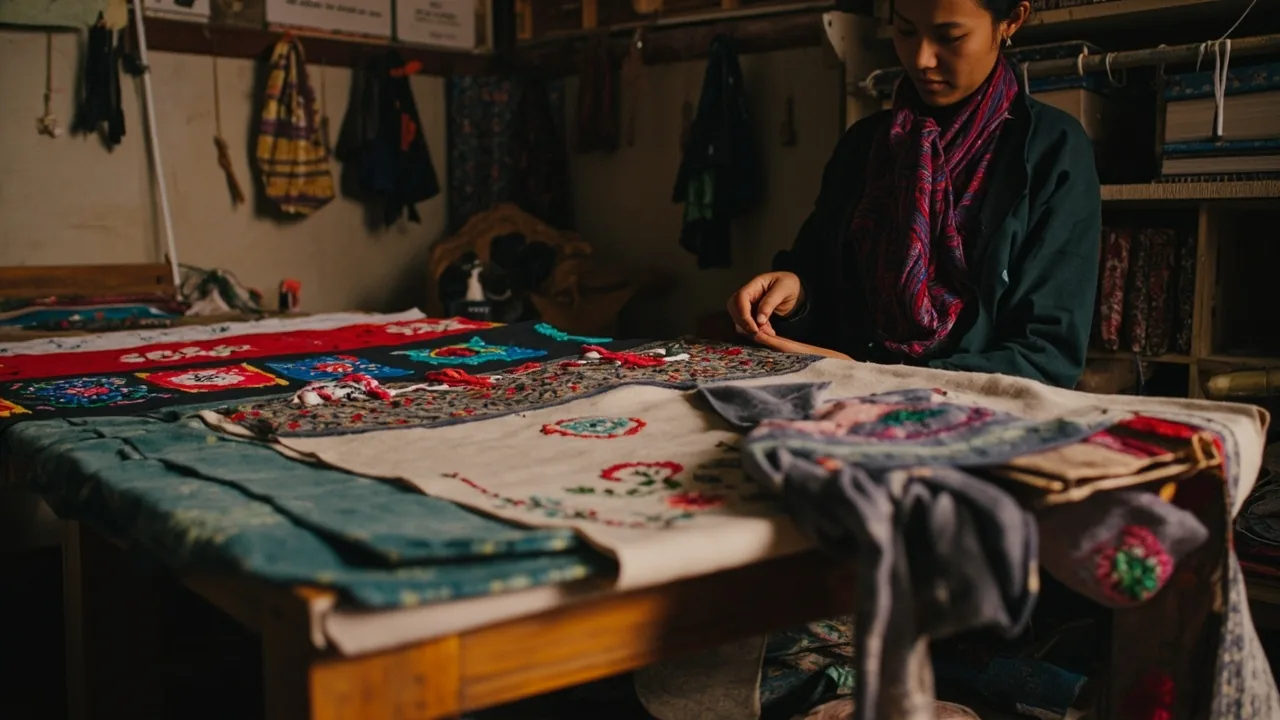
A textile workshop in Sapa is a half-day to full-day session hosted in a Hmong, Dao, Tay, or Xa Pho family home, where you learn the craft the women in the family have practiced for generations: indigo leaf dyeing (the blue/black cloth Sapa is famous for), hemp spinning, backstrap loom weaving, or appliqué and batik patterns. Most sessions run 3 to 6 hours, include a home-cooked lunch of rice, greens, and free-range pork or tofu, and end with the participant taking home the piece they made (or a finished product from the family). See also: How to Get From Sapa to Halong Bay.
For Indian travelers specifically, this is one of the few niche activities in Vietnam where the cultural exchange is genuinely mutual, not performative. You’re not watching a “dance show” staged for tourists. You’re sitting at the loom next to a woman who has been weaving since age seven, asking how she keeps the tension even, and she’s asking why your dupatta has sequins. The workshops that survive are the ones that pay the family fairly and don’t run conveyor-belt sessions of 30 tourists at a time. For related planning, see our guide on Koh Lipe Temple Etiquette a Respectful Visitor S Guide.
Quick Answers
| What | Answer | Price (INR) |
|---|---|---|
| Indigo dyeing workshop (half day) | Family-run studio, includes materials + lunch | ₹1,285-₹1,836 (~350,000-500,000 VND or ~$13.34-$19.06) |
| Hemp weaving workshop (full day) | Backstrap loom + traditional patterns | ₹1,836-₹2,938 (~500,000-800,000 VND or ~$19.06-$30.49) |
| Hmong brocade class (half day) | Stitching + appliqué + finished piece | ₹1,469-₹2,203 (~400,000-600,000 VND or ~$15.25-$22.87) |
| Multi-day immersion (2 to 3 days) | Live with family, learn 3 to 4 crafts | ₹5,508-₹11,016 (~1,500,000-3,000,000 VND or ~$57.17-$114.35) |
| Best area for workshops | Ta Van, Lao Chai, Ta Phin villages (30 to 60 min from Sapa town) | , |
| Booking method | Direct via WhatsApp/zalo or studio website | , |
| English spoken? | Yes at most studios, basic to fluent | , |
| Custom piece (shipped home) | +₹734-₹1,836 (~200,000-500,000 VND or ~$7.62-$19.06) for finished bespoke item | , |
| Current FX rate | 1 INR = 270 VND | , |
Step-by-Step: How to Book a Textile Workshop in Sapa
Step 1: Pick the right village and craft
Sapa has six main ethnic minority villages within trekking distance of town, and each one specializes differently:
| Village | Distance from Sapa | Ethnic group | Specialty |
|---|---|---|---|
| Ta Van | 8 km (30 min by motorbike) | Dao and Giay | Indigo dyeing, hemp weaving |
| Lao Chai | 6 km (20 min) | Black Hmong | Brocade, appliqué |
| Ta Phin | 12 km (35 min) | Red Dao | Indigo dyeing, herbal bath |
| Ban Ho | 25 km (60 min) | Tay | Hemp, backstrap loom |
| Cat Cat | 3 km (15 min) | Black Hmong | Tourism-focused, less authentic |
| Sin Chai | 4 km (20 min) | Hmong | Weaving, daily life |
Pick based on the craft, not just proximity. Cat Cat is the closest but it’s the most commercialized (think entrance fee, staged photos, souvenir stalls). For a real workshop, Ta Van, Lao Chai, or Ta Phin are where families still run working studios.
Step 2: Contact the studio directly
Skip GetYourGuide for textile workshops. The commissions inflate the price by 20 to 40 percent, and the family only sees a fraction. Booking direct means the family gets paid what they quoted, and you can negotiate on the spot if you want to add a second craft.
Most studios are reachable on WhatsApp (+84 prefix) or Zalo (Vietnam’s WhatsApp equivalent). One reliable option that responds in English:
- Sapa Little Artisan: Runs an Indigo Dyeing & Ethnic Crafts session that includes plant collection, dye prep, and finishing. Family-run, takes kids too. See the Sapa Little Artisan Indigo Dyeing session (note: their direct WhatsApp booking is cheaper than GetYourGuide by about ₹367 (~100,000 VND or ~$3.81)).
Direct booking usually goes like this:
- WhatsApp the studio 2 to 5 days before you want to attend.
- They confirm availability and pick-up point in Sapa town.
- You arrive at 8:30 or 9:00 AM, motorbike taxi or they pick you up.
- Workshop runs until 2:30 or 3:00 PM with lunch.
- Pay in cash VND at the end, no deposit required usually.
Step 3: Get to the village from Sapa town
Workshops almost never happen in Sapa town itself. You need transport to the village. Options:
| Method | Cost (VND) | Time | Best for |
|---|---|---|---|
| Motorbike taxi (xe om) | 80,000 to 120,000 one way | 20 to 40 min | Solo or couple |
| Grab car | 130,000 to 180,000 | 20 to 40 min | Group, comfort |
| Trek from Sapa town | Free (you walk) | 1.5 to 3 hours one way | If you’re trekking that day anyway |
| Studio-arranged shuttle | Usually free if you’re booking a workshop | 20 to 40 min | Easiest |
If you’re already doing a trek (most agencies include a homestay in Ta Van or Lao Chai), the workshop gets bolted onto the homestay night and there’s no extra transport cost.
Step 4: Know what happens during the workshop
A typical half-day indigo dyeing workshop runs like this:
| Time | Activity |
|---|---|
| 9:00 AM | Arrival, herbal tea, intro to family and history |
| 9:30 AM | Walk to indigo fields, harvest leaves |
| 10:00 AM | Ferment indigo in clay vat, prepare dye bath |
| 10:30 AM | Tie or stitch your pattern onto white hemp cloth |
| 11:00 AM | First dip in indigo vat, oxidize (cloth turns green then blue) |
| 11:30 AM | Repeat dip and oxidize 5 to 8 times for deep color |
| 12:00 PM | Lunch (rice, stir-fried greens, pork or tofu, fish) |
| 1:00 PM | Rinse, dry, optional wax resist for second pattern |
| 2:00 PM | Take home your finished cloth (or have it shipped, +₹184-₹367 (~50,000-100,000 VND or ~$1.91-$3.81)) |
| 2:30 PM | Optional: browse the family’s shop for ready-made pieces |
The full-day weaving workshop swaps the dyeing for 3 to 4 hours at the backstrap loom. It’s harder than it looks. Most beginners get 10 to 20 cm of even cloth in a full day.
Step 5: Pay and tip
Pay the workshop fee in cash VND at the end. Card acceptance is rare outside Sapa town. Tips:
- Standard tip: ₹184-₹367 (~50,000-100,000 VND or ~$1.91-$3.81) per person, given to the family or to the woman who taught you directly.
- If the family hosted lunch and you stayed 6+ hours, ₹367-₹734 (~100,000-200,000 VND or ~$3.81-$7.62) is appropriate.
- If you bought a finished piece from their shop (scarf, table runner, pillow cover), the purchase itself is the biggest support.
Common Mistakes Indians Make
Mistake 1: Booking through a hotel in Sapa town instead of contacting the studio directly. Hotels add a 20 to 30 percent commission. The studio still gets the same amount. You’re paying extra for no value. WhatsApp the studio yourself. The phone numbers are on every blog and TripAdvisor review.
Mistake 2: Wearing white or new clothes. Indigo stains. Permanently. You’ll be elbow-deep in dye for 3 hours. Wear dark or old clothes you don’t care about. Closed-toe shoes, not sandals. Long sleeves because some of the dye plants cause mild skin irritation.
Mistake 3: Expecting to finish a large piece in half a day. Backstrap loom weaving is the slowest textile craft on earth. A full day at the loom gets you a strip 20 cm wide and maybe 1 meter long, if you’re fast. If you want a usable scarf or table runner, book the multi-day immersion or buy a finished piece from the family after the workshop.
Mistake 4: Confusing Cat Cat village workshop with a real one. Cat Cat is the tourist village 3 km from Sapa town. Entrance fee is ₹367 (~100,000 VND or ~$3.81) and it has a “Hmong weaving demo” that runs every 30 minutes. It’s choreographed. For an actual workshop where you do the work, go to Ta Van, Lao Chai, or Ta Phin.
Mistake 5: Not bringing enough VND cash. ATMs in Sapa town work (Vietcombank, Agribank branches near the church) but the village studios don’t. Withdraw ₹5,508-₹7,344 (~1,500,000-2,000,000 VND or ~$57.17-$76.23) before you leave town for a full-day workshop plus a finished piece to take home.
What Most Guides Don’t Tell You
The indigo isn’t indigo
Most “indigo” cloth sold in Sapa markets is synthetic dye. The deep, glossy, slightly purplish blue-black you see on real Red Dao and Black Hmong ceremonial cloth comes from the Strobilanthes cusia plant, fermented in a clay vat with ash lye for 5 to 10 days. The synthetic version looks brighter and doesn’t smell earthy. The real workshops use the real plant. The tourist stalls sometimes mix both and charge the same price. If a workshop proudly shows you their indigo vat, smells like old socks, and is dark green (not blue), you’re in the right place.
Workshops in November to February are quieter and better
Peak season in Sapa is March to May and September to October. November to February is misty and cold but the workshops run with fewer tourists, the women have more time to teach properly, and you often get a one-on-one session for the same group price. The trade-off: the indigo dye takes longer to oxidize in cold, damp air, so your cloth might be a lighter blue. Bundle up and bring thermals if you go in winter.
Custom pieces for export cost more but are the real value
If you want a finished table runner, bed cover, or shawl in a specific Hmong motif (the swirls, the diamonds, the horse patterns), order it during the workshop. The family will weave it over 2 to 4 weeks and ship it to you. Cost: ₹5,508-₹14,688 (~1,500,000-4,000,000 VND or ~$57.17-$152.46) depending on size and complexity, plus ₹734-₹1,836 (~200,000-500,000 VND or ~$7.62-$19.06) shipping. Shipping to India by DHL or FedEx from Hanoi takes 5 to 7 days and the customs duty on textiles under ₹10,000 (~$103.80) is zero (within the personal import exemption). Above ₹10,000 (~$103.80) you’ll pay 20 to 30 percent duty. Most workshops can declare the value lower if you ask, but that’s a choice, not a right.
The Sapa Sunday market and Bac Ha market are related but different
The textile workshops feed the supply chains for Sapa’s weekly markets. Bac Ha market (Sunday, 90 km from Sapa town) is the bigger one and is worth the trip if you’re in the area on a Sunday. The Sapa town market (daily but best on Saturday) has all the same textiles at slightly higher prices. Buy your finished pieces at the workshop, not the market, for the same reason as direct booking: the family gets more.
You can do a workshop and a half-day trek on the same day
Most Sapa itineraries pair a morning trek to a village with a same-day workshop. The local trekking agencies all bundle this for ₹2,203-₹4,406 (~600,000-1,200,000 VND or ~$22.87-$45.74). The downside is the workshop is shorter (2 to 3 hours instead of 5) and the group is larger (8 to 15 people instead of 2 to 4). If textile craft is the main reason you’re in Sapa, skip the combo and book a standalone workshop.
What to Bring Back to India (Customs and Practical)
Customs limit: You’re allowed to import up to ₹10,000 (~$103.80) worth of personal goods duty-free from Vietnam. Above that, textiles attract 20 to 30 percent duty depending on whether cotton, silk, or hemp.
| Item | Workshop price (VND) | Customs classification | Notes |
|---|---|---|---|
| Indigo-dyed scarf (your own work) | 0 (you made it) | Personal, exempt | Always exempt if you made it |
| Hemp table runner (small) | 300,000 to 600,000 | Within ₹10,000 (~$103.80) limit | Most run around ₹1,000 (~$10.38) to ₹2,000 (~$20.76) |
| Hmong brocade pillow covers (pair) | 200,000 to 400,000 | Within ₹10,000 (~$103.80) limit | Easy carry |
| Large ceremonial cloth (1m x 2m) | 1,500,000 to 3,000,000 | Above ₹10,000, 20 to 30% duty | Ask workshop to declare lower |
| Custom-ordered bespoke piece (shipped) | 1,500,000 to 4,000,000+ | Above ₹10,000 (~$103.80), 20 to 30% duty | DHL/FedEx, 5 to 7 days to India |
Practical packing: Indigo-dyed cloth bleeds. Pack finished pieces in plastic bags inside your suitcase. Even “fixed” indigo will transfer a little blue onto other clothes for the first 2 to 3 washes.
Where to Eat Around the Workshop (Veg-Friendly)
Workshop lunch is usually rice, stir-fried greens, free-range pork, and a tofu or egg dish. That’s fine if you eat egg, but if you’re strict veg or Jain (no onion/garlic either), tell the studio when you book. They’ll usually substitute with fried tofu, mushroom dishes, and steamed greens. If you want to eat in Sapa town before or after the workshop, these spots from the local shortlist work well:
- Thong Dong Vegan Kitchen & Cafe: Plant-based Vietnamese, vegan spring rolls, jackfruit curry, garden seating. The kitchen uses no animal products at all, including no fish sauce.
- Andee Sapa Restaurant & Vegan: Vegan-friendly, local flavors, lots of tofu and mushroom dishes.
- The Herbalist Sapa: Herbal teas and health-focused meals, quieter than the main strip, good for lunch after a workshop.
For non-veg options or the famous Sapa grilled meats, ChuSu Kitchen and Nature View have broader menus with both local meat dishes and veg sides.
Getting Connected in Sapa
Mobile data works on most Indian roaming plans in Vietnam but it’s slow and costs ₹10 (~$0.10) to ₹30 (~$0.31) per MB. The two practical options:
- Vietnamese physical SIM: Viettel or Vinaphone, sold at Sapa town shops and the airport. Tourist SIMs with 30-day validity, 3 to 5 GB per day, run ₹734-₹1,285 (~200,000-350,000 VND or ~$7.62-$13.34). Top-up at any convenience store.
- eSIM before you fly: Get Nomad eSIM, India to Vietnam packages start at ₹500 (~$5.19) for 5 GB over 7 days. Activates on arrival, no passport photocopy needed at the airport counter.
In Sapa town, 4G works. In the villages (Ta Van, Ta Phin), coverage drops to 3G or no signal in spots. Tell your family before you go to the workshop.
How to Get There (Getting to Sapa)
Sapa doesn’t have an airport. You arrive by train, bus, or private car from Hanoi:
| Route | Method | Duration | Cost (VND) | Book |
|---|---|---|---|---|
| Hanoi to Sapa | Sleeper bus | 6 hours | 250,000 to 400,000 | Book Hanoi to Sapa on 12go |
| Hanoi to Sapa | Train to Lao Cai + bus | 8 hours (1 hour bus + train) | 350,000 to 700,000 | Book Hanoi to Lao Cai on 12go |
| Hanoi to Sapa | Private car | 5 hours | 2,500,000 to 4,000,000 | Book Hanoi to Sapa on 12go |
Most Indian backpackers take the overnight sleeper bus: leaves Hanoi 9 to 11 PM, arrives Sapa 3 to 5 AM. Saves a hotel night. Trains are comfier but require a connecting bus from Lao Cai station to Sapa town (40 km, 1 hour, ₹294-₹551 (~80,000-150,000 VND or ~$3.05-$5.72) by minibus).
From Sapa town, you’ll move to the villages by motorbike taxi or studio-arranged shuttle as covered above.
What to Pack for a Sapa Workshop
| Item | Why |
|---|---|
| Dark, old clothes | Indigo stains permanently |
| Closed-toe shoes or hiking sandals | Vat splashes, uneven village paths |
| Long sleeves | Some dye plants cause mild skin irritation |
| Small backpack | Water bottle, sunscreen, phone |
| Cash VND (1.5 to 2 million) | Workshop fee, finished piece, tip, motorbike back |
| Plastic ziplock bags | Pack finished indigo cloth to stop it staining other items |
| Bandana or scarf | Hair tie if you’re dyeing |
| Water bottle (refill) | Workshops provide tea but not always water |
| Camera (optional) | Most families allow photos, ask first |
Don’t bring expensive white sneakers. You’ll ruin them in the indigo vat, and the family will feel bad if they think you didn’t know.
Combining This With Your Vietnam Trip
Most Indian backpackers do Sapa as a 2 to 3-night stop on the broader Hanoi-Halong-Sapa loop. From Sapa, the next move is usually back to Hanoi or direct to Halong Bay:
- Sapa to Hanoi: 6 hours by sleeper bus, ₹918-₹1,469 (~250,000-400,000 VND or ~$9.53-$15.25).
- Sapa to Halong Bay: Direct bus or minivan, 7 to 9 hours, ₹1,469-₹2,203 (~400,000-600,000 VND or ~$15.25-$22.87). Most travelers return to Hanoi first, then go to Halong.
If you’re fitting the workshop into a longer Vietnam trip, do it on day 2 or 3 of your Sapa stay. Day 1 is usually arrival, jet-lag, Sapa town exploration. Day 2 is the workshop (full day). Day 3 is a half-day trek or Bac Ha market (Sunday only), then evening bus to Hanoi.
FAQ
Q: Can I join a workshop if I don’t speak Vietnamese or English? A: Most studio women speak basic English and use hand demonstrations for the craft itself. Vietnamese is the family’s first language and they’ll speak it among themselves. The teaching is mostly visual and tactile, so a Hindi-only speaker can follow fine.
Q: Is the workshop suitable for kids? A: Yes, especially indigo dyeing which is less skill-heavy than loom weaving. Sapa Little Artisan explicitly runs a kids version with simpler patterns and shorter duration. Bring an extra set of clothes for them; indigo gets everywhere.
Q: Can I bring my own design instead of using the traditional patterns? A: At most studios, yes, but the family will help you adapt it to the constraints of the loom or the dye. Custom designs take 2 to 3 times longer. If you want a finished piece in a custom design, opt for the multi-day immersion or order it shipped.
Q: Will the indigo dye make me itch or cause a reaction? A: Real plant-based indigo is hypoallergenic for most people. Some of the binding agents (ash, lime) can dry out skin. Wear long sleeves if you have sensitive skin, and rinse your hands/arms with cool water after dipping. No one in the family will be offended if you wear gloves for the actual vat work.
Q: Can I take photos and videos inside the workshop? A: Yes at most studios, but always ask first. Some elders in the family prefer not to be photographed. The finished pieces and the craft process are almost always fine to photograph. Don’t promise to “promote” the family in exchange for a discount and then not follow through.
Q: What’s the best month for a textile workshop in Sapa? A: October to November is ideal: cool (10 to 18°C), dry enough for indigo to oxidize properly, fewer crowds than spring, and the rice terraces are just after harvest. Avoid June to August (rainy season) and December to February if you hate cold and fog.
Q: Can I get a refund if I cancel? A: Direct bookings usually have no refund policy because the family blocks the day for you. Some studios will reschedule with 48 hours notice. GetYourGuide bookings have their own cancellation window, which is one reason some travelers use them despite the higher price.
Subodh’s Take
Textile workshops in Sapa are the one thing in Vietnam that I think every Indian traveler should do at least once, even if you’ve never touched a loom. The price is fair (under ₹3,672 (~1,000,000 VND or ~$38.12) for a full day including lunch), the people hosting are some of the warmest in the country, and you walk out with a handmade piece that has more story behind it than anything in a mall. Skip the Cat Cat tourist demo. Book direct with a Ta Van or Ta Phin family. Bring old clothes, bring cash, and plan to tip generously. The only mistake is treating it like a checkbox activity; if you slow down and sit at the loom, you’ll remember the day for years.
