Thailand Packing List: Month-by-Month Guide for Indians (2026)
Packing light is the golden rule of backpacking Thailand. A 40 to 50 litre backpack is all you need for a 12-day trip, everything else you can buy there for cheap. The mistake most first-time Indian backpackers make is packing for every possible scenario: jeans, hair dryers, two laptops, full-size shampoo bottles. You won’t use half of it. Thailand is hot, casual, and laundry is cheap, so pack like you’ll be living out of a laundry bag, because you will. For related planning, see our guides on Sea Backpacking Hub and Airtel International Roaming Thailand Plans Review.
This guide breaks the packing list down by month and season, so you know exactly what to bring for January versus June versus November. Whether you’re a solo female traveller heading to Chiang Mai in March or a group of friends hitting Phuket in monsoon, the list below is what fits in one bag. You may also find Buying a Sim Card At Don Mueang Airport Prices Operators What to Skip useful for this trip.
Quick Answers
| What | Answer | Price (INR) |
|---|---|---|
| Best backpack size | 40 to 50 litres, no hard suitcase | ₹3,000 (~$31.14) to ₹7,000 (~$72.66) |
| How many t-shirts for 12 days | 5 quick-dry tees (laundry every 3 days) | , |
| Power bank limit for flights | Under 20,000 mAh and 100 Wh, cabin baggage only | , |
| Sunscreen from India | Yes, packed. Sunscreen costs 3 to 4x more in Thailand | ₹400 (~$4.15) |
| Tourist SIM 15 days | AIS or TrueMove, ₹1,141 (~399 THB or ~$11.84) at 7-Eleven | ₹1,145 (~$11.89) |
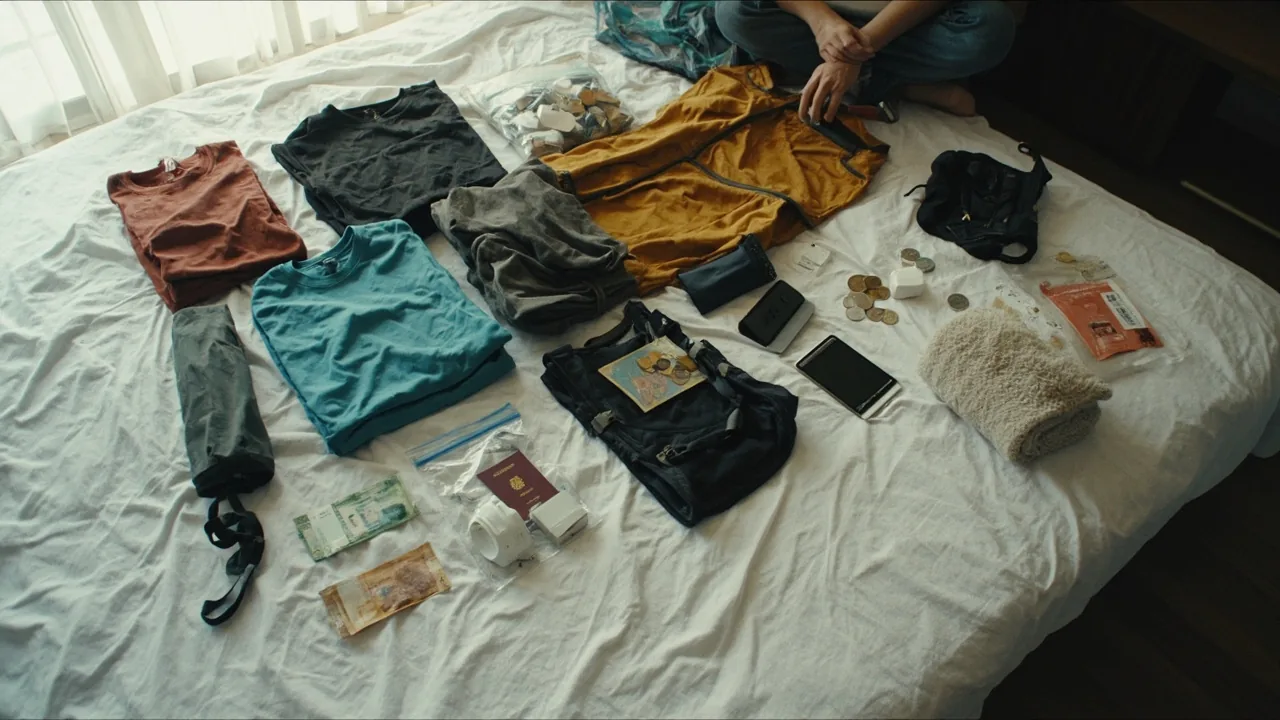
The Ultimate Packing Checklist
Here’s the core checklist. It works for any month of the year, just adjust the rain gear and the fabric weight by season. See also: Dtac Thailand Sim Card for Indian Travelers Plans Prices Where to Buy.
Clothing
- 5 quick-dry t-shirts (merino or synthetic, never heavy cotton)
- 2 pairs of lightweight shorts
- 1 pair of light, quick-dry trousers (for buses with AC and temples)
- 1 pair of leggings or track pants (for female travellers, also for cold bus rides)
- 5 to 6 pairs of underwear (ExOfficio or Uniqlo Airism)
- 5 pairs of socks (only if you’ll wear sneakers)
- 1 light hoodie or fleece (December to February northern Thailand gets cold)
- 1 packable rain jacket or poncho (May to October) For related planning, see our guide on Thailand Sim Card in Koh Samui Where to Buy Best Plans What Actually Works.
Footwear
- 1 pair of walking sneakers (sketchers, decathlon Quechua, anything broken in)
- 1 pair of sandals or flip-flops (for hostels, beaches, and showers)
Toiletries
- Travel-size toothpaste, soap, shampoo (under 100 ml each, or buy at 7-Eleven)
- Sunscreen SPF ₹2,287-₹3,431 (~800-1,200 THB or ~$23.74-$35.61)
- Mosquito repellent (DEET-based, also cheaper to bring)
- Quick-dry towel (microfibre, hostel towels are paper-thin)
- Reusable water bottle with filter (Sea to Summit or LifeStraw)
First Aid
- ORS sachets (4 to 6)
- Paracetamol (strip of 10)
- Combiflam or any painkiller you trust
- Electral or Glucon-D
- Loperamide for stomach upsets (just in case)
- Band-aids and one Crepe bandage
- Any personal prescription meds with a copy of the prescription
Documents
- Passport (6+ months validity, 2 blank pages)
- Printed flight tickets and hotel bookings for first 2 nights
- Travel insurance PDF (SafetyWing)
- 2 passport photos (for visa extensions or lost passport)
- Photocopy of passport (separate from the original)
Subodh’s Pro Tip: Roll your clothes, don’t fold. Rolling saves 30% more space and stops wrinkles. Use packing cubes by zone: one for tops, one for bottoms, one for electronics, one for toiletries.
Month-by-Month Breakdown: What Changes by Season
Thailand has three real seasons, not four: a hot dry season, a wet monsoon, and a cool dry window. Your bag changes a lot between them.
January to March: Hot and Dry
This is peak season. Temperatures sit around 32 to 36°C in Bangkok and the islands, cooler up north (Chiang Mai around 25 to 30°C).
Pack: breathable linens and cottons, all the sunscreen, sunglasses, a hat. Skip the rain jacket, you won’t need it. Bring a sarong or scarf for sun protection and temple visits.
April: The Hot Month
April is the hottest month, Songkran hits mid-month and the whole country turns into a water fight. Pack extra quick-dry clothes because you’ll get wet a lot, even if you’re not joining the festival. Bangkok and Chiang Mai both cross 38 to 40°C in April.
Pack: even more sunscreen, a waterproof phone pouch, and a lightweight long-sleeve for sun protection. April travellers report the heat is no joke, plan siestas.
May to October: Monsoon Season
Southwest monsoon, rain almost every afternoon, sometimes for hours. Humidity is brutal. Northern Thailand (Chiang Mai, Pai) rains less than the Andaman coast (Krabi, Phuket, Koh Phangan).
Pack: a proper rain poncho (not just an umbrella), quick-dry everything, dry bags for electronics, waterproof sandals. Skip jeans entirely, they won’t dry overnight. A packable rain cover for your backpack is essential. Travellers report the Andaman islands can see ferry cancellations in heavy monsoon weeks, so pack a paperback.
November to Mid-December: Cool Dry Season Begins
Northern Thailand cools down to 15 to 20°C at night, even 10°C in Pai and Chiang Rai. Bangkok stays warm. The rain stops almost overnight in November.
Pack: a fleece or light hoodie for the north, long trousers for evening bus rides (AC freezes you). The Andaman coast opens back up for diving, this is one of the best windows to visit Koh Tao or Koh Phangan.
Subodh’s Pro Tip: If you’re travelling north to south in December, layer. A fleece in Chiang Mai at 7 AM and a t-shirt in Koh Phangan at noon is a real same-country swing.
Monsoon vs. Dry Season Packing
The core swap is fabric weight and rain protection.
Monsoon (May to October)
- Quick-dry synthetics only (no cotton)
- Packable rain poncho or jacket
- Dry bag for phone and passport
- Waterproof sandals (Tevas, Decathlon Quechua)
- Anti-fog mask for snorkelling trips
- A small microfibre towel that dries fast
Dry Season (November to April)
- Linen and light cotton tees
- Sunglasses (polarised, UV 400)
- Wide-brim hat or cap
- Light long-sleeve for UV protection
- Reusable water bottle (refill stations are everywhere)
- A scarf or sarong (sun AND temple use)
The mistake is bringing one set for both seasons. Cotton is your enemy in monsoon, it stays wet for hours and gets smelly. Synthetics smell fine and dry on your body.
Electronics and Tech Setup
Universal Adapter: Thailand uses Type A, B, and C sockets (the same flat two-pin or three-pin you see in India). Indian plugs work in most Thai outlets without an adapter, but a universal adapter is safer for older hostels and cafés.
Power Bank Rules: The single most common reason Indian travellers get stopped at airport security is over-capacity power banks. The DGCA and IATA limit is 100 Wh (watt-hours), which works out to about 20,000 mAh at 5V. Anything bigger gets confiscated at Indian airports, sometimes at transit stops in Singapore or Kuala Lumpur. Stick to 10,000 to 20,000 mAh, and pack it in cabin baggage, never checked luggage.
Cables and Charging: Bring 1 long USB-C cable, 1 short one, and a multi-port wall charger (Anker or Baseus, around ₹1,200 (~$12.46) from India). Most Thai hostels have limited plugs, a multi-port is essential.
Offline Maps: Download Thailand on Google Maps offline before you fly. Maps.me works as backup. Download Grab and Bolt apps before landing.
SIM and eSIM: Buy a tourist SIM at the airport (AIS or TrueMove, ₹1,141 (~399 THB or ~$11.84) for 15 days with ~15GB data, around ₹1,145 (~$11.89)) or grab the same plan at any 7-Eleven. For a hassle-free alternative, Get Nomad eSIM gets you connected before you even board the flight. Both options work on Indian-registered phones without unlocking.
VPN: Some Indian travellers use a VPN for banking apps (HDFC, ICICI block foreign logins by default). NordVPN or Surfshark, install before leaving India.
Cultural Dress Codes: Temples vs. Beaches
Thailand’s temples (Grand Palace in Bangkok, Wat Pho, Wat Chedi Luang in Chiang Mai, White Temple in Chiang Rai) have a strict dress code: shoulders and knees must be covered. You will be turned away at the door otherwise, and there are no rental sarongs at every temple.
What to bring
- 1 light, long-sleeve linen shirt (white or beige, works for temples and evenings)
- A long skirt or loose trousers (for female travellers)
- A large scarf or sarong (doubles as a beach cover-up, temple wrap, and bus blanket)
For beaches and islands, anything goes. Swimwear on the beach is fine, but cover up before walking into town, Thai culture is conservative outside the resorts.
Safety Alert: You’ll be walking barefoot in every temple. That means your feet need to be clean and your toenails trimmed. Bring flip-flops you can slip off fast.
Trail Laundry and Toiletries
Every Thai hostel and guesthouse offers laundry by the kilo. Expect ₹114-₹172 (~40-60 THB or ~$1.19-$1.78) per kilo (around ₹115 (~$1.19) to ₹170 (~$1.76)), same-day return if you drop it before noon. This is why you only need 5 t-shirts: wash every 3 days, wear the same 5 in rotation.
Toiletries: do not bring full-size bottles. 7-Eleven and Circle K are on every corner, even in Pai and Koh Tao. Toothpaste, soap, shampoo, deodorant, razors, sunscreen (though expensive), mosquito repellent. The only things worth bringing from India are sunscreen and repellent, both cost 2 to 3x more in Thailand.
Subodh’s Pro Tip: Pack one extra plastic ziplock bag. Dirty laundry goes in there, your clean clothes stay dry in monsoon. Travellers report this saves them when a hostel toilet leaks.
Common Packing Mistakes Indians Make
1. Bringing a hardshell suitcase instead of a backpack. Thailand’s sleeper buses, songthaews, and tuk-tuks have zero space for suitcases. A suitcase means you’ll pay extra for taxi upgrades and miss the night buses everyone else takes. Buy a proper 40 to 50L backpack (Decathlon Forclaz, Quechua, or Wildcraft).
2. Packing jeans and heavy cotton hoodies. Jeans weigh 700g, take a day to dry, and are useless in monsoon. Heavy cotton hoodies are overkill except December nights in the north. Replace both with one pair of quick-dry trousers and one light fleece.
3. Forgetting power bank capacity rules. Over 20,000 mAh or 100 Wh and it gets confiscated at Indian airport security. Travellers report losing ₹15,000 (~$155.70) power banks at Mumbai and Delhi security. Stick to 10,000 to 20,000 mAh and pack in cabin baggage only.
4. Bringing full-size toiletries. Indian regulations limit liquids in cabin baggage to 100 ml per container, all in one clear ziplock. If you bring big bottles, security will toss them. Buy small refillable bottles (₹300 (~$3.11) for a 4-pack on Amazon) or just plan to shop at 7-Eleven.
5. Skipping temple-appropriate clothes. You’ll be turned away from the Grand Palace and Wat Pho without covered shoulders and knees. Travellers report paying ₹572 (~200 THB or ~$5.94) to rent sarongs at some sites. Bring one cheap scarf or sarong, saves you money and frustration.
The 5-4-3-2-1 Rule (For a 12-Day Trip)
If you want a one-line mental model, here it is:
- 5 t-shirts
- 4 pairs of underwear
- 3 pairs of shorts or trousers
- 2 pairs of shoes (sneakers + sandals)
- 1 rain jacket
That’s it. Laundry handles the rest. This rule of thumb keeps your bag under 7 kg and forces you to skip the “just in case” pile, which is where overpackers go wrong.
FAQ
Can I bring a suitcase instead of a backpack?
You can, but you’ll regret it. Sleeper buses have under-bus luggage holds, songthaews have narrow benches, and tuk-tuks have nowhere to put a suitcase. Backpack wins every time. If you must bring a hard case for valuables, plan to leave it at your Bangkok hotel and travel with a daypack.
Are power banks allowed in cabin baggage?
Yes, under 100 Wh (about 20,000 mAh). Anything bigger gets confiscated at Indian airport security. Always carry in cabin baggage, never checked luggage. Power banks don’t count toward your cabin liquid limit.
Can I buy sunscreen cheap in Thailand?
No. Sunscreen is one of the most expensive items in Thai 7-Elevens and pharmacies, often ₹2,287-₹3,431 (~800-1,200 THB or ~$23.74-$35.61) for brands that cost ₹400 (~$4.15) in India. Bring two tubes from India, you’ll thank yourself on day three in Koh Phangan.
What should a female traveller pack differently?
Add: a light scarf or shawl (temples + bus AC + conservative areas), a menstrual cup or extra tampons (limited options in rural areas), a small padlock for hostel lockers, and a reusable zip pouch for documents. The general packing list stays the same. Travellers report Thailand is one of the safer Southeast Asian countries for solo female backpackers, especially in Chiang Mai and Pai.
Do I need different clothes for the islands vs Bangkok?
Not really. The islands are more casual, but Bangkok is hot and humid too. The same 5 t-shirts and 2 shorts work in both. The only addition for islands is a rash guard if you plan to snorkel, and reef-safe sunscreen if you dive.
Is monsoon season a bad time to visit?
It’s not bad, just different. Prices drop 30 to 50%, crowds thin out, and the islands are still beautiful. The trade-off: rain almost every afternoon, ferry cancellations possible in the Andaman, and full-day plans get ruined. Pack right (poncho + dry bag + patience) and monsoon can be the best time to visit.
Subodh’s Take
If it doesn’t fit in a 50-litre backpack, leave it at home, bhai. You’ll thank me when you’re boarding a sleeper bus at 10 PM with one bag on your back and one in the hold, while the family next to you struggles with two suitcases and a guitar. Pack for laundry, not for every scenario, and Thailand becomes the easiest country in Southeast Asia to travel.
