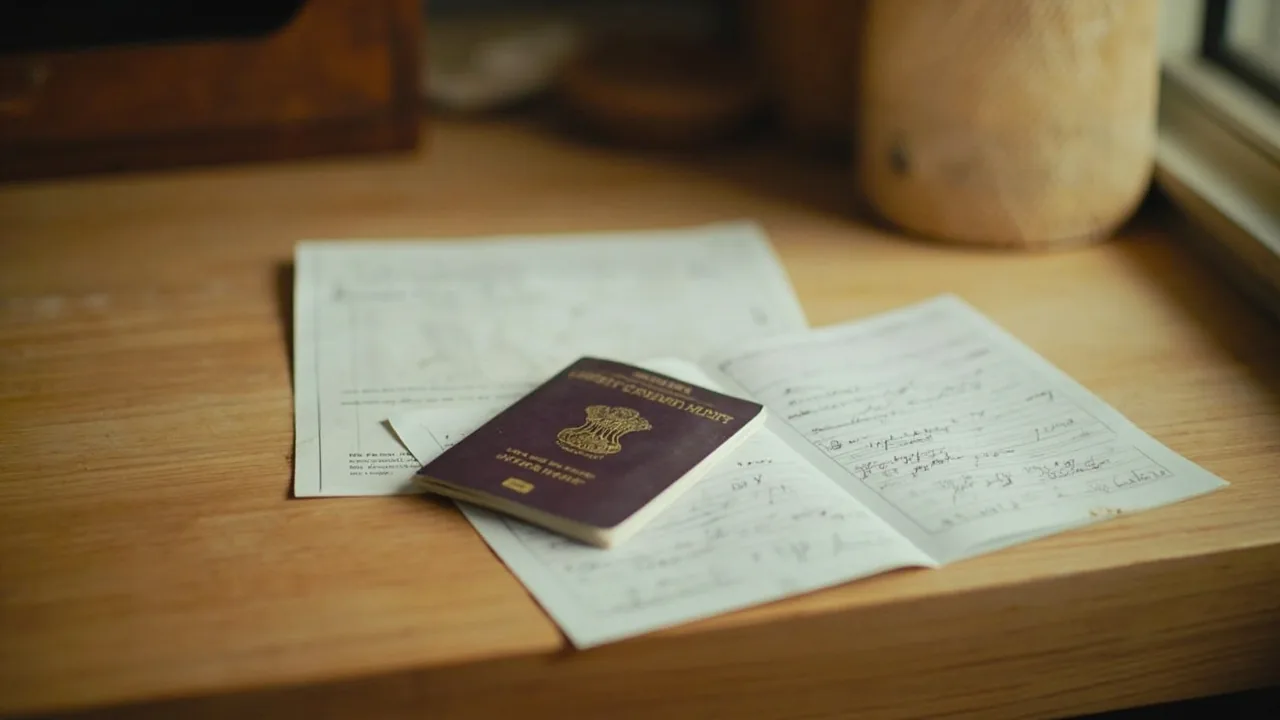
Thailand Visa for Indian Kids & Minors: Documents, Consent Letters & Parent Rules Explained
The Thailand visa for Indian minor children document requirements are strict: birth certificate, notarised consent letter, and a 4 cm × 6 cm photo on white background. These rules were cross-checked against the Thai Immigration Bureau’s June 2026 published guidance and recent traveller reports from Suvarnabhumi, Phuket, and Chiang Mai immigration counters. This guide covers consent letters, apostille rules, photo specs, and single-parent entry rules for 2026.
The rules below are built into the broader Thailand backpacking guide. If your child is arriving without a TDAC pre-registration, the visa-on-arrival route (15 days, ~₹5,700) is available — but most Indian families should use the free 60-day visa-free stamp instead; see Thailand Visa on Arrival for Indians for the fee structure.
Quick Answers
| What | Answer | Price (INR) |
|---|---|---|
| Visa required for minors? | Visa-free 60 days (same as adults); visa needed only if staying past 60 days | Free |
| Primary visa type | Visa-free stamp at immigration | Free |
| Fallback / alternative | Tourist Visa (TR) from Thai embassy if 60-day visa-free isn’t enough | ~₹2,600 |
| Processing time | Instant at the airport; TR takes 5-7 working days | — |
| Validity / max stay | 60 days from entry, extendable by 30 days at Thai immigration | — |
| Extension possible? | Yes, at any Thai Immigration office, by 30 days | ~₹1,900 THB |
| Photo required for the child? | Yes. 4x6 cm (approximately 1.57 x 2.36 inches), white background, taken within 6 months | ~₹150-200 |
| Passport blank pages needed? | Minimum 2 completely blank pages (visas and stamps need clear space) | Free |
| Mandatory arrival form | TDAC for every traveller, including infants | Free |
If the photo and blank-page requirements aren’t met, even fully visa-free Indian families can be turned away at the gate. Photo spec and blank-pages rules are covered in detail below.
Visa-Free Entry for Indian Minors (the most common case)
Indian minors (under 18 on the date of entry) get exactly the same visa-free entry as adults: a 60-day stamp on arrival, extendable once by 30 days. The 60-day stamp is automatic and free when the immigration officer sees the child’s Indian passport and the supporting family documents.
What changes for minors is the document pile immigration expects to see on top of the passport. Standard adult entry means a passport, a TDAC confirmation, and proof of onward travel. For a child, Thai officers generally want all of those plus birth certificate, parent consent letter, and a photo that matches the spec.
If you’re flying into Bangkok, the same rule applies at Phuket, Krabi, Chiang Mai, Koh Samui, and Hat Yai immigration counters. At land borders (Ranong, Padang Besar, Mae Sot, Aranyaprathet for Cambodia), enforcement is uneven; some land posts have started asking minors to produce apostilled birth certificates, others wave them through. Don’t depend on the land-post mood.
For families planning a longer Thai stay (kids in international school, a 90-day grandparent visit, an extended family trip): you need to leave the visa-free lane and use a Tourist Visa (TR) or Multiple Entry Tourist Visa (METV) from a Thai embassy. The Thailand visa guide for Indian passport holders walks through the TR and METV process in full.
What Every Indian Minor Needs at Thai Immigration
This is the document checklist, in the order Thai officers typically ask for them:
- Indian passport with at least 6 months validity from the date of entry and a minimum of 2 completely blank pages (the visa stamp and any future exit stamp both need their own clear page; scribbled-out visa pages don’t count).
- TDAC confirmation, QR code or PDF printout, submitted for every traveller including infants, from https://tdac.immigration.go.th. It’s free, mandatory, and has to be done before boarding.
- Passport-style photo, 4x6 cm (approximately 1.57 x 2.36 inches), white background, no border, taken within the last 6 months, matching the photo spec below.
- Birth certificate, original plus one photocopy. For families where child and parent surnames don’t match (a regular Indian case after marriage), this is the document that closes the gap.
- Consent letter from the non-travelling parent or guardian, notarised in India, in English, naming the child, the travelling parent, and the travel dates. Format and requirements under Single Parent or One-Parent Travelling.
- Both parents’ passports, colour photocopies of the bio page, kept with the travelling parent. When only one parent is travelling, the other parent’s passport copy plus the consent letter satisfies the requirement.
- Proof of accommodation: hotel booking confirmation under the family name, or a sponsor/relative letter if staying with family in Thailand.
- Return ticket or proof of onward travel, mandatory for everyone, including kids in arms.
Travellers report that immigration rarely asks for every document at every checkpoint, but the rule they don’t ask for is the rule that gets you. If a document isn’t in your folder and the officer asks for it, the secondary screening takes 30-60 minutes and on a bad day you miss your boarding. Take the full file.
Photo Spec and Blank Pages
Note: visa-free entry does not require a photo at the immigration counter; only the VoA and TR applications require one.
The two non-consent details that trip Indian families up most often are the photo specification and the blank-page requirement. The Thai immigration system treats both as hard rules, not nice-to-haves.
Photo spec: 4 cm × 6 cm, sometimes listed as 1.5 × 2.5 inches in older counters and embassies. Background plain white, head centred, both ears visible, no glasses, no smiling with teeth, no hats unless religious and verified. The full Thailand visa photo spec for Indians covers dimensions and background in detail. Photo must be taken within the last 6 months; an old photo from a passport renewal that matches the child now four years later will get rejected. Photos printed on office paper or in colour ink that bleeds at the edges fail. Most Indian passport-photo studios familiar with visa specs know this spec; ask for “Thailand visa photo 4x6 cm” and you’ll usually get the correct print.
Blank pages: Thai immigration needs 2 completely blank pages in your child’s passport for a visa-free entry. That means the page pair of facing pages should both be empty, not just the page the stamp lands on, because officers stamp entry on one and exit on the other. If your child is on a recently renewed Indian passport or has the standard 36-page passport, count the empty pages before you leave home; many Indian minors run out of blank space after two or three prior trips. Apply for fresh passport pages (Tatkal or non-Tatkal re-issue at passportindia.gov.in) if you’re under 4 clean pages.
Consent Letter Format (Two Parents Travelling Together)
If both parents are on the same flight, you’ll still be asked for the consent letter. Yes, even with both parents present.
Both parents travelling: most Thai immigration officers accept a notarised parental consent letter that the non-travelling parent would have signed if a problem came up mid-trip, but the standard practice for Indian families is to carry a single joint letter signed by both parents at the time of travel. The letter covers you if Thai officers ask, and airlines sometimes ask for it at check-in regardless. The letter should contain:
- Child’s full name (as in passport) and date of birth.
- Passport number of the child.
- Both parents’ full names (as in their passports) and passport numbers.
- Travel dates in Thailand (entry and exit).
- Cities being visited, optional but helpful.
- A statement both parents sign: “We, [parent names], authorise our child [child name], passport [number], to travel to Thailand from [date] to [date] with the consent and knowledge of both parents. In case of medical emergency, [travelling parent name] is authorised to make decisions on behalf of both parents.”
- Both parents’ signatures and dates. If you can get it apostilled (see below), even better.
A simple typed letter on plain paper is acceptable for the visa-free route, but if you can have it notarised at any Indian notary public for ₹200-₹500 (~$2.07-$5.19), the document carries more weight at the counter.
Single Parent or One-Parent Travelling
This is where Indian families most often get stuck. If only one parent is travelling with the child, the requirement is for a notarised consent letter from the absent parent, plus documentation that ties the family together, and a few additional items Thai immigration sometimes requests.
Mandatory:
- Notarised consent letter from the non-travelling parent, in English, naming the child, the travelling parent, the trip dates, and containing a clear statement of consent. Format is the same as the two-parent letter above, but only the non-travelling parent signs.
- Birth certificate, original plus photocopy, showing both parents’ names.
- Non-travelling parent’s passport, colour copy of bio page (the original can stay in India with the parent).
- Marriage certificate, photocopy, useful if the family surname changed.
Sometimes asked:
- Custody order from a court if the parents are separated or divorced.
- Death certificate if one parent has passed away.
Travellers report that single mums travelling with kids do face more scrutiny than single dads or married couples. This isn’t fixed by Thai law, and it’s not a Thai policy in writing, but the on-the-ground reality is that a father travelling with a child is generally waved through faster than a mother. The way to neutralise the difference is to carry more documents, not fewer.
If the child is travelling with a relative (grandparents, aunt, uncle, family friend), the document pile grows further: a notarised consent letter from BOTH parents, birth certificate, both parents’ passport copies, and an affidavit of relationship.
Apostille, MEA, and Birth Certificate Rules
There’s a popular myth that Indian birth certificates need to be apostilled for a Thailand trip. The truth: visa-free entry does not require an apostille. A notarised letter plus the original birth certificate, plus passport copies, has been enough at Suvarnabhumi Airport consistently in 2025 and 2026 based on traveller feedback.
Where apostille does come in:
- If you’re applying for a Tourist Visa (TR) from a Thai embassy, some posts ask for apostilled consent letters. Check the specific embassy’s checklist first.
- If you’re applying for a long-stay or non-immigrant visa (O, ED, Guardian Visa), apostilled documents are often mandatory.
- Apostille in India goes through the MEA: file at mea.gov.in under the Apostille section, fees around ₹50 (~$0.52) per document plus attorney fees (typically ₹1,500-₹3,000 (~$15.56-$31.12) per document for the full process).
For the visa-free entry most Indian families use, skip the apostille for now; carry the original birth certificate and the notarised consent letter. If your trip type changes (school enrolment, guardianship, longer stay), get the apostille before you apply.
Step-by-Step: How Thai Immigration Processes an Indian Minor
- Submit TDAC online for every family member at https://tdac.immigration.go.th. Free, takes 5 minutes per person, do it within 72 hours before departure. Print or screenshot the QR code confirmation.
- At check-in (any airline), the ground staff generally asks for the TDAC confirmation. Some also ask for the child’s birth certificate if the surname differs from yours.
- On landing, walk to the foreign passport / visa-free counter. For children, Thai officers at Suvarnabhumi and Phuket will sometimes wave the whole family to a separate family lane; at smaller airports and land borders, it’s the regular counter.
- Present the child’s passport, your own passport, the TDAC confirmation, the photo, and the document folder. The officer may or may not physically look at the birth certificate and consent letter; some just glance at the file.
- Receive a 60-day visa-free stamp in the child’s passport. Keep this page clean, don’t stamp play zones or extra boarding passes over it.
- On exit (anywhere from Bangkok, Phuket, Chiang Mai, or a land border), the same 60-day stamp is checked at the outbound counter.
If your child is travelling on a slightly older passport and is short on blank pages, or if your photo is non-conforming and the officer flags it, secondary screening happens in a back office and takes 30 minutes to 2 hours. This is the single most common delay reported.
At the Airport / Border: What Happens
At Suvarnabhumi and Don Mueang (Bangkok), the foreign-passport / visa-free lanes are marked. At Phuket, Krabi, Chiang Mai, Koh Samui, and U-Tapao, the same setup. Family lanes exist at Suvarnabhumi but not consistently at the others, so don’t plan around the family lane.
Officers’ typical questions to families:
- “Is the child with both parents?” (Standard first question.)
- “Where are you staying in Thailand?” (Hotel name and booking.)
- “How long are you staying?” (Match the return ticket dates.)
- “Where is the other parent’s consent letter?” (Only if one parent is absent.)
- “Is the photo fresh?” (If the file is borderline.)
You can be asked any combination. The officer picks the question list based on what they see, not a fixed checklist.
Extensions & Overstay
If 60 days isn’t enough, you can apply for a 30-day extension at any Thai Immigration office in Thailand. Cost is ₹5,456 (1,900 THB (~$56)) per person, including the child. Document requirements are the same: child’s passport, both parents’ passport copies, birth certificate, proof of stay.
At Phuket Immigration (Phuket Town, near the airport), the wait is 1-3 hours. At Chiang Mai Immigration (on Airport Road), the wait is 2-5 hours. At Bangkok’s Chaeng Watthana Immigration office, the wait is the worst in the country; arrive at 7:30am when the office opens, by 8:30am wait can hit 4+ hours.
Overstay fines are ₹1,436 (~500 THB or ~$14.89) per day per person, including the child, up to a maximum of ₹57,430 (~20,000 THB or ~$595.72) per person. The additional consequence at higher overstay volumes is a Thai immigration blacklist entry (a “red case” in Thai immigration language), which bans future entry. This is rare for minor visa-free stays but it happens. The way to avoid overstay fines is to leave Thailand on or before day 60.
Common Mistakes Indian Families Make at Thai Immigration
- Forgetting the apostille (not always needed, sometimes needed). Parents often bring no notarised documents, or, the opposite mistake, pay for an apostille they don’t need. Check your specific visa type first.
- Photo spec mismatch. Indian passport studios default to 35 mm × 45 mm for visa photos (the Schengen/Indian passport size), which does NOT match the Thai spec. The Thai photo spec is 4 cm × 6 cm on white background with no edge bleed, no background shadow, no glasses. Get the photo done in a Thai-photo-aware studio or ask specifically for “Thailand visa photo, 4 by 6 cm, white background.”
- Surname gap between parent passport and child. A common Indian scenario: mother and child carry the father’s surname on different documents, or the mother reverted to her maiden name after marriage, or the child’s surname is the grandfather’s. The birth certificate is the bridge; without the original on hand, this is the case where families get sent to secondary screening.
- Insufficient blank pages. Indian passports run 36 or 60 pages. Children who have travelled a few times already have stamp-heavy passports. Two completely blank pages is the minimum for a visa-free entry; the safe number is 4. If the passport is short, apply for a fresh one at the nearest RPO 2-3 months before departure.
- Single-mum families without a complete consent letter. The single biggest rejection risk category. Travel with at minimum: child’s birth certificate, your passport, your husband’s/partner’s passport copy, a signed and notarised consent letter on letterhead. Take a sworn affidavit in addition if your husband can’t get to a notary.
- Children not on TDAC. Every traveller, including infants, must be on the TDAC submission. Parents filing for a baby need the baby’s passport number and date of birth on the same form.
Getting Connected
Once you’ve cleared immigration with the family, the immediate priority is a working SIM card. The most reliable tourist SIMs are the AIS or TrueMove tourist 15-day packs at ₹1,146 (~399 THB or ~$11.88), including roughly 15GB of data, available at Suvarnabhumi, Don Mueang, Phuket, and Chiang Mai airports at the AIS, TrueMove, or dtac booths. If your phone supports eSIM, Get Nomad eSIM gives you data before you land, so the family can navigate immigration lines, share the consent letter by email if needed, and update relatives as soon as wheels-down. For older phones or family travellers on a tight budget, the physical SIM at 7-Eleven (also ₹1,146 (~399 THB or ~$11.88) for tourist packs) works fine; bring your passport for activation.
FAQ
Do Indian minors need a separate visa for Thailand? No. Indian minors on Indian passports get the same 60-day visa-free entry as adults. The visa is the same stamp, the only difference is the supporting documents you’re asked to show at immigration.
What documents does a single parent need to take a child to Thailand? Original birth certificate, notarised consent letter from the non-travelling parent, the non-travelling parent’s passport copy, both parents’ IDs, hotel booking under the family name, return ticket. Some officers ask for a court custody order if the parents are separated. Travellers report Thai officers scrutinise single-mum families more closely than single-dad families, so carry more documents rather than fewer.
Does a child need a separate TDAC? Yes. Every traveller, including infants, needs their own TDAC submission. The QR codes and PDFs can be batched in a single parent’s account using multiple passport entries, but each traveller needs their own confirmation linked to their passport.
How many blank passport pages does my child need for Thailand? Minimum 2 completely blank pages, one for the entry stamp and one for the exit stamp. If you have 4 blank pages, you’re safe.
Does a birth certificate need to be apostilled for a Thailand trip? For visa-free entry (the 60-day stamp most Indian families use), no apostille needed. For a Thai tourist visa (TR) from the embassy, apostille is sometimes asked for. For long-stay visas (O, ED, Guardian), apostille is usually mandatory.
What size photo for a Thailand visa for a child? 4x6 cm (approximately 1.57 x 2.36 inches), white background, taken within the last 6 months, no glasses, no hats (except religious headgear with verified profile), ears visible, mouth closed.
What if the non-travelling parent refuses to sign a consent letter? Travelling families with that specific situation should consult an Indian family lawyer and carry a court order authorising international travel instead. Thai immigration does not enforce foreign custody disputes, but the lack of documentation could complicate exit or future applications.
Subodh’s Take
Indian families travel well into Thailand, and the immigration rules are designed to make visa-free entry fast. The friction almost always comes from three things: photo spec, blank pages, and surname mismatch with the birth certificate. All three are fixable before you leave India. Don’t pay for an apostille you don’t need if you’re on a 60-day visa-free visit, but go through the MEA if you’re staying longer than 60 days on a TR or visa. The single best move before a family trip is to spend 30 minutes doing two things: refresh the photo in a real visa-photo shop with a Thailand-spec print, and count the blank pages in every family member’s passport. If those two boxes are clear, Thai immigration is a non-event.
