UPI Payments Abroad: Which Countries Accept UPI in 2026 (Paytm & More)
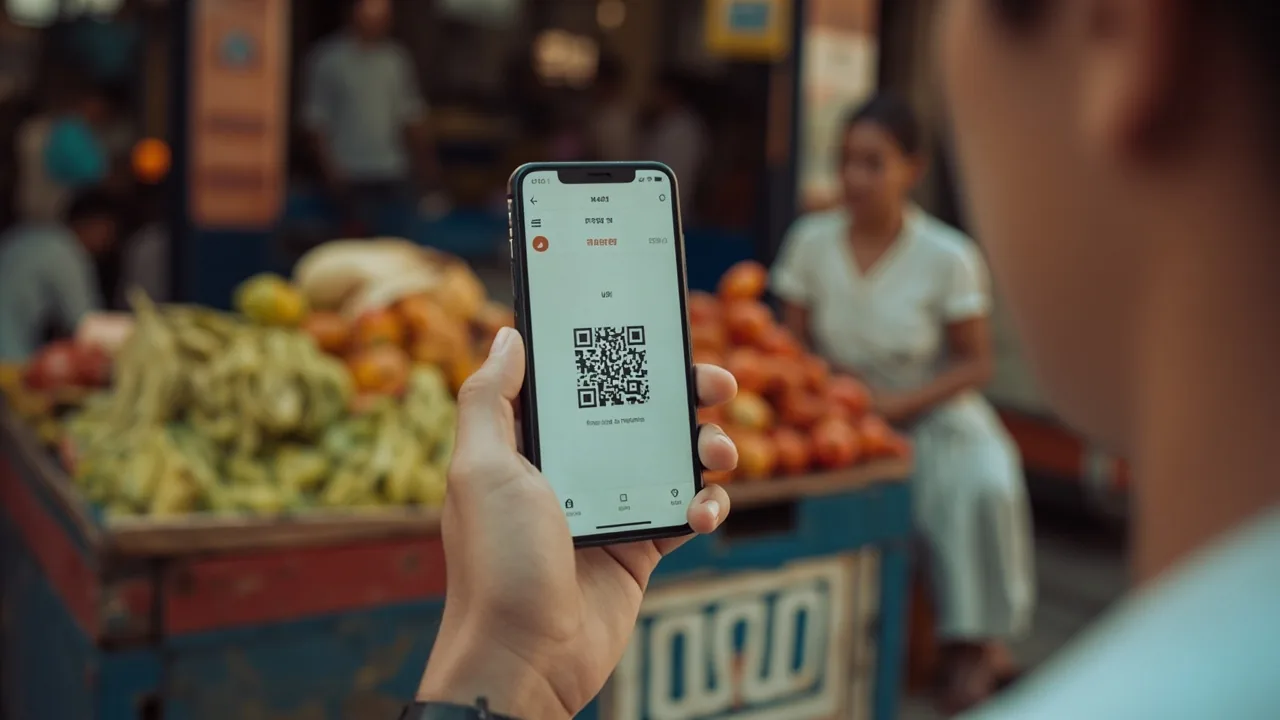
Yes, UPI payments countries abroad are real in 2026. Paytm, PhonePe, and Google Pay work for QR-code payments in Singapore, Malaysia, Thailand, Vietnam, Cambodia, Laos, Indonesia, the UAE, France, and Switzerland. Acceptance is patchier than in India, so always carry a backup card and set up an international UPI PIN before you fly.
What Is UPI (and How Does It Work Abroad)?
UPI (Unified Payments Interface) is India’s instant bank-to-bank payment rail built by NPCI. You link a bank account to an app like Paytm, PhonePe, or Google Pay, then pay anyone with a UPI ID or scan a QR code. The money moves in seconds, no card needed.
For cross-border use, NPCI has signed deals with foreign payment networks so that Indian QR codes can be scanned and settled in local currency. Travellers report the experience feels almost identical to scanning a QR at a chai stall in Pune, except the merchant’s terminal is in a Singapore hawker centre or a Phnom Penh tuk-tuk stand. The money still debits from your Indian bank account in INR, and the merchant receives their local currency on their end.
Two things to know before you go:
- Your app must have an international UPI PIN enabled. Most apps let you set one under Profile > Payment Settings > International Usage, but it is often switched off by default.
- NPCI caps international UPI spend at ₹100,000 (~$1,037.30) per transaction and ₹2,00,000 (~$2,076) per financial year under LRS, so UPI abroad is great for small daily spends but not for paying a hotel bill.
Subodh’s Pro Tip: Treat UPI like cash in your wallet, not like your main travel card. UPI is for the 200-baht pad thai and the 30-ringgit Grab ride. For anything over a few thousand rupees, swipe your forex card.
Quick Answers
| What | Answer | Price (INR) |
|---|---|---|
| Countries accepting UPI in 2026 | 10+ (Singapore, Malaysia, Thailand, Vietnam, Cambodia, Laos, Indonesia, UAE, France, Switzerland, more rolling out) | , |
| Apps that work | Paytm, PhonePe, Google Pay, BHIM, some bank apps (HDFC, ICICI, SBI) | , |
| Per-transaction limit | ₹1,00,000 (~$1,038) (NPCI cap) | , |
| Yearly cap (LRS) | ₹2,00,000 (~$2,076) for tourist remittances | , |
| Set up | Enable international UPI on app before flying | Free |
| Backups you still need | Forex card (Wise/Fi), some local cash | , |
| Acceptance level in SEA | Patchy. Big cities and tourist areas: good. Rural / small shops: hit or miss | , |
Countries That Accept UPI in 2026
This list is verified against NPCI partner announcements and traveller reports as of July 2026. Acceptance percentages are approximate, based on feedback from Indian backpackers using Paytm and PhonePe over the last six months.
Singapore 🇸🇬
Acceptance: High. Singapore was one of the first countries to roll out UPI QR acceptance at merchant terminals, through a PayNow-UPI linkage. You can scan-to-pay at hawker centres (Chinatown, Lau Pa Sat, Maxwell), most chain restaurants, and many convenience stores.
Paytm and PhonePe both work. Google Pay works in some terminals. Travellers report fewer failures here than anywhere else in Southeast Asia.
Safety Alert: Tourists report some terminal display bugs where the Singapore merchant’s screen shows an error even though the payment has gone through. Always check your app’s transaction history before walking away from the counter.
Malaysia 🇲🇾
Acceptance: Medium-High. Kuala Lumpur, Penang, and Malacca have decent UPI coverage at tourist-area restaurants, Indian restaurants (especially in Brickfields, KL), and some GrabPay-accepting merchants. Sabah and Sarawak are patchier.
PhonePe and Google Pay tend to work more reliably than Paytm in Malaysia, based on traveller reports. The PayNet-UPI linkage was extended in late 2025.
Thailand 🇹🇭
Acceptance: Medium. Bangkok has working UPI at many Indian restaurants, some 7-Elevens, and a handful of malls. Phuket and Chiang Mai are hit-or-miss: big hotels and tourist-area cafes often accept it, but small street vendors mostly still want cash.
Paytm is the most-tested app in Thailand. Scan failures are common, so always have ₹574-₹1,436 (~200-500 THB or ~$5.96-$14.89) cash on hand as backup. Check our Thailand budget guide for daily cash expectations.
Subodh’s Pro Tip: If the QR at the counter shows a Thai bank logo (PromptPay) and not an NPCI/UPI logo, your UPI app will not work. Look for stickers that explicitly say “UPI accepted” or “Pay with Paytm/PhonePe.”
Vietnam 🇻🇳
Acceptance: Low-Medium. UPI is accepted in some Ho Chi Minh City and Hanoi Indian restaurants, plus a few tourist-area cafes and souvenir shops in District 1. Outside major cities, acceptance drops sharply.
NPCI and Vietnam’s Napas network signed a UPI linkage in 2025, so the rollout is still ongoing. Travellers report this as the least reliable country in mainland SEA for UPI.
Budget a backup of ₹1,842-₹3,683 (~500,000-1,000,000 VND or ~$19.10-$38.20) cash per day in Vietnam. Our Vietnam budget trip breakdown has cash expectations sorted.
Cambodia 🇰🇭
Acceptance: Low. Phnom Penh and Siem Reap have a handful of Indian-owned guesthouses and a few tourist restaurants that take UPI via Paytm. Outside those pockets, USD cash is still king.
Safety Alert: Cambodia’s card-payment infrastructure is limited even for locals. Do not rely on UPI for more than one or two transactions per day. Carry clean, untorn USD notes (no ₹19,281 (~200 USD) bills, they often get refused).
Laos 🇱🇦
Acceptance: Low. UPI is theoretically live in Laos through the LaOnBanking-UPI linkage, but in practice, few merchants in Luang Prabang or Vientiane will recognise your QR scan. You will be paying in LAK cash for 99% of your trip.
Plan for cash. Our Luang Prabang weather guide covers the best months to visit, when cash flow matters most for budget planning.
Indonesia 🇮🇩
Acceptance: Medium. Bali has reasonable UPI coverage in Canggu, Seminyak, Ubud, and Kuta, thanks to a high concentration of Indian tourists and Indian-owned businesses. Jakarta is patchier. Other islands: don’t count on it.
Paytm and PhonePe both reported well in Bali as of early 2026.
UAE 🇦🇪
Acceptance: High. Dubai and Abu Dhabi have had UPI acceptance since 2022 through the Mashreq-NPCI and Lulu-NPCI partnerships. Mall chains, Lulu Hypermarket, and most Indian restaurants accept it. Google Pay works especially well here.
If you are transiting through Dubai or have a layover, this is one of the most reliable places to test that your UPI works.
France & Switzerland 🇫🇷 🇨🇭
Acceptance: Low-Medium. Both countries launched UPI acceptance in 2024-25 through partnerships with local acquirers. Indian restaurants in Paris, Geneva, and Zurich take it. Big chain stores (Fnac, Manor) are starting to roll out.
Coverage is still limited compared to card payments, so do not plan to skip the forex card. Treat UPI as a bonus.
Other countries rolling out
Bhutan, Sri Lanka, Mauritius, Nepal, and the UK have all signed UPI linkage MoUs in the last 18 months. Some merchant coverage is live in each, but travellers report inconsistent experience. Check NPCI’s official site for the most current rollout status before you fly.
Step-by-Step: How to Set Up UPI for International Use
Follow this checklist at least one week before departure. Trying to enable international UPI on the fly at Bangkok airport is a recipe for a missed payment.
Step 1: Update your app to the latest version
Open Paytm, PhonePe, or Google Pay on your phone and update from the App Store / Play Store. International UPI support has been added in multiple 2025-26 updates, and older app versions may not have it.
Step 2: Enable international UPI usage
In Paytm: Profile > Payment Settings > International Usage > Toggle ON. In PhonePe: Settings > UPI & Payment Methods > UPI International > Enable. In Google Pay: Settings > Payments > International Payments > ON.
The toggle is buried in different places across apps. If you cannot find it, call your bank’s UPI customer care before flying, not after.
Step 3: Set a separate international UPI PIN
Most apps require you to set a 6-digit PIN specifically for international transactions, distinct from your regular UPI PIN. Do this before you leave home; setting it on a foreign SIM can fail due to OTP routing issues.
Step 4: Link the right bank account
Some banks restrict international UPI to certain account types. HDFC, ICICI, SBI, Axis, and Kotak Mahindra have full support as of 2026. If your primary account is at a smaller bank, link a backup account from one of these before you travel.
Step 5: Verify the FX rate your app charges
UPI transactions abroad get converted at the app’s partner rate, which is usually 1-2% worse than the mid-market rate. For a quick mental check, current rates are roughly:
- 1 USD ≈ ₹96.3294
- 1 SGD ≈ ₹74.6855
- 1 THB ≈ ₹2.8691
- 1 VND ≈ ₹0.0037
If your app quotes you a rate more than 3% worse than these benchmarks, cancel the payment and use your forex card instead.
Step 6: Test with a small payment at the airport
Before leaving India, do a tiny UPI transaction at a shop inside your departure terminal. If it works, your app is configured correctly and you will save yourself the diagnostic headache abroad.
Step 7: Carry backups
UPI is one rail. You need at least two more ways to pay:
- Forex card (Wise or Fi card, both excellent for Indians, see our best forex card guide)
- Some local currency cash (₹4,820-₹9,640 (~50-100 USD) equivalent per country)
- A credit card with no FX markup (HDFC Infinia, Axis Atlas)
Check our carry money abroad guide for the full breakdown.
Common Mistakes Indians Make with UPI Abroad
Mistake 1: Assuming every QR code accepts UPI
In Thailand and Vietnam especially, you will see QR codes on every counter. Most of those are local network codes (PromptPay in Thailand, VietQR in Vietnam) and your Indian UPI app will fail on them. Only scan QR codes that explicitly mention UPI, Paytm, PhonePe, or NPCI.
What happens: scan fails with an error like “Invalid QR” or “Merchant not configured.” You then look like a confused tourist, and the cashier has to reset their terminal.
How to avoid: ask the cashier “UPI / Paytm accepted?” before scanning.
Mistake 2: Not enabling international UPI before leaving India
Many travellers land in Bangkok, try to pay with Paytm, and get a “International payments disabled” error. The toggle is in a different menu from domestic UPI and is off by default on most apps.
What happens: embarrassing fumbling in front of a queue of locals, and you end up at an ATM anyway.
How to avoid: complete Steps 1-6 above at home, the night before your flight.
Mistake 3: Hitting the LRS limit and getting blocked
NPCI’s Liberalised Remittance Scheme cap is ₹2,00,000 per financial year (April to March) for tourist payments through UPI. Hit it and your UPI abroad will stop working until next April.
What happens: confused “transaction failed” messages that don’t explain the cap. You don’t realise until your third trip of the year.
How to avoid: track your total UPI abroad spend. Once you cross ₹1.5 lakh in a financial year, switch to forex card for the rest.
Mistake 4: Paying hotel bills via UPI
Hotels in SEA often quote prices including a 3-5% card surcharge that they waive if you pay cash. UPI payments usually do not qualify for this discount, and the per-transaction ₹1 lakh cap means you can’t pay a 7-night Bangkok hotel bill via UPI anyway.
What happens: you pay more than the rack rate for no good reason.
How to avoid: use UPI for street food, tuk-tuks, small restaurants. Use your forex card or cash for hotels.
Mistake 5: Relying on UPI in rural areas
UPI acceptance in SEA is concentrated in capital cities, tourist zones, and Indian-owned businesses. Take a sleeper train from Bangkok to Chiang Mai and you will find exactly zero UPI merchants at the rural stops.
What happens: stuck without payment options in the middle of nowhere.
How to avoid: carry enough local cash for any trip outside the main cities. Our Thailand sleeper train guide covers the cash expectations for that route.
What Most Guides Don’t Tell You
1. UPI abroad counts as a foreign-exchange transaction under LRS
Every UPI scan abroad is technically a remittance from India to a foreign country. It counts against your ₹2,50,000 (~$2,595) per-financial-year LRS limit (the same cap that applies to forex card loads, international wire transfers, and even some travel bookings). Travellers who don’t know this sometimes hit the cap in October and find themselves unable to load their forex card for the rest of the year.
What to do: consolidate your foreign-exchange spending. If you put ₹2 lakh on a forex card and also spend ₹80,000 (~$829.84) via UPI abroad, you are nearing the cap and may be flagged.
2. The merchant’s QR is in local currency, but you pay in INR
You scan a Singapore QR, the merchant’s terminal settles in SGD, and Paytm debits your Indian bank account in INR using the day’s reference rate. This is invisible to you, but it means the merchant pays a small fee to their acquirer, which is why some merchants only enable UPI for orders above a minimum threshold (often ₹374-₹747 (~5-10 SGD or ~$3.88-$7.75) in Singapore).
What to do: if a small merchant in Singapore refuses your Paytm for a S ₹289 (~3 USD) drink, that is normal economics, not a technical failure. Order one more item or pay cash.
3. International UPI fails more on iPhones than on Android
Travellers report a higher failure rate for international UPI transactions on iOS than on Android, particularly on older iPhones running iOS 17 or below. The issue is intermittent, but a known pattern across multiple Paytm and PhonePe forum threads.
What to do: if you are on iPhone, update to the latest iOS version and the latest app version before travelling. If you have an Android backup phone, carry it as a payment backup. This is one of those cases where having an old Redmi in your bag helps.
4. Some UPI apps refund failed transactions in 5-7 days
If your Paytm transaction abroad fails after the merchant’s terminal shows “success,” the money is held by the app for 3-7 business days before being reversed. This is not a bug; it is how the settlement reconciliation works across borders.
What to do: keep a written record (a screenshot) of every UPI transaction abroad. If the money doesn’t come back in 7 days, raise a dispute in the app with that screenshot.
5. UPI works in Sri Lanka now, but only through certain apps
NPCI and Sri Lanka’s LankaPay signed a UPI linkage in 2024, and merchant QR acceptance is live in Colombo, Kandy, and Galle as of 2026. PhonePe works; Paytm is patchy.
What to do: if you are heading to Sri Lanka, install PhonePe before flying, even if Paytm is your usual app.
FAQ
Can I use Paytm outside India in 2026? Yes, Paytm works for international UPI payments in Singapore, Malaysia, Thailand, Vietnam (limited), Cambodia (limited), UAE, France, Switzerland, and several other countries. You must enable international UPI in the app’s settings before travelling.
Which countries accept UPI from India right now? As of July 2026, UPI is accepted in Singapore, Malaysia, Thailand, Vietnam, Cambodia, Laos, Indonesia, UAE, France, Switzerland, Bhutan, Sri Lanka, Mauritius, Nepal, and the UK (limited). More countries are in active rollout.
Is there a limit on UPI payments abroad? Yes. NPCI caps each international UPI transaction at ₹1,00,000 (~$1,038), and your total tourist remittance via UPI counts toward the ₹2,00,000 (~$2,076)-per-year LRS sub-limit.
Do I need a forex card if I have UPI? Yes. UPI is for small daily spends and the acceptance is patchy in many countries. A forex card from Wise or Fi handles hotels, transport, and big purchases reliably. See our forex card comparison for the best options for Indian travellers.
Does UPI abroad charge a markup? Most UPI apps add 1-2% over the mid-market FX rate on cross-border transactions. Compare this to your forex card’s markup (Wise: 0.3-0.5%, Fi: 0%) before deciding which rail to use for big spends.
Can I use UPI in Bali? Yes, UPI works in Bali, especially in Canggu, Seminyak, and Ubud. PhonePe and Paytm both reported well there in early 2026.
Why is my UPI QR scan failing in Thailand? Most QR codes in Thailand are PromptPay, which is a Thai domestic rail. Your Indian UPI app cannot read those. Look for stickers that say “UPI accepted” or specifically show the Paytm/PhonePe/NPCI logo.
Subodh’s Take
UPI abroad in 2026 is real, useful, and getting better every quarter. Singapore and the UAE are rock solid, Thailand and Bali work for daily spends, and Vietnam and Cambodia are improving. But UPI is one payment rail, not a whole travel-money strategy. Pair it with a Wise or Fi forex card, keep ₹4,820-₹9,640 (~50-100 USD) of emergency USD cash, and you will rarely hit a payment problem anywhere in Southeast Asia. The day you try to pay a 14,000-baht hotel bill with Paytm and remember the ₹1 lakh transaction cap is the day you’ll thank me for telling you to bring a backup card.
Safety Advisory: Before any trip, check your government’s latest travel advisory at mea.gov.in and the destination country’s own advisory site. Rules and on-ground conditions change quickly, and no article can replace an official government update.
