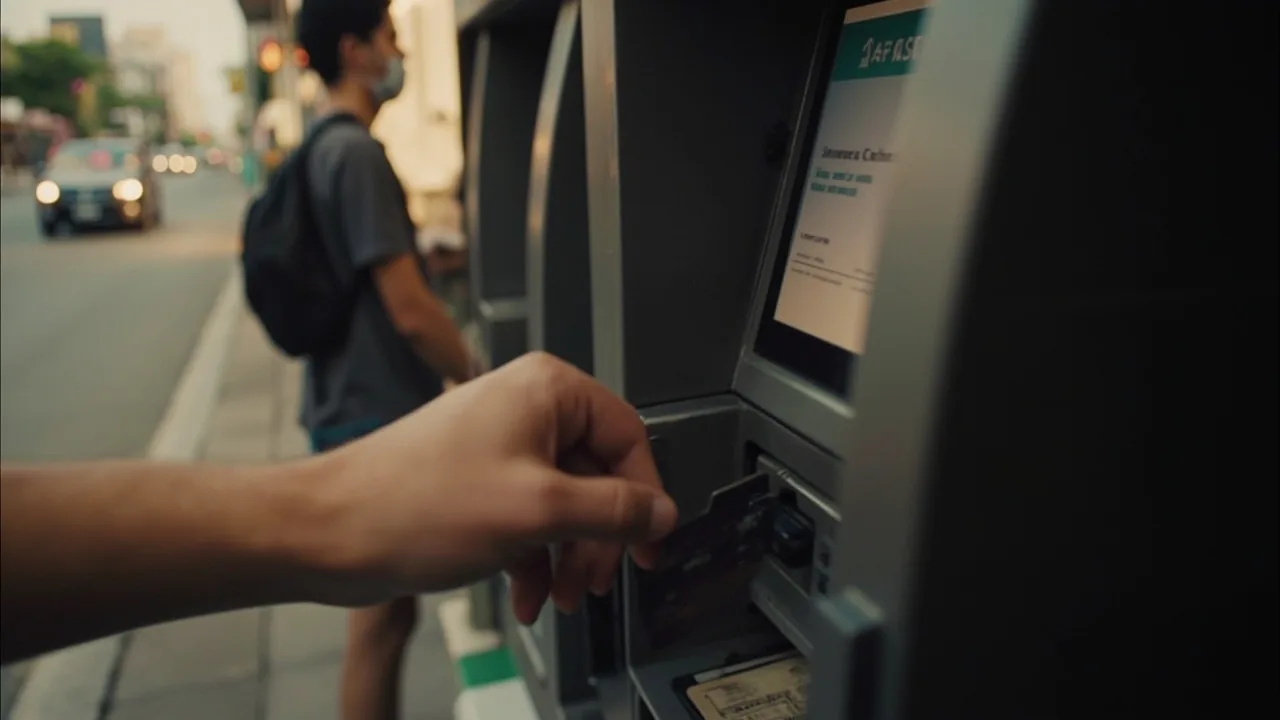
SE Asia ATM Fees: Indian Traveler’s Fee-Free Guide (2026)
Most ATMs in Thailand, Vietnam, Cambodia, and Laos charge a fixed operator fee on top of your bank’s charges. A handful waive that fee for certain foreign cards. Part of the SE Asia backpacking guide, this corridor piece covers which ATMs to use, which Indian cards avoid double-charging, and how to minimise costs across the four-country trail.
Quick Answers
| What | Answer | Price (INR) |
|---|---|---|
| Are ATM withdrawals free in Thailand? | No, but fee-free at AEON, Bangkok Bank (Bualuang), and Superrich counters | ₹0 at fee-free ATMs (operator fee waived) |
| Do all ATMs charge a fee in Vietnam? | Yes, Vietcombank, BIDV, and most charge ₹202 (~55,000 VND or ~$2.10) | 0 (operator fee applies) |
| What’s the cash carrying limit for India? | No customs declaration up to USD 3,000; LRS allows USD 250,000/year | 0 (regulatory threshold) |
| Best debit card to avoid fees? | DBS Treasure or Wise Multi-Currency | 0 (no foreign ATM fee on first withdrawals) |
| Worst ATM choice in Cambodia? | Canadia Bank, almost always adds ₹483 (~5 USD) | 0 (high fee) |
Option 1: Fee-Free ATMs (Best for Most Withdrawals)
The real question is “what ATMs are free” specifically. Fee structures checked across Bangkok, Chiang Mai, Hanoi, and Phnom Penh in mid-2026 show three consistent patterns:
Thailand: AEON Bank, Bangkok Bank (BBL), and Superrich Thailand ATMs do not charge the ₹631 (~220 THB or ~$6.54) operator fee when you withdraw with a foreign card. AEON is the most reliable at 0 THB fee. Bangkok Bank charges 0 THB if your card is on their no-fee partner list (most Indian bank cards are not, but DBS and ICICI Visa/Mastercard debit cards often are). Kasikornbank (KBank), Krungthai (KTB), and Siam Commercial Bank (SCB) all charge the full ₹631 (~220 THB or ~$6.54) per withdrawal.
Vietnam: Almost no ATM is fee-free. Vietcombank, BIDV, Techcombank, and ACB all charge ₹202-₹276 (~55,000-75,000 VND or ~$2.10-$2.86). The only operator widely reported as zero-fee for foreign cards in 2026 is VPBank, though this is inconsistent by branch. The pragmatic move in Vietnam is to withdraw the maximum amount per transaction (usually ₹18,405 (~5,000,000 VND or ~$190.67) ≈ ₹18,500 (~$191.65)) so the fixed fee is a smaller percentage of your total.
Cambodia: ABA Bank, Sathapana Bank, and ACLEDA all charge ₹97-₹483 (~1-5 USD). The operator fee is non-negotiable at almost every machine. The exception is Maybank Cambodia and some ANZ Royal ATMs inside Phnom Penh airport and major shopping centres, which waive the operator fee for foreign cardholders withdrawing above ₹9,653 (~100 USD).
Laos: BCEL (Banque pour le Commerce Extérieur Lao) charges ₹108 (~25,000 LAK or ~$1.12) per withdrawal, and JDB (Joint Development Bank) charges ₹130 (~30,000 LAK or ~$1.34). These are the lowest operator fees in the region relative to withdrawal size, so Laos is one of the easier places to dodge excessive ATM charges.
Subodh’s Pro Tip: Don’t trust “ATM in Thailand with no fee” Google results from 2023 or earlier. Thailand changed its ATM fee structure in late 2023, and many outdated blog posts still recommend KBank or SCB as fee-free. They are not.
Option 2: The Right Indian Bank Card
The second layer of “do all ATMs charge a fee” depends entirely on what card you’re holding. Indian banks fall into three tiers:
Tier 1. Zero foreign ATM fee (best): DBS Treasure, ICICI Coral Visa Debit, HDFC Infinia Metal, Axis Atlas, and HSBC Premier cards waive the bank’s own foreign withdrawal fee. You’ll still pay the operator’s fee at the ATM (unless you find a fee-free machine as listed above). DBS Treasure also reimburses up to 6 ATM operator fees per month worldwide, so combining DBS with an AEON or Bangkok Bank ATM gives you a genuinely zero-cost withdrawal.
Tier 2. Flat fee (acceptable): SBI, Kotak, IDFC First, and Yes Bank debit cards charge a flat ₹100-₹150 (~$1.04-$1.55) per foreign ATM transaction, regardless of the operator fee. If you withdraw once a week, this works out to roughly ₹400-₹600/month in bank fees on top of operator fees.
Tier 3. Percentage-based (avoid): Some Indian bank cards charge 1-3% of the withdrawal amount on top of fixed fees. Standard Chartered and a few older HDFC cards fall here. A ₹14,345 (~5,000 THB or ~$148.61) withdrawal becomes ₹14,345 (~5,000 THB or ~$148.61) + ₹631 (~220 THB or ~$6.54) operator fee + ₹430 (~150 THB or ~$4.46) bank fee = ₹15,407 (~5,370 THB or ~$159.61) effective, and at 2% you’re paying another ₹287 (~100 THB or ~$2.97), so ₹15,693 (~5,470 THB or ~$162.58) total.
For forex cards (HDFC, Axis, Niyo Global), the structure is similar but rates are locked at the time of card loading rather than the day of withdrawal. Travellers report that Wise and Niyo Global give the closest-to-mid-market FX rates in 2026.
Option 3: Withdrawing More, Less Often
The single biggest cost-saving move for Indian backpackers is changing withdrawal behaviour. Instead of pulling ₹5,738 (~2,000 THB or ~$59.44) at a time, withdraw ₹20,083-₹28,690 (~7,000-10,000 THB or ~$208.05-$297.22) per visit. Here’s why:
A ₹5,738 (~2,000 THB or ~$59.44) withdrawal with a ₹631 (~220 THB or ~$6.54) operator fee = 11% effective fee. A ₹14,345 (~5,000 THB or ~$148.61) withdrawal with a ₹631 (~220 THB or ~$6.54) operator fee = 4.4% effective fee. A ₹28,690 (~10,000 THB or ~$297.22) withdrawal with a ₹631 (~220 THB or ~$6.54) operator fee = 2.2% effective fee.
Most Thai ATMs cap at ₹86,070 (~30,000 THB or ~$891.65) per transaction, and most Vietnamese ATMs cap at ₹18,405 (~5,000,000 VND or ~$190.67). Cambodian ATMs go up to ₹38,612-₹48,264 (~400-500 USD) per transaction at ABA Bank. Laotian ATMs cap lower, typically ₹8,642 (~2,000,000 LAK or ~$89.53).
Safety Alert: Withdrawing more means carrying more. Most backpacker hostels in SE Asia have lockers (bring a padlock), and splitting cash between wallet, locked bag, and a hidden inner pocket is standard practice. Don’t flash large wads at the ATM, especially in Vietnam and Cambodia.
Option 4: Cash Carrying Limits (India and SE Asia)
The “cash carrying limit international” question has three answers: the Indian side, the destination side, and the practical side.
Indian side: RBI’s Liberalised Remittance Scheme (LRS) allows Indian residents to spend up to USD 250,000 per financial year abroad across all foreign exchange purposes, including foreign travel, education, and gifts. There is no daily or per-trip cash-carrying limit from India; you can take any amount up to your LRS cap if you declare it at airport customs. For cash specifically, RBI allows up to ₹289,587 (~3,000 USD) in foreign currency notes out of India without customs declaration issues, though amounts above that threshold must be declared. Traveller’s cheques have no longer been a primary instrument since 2020.
Thailand: Customs declaration required for foreign currency exceeding ₹1,930,578 (~20,000 USD) equivalent. No restriction on spending per day, but hotels and tour operators may require proof of funds for stays over 30 days.
Vietnam: Customs declaration for amounts over USD 5,000 in cash. Vietnam’s State Bank has been tightening informal USD cash carrying limits for foreigners in 2024-2025, and travellers report being asked to declare amounts as low as USD 2,000 at Ho Chi Minh City airport.
Cambodia: Cash in or out above USD 10,000 must be declared.
Laos: USD 5,000 cash carrying limit without declaration.
Practical side: In 2026, the smart move for Indian backpackers is to carry roughly ₹19,306-₹28,959 (~200-300 USD) in cash as backup (around ₹19,000-₹29,000 (~$196.83-$300.43)), then rely on ATMs for the rest. Most of the Banana Pancake Trail is fully ATM-connected, and you’ll lose 1-2% to fees regardless of strategy. Holding 100% in cash means you’re at risk the entire trip; holding 100% on cards means a single blocked card ends your trip.
Border Crossing Cash Strategy
Two of the four countries in this corridor have land borders you will likely cross:
Thailand-Laos border at Chiang Khong / Huay Xai: Travellers report that the Thai side has a Bangkok Bank ATM with operator fee, and the Lao side (BCEL) charges ₹108 (~25,000 LAK or ~$1.12) per withdrawal. Withdraw your last Thai baht on the Thai side, then walk across to BCEL on the Lao side. The border crossing typically takes under two hours for Indian passport holders, though times vary by queue. Visa-on-arrival at Huay Xai is reportedly around ₹2,896-₹4,054 (~30-42 USD) depending on nationality tier; confirm current fees before you go, as these change frequently. See our Chiang Khong border crossing guide for step-by-step details.
Thailand-Cambodia border at Poipet / Aranyaprathet: Travellers report that Poipet has limited ATM options, and the machines that exist (Canadia Bank, ACLEDA) charge ₹483 (~5 USD)+. Withdraw what you need on the Thai side before crossing, then take USD cash as backup for Cambodia where the USD circulates as a second currency. The Poipet crossing for Indian passport holders has specific scam patterns documented in our Poipet border crossing guide.
Vietnam-Cambodia border at Bavet / Moc Bai: Withdrawals on the Vietnamese side (BIDV, Vietcombank) are available but charge ₹202 (~55,000 VND or ~$2.10). On the Cambodian side, ACLEDA charges ₹97-₹483 (~1-5 USD). Travellers report that bringing USD cash across is the most efficient move at this border, since the USD/Vietnamese Dong and USD/Riel exchange at the border is poor.
For more on cross-border scam patterns, our scams to avoid Laos Vietnam border crossing guide is worth reading before you cross.
When NOT to Rely on ATMs
A handful of situations in SE Asia will leave you stranded without cash:
Rural Vietnam: District-level towns and motorbike routes in Ha Giang, Cao Bang, and the Phong Nha region often have no functioning ATMs, and the ones that exist frequently run out of cash after weekends. Travellers report carrying ₹7,362-₹11,043 (~2,000,000-3,000,000 VND or ~$76.27-$114.40) cash (~₹7,400-₹11,100) as the baseline for these areas.
Laos slow boats: The Huay Xai to Luang Prabang Mekong slow boat stops in Pakbeng, where there is exactly one BCEL ATM and it frequently runs out of cash or doesn’t accept foreign cards. Withdraw the full trip amount in Huay Xai before boarding.
Vietnam-Cambodia overland via Chau Doc: Travellers report that the Chau Doc end has limited ATMs and the Cambodia side at Kaam Samnor / Neak Luong is similarly cash-poor. Our Chau Doc to Cambodia overland guide has the practical workaround.
Cambodia islands: Koh Rong and Koh Rong Samloem have one ATM between them, often out of cash or out of service. Our Siem Reap to Koh Rong guide and Phnom Penh to Koh Rong guide recommend carrying all the cash you need for the islands plus 30% buffer.
Getting Connected
Most ATMs don’t require data to function, but having a working SIM helps when you need to call your bank’s fraud line, use ride-hailing to reach an off-the-beaten-path ATM, or check rates on Wise. eSIM (land already connected): Get Nomad eSIM before you fly. Activates the second your flight lands, no passport scan at the airport. Good for the entire Thailand-Vietnam-Laos-Cambodia loop. Set up the Cambodia activation the night before crossing, since that’s the trickiest of the four.
Indian Passport Specifics
Two Indian-specific quirks show up on the ATM trail in SE Asia:
Blocked cards: Indian debit cards get blocked by RBI algorithms more often than other nationalities, particularly at high-risk-merchant-category ATMs (some casinos, some petrol stations, some ATMs flagged for skimming). Always call your bank before departure and set a travel notice for Thailand, Vietnam, Cambodia, and Laos with date ranges. SBI and HDFC both have this in their mobile apps under international travel settings. DBS Treasure customers report zero blocks in 2026.
USD 250,000 LRS consideration: For longer trips (90+ days), the LRS USD 250,000/year limit is not the binding constraint; the issue is how much foreign currency you’ve spent in a financial year. If you’ve already paid university tuition or made property payments, your remaining LRS budget is reduced. Track this before assuming you can withdraw freely.
Safety Alert: Beyond petty ATM-area scams, check the MEA India travel advisory page and your destination country’s own government advisory site before departure.
FAQ
Are ATM withdrawals free in Thailand with an Indian card? Not by default, but yes at AEON and Bangkok Bank ATMs with a DBS, ICICI, or HDFC card from the no-foreign-fee list. Otherwise expect ₹631 (~220 THB or ~$6.54) per withdrawal plus your bank’s own fee.
What ATMs are free for Indian debit cards specifically? AEON Bank in Thailand, VPBank (inconsistently) in Vietnam, and Maybank Cambodia. Combined with a DBS Treasure or HDFC Infinia card, you can withdraw with zero combined fee.
How much cash should I carry for a SE Asia trip? ₹19,306-₹28,959 (~200-300 USD) in physical cash as backup (~₹19,000-₹29,000). Withdraw the rest via ATM in larger chunks (₹14,345-₹28,690 (~5,000-10,000 THB or ~$148.61-$297.22) or equivalent) every 5-7 days.
Do all ATMs charge a fee in Vietnam? Yes, all of them. The ₹202 (~55,000 VND or ~$2.10) operator fee (~₹204) is unavoidable. Choose your card wisely to avoid double-charging.
What’s the cash carrying limit from India? RBI allows up to ₹289,587 (~3,000 USD) in foreign currency cash out of India without customs declaration, and up to USD 250,000/year under LRS for total foreign exchange purposes. Declare amounts above USD 3,000 at airport customs.
Can I use UPI in SE Asia? Limited as of 2026. Thailand has some UPI QR acceptance in Bangkok and Phuket tourist zones, Vietnam is piloting it, and Cambodia/Laos do not accept UPI at ATMs. Carry backup cash and cards.
Subodh’s Take
The ATM game in SE Asia isn’t about finding one magical fee-free machine, it’s about stacking two cheap options (the right card + the right bank) and avoiding the percentage-fee cards that eat your budget on every withdrawal. DBS Treasure + AEON Bank in Thailand, VPBank in Vietnam, and Maybank in Cambodia will get you through the trail with under 1% effective fee on cash. Everything else is fine if you know the cost going in.