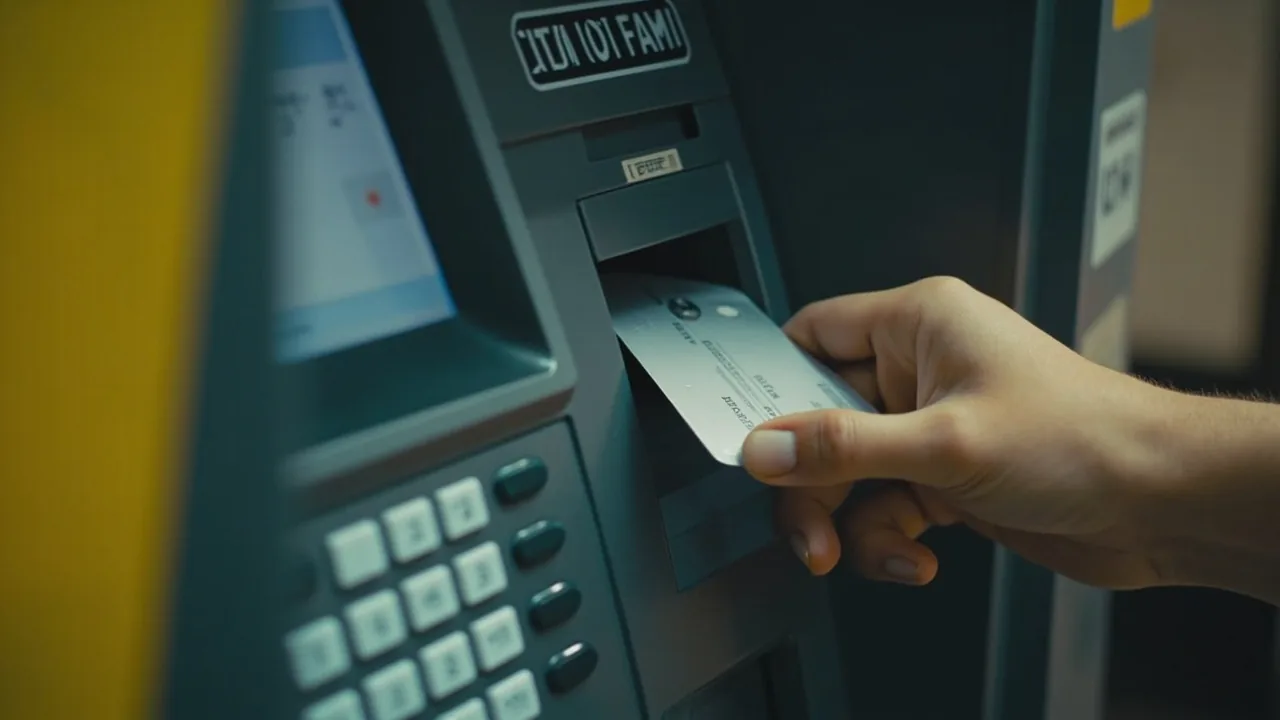
Using Your Indian ATM Card in Thailand: Fees, Limits & Bank-Wise Charges
Yes, your Indian debit card works at Thai ATMs. You’ll get Thai baht, but every withdrawal comes with a double fee. This guide breaks down exactly what SBI, HDFC, ICICI, Axis, and Kotak charge, what the Thai bank adds on top, and how to withdraw the cheapest way possible. Verified against current bank schedules, official card-issuer T&Cs, and traveller reports from July 2026. For related planning, see our guide on Thailand Travel Insurance Indian Tourist Cost Coverage.
Quick Answers
| What | Answer | Price (INR) |
|---|---|---|
| Will my Indian debit card work in Thailand? | Yes, at any ATM with Visa/Mastercard/Cirrus/Maestro logo | Standard ₹632 (~220 THB or ~$6.55) Thai operator fee applies |
| Thai bank ATM fee (per transaction) | Charged by the ATM owner (Krungthai, Bangkok Bank, etc.), flat rate | ₹632 (~220 THB or ~$6.55) |
| SBI international ATM withdrawal fee | Per-transaction flat fee + 3.5% forex markup | ₹100 (~$1.04)+ 3.5% markup |
| HDFC international ATM withdrawal fee | Per-transaction flat fee + 3.5% forex markup | ₹125 (~$1.30)+ 3.5% markup |
| ICICI international ATM withdrawal fee | Per-transaction flat fee + 3.5% forex markup | ₹125 (~$1.30)+ 3.5% markup |
| Axis Bank international ATM fee | Per-transaction flat fee + 3.5% forex markup | ₹100 (~$1.04)+ 3.5% markup |
| Best zero-markup debit card option | Niyo / Fi / Equitas Zero Forex card | 0% markup, only ₹632 (~220 THB or ~$6.55) operator fee |
| Daily ATM withdrawal limit (most banks) | ₹574 (~200 THB or ~$5.96) note dispenser default is 20 notes = ₹11,486 (~4,000 THB or ~$119.14) | 4,000 THB (~₹11,500) |
| Thai ATM withdrawal ceiling (Visa/Mastercard) | Set per transaction by ATM, usually 20-30 notes | ₹57,430-₹86,145 (~20,000-30,000 THB or ~$595.72-$893.59) max per transaction |
| Will my card work in Malaysia too? | Yes, same network rules. Maybank/CIMB charge flat | (~₹285) per transaction |
Subodh’s Pro Tip: Always decline “conversion to INR” at the ATM screen. That prompt is Dynamic Currency Conversion (DCC), and it adds a 3-5% markup on top of everything else. Pick “without conversion” or “in THB” every single time. You may also find Thailand Visa Indian Minor Children Document Requirements useful for this trip.
How It Works: The Mechanics of Indian Cards in Thai ATMs
Every withdrawal from a Thai ATM triggers two separate charges, plus one hidden one.
Charge 1: The Thai operator fee. This is set by the ATM’s owner bank, not by yours. Most Thai banks (Krungthai, Bangkok Bank, Kasikorn, Siam Commercial, Government Savings Bank) charge ₹632 (~220 THB or ~$6.55) flat per transaction to foreign cards. You’ll see this exact number on the ATM screen before you confirm. It’s non-negotiable and unavoidable on a single withdrawal.
Charge 2: Your Indian bank’s fee. Your home bank charges a per-transaction flat fee (₹100-₹125 (~$1.04-$1.30) for most public/private banks) plus a forex markup. The markup is the real killer. Most Indian banks quote 3.5% above the mid-market RBI rate. A few newer cards (Niyo, Fi, Equitas Zero Forex, Jupiter Zero Forex) quote 0% markup and only charge you the flat fee, or nothing at all.
Charge 3 (the hidden one): DCC. When the ATM asks “Convert to INR?” and you tap Yes, the ATM’s payment processor applies its own exchange rate, typically 3-5% worse than your bank’s rate. You pay that markup on top of everything else. Always choose “without conversion” or “in local currency.” This is the single biggest mistake Indian travellers make at Thai ATMs.
Net effect for a ₹5,743 (~2,000 THB or ~$59.57) withdrawal on a standard SBI card:
- Thai operator fee: ₹632 (~220 THB or ~$6.55)
- SBI flat fee: ₹100 (~$1.04) + SBI 3.5% markup on ₹5,733 (~$59.42): ₹201 (~$2.08)- Total: ~₹931 (~$9.65) in fees on a ₹5,733 (~$59.42) withdrawal = 16% effective cost
Net effect for the same ₹5,743 (~2,000 THB or ~$59.57) withdrawal on a Fi Zero Forex card:
- Thai operator fee: ₹632 (~220 THB or ~$6.55)
- Fi flat fee: ₹0 (₹100 for some cards)
- Fi 0% markup: ₹0
- Total: ~₹630 (~$6.53) in fees on a ₹5,733 (~$59.42) withdrawal = 11% effective cost
The takeaway: The Thai operator fee is identical for everyone. The only lever you control is your Indian bank’s markup. A zero-markup card saves you roughly ₹300-₹400 (~$3.11-$4.15) per ₹5,000 (~$51.82) withdrawal compared to a standard bank debit card.
Verified 2026-07-17 against SBI, HDFC Bank, ICICI Bank, Axis Bank, Kotak Mahindra Bank official forex/ATM-fee schedules and Equitas Small Finance Bank, Niyo, Jupiter card T&Cs. Thai operator fee confirmed against Bangkok Bank’s published ₹632 (~220 THB or ~$6.55) foreign-card rate.
Bank-Wise Comparison: What Each Indian Bank Charges
The numbers below are per-transaction. Multiply by the number of times you’ll withdraw during your trip to estimate total hit.
| Bank | Per-Txn Fee | Forex Markup | Max Daily Limit | Notes |
|---|---|---|---|---|
| SBI (Classic/Debit) | ₹100 (~$1.04) | 3.5% | ₹40,000-₹60,000 (~$414.59-$621.88) | YONO card has same fees, no relief |
| SBI (Gold/International) | ₹100 (~$1.04) | 3.5% | ₹100,000 (~$1,036.47) | Higher limit, same markup |
| HDFC Bank (EasyShop Platinum) | ₹125 (~$1.30) | 3.5% | ₹100,000 (~$1,036.47) | Premium cardholders get ₹0 fee on some variants |
| HDFC Bank ( Millennia/Regalia) | ₹0-₹125 (~$0-$1.30) | 3.5% | ₹200,000 (~$2,072.94) | Higher tier waives fee but not markup |
| ICICI Bank (HPCL coral, etc.) | ₹125 (~$1.30) | 3.5% | ₹100,000 (~$1,036.47) | Some cards free first 3-5 transactions/year abroad |
| Axis Bank ( Burgundy) | ₹100 (~$1.04) | 3.5% | ₹100,000 (~$1,036.47) | Lower fee than peers, same markup |
| Kotak Mahindra (Classic) | ₹110 (~$1.14) | 3.5% | ₹75,000 (~$777.35) | Lowest daily limit of major banks |
| Niyo Global (SBM/Equitas-backed) | ₹0 | 0% | ₹200,000 (~$2,072.94) | Zero-markup, issued via partner SBM Bank India |
| Fi Federal (Zero Forex debit) | ₹0-₹100 (~$0-$1.04) | 0% | ₹100,000 (~$1,036.47) | App-only, free if you meet spend criteria |
| Equitas Zero Forex (Selfe+) | ₹0 | 0% | ₹100,000 (~$1,036.47) | Free lifetime on international ATM use |
| Jupiter Zero Forex | ₹0 | 0% | ₹100,000 (~$1,036.47) | Requires salary account or FedNow signup |
The “max daily limit” column is what your Indian bank caps. The Thai ATM has its own per-transaction ceiling (usually 20,000-30,000 THB), so the lower of the two applies. With a 20-note dispenser default, pulling ₹11,486 (~4,000 THB or ~$119.14) per transaction is the most common practical max.
Safety Alert: Some Thai ATMs in tourist areas (Khao San Road, Patong, certain Phuket branches) have been reported to skim cards. Always use ATMs inside bank branches, not standalone machines on the street. Cover your PIN with your hand. If a card sticks, walk away and call your bank’s international collect-call number printed on the back.
For a deep dive on ATM withdrawal limits and the exact mechanics of how foreign cards interact with Thai banks, see our Thailand ATM withdrawal guide.
Comparison of Popular Options
The four real choices for an Indian traveller in Thailand, ranked by total cost per ₹10,000 (~$103.65) spent.
| Option | Markup | ATM Fee | Effective Cost on ₹10,000 (~$103.65) | Verdict |
|---|---|---|---|---|
| Zero-markup debit (Fi/Niyo/Equitas Zero) | 0% | ₹632 (~220 THB or ~$6.55) per txn | ₹11,480 (~$118.99) effective cost on ₹10,000 (~$103.65) base spend | Best option for most travellers |
| Standard debit (SBI/HDFC/ICICI/Axis/Kotak) | 3.5% | ₹100-₹125 (~$1.04-$1.30)+ ₹632 (~220 THB or ~$6.55) | ₹11,800-₹11,900 (~$122.30-$123.34) effective cost | Fine if you have no other option |
| Forex prepaid card (HDFC/MakeMyTrip/Thomas Cook) | 2-3.5% | ₹100-₹200 (~$1.04-$2.07)+ ₹632 (~220 THB or ~$6.55) | ₹11,650-₹11,900 (~$120.75-$123.34) effective cost | Useful as backup, worse than zero-markup debit |
| Cash exchanged in India before flying | 5-8% worse than mid-market | ₹0 | ₹10,500-₹10,800 (~$108.83-$111.94) net (you start with less) | Worst option, full stop |
The “cash exchanged in India” row is the trap. You’ll see “no commission!” posters at airport forex counters, but the rate they offer is 5-8% below mid-market. You’re paying for the convenience of walking out of Mumbai airport with baht in hand. Skip it entirely.
For an overall picture of what Thailand costs day-to-day once you’ve handled the ATM question, see our Thailand budget guide or our full guide on using your Indian ATM card in Thailand.
India-Specific Gotchas: RBI, TCS, and the ₹7 Lakh Question
The Reserve Bank’s Liberalised Remittance Scheme (LRS) governs how much foreign exchange Indians can use in a financial year. The headline rules:
- Annual LRS cap: USD 250,000 (~₹2.4 Crore) per person per financial year. You’ll never hit this on a Thailand trip.
- 20% Tax Collected at Source (TCS): From July 2023, every forex outflow under LRS attracts 20% TCS above ₹7 Lakh in a financial year. The first ₹7 Lakh is TCS-free for education and medical remittances, but for travel the threshold is effectively ₹0. TCS kicks in on every rupee you spend abroad over ₹7 Lakh in a year.
- PAN card requirement: Mandatory for any LRS remittance. Carry PAN even for ATM withdrawals abroad, as some banks request it for the FX transaction.
- Credit card foreign spend: 20% TCS applies above ₹7 Lakh on credit card international spend too, from FY 2024-25 onwards.
What this means in practice: A two-week Thailand trip costing ₹60,000-₹80,000 (~$621.88-$829.17) stays under the ₹7 Lakh threshold. You pay zero TCS. But if you’ve already remitted ₹6.5 Lakh for any other purpose (another trip, education, investment) this year, your Thailand ATM withdrawals will trigger 20% TCS on the excess. Keep PAN handy, keep receipts, and don’t panic if you see a small TCS debit in your bank statement, it adjusts against your advance tax at year-end.
Reimbursement: You can claim the 20% TCS as a refund when filing your ITR by showing actual foreign travel spend. Most travellers don’t bother because the amounts are small. If you’re a frequent flyer crossing ₹7 Lakh in a year, talk to a CA.
Does It Work in Malaysia Too?
Yes. Indian debit cards work in Malaysia with the same network rules (Visa, Mastercard, Cirrus, Maestro). Two differences worth noting:
- Local operator fee: Maybank and CIMB charge (~₹285) per foreign-card transaction. The fee is lower than Thailand’s ₹632 (~220 THB or ~$6.55) in absolute terms, but Malaysia is also a less expensive country, so the relative impact is similar.
- Daily limit: Most Malaysian ATMs dispense 40 notes per transaction, defaulting to RM 100 notes. Pulling RM 1,500 (~₹35,500) per transaction is straightforward. Per-day limits from your Indian bank apply as usual.
If you’re doing a Thailand-Malaysia combo, a single zero-markup debit card works for both. You don’t need two cards.
For the broader Southeast Asia money question across Thailand, Vietnam, Laos, and Cambodia, our backpacking hub has the regional playbook.
What Bananarchy Travellers Use
The setup across our travellers on the last few trips is consistent:
- Primary card: Fi Zero Forex or Niyo Global. Zero markup, low hassle.
- Backup card: Standard HDFC or ICICI debit. Kept in a separate bag from the primary, used only if the primary gets blocked or stuck.
- Cash float: ₹5,000-₹8,000 (~$51.82-$82.92) in Thai baht for the first 24-48 hours. Airport exchange is included in the “things not to do” briefing on day zero, so travellers either pre-buy from a friend’s leftover stash or use a zero-markup card at the airport ATM in the arrivals hall.
- Withdrawal pattern: One withdrawal of ₹11,486-₹14,358 (~4,000-5,000 THB or ~$119.14-$148.93) every 3-4 days, not daily. Larger withdrawals mean the ₹632 (~220 THB or ~$6.55) operator fee hurts less per baht withdrawn.
The most common mistake travellers make is treating their HDFC Platinum or SBI Gold as if it were a zero-markup card. The “international enabled” sticker on the card doesn’t mean zero markup. It means the card works internationally. The 3.5% still applies, and on a 14-day trip with 4-5 withdrawals, that adds up to ₹1,500-₹2,000 (~$15.55-$20.73) in avoidable fees.
Getting Connected
You need working data on day one in Thailand to confirm ATM withdrawals credited, to check exchange rates, and to load your bank’s app if a card gets blocked. The cheapest reliable option is an eSIM you can activate before you fly.
For physical SIMs, AIS and TrueMove H both sell tourist SIMs at Suvarnabhumi and Don Mueang airport for ~₹859 (~299 THB or ~$8.91) with 15 days of data. Walk past the airport counters to the downtown AIS or 7-Eleven (AIS SIM2Fly is also available at airport counters) for the same package at ~₹571 (~199 THB or ~$5.93). You’ll need your passport. Activation is instant.
Get Nomad eSIM, works before you fly, includes 1-5 GB regional packages, no passport photo upload. Most useful as a backup to your physical SIM in case the Thai SIM activation hits a snag.
FAQ
Q: Does UPI work in Thailand?
No. UPI is India-only and doesn’t work outside Indian merchant networks. A handful of tourist-facing Thai merchants in Bangkok accept Indian QR-based payments through third-party aggregators, but this isn’t UPI proper, it’s a remittance product with poor rates and high friction. Don’t plan around it.
Q: My card got swallowed by a Thai ATM. What do I do?
Call your Indian bank’s international collect-call number (printed on the back of the card or on your bank’s website). Thai banks usually retain swallowed cards for 24-48 hours and will return them at the branch with your passport and the transaction receipt. Don’t leave the ATM without taking a photo of the receipt and the bank branch name.
Q: How much cash can I legally carry out of India?
₹289,211 (~3,000 USD) or equivalent in any currency, without customs declaration. Above USD 3,000 you must declare at the airport customs counter with PAN and a forex receipt. Travellers commonly carry ₹96,404 (~1,000 USD)-USD 2,000 in cash for the first two days and reload via ATM after that.
Q: Are there ATMs in Thailand that don’t charge ₹632 (~220 THB or ~$6.55)?
Yes. Some Thai banks (notably Government Savings Bank / GSB and TMBThanachart) waive the fee on specific card networks. Citibank ATMs in Bangkok also sometimes waive fees for Citibank cardholders. The catch: these ATMs are rare in tourist areas, and finding them eats the time you’d save.
Q: Can I use Google Pay or PhonePe in Thailand?
No. Both are India-only and don’t support international transactions.
Q: What if my zero-markup debit card gets blocked after 2-3 withdrawals?
Some Indian banks’ fraud systems flag repeated international ATM use as suspicious. If your card stops working, call the bank’s helpline from a Thai number (via WhatsApp), confirm it’s you, and they’ll unblock within minutes. Keep the international customer-care number saved offline before you fly.
Q: Should I get a forex card or use a zero-markup debit card?
Zero-markup debit wins on cost, reload speed (instant via UPI in India), and recovery if lost. Forex prepaid cards still have 2-3.5% markup, reload takes hours, and replacement abroad is slower. The only edge case for forex cards is if you want to lock in an exchange rate today for a trip three months from now, which protects against rupee depreciation.
Subodh’s Take
The card you carry in your wallet matters more than the card in your travel-blogger article. The ₹632 (~220 THB or ~$6.55) Thai operator fee hits everyone equally; the markup is the only thing you control. Sort that out before you board the flight.