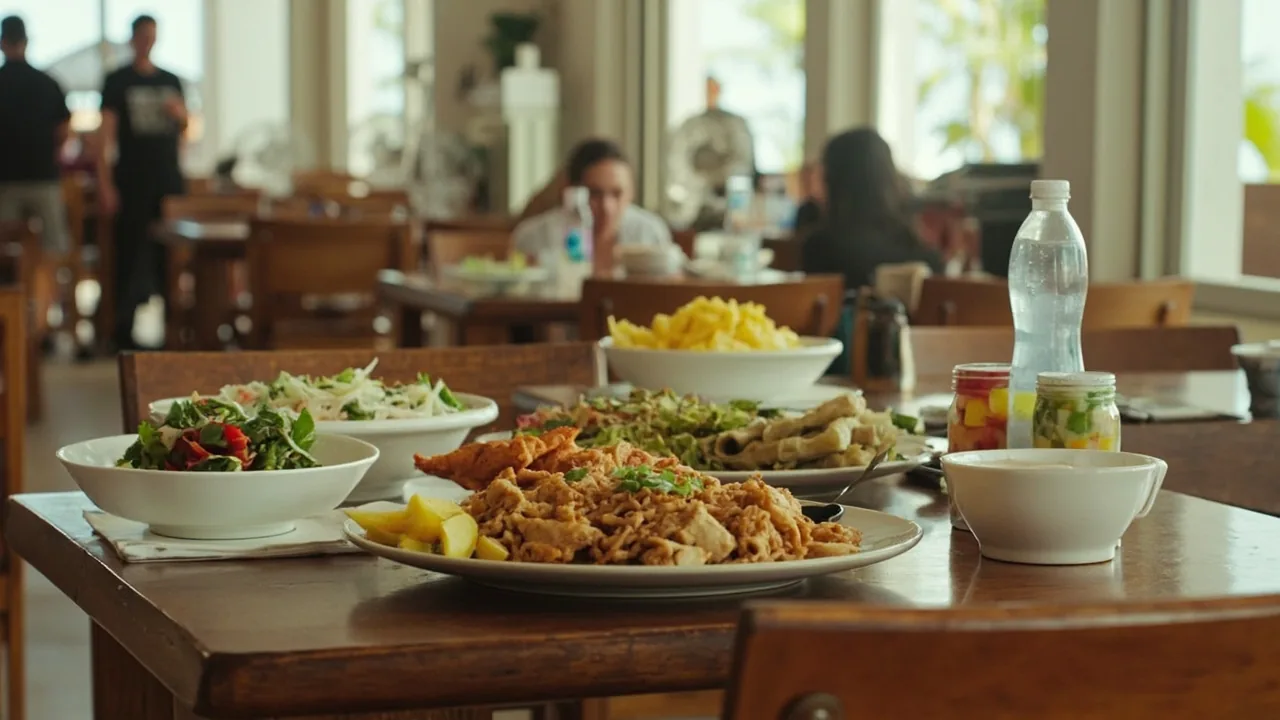
Vegan Thai Food in Koh Samui: Where to Eat in 2026
Koh Samui is one of the easier Thai islands for finding good food as a vegan. The vegan Thai food Koh Samui scene ranges from dedicated plant-based kitchens to Thai restaurants that cook Jay on request, plus a strong Indian restaurant backbone for dal-chawal days. This guide covers it all.
Quick Answers
| What | Answer | Price (INR) |
|---|---|---|
| Magic word for “vegan, no animal products" | "Jay” (เจ), pronounced “jey” | Free |
| Best dedicated vegan restaurant on the island | Pure Vegan Heaven (Bophut area) | ₹431-₹1,005 (~150-350 THB or ~$4.47-$10.43) mains |
| Most creative plant-based menu | Food Lab (Chaweng) | ₹517-₹1,149 (~180-400 THB or ~$5.36-$11.91) mains |
| Cheapest vegan meal you’ll find | Pad Thai Jay from a street stall | ₹172 (~60 THB or ~$1.79) |
| Best North Indian fallback for vegetarians | Noori India (Chaweng) | ₹517-₹1,091 (~180-380 THB or ~$5.36-$11.32) mains |
Planning a longer Thailand trip? Start with the SEA backpacking hub for country-by-country overviews, or check the full Thailand vegan food tour if you’re island-hopping beyond Samui.
The Local Culinary Landscape (And Why “Veg” Isn’t Always Veg)
Thai food looks vegetarian-friendly on paper: tofu, vegetables, coconut milk, rice noodles. In practice, the cuisine leans on a small set of flavour-builders that aren’t vegan at all. Fish sauce (น้ำปลา nam pla) goes into almost every stir-fry, every fried rice, most curry pastes. Shrimp paste (กะปิkapi) hides inside the base of many curries and chilli dips. Oyster sauce shows up in greens, pad thai, and noodle dishes. Chicken broth is the default liquid for soups and congees. Lard gets brushed onto grilled skewers more often than you’d think.
When a Thai person hears “vegetarian,” they often mentally file it as “no pork, no beef, fish and chicken are still fine.” That’s the cultural gap. Telling a server “I’m vegetarian” alone gets you some surprising plates, including seafood dishes they think you’re fine with. That’s why the magic word exists: Jay (เจ). It signals fully plant-based, and any kitchen that’s worth eating at will know to swap fish sauce for soy sauce or salt, and to leave out the shrimp paste.
A second Thai-specific thing to know: even at non-vegan Thai restaurants, almost everything can be made vegan if the kitchen is willing. Most cooks here deal with dietary requests all day. The problem is rarely hostility, it’s communication. Bring the phrase. Print it. Say it twice. Confirm with “mai sai nam pla, mai sai kapi, mai sai kai” (no fish sauce, no shrimp paste, no egg).
Subodh’s Pro Tip: The single highest-use phrase on Koh Samui is “Ahan Jay” (อาหารเจ), which means “Jay food.” Yellow flags with the Thai script เจ outside a stall or restaurant mean the kitchen is fully Jay-certified for at least part of the year, usually during the annual Vegetarian Festival (เทศกาลกินเจ) in October. Outside festival season, the flag may come down but the kitchen often still understands the request.
Key Phrases You’ll Use Every Day
| English Phrase | What It Means | Local Script | Pronunciation |
|---|---|---|---|
| I eat Jay / vegan food | Tells the kitchen you want fully plant-based | ฉันกินเจ | chan kin jey |
| No fish sauce | Skip the nam pla | ไม่ใส่น้ำปลา | mai sai nam pla |
| No shrimp paste | Skip thekapi | ไม่ใส่กะปิ | mai sai kapi |
| No egg | Skip egg in pad thai, fried rice | ไม่ใส่ไข่ | mai sai khai |
| No meat, no seafood | Belt-and-braces clarification | ไม่ใส่เนื้อ ไม่ใส่อาหารทะเล | mai sai nuea, mai sai ahan tale |
| No onion, no garlic | For Jain travellers | ไม่ใส่หัวหอม ไม่ใส่กระเทียม | mai sai hua hom, mai sai kratiam |
| With tofu instead | Substitute protein | ใส่เต้าหู้แทน | sai taohu taen |
| Thank you | Always appreciated | ขอบคุณ | khob khun |
Show the script on your phone if pronunciation is a barrier. Koh Samui’s tourism economy means most kitchens have dealt with non-Thai speakers before, so don’t stress about accent.
Safe Vegan Dishes to Order Anywhere
These dishes are either vegan or can be made vegan with one or two substitutions. Memorise the names and you’ll have a meal anywhere on the island.
Pad Thai Jay (ผัดไทยเจ): The classic, made without egg, fish sauce, or shrimp. Ask for tofu instead of the usual dried shrimp topping, and request extra crushed peanuts and lime. Most Thai kitchens on Koh Samui can make this. Expect ₹172-₹230 (~60-80 THB or ~$1.79-$2.38) at a street stall, ₹287-₹517 (~100-180 THB or ~$2.98-$5.36) at a sit-down place.
Pad Pak Ruam (ผัดผักรวม): Stir-fried mixed vegetables in garlic sauce. Specify no oyster sauce (most places use soy sauce as a default anyway) and you’ll get a clean, garlicky plate of greens. Around ₹230-₹345 (~80-120 THB or ~$2.38-$3.57).
Tom Kha Jay (ต้มข่าเจ): A coconut-milk galangal soup, mushroom-loaded, with no chicken stock. One of the most underrated vegan Thai dishes because the coconut milk is so rich on its own. Around ₹230-₹345 (~80-120 THB or ~$2.38-$3.57).
Som Tam Jay (ส้มตำเจ): Green papaya salad, made without fish sauce or dried shrimp. The sour, salty, spicy balance is what makes it. Tell them “mai sai kapi, mai sai nam pla” and you’ll get the real version. Street stalls charge ₹115-₹172 (~40-60 THB or ~$1.19-$1.79), restaurants ₹230-₹345 (~80-120 THB or ~$2.38-$3.57).
Pad Krapow Jay (ผัดกะเพราเจ): Holy basil stir-fry with tofu, served over rice. Skip the fried egg on top (mai sai khai) and ask for extra basil. Around ₹201-₹287 (~70-100 THB or ~$2.09-$2.98).
Mango Sticky Rice (ข้าวเหนียวมะม่วง): vegan, no substitutions needed. Coconut milk, sticky rice, ripe mango. A must-eat on Koh Samui. Street stalls charge ₹144 (~50 THB or ~$1.49), cafes up to ₹345 (~120 THB or ~$3.57).
Gaeng Keow Wan Jay (แกงเขียวหวานเจ): Green curry with tofu and vegetables. Most kitchens will use a vegetable stock when you ask for Jay. Coconut-heavy, so it fills you up fast. Around ₹287-₹431 (~100-150 THB or ~$2.98-$4.47).
Safety Alert: Anything labelled “vegetable soup” (gaeng jeud) sounds safe but is usually built on chicken broth. Specify Jay and confirm “mai sai nam man kai” (no chicken oil or stock) if you want to be sure.
The Best Vegan Restaurants on Koh Samui
This is the part most generic guides skip. There are real, named, well-reviewed vegan spots on the island. Below is a ranked directory, cross-referenced against HappyCow, Google reviews, and traveller reports as of mid-2026. Don’t settle for the first hotel buffet.
Pure Vegan Heaven (Bophut / Fisherman’s Village area)
Rating 4.8. The name is honest. This is a fully plant-based Thai kitchen with a short, focused menu that does the classics well: pad thai, green curry, tom kha, massaman, all made Jay. Travellers report the green curry as the standout. Mains sit around ₹431-₹718 (~150-250 THB or ~$4.47-$7.45), smoothies and fresh juices around ₹230-₹345 (~80-120 THB or ~$2.38-$3.57). The setting is a small, shaded courtyard, a quiet break from the busier Chaweng strip. If you only eat at one vegan spot on Koh Samui, eat here.
Food Lab (Chaweng)
Rating 4.8. More of a modern plant-based kitchen than a traditional Thai restaurant. Bowls, wraps, plant-based burgers, creative takes on Thai flavours with a Western plating style. Prices run higher (₹517-₹1,149 (~180-400 THB or ~$5.36-$11.91) mains) but the portions match. Travellers report the “lab” pad thai as worth the detour. Good for a lunch break between beach sessions.
Penne Vegan Restaurant Samui (Bophut)
Rating 4.9. The name’s a giveaway. Italian-leaning menu, all vegan, with pastas, wood-fired pizzas, and a few Thai options for the undecided. Mains ₹574-₹1,005 (~200-350 THB or ~$5.96-$10.43). Travellers report the cashew-cream pasta as the dish that gets reordered. A reliable pick when you want a break from rice and noodles but still want fully plant-based.
Secret Oven (Chaweng Noi area)
Rating 4.9. A vegan bakery and cafe with Thai mains on the side. Travellers report the Thai tea cheesecake as the surprise hit. Mains ₹345-₹574 (~120-200 THB or ~$3.57-$5.96), baked goods ₹172-₹345 (~60-120 THB or ~$1.79-$3.57). Worth a stop for the dessert even if you’re not hungry.
Petit Gourmand (Bo Phut / Fisherman’s Village)
Rating 4.9. Quaint cafe with pastries, plant-based options, and a few Thai items on the menu. Not a pure vegan spot but traveller-friendly for vegans if you ask. Pastries ₹172-₹431 (~60-150 THB or ~$1.79-$4.47), mains ₹431-₹804 (~150-280 THB or ~$4.47-$8.34). Good for breakfast or a slow afternoon.
The Corner Samui Restaurant
Rating 4.8. A local Thai kitchen with a marked vegan section on the menu. Mains ₹287-₹574 (~100-200 THB or ~$2.98-$5.96). Travellers report this as one of the most reliable non-vegan-branded spots for confident Jay cooking. Worth knowing about if you’re staying away from the dedicated vegan strip.
Clandestino Koh Samui
Rating 5.0. Chic, modern, mostly plant-forward menu with a few Thai items. Not strictly vegan but vegan-friendly with clear markings. Mains ₹632-₹1,091 (~220-380 THB or ~$6.55-$11.32). A dinner-out option when you want something a step above casual.
Nely Restaurant
Rating 4.8. A homey local Thai place with several dishes that can be made vegan on request. Travellers report the staff here are patient with dietary questions and willing to sub. Mains ₹230-₹431 (~80-150 THB or ~$2.38-$4.47). Good for a cheap, no-fuss meal.
When You Need Indian Food (The Strict-Veg Fallback)
Some days you just want dal, rice, roti, and a dish that’s recognisably home-cooking. Koh Samui has a long-standing Indian restaurant scene catering to the diaspora and to long-stay travellers. These spots also handle Jain requests (no onion, no garlic) more confidently than most Thai kitchens.
Noori India (Chaweng): Rated the strongest North Indian option in traveller reports. Butter chicken, dal makhani, biryani, naan. Vegan and Jain versions available if you ask. Mains ₹517-₹1,091 (~180-380 THB or ~$5.36-$11.32). The butter chicken is the dish most travellers come back for, though the dal makhani gets a quieter fan club.
Giant Summit Restaurant (interior hills, near Big Buddha): Mountain views, mixed Thai and Indian menu. Indian section has paneer dishes, dals, biryanis. Mains ₹517-₹919 (~180-320 THB or ~$5.36-$9.53). Worth the trip inland if you’re doing the Big Buddha anyway.
Zazen (Bophut beach area): Higher-end, elegant setting. Indian dishes sit alongside Thai and European options. Mains ₹804-₹1,493 (~280-520 THB or ~$8.34-$15.49). Good for a date night that needs both cuisines on the table.
Woodland Park View Restaurant: Tranquil park setting, Thai and Indian menu. Solid vegetarian thali. Mains ₹431-₹804 (~150-280 THB or ~$4.47-$8.34).
La Banette de Fisherman’s Village: A French bakery that carries Indian spices and a few Indian-influenced bakes. Drop in for bread, pastries, and a chai.
Khao Nui View Restaurant: Scenic, local Thai with Indian options on request. Mains ₹345-₹718 (~120-250 THB or ~$3.57-$7.45).
If you’re comparing islands, the vegan food scene in Krabi follows similar rules, and the vegetarian food in Thailand overview covers the Jay system island by island.
Booking a Food Tour (Yes, Vegan Ones Exist)
If you want to learn what to look for in markets, how to read a Thai ingredient label, and how to cook a few of the dishes above, a guided food tour is worth it. Vegan-friendly options come and go, so book one with flexible dietary tagging.
Book a Koh Samui food tour and confirm vegan or Jay when you book.
Food Safety & Hygiene (The Non-Negotiable Basics)
Koh Samui’s tap water is not drinkable. Brushing teeth with bottled water and skipping ice from street stalls that look like they’re cutting corners is the standard play. The rest is common sense: eat at stalls with high turnover (look for queues), watch how the food is handled, and avoid raw vegetables you didn’t see washed.
Specific gotchas for vegan travellers:
- “Vegetable” soups and broths are often chicken-based unless you specify Jay.
- Fried rice at street stalls is usually made with egg unless you say otherwise.
- Banana leaf parcels often hide fish or shrimp paste in the rice.
- Som tam from market stalls may come with dried shrimp already mixed in; ask for it added on the side.
Water: Bottled water runs ₹20 (~7 THB or ~$0.21) at convenience stores, ₹29-₹43 (~10-15 THB or ~$0.30-$0.45) at minimarts and beach vendors. The 7-Eleven price is the floor; refill bottles at your hostel if it has a filter station.
Stomach prep: Bring a small kit of oral rehydration salts, activated charcoal, and a probiotic from India. Pharmacies on Koh Samui (Boots, Watsons) carry them too at tourist prices.
Getting Connected
A working SIM makes the difference between wandering the Bophut night market and finding Pure Vegan Heaven at the right time. Pick up an AIS or TrueMove tourist SIM at Koh Samui airport on arrival (8-day SIMs run ₹859 (~299 THB or ~$8.91), 15-day SIMs ₹1,433 (~499 THB or ~$14.86)), or grab an eSIM before you fly so you’re online the moment you land. Get Nomad eSIM for a same-day activation option that doesn’t require a passport exchange at the airport counter.
Common Mistakes Indian Vegans Make on Koh Samui
Mistake 1: Ordering “vegetable fried rice” and assuming it’s vegan. What happens: Egg is almost always in it, fish sauce often too. Fix: Ask for “khao pad jay, mai sai khai, mai sai nam pla” (fried rice Jay, no egg, no fish sauce).
Mistake 2: Trusting a green papaya salad that looks vegan. What happens: Fish sauce and dried shrimp are the default seasoning. Fix: Always ask for som tam jay, no kapi, no nam pla, no kung (no shrimp).
Mistake 3: Assuming “vegetarian” at an Indian restaurant means vegan. What happens: Ghee, paneer (dairy), and sometimes egg in biryani. Fix: Specify “vegan” or “Jain” when ordering, especially for curries and rice dishes.
Mistake 4: Skipping breakfast because nothing looks vegan. What happens: You end up overeating at lunch and missing the morning light at the beach. Fix: Most cafes do vegan-friendly oats, fruit bowls, and avocado toast. Pure Vegan Heaven opens early and the breakfast menu is solid.
Mistake 5: Drinking the welcome drink at a temple. What happens: It’s usually jasmine tea with honey or condensed milk. Fix: Politely decline or ask for plain water.
Mistake 6: Not specifying no oyster sauce at non-vegan Thai restaurants. What happens: Your “stir-fried greens” arrive glossy with oyster sauce. Fix: Add “mai sai nam man hoi” (no oyster sauce) to every stir-fry order.
Daily Budget for Vegan Travellers on Koh Samui
| Category | Budget (THB) | Comfort (THB) |
|---|---|---|
| Breakfast (cafe or street) | 60-120 | 150-250 |
| Lunch (vegan restaurant) | 150-250 | 250-400 |
| Dinner (Indian or vegan Thai) | 180-300 | 350-550 |
| Snacks / smoothies | 60-120 | 150-250 |
| Water (2-3 bottles) | 21-45 | 30-50 |
| Daily total | ₹1,350-₹2,398 (~470-835 THB or ~$14-$25) | ₹2,670-₹4,305 (~930-1,500 THB or ~$27-$45) |
Roughly ₹1,350-2,400/day for budget, ₹2,700-4,300/day for comfort, plus a dorm bed on top. See the Thailand daily budget breakdown for the full picture.
Quick Recipe Reference: Two Vegan Thai Dishes You Can Recreate
After a week on Koh Samui you’ll want to recreate the dishes at home. Here’s the backbone for two of the most-ordered items.
Pad Thai Jay (serves 2):
- 200g rice noodles, soaked
- 150g firm tofu, cubed
- 2 tbsp soy sauce (replacing fish sauce)
- 1 tbsp tamarind paste
- 1 tbsp palm sugar
- 2 cloves garlic, minced
- 100g bean sprouts
- Crushed peanuts, lime, chilli flakes to serve
- Skip the egg. Skip the dried shrimp. Top with peanuts and lime. Done.
Tom Kha Jay (serves 2):
- 400ml coconut milk
- 400ml vegetable stock (not chicken)
- 3 slices galangal
- 2 stalks lemongrass, bruised
- 200g oyster or straw mushrooms
- 200g tofu
- 2 tbsp soy sauce
- 2 tbsp lime juice
- 4 kaffir lime leaves
- Fresh coriander to serve
Boil coconut milk and stock with galangal, lemongrass, and lime leaves for 5 minutes. Add mushrooms and tofu, simmer 3 more minutes. Season with soy sauce and lime. Garnish with coriander.
FAQ
Is fish sauce used in everything on Koh Samui? In most stir-fries, fried rice, and noodle dishes, yes. In curries, often yes. In fresh fruit dishes, mango sticky rice, and most smoothies, no. The phrase “mai sai nam pla” is your single most useful sentence.
Can I get Jain food on Koh Samui? Yes, but only at the Indian restaurants (Noori India, Zazen, Giant Summit, Woodland Park View). They handle “no onion, no garlic” reliably. Most Thai kitchens won’t fully understand a Jain request, so stick with simpler Thai dishes and verify each ingredient.
Is street food safe for vegans on Koh Samui? Street food is safe at busy stalls with high turnover. For vegans, the issue is less hygiene and more hidden ingredients. Use the phrases, confirm twice, and stick with stalls that visibly cater to tourists or have a clear Thai-language menu.
Are the dedicated vegan restaurants tourist-traps? No. Pure Vegan Heaven, Food Lab, and Penne Vegan are all rated 4.8 or higher on Google by hundreds of reviews. They’re Thai-run or expat-run kitchens serving a real vegan clientele, including locals who eat Jay for religious reasons.
Will I miss out on Thai food as a vegan? Not really. The best Thai dishes are the ones that put vegetables, herbs, and coconut milk front and centre: green curry, tom kha, som tam, pad pak. Vegan Thai food in Koh Samui is closer to “the way these dishes were meant to taste” than the seafood-heavy versions.
Do I need a booking at vegan restaurants? No for most spots during the day. For evenings at Food Lab or Penne Vegan, a quick message via their Instagram the same day helps.
Subodh’s Take
Koh Samui used to be a hard island for plant-based travellers; that was five years ago. Today, between Pure Vegan Heaven, Food Lab, Penne Vegan, and the Indian-restaurant backbone (Noori India especially), you can eat a different place every meal for a week and not feel like you compromised. The trick is the phrases. Print them, screenshot them, say them twice, and you’ll eat better than half the meat-eating tourists on the same beach.
