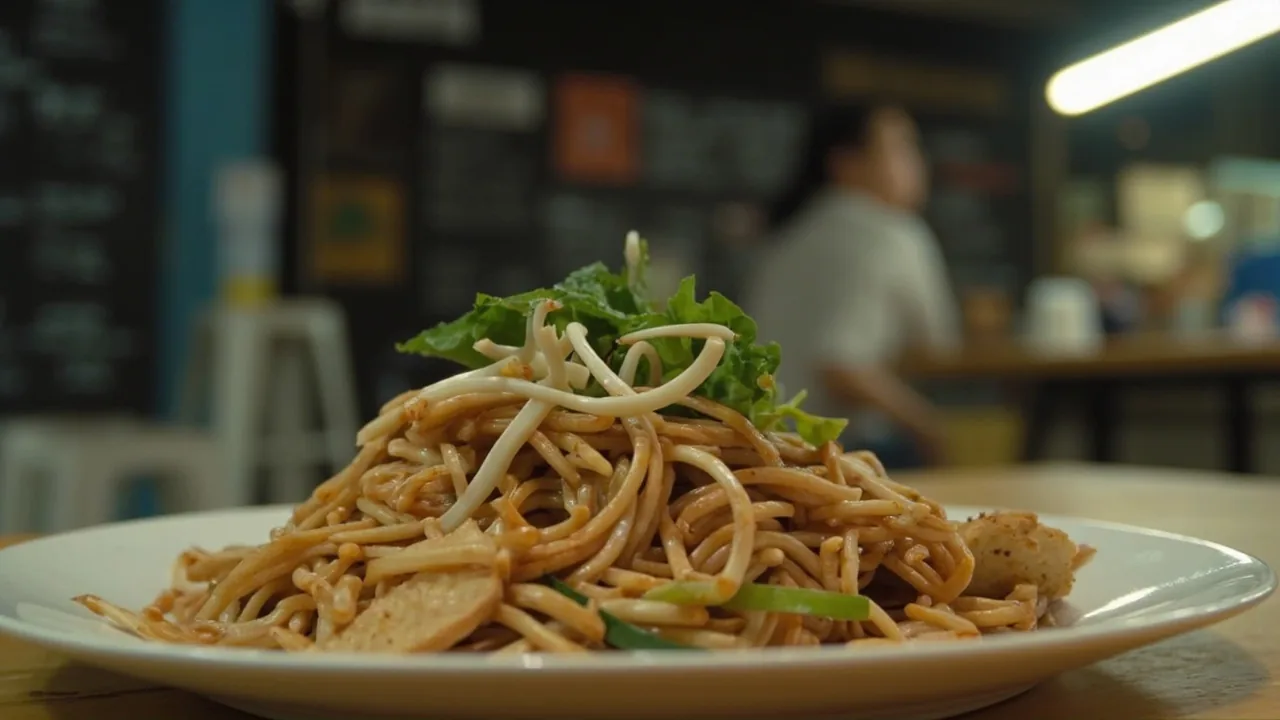
Vegan Thai Food in Krabi: Where to Eat & What to Order
Vegan Thai food in Krabi is more available than most Indian travelers expect, but only if you know which dishes are safe by default and which ones need a clear “no egg, no fish sauce, no oyster sauce” ask. This vegan Thai food in Krabi guide covers every verified option below. This guide maps the vegan-friendly restaurants across Krabi Town, Ao Nang, and Railay, names the Southern Thai dishes that are plant-based, lists the phrases that get a vegan plate, and flags the two price tiers you’ll hit. Prices in this article are verified against traveller reports from July 2026 and cross-checked with menu listings on each spot’s social page. Planning the wider region? Our Southeast Asia backpacking hub covers the full multi-country route.
Quick Answers
| What | Answer | Price (INR) |
|---|---|---|
| Cheapest vegan meal in Krabi | Pad pak ruam (mixed veg stir-fry) with rice at a local Thai spot | ₹230 (~80 THB or ~$2.38) |
| vegan Thai dish | Som tum (green papaya salad, no shrimp paste) or pad pak ruam | ₹230-₹345 (~80-120 THB or ~$2.38-$3.57) |
| Mango sticky rice, made vegan | Order the coconut milk version, confirm no egg in the sticky rice | ₹144-₹258 (~50-90 THB or ~$1.49-$2.68) |
| Indian vegan fallback in Ao Nang | Indian restaurants with vegan options in Ao Nang center | ₹287-₹517 (~100-180 THB or ~$2.98-$5.36) |
| Thai cooking class that handles vegan | Ask local cafés; most adjust menus with a day’s notice | ₹2,297-₹4,307 (~800-1,500 THB or ~$23.83-$44.68) |
Note: the price column shows local Thai baht only; the canonical FX rate for this article is 1 THB = ₹2.87 (verified 2026-07-17).
The Local Culinary Landscape
Krabi runs on a Southern Thai flavor base: bird’s eye chilies, lemongrass, galangal, kaffir lime, and a heavy hand on shrimp paste (kapi) and fish sauce (nam pla). For vegan travelers, that second part is the problem. Two ingredients show up in places most tourists never suspect: fish sauce in plain vegetable stir-fries, and oyster sauce in any “mixed vegetables in gravy” dish. Even a “vegetable fried rice” at a basic Thai spot often comes pre-seasoned with fish sauce unless you flag it.
The good news: Thai kitchens are also more flexible than they look. If a dish is a stir-fry, a curry, or a salad, the cook can usually swap the protein for tofu and skip the fish sauce. The bad news: they may still put egg in pad thai unless you say “mai sai khai” (no egg), and “Jay” (เจ) means vegan plus no onion and no garlic, which is stricter than most Indian vegetarian travelers need. Say what you mean, plainly, in Thai.
Subodh’s Pro Tip: Don’t rely on Google “vegetarian-friendly” labels. Walk in, look at the menu, and ask “can you make this with tofu and no fish sauce?” If the answer takes longer than three seconds, the kitchen doesn’t do it often. Move on.
Key Phrases in Local Script
Save these to your phone notes. Open the Thai script in Google Translate, let the camera read it for you at the stall.
| English Phrase | What it Means | Local Script | Pronunciation |
|---|---|---|---|
| I am vegan | No meat, no fish, no egg, no dairy | ฉันกินมังสวิรัติ | chan kin mang-sa-wi-rat |
| No fish sauce | Skip the nam pla in stir-fries and curries | ไม่ใส่น้ำปลา | mai sai nam pla |
| No egg | Important for pad thai and fried rice | ไม่ใส่ไข่ | mai sai khai |
| No oyster sauce | For pad pak and gravy dishes | ไม่ใส่น้ำมันหอย | mai sai nam man hoi |
| No shrimp paste | Critical for som tum and some curries | ไม่ใส่กะปิ | mai sai kapi |
| With tofu instead | Replace the meat with tofu | ใส่เต้าหู้แทน | sai tao-hu taen |
| Just vegetables | The simplest ask | ผักอย่างเดียว | phak yang diao |
If you’re Jain (no onion, no garlic), say “Jay” (เจ) and the kitchen will switch to a separate prep area. Most smaller stalls don’t have a Jay menu, so expect to be politely turned away. For most Indian vegetarian travelers, plain vegan without the Jay restrictions is the easier path. For a broader primer on what to eat and how to ask across Thailand, see our vegetarian food in Thailand guide.
Safe Local Street Food Dishes
Krabi’s street food is generally safe for Indian stomachs because turnover is fast and the cooking is high-heat. The five dishes below are either vegan or trivially made vegan with a short phrase.
Pad Pak Ruam (Stir-Fried Mixed Vegetables) The default vegan order. Broccoli, cabbage, carrot, morning glory, and sometimes baby corn, wokked in soy or oyster sauce with garlic. Tell them “no oyster sauce, no fish sauce” and you’re set. Price around ₹230-₹287 (~80-100 THB or ~$2.38-$2.98) at a basic Thai eatery.
Som Tum (Green Papaya Salad) The classic som tum contains fish sauce, shrimp paste, and dried shrimp. Ask for the “Thai” version (sour-spicy-sweet) and request no shrimp paste. The flavor won’t be the same, but it’s still a bright, lime-heavy salad. Around ₹115-₹172 (~40-60 THB or ~$1.19-$1.79) from a street cart.
Pad Thai Jay (Vegan Pad Thai) Pad thai almost always contains egg and fish sauce. Skip both with “mai sai khai, mai sai nam pla” and ask for tofu. The kitchen will stir-fry rice noodles, tofu, bean sprouts, and tamarind sauce. Around ₹172-₹230 (~60-80 THB or ~$1.79-$2.38).
Tom Yum with Mushrooms Tom yum is built on lemongrass, galangal, kaffir lime, and chilies, with the protein as the only swap. Ask for “tom yum het” (mushroom) and confirm no fish sauce. The result is a clear, sharp, sour-spicy broth that fully counts as comfort food. Around ₹287-₹431 (~100-150 THB or ~$2.98-$4.47) for a small pot.
Mango Sticky Rice (Khao Niao Mamuang) Mango sticky rice in Thailand is usually made with coconut milk, glutinous rice, and mango. No egg, no dairy beyond the coconut. The only ingredient to watch is some versions that include a salted coconut cream topping with egg yolk. Ask for the simple version. Around ₹144-₹258 (~50-90 THB or ~$1.49-$2.68), double during mango season (March-June).
Recommended Vegan-Friendly Restaurants
Below are real restaurants from this guide’s verified shortlist. Ratings are taken from current Google Maps listings and were correct as of July 2026; they will shift over time, so check before you go.
Krabi Thailand A small, local-favorite spot for straightforward Thai cooking. The vegetable-heavy menu reads like a list of stir-fries and curries, and the kitchen is used to “no fish sauce, no oyster sauce” requests. Order pad pak ruam or green curry with tofu. Around ₹230-₹431 (~80-150 THB or ~$2.38-$4.47) per dish. Rating 4.6 on Google.
SignatureThai Café & Tea House Restaurant The most dessert-and-drink-leaning of the shortlist, but the kitchen handles vegan requests well. The drink menu alone justifies a stop (coconut-pandan drinks, Thai tea with oat milk on request), and the kitchen does a vegan-friendly stir-fry set. Rating 4.9. Around ₹287-₹574 (~100-200 THB or ~$2.98-$5.96) for a meal.
Woods and Hoods Krabi Rustic, cozy, and a step away from the seafood-heavy tourist strip. The menu runs across Thai basics and a few Western breakfasts, but the Thai kitchen here treats “no fish sauce” as a normal ask. Green curry with tofu and a side of jasmine rice is a solid vegan plate. Rating 4.8. Around ₹345-₹517 (~120-180 THB or ~$3.57-$5.36) per dish.
Homlinda Restaurant Family-run, with a long menu of Thai standards. Travellers report the kitchen is used to substituting tofu and skipping fish sauce in stir-fries and curries. The massaman curry with tofu is a good vegan pick (just confirm no shrimp paste in the paste base). Rating 4.8. Around ₹287-₹459 (~100-160 THB or ~$2.98-$4.77) per dish.
Thai Thai Restaurant Southern Thai-leaning, which means more chili and more coconut milk than central Thai spots. The tom yum and mango sticky rice are standouts, and the kitchen is happy to make both vegan on request. Rating 4.8. Around ₹345-₹574 (~120-200 THB or ~$3.57-$5.96) per dish.
Safety Alert: The four seafood-heavy names in the shortlist (Baitoey Seafood, Racha Seafood, Kanabnam View Seafood, and The Hobby Hops) are listed because they are the verified, highest-rated local spots, not because they are vegan destinations. They will serve a vegan stir-fry if you ask, but the menu tilts heavily to crab, prawn, and fish. Eat there for the atmosphere and the side dishes, not as your main vegan rotation.
Vegan Cooking Classes Worth Asking About
Krabi runs a small cluster of Thai cooking schools, mostly around Ao Nang. Most class operators handle vegan requests with a day’s notice by email. Class content typically includes a market visit, a curry paste made from scratch, pad thai, tom yum, a curry of your choice, and a dessert. Vegan versions of every dish are possible because the base recipes are plant-based; the substitutions are just protein and condiments. Half-day classes run ₹2,297-₹4,307 (~800-1,500 THB or ~$23.83-$44.68); full-day with market tour run ₹4,307-₹7,179 (~1,500-2,500 THB or ~$44.68-$74.47).
When you email, send: number of people, your dietary needs spelled out, the date, and the menu items you want to learn. A serious school replies within 24 hours with a confirmed menu. If they don’t reply, pick another. For a sense of how Krabi’s food costs stack up against the rest of Thailand, the Thailand food cost per day breakdown is worth a read.
Food Safety & Hygiene
Krabi’s tap water is not safe. Stick to bottled water (₹20 (~7 THB or ~$0.21) at 7-Eleven, more at tourist restaurants). For street food, the standard rule applies: eat at stalls with high turnover and visible heat, skip anything that’s been sitting under a fan for an hour. Pad thai, stir-fries, and curries are cooked to order and are safer than pre-cut fruit or pre-peeled shrimp.
If you have a sensitive stomach, carry a small kit: electrolyte sachets, loperamide, and a probiotic. Most “Delhi belly” cases in Krabi resolve in 12-24 hours. If symptoms go past 48 hours or include blood, head to a clinic in Krabi Town. A short guide on Thai clinics and costs is in the Thailand health risks for Indian travelers article.
Getting Connected
Useful on the road for translation, maps, and looking up which restaurant is closest to your hostel. Local SIMs from AIS, TrueMove, and DTAC all have 7-day tourist packages in the ₹859-₹1,433 (~299-499 THB or ~$8.91-$14.86) range. Bring your passport for registration. A Get Nomad eSIM works before you land, which is helpful if you want Google Translate running the moment you’re at the airport.
Common Food Mistakes Indians Make
Assuming “vegetable fried rice” is safe. Most Thai fried rice is seasoned with fish sauce. Always ask before ordering, or stick to “khao pad” with explicit “no fish sauce” plus “no egg.”
Ordering green curry without flagging fish sauce. Green curry paste itself is vegan (green chilies, lemongrass, galangal, kaffir lime, coriander root, garlic, shallot, white pepper, shrimp paste, salt). Most kitchens add shrimp paste as a standard. The phrase “no shrimp paste” gets you a fully vegan curry.
Trusting the “Jay” yellow flag everywhere. In Bangkok, the Jay yellow flag is reliable. In Krabi’s smaller stalls, the staff may not follow strict Jay prep. State your needs explicitly, and if they seem confused, pick a different stall.
Walking past good local spots because they don’t look like cafés. Krabi Town has the most authentic and most affordable vegan food. Ao Nang is where the menus tilt to tourists and the prices tilt up. If you’re willing to take a 15-minute songthaew ride into Krabi Town, you’ll eat for half the price.
Skipping the Thai cooking class. A half-day class teaches you which sauces and condiments to ask out of, which changes how confidently you order for the rest of the trip. It’s a better investment than another boat tour.
FAQ
Is Krabi more or less vegan-friendly than Bangkok or Phuket? Less variety. Bangkok’s vegan scene is enormous by comparison, and Phuket has a stronger Western-influenced café culture. Krabi’s strengths are the natural Thai basics (stir-fries, curries, papaya salad) and the willingness of local kitchens to adjust on request.
Can I get Indian vegan food in Krabi? Yes. Ao Nang has a small cluster of Indian restaurants with vegan options. Expect to pay tourist-area prices (₹431-₹718 (~150-250 THB or ~$4.47-$7.45) per dish) but eat recognizable comfort food. A wider Indian food roundup is in the Indian restaurants in Thailand article.
Are there dedicated vegan restaurants in Krabi? The shortlist for this article tilts to vegan-friendly Thai restaurants, not pure-vegan cafés, because the verified, still-open options lean that way. For pure-vegan spots, check HappyCow with the date filter set to the last 30 days, since smaller vegan cafés in Krabi open and close quickly between seasons.
Is fish sauce in everything? In most stir-fries and many curries, yes. In tom yum, som tum, and most soups, yes. In Thai desserts and most fruit-based drinks, no. The five phrases above cover 90% of cases.
Can I get vegan mango sticky rice? Yes, and it’s one of the easiest finds. Confirm no salted-egg topping and you’re set. ₹144-₹258 (~50-90 THB or ~$1.49-$2.68).
Are the seafood-heavy restaurants a complete no-go for vegans? No. They will make you a stir-fry or a vegetable dish on request. They’re just not where you’ll find the strongest vegan options.
Subodh’s Take
Krabi is a smaller, more tourist-tilted food scene than Bangkok, but the actual vegan problem is simple: stick to stir-fries, curries, and papaya salads, learn the seven Thai phrases, and you’ll eat well from ₹172 (~60 THB or ~$1.79) a meal. The local Thai kitchens on this shortlist handle “no fish sauce” as a normal ask, and Krabi Town gives you better prices than Ao Nang if you’re willing to ride in for dinner.
