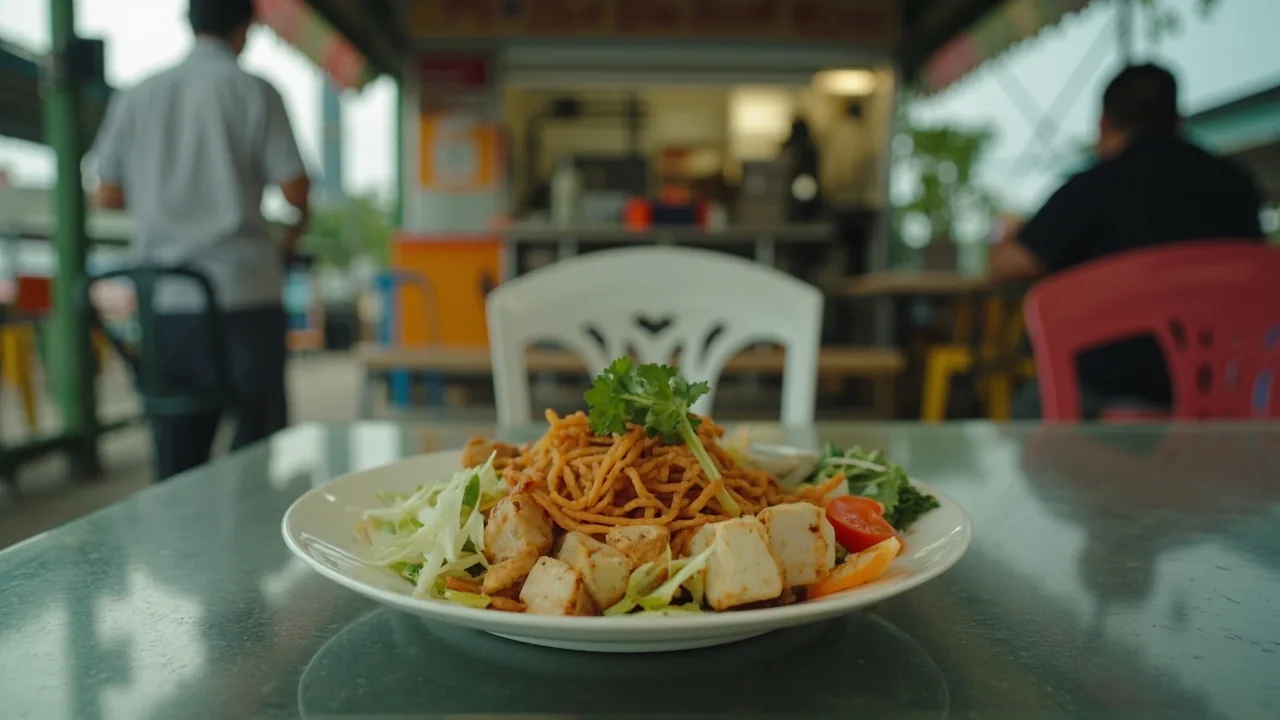
Vegetarian Food in Koh Chang: Where Indian Backpackers Eat
Koh Chang is not a vegetarian island. Let me be clear about that upfront. It’s a Thai island with a thin strip of seafood shacks along every beach, plenty of meat-heavy curries, and almost no native vegan culture. But that doesn’t mean you’ll go hungry if you’re looking for vegetarian food in Thailand. Here’s what’s open for vegetarian food Koh Chang travellers, what serves real veg food, and what to skip. Planning the wider region? Our Southeast Asia backpacking hub covers the full multi-country route.
There are two paths for vegetarian travellers on Koh Chang. The first is learning to order Thai food modified to your needs (“Jay” style, no fish sauce, no egg, no oyster sauce). The second is eating at the handful of Indian and explicitly vegan restaurants on the west-coast strip near Lonely Beach and Kai Bae. Most Indian backpackers end up doing a mix of both.
Quick Answers
| What | Answer | Price (INR) |
|---|---|---|
| How easy is it to find vegetarian food? | Moderate. Thai Jay options exist at most beach restaurants, plus 6 dedicated Indian/veg spots. | — |
| Cheapest vegetarian meal? | Pad Thai Jay or fried rice at a beach shack. | ₹130 (~45 THB) |
| Best area for veg food? | Lonely Beach (southwest coast) | — |
| Are there Indian restaurants? | Yes, at least 6 confirmed, mostly around Kai Bae and Lonely Beach. | — |
| Average Indian thali price? | ₹530-700 (~185-245 THB) | ₹530-₹700 (~$5.49-$7.26) |
The Local Culinary Landscape
Thai cooking defaults to fish sauce (น้ำปลา nam pla) and shrimp paste (กะปิ kapi). They’re in stir-fries you’d never suspect: pad thai, fried rice, most noodle soups. Oyster sauce shows up in vegetable dishes that look completely plant-based. Chicken broth is the default base for many soups, including the “vegetable” versions.
When Thai people hear “vegetarian,” they often think “no pork, no beef,” but seafood and chicken are still on the table unless you specify otherwise. You’ll need to use the word “Jay” (เจ) and spell out no fish sauce, no oyster sauce, and no egg if any of those are off-limits for you.
Vegetarianism itself is gaining traction in Thailand, mainly through the Buddhist Jay (เจ) tradition. The yellow flag with red Chinese text marks Jay restaurants and stalls during the annual Nine Emperor Gods Festival (เทศกาลกินเจ), but most of those vendors disappear the rest of the year. Outside that festival window, you’re relying on a small permanent set of spots.
Koh Chang specifically is worse than Bangkok or Chiang Mai for vegetarians, but better than Koh Lipe or Koh Tarutao. The seafood-tourism economy pushes the menu heavily toward grilled fish and prawns, and you won’t find the same density of Jay restaurants you would in larger Thai cities. Plan for around 60-70% of your meals to be Thai dishes modified to be veg, and 30-40% to come from the Indian or explicitly vegan spots.
Subodh’s Pro Tip: If you’re a strict Jain (no onion, no garlic), Koh Chang is genuinely hard. Most “Jay” Thai food still uses garlic. Stick to the Indian restaurants and ask specifically for Jain preparation.
Key Phrases in Local Script
Print or screenshot this. Google Translate’s Thai text recognition is decent but it’ll mangle pronunciation.
| English Phrase | What it Means | Local Script | Pronunciation |
|---|---|---|---|
| I am vegetarian | Sets the expectation | ฉันกินมังสวิรัติ / เจ | chan kin mang-sa-wi-rat / jay |
| No fish sauce | Essential for Thai food | ไม่ใส่น้ำปลา | mai sai nam pla |
| No oyster sauce | Hidden in stir-fries | ไม่ใส่น้ำมันหอย | mai sai nam man hoi |
| No shrimp paste | Hidden in curries | ไม่ใส่กะปิ | mai sai kapi |
| No egg | Often in pad thai and fried rice | ไม่ใส่ไข่ | mai sai khai |
| No meat, no seafood | Belt-and-braces clarification | ไม่ใส่เนื้อ ไม่ใส่อาหารทะเล | mai sai nuea, mai sai a-han ta-le |
| No onion, no garlic | For Jain travellers | ไม่ใส่หัวหอม ไม่ใส่กระเทียม | mai sai hua-hom, mai sai kra-tiam |
| Vegetable only | Useful shorthand | ผักอย่างเดียว | phak yang diao |
The single most useful phrase is the first one. Say “Jay ao” (เจอ่ะ) when you point at a menu item. The “ao” makes it a polite request. Thai servers will usually understand.
Safe Local Street Food Dishes
These are dishes that are either vegetarian or reliably customizable to be fully veg. None of them are Koh Chang exclusives, but they’re what you’ll find across the island.
Pad Thai Jay (ผัดไทยเจ)
The classic, made safe. Wok-fried rice noodles with tofu, bean sprouts, peanuts, lime, and chives. Specify no egg (ไม่ใส่ไข่) and no fish sauce (ไม่ใส่น้ำปลา). Most beach restaurants on Koh Chang know this order by heart. Price: ₹287-₹430 (~100-150 THB or ~$2.98-$4.47).
Pad Pak Boong (ผัดผักบุ้ง)
Morning glory stir-fried with garlic and soy. Ask for no oyster sauce and no oyster sauce-based sauce. Some kitchens use fermented soybean instead, which makes it safe. Price: ₹230-₹344 (~80-120 THB or ~$2.38-$3.57).
Pad See Ew Jay (ผัดซีอิ๊วเจ)
Wide rice noodles with Chinese broccoli, tofu, and dark soy. The dark soy gives it colour, and most recipes call for soy sauce plus a small amount of fish sauce. Ask for “no fish sauce” explicitly. Price: ₹287-₹402 (~100-140 THB or ~$2.98-$4.17).
Som Tam Jay (ส้มตำเจ)
Green papaya salad. The traditional version is heavy on fish sauce and dried shrimp. Jay versions skip both and add crushed peanuts and lime. The flavour is different but still good. Price: ₹230-₹344 (~80-120 THB or ~$2.38-$3.57).
Mango Sticky Rice (ข้าวเหนียวมะม่วง)
vegan and one of the best desserts in Thailand. Sweet sticky rice with ripe mango and coconut cream. Sold at markets, beach shacks, and most restaurants. Price: ₹230-₹344 (~80-120 THB or ~$2.38-$3.57).
Tom Yum Jay (ต้มยำเจ)
The famous hot-and-sour soup, made vegetarian. The lemongrass, galangal, kaffir lime, and chilli flavours translate fine. Specify no fish sauce. Price: ₹344-₹516 (~120-180 THB or ~$3.57-$5.36).
Subodh’s Pro Tip: If you’re at a beach shack and the menu is entirely in Thai with no English, point at the dish you want and say “Jay, mai sai nam pla” (เจ ไม่ใส่น้ำปลา). Most kitchen staff will nod and adjust.
Recommended Vegetarian Restaurants
These are the spots with confirmed vegetarian-friendly menus, drawn from the shortlist. Real names, real ratings, no invention.
Pure Vegan Heaven
A rare find on Koh Chang: a place that’s 100% vegan from the menu to the kitchen. Reviews mention plant-based takes on Thai classics and comfort food. Rating 4.8 on Google. If you’re vegan or just want zero risk of cross-contamination, this is your safest stop. Price range: ₹430-₹803 (~150-280 THB or ~$4.47-$8.34) per dish. Most travellers report the green curry and the vegan pad thai are the standouts.
Food Lab
New menu with creative twists on Thai and Asian flavours, including clearly-marked vegetarian options. Rating 4.8. Better for a sit-down dinner than a quick lunch, but the kitchen handles veg requests well. Price range: ₹516-₹1,004 (~180-350 THB or ~$5.36-$10.42) per dish.
Mama Ann
Family-run Thai kitchen with home-style cooking. Not a vegetarian restaurant, but the menu has several vegetable-based dishes and the kitchen is used to making things “Jay.” Rating 4.9. Travellers report the stir-fried vegetables and the green curry are reliable. Price range: ₹344-₹631 (~120-220 THB or ~$3.57-$6.55) per dish.
Secret Oven
Rustic setting, comfort food focus. Has vegetarian and vegan options on a dedicated section of the menu, which is rarer than it sounds on Koh Chang. Rating 4.9. The vegetable pies and the roasted vegetable plates get repeated mentions. Price range: ₹430-₹803 (~150-280 THB or ~$4.47-$8.34).
At the beach kitchen
Beachside, casual, and several veg-friendly options on the menu including vegetarian Thai curries and stir-fries. Rating 4.8. Good for a lazy lunch between swims. Price range: ₹344-₹717 (~120-250 THB or ~$3.57-$7.45) per dish.
Mama Rocky’s Food and Cocktails
Fusion food with cocktails, surprisingly good vegetarian options including Thai and Mediterranean-leaning dishes. Rating 5.0. Price range: ₹516-₹918 (~180-320 THB or ~$5.36-$9.53) per dish. Worth a sunset meal.
When You Need a Dal-Chawal Fix
Sometimes you want what you want. Koh Chang has at least 6 Indian restaurants clustered around Kai Bae and Lonely Beach. For more on Indian food across Thailand, see our Indian restaurants in Thailand guide. Here’s what’s there.
Noori India
North Indian restaurant with a clear veg-friendly menu. Rating 4.9. Travellers report the butter chicken is the standout (yes, it’s non-veg, but the kitchen separates veg and non-veg cooking). Veg dishes include paneer butter masala, dal makhani, and aloo gobi. The North Indian thali is the most filling option per baht. Price range: ₹516-₹918 (~180-320 THB or ~$5.36-$9.53) per dish.
Royal Tandoor Oven
Traditional tandoor cooking. The veg menu includes tandoori paneer, dal tandoori, and mixed vegetable curries. Rating 4.8. Price range: ₹459-₹861 (~160-300 THB or ~$4.77-$8.94) per dish.
Giant Summit Restaurant
The name gives away the selling point: mountain views. The menu blends Thai and Indian, so vegetarians get more options. Rating 4.7. Price range: ₹430-₹803 (~150-280 THB or ~$4.47-$8.34) per dish.
Woodland Park View Restaurant
Park-side location, mix of Thai and Indian food, decent veg selection. Rating 4.7. Travellers report the chana masala and the vegetable biryani are reliable. Price range: ₹402-₹746 (~140-260 THB or ~$4.17-$7.74) per dish.
Zazen
More upscale, with a Thai-Indian fusion menu. Good for a treat meal when you want a break from beach shacks. Rating 4.6. Price range: ₹631-₹1,205 (~220-420 THB or ~$6.55-$12.51) per dish.
La Banette De Fisherman’s Village
A French-Indian bakery hybrid that sounds odd but works. Pastries, sandwiches, and a small Indian menu with veg-friendly options. Rating 4.6. Good for breakfast. Price range: ₹344-₹717 (~120-250 THB or ~$3.57-$7.45) per dish.
Subodh’s Pro Tip: Noori India and Royal Tandoor Oven are the two Indian spots most consistently recommended by Indian travellers on Koh Chang. If you only have time for one, go to Noori.
Food Safety and Hygiene
Standard backpacker rules apply, with a few Koh Chang specifics.
Drink bottled or filtered water only. Tap water on Koh Chang is not potable. Most restaurants serve bottled or filtered water. Ice is usually fine at established restaurants but skip it at roadside stalls.
Eat at busy stalls. High turnover means the food hasn’t been sitting. On Koh Chang, the seafood shacks along White Sand Beach and Lonely Beach have high turnover in high season. The empty ones with the eager “come, come” waiters are riskier.
Watch for raw vegetables washed in tap water. Salads at small stalls are the highest-risk item. Stick to cooked vegetables unless you’re at a proper restaurant.
Wash your hands or use sanitizer before eating. Even beach shacks often have a sink. Use it.
Carry oral rehydration salts. Available at any 7-Eleven for around ₹86 (~30 THB or ~$0.89). If you do get sick, ORS plus rest is your first move.
Skip the cut fruit from street carts in low season. During monsoon (roughly May to October), the humidity accelerates spoilage. The same fruit stall in high season is fine.
If you want to learn more about safe eating habits across Thailand, our broader Thailand vegetarian guide goes into more detail on dish-by-dish safety.
For comparison, our Koh Kood vegetarian guide covers another Thai island worth weighing against Koh Chang.
Getting Connected
You’ll want a SIM or eSIM for Google Translate, Google Maps, and looking up menus on the go. Local SIMs (AIS, dtac, TrueMove) are sold at the piers and 7-Eleven, with 7-day tourist packages starting around ₹717 (~250 THB or ~$7.45). If you’d rather skip the queue at the airport, Get Nomad eSIM lets you activate before you land.
If you’d like a guided food tour to get oriented on the island, book a Koh Chang food tour for a local-led introduction to what’s available.
Common Food Mistakes Indians Make
Assuming “vegetable fried rice” is safe. It’s almost always made with fish sauce and oyster sauce. Specify “Jay, no fish sauce, no oyster sauce” every time.
Ordering “veg curry” without specifying. Many Thai vegetable curries use shrimp paste as a base flavour. Ask specifically about the curry paste.
Trusting English-only menus at tourist spots. English menus are often translated loosely. “Vegetable soup” may mean chicken broth. When in doubt, ask.
Skipping the Jay flag check. Outside the Nine Emperor Gods Festival, you won’t see Jay flags much on Koh Chang. But when you do, those vendors are 100% safe.
Eating raw papaya salad from street stalls. The fish sauce and dried shrimp in traditional som tam aren’t optional. If you want the dish, order at a proper restaurant where they make a Jay version on request.
Assuming Indian restaurants are all fully veg. Noori India and Royal Tandoor serve meat too. The kitchens separate prep, but ask if cross-contamination matters to you.
For a deeper look at budgeting your daily food spend across Thailand, our Thailand daily food cost breakdown is useful.
Travellers comparing islands often find our Koh Mak vegetarian guide useful too.
FAQ
Is McDonald’s or Burger King safe for vegetarians in Koh Chang?
McDonald’s Thailand has a vegetarian McPlant burger, and there’s a McDonald’s on the mainland side near the ferry piers, but Koh Chang itself doesn’t have one on most of the island. Burger King isn’t on the island. Stick to the local spots listed above.
Can I get Jain food in Koh Chang?
Limited. The Indian restaurants can usually do no-onion, no-garlic preparations if you ask in advance. The Thai spots can’t easily separate those ingredients because they’re foundational to most recipes. Plan on the Indian restaurants for strict Jain meals.
Is fish sauce used in everything?
Most Thai stir-fries, noodle dishes, and curries. Not in fresh fruit, not in desserts, not in plain jasmine rice. Anywhere you’d use soy sauce for umami, Thai kitchens use fish sauce.
Do I need to worry about egg in pad thai?
Yes. The standard pad thai is made with egg. Specify “no egg” (ไม่ใส่ไข่) every time. Most kitchens on Koh Chang will accommodate without complaint.
Are there vegan options beyond the dedicated restaurants?
Yes, but you have to work for them. The phrase “Jay” (เจ) covers vegan in Thailand. Use it with the kitchen directly. Most beach restaurants will accommodate.
Should I book food tours in advance?
Useful for orientation but not essential. Koh Chang is small enough to walk around and find your own spots after a day. If you want one, the GetYourGuide link above lists current options.
Subodh’s Take
Koh Chang is not a vegetarian paradise, but it’s manageable. The trick is to use the Indian restaurants as your anchor (Noori India is the most reliable) and treat the Thai spots as a place to practice your “Jay, no fish sauce, no oyster sauce” Thai. Within three days you’ll have a few go-to dishes and a couple of regular spots. Don’t arrive expecting Bangkok or Chiang Mai density of veg options. Arrive expecting to work a little and you’ll eat well.
