Vegetarian Food in Malaysia: Where to Eat, What to Order & Tips for Indian Travelers
Malaysia is one of the easiest Southeast Asian countries for an Indian vegetarian to eat well. Kuala Lumpur and Penang both have large Indian communities, a strong Chinese vegetarian tradition, and enough English on menus that you rarely have to guess. Spot-checked against recent traveller reports and cross-checked against the KL and Penang restaurant shortlist in our editorial registry this month. Planning the wider region? Our Southeast Asia backpacking hub covers the full multi-country route.
The catch is that “vegetarian” in local usage is loose. Many Chinese-Malaysian and Malay cooks count fish sauce, shrimp paste, oyster sauce, and chicken stock as “flavouring,” not meat. If you’re strict, you have to say so out loud. The phrases below, plus a small list of trusted spots, will keep you fed and stress-free for the whole trip.
Quick Answers
| What | Answer | Price (INR) |
|---|---|---|
| Is Malaysia good for Indian vegetarians? | Yes, among the best in SEA. KL and Penang have dozens of pure-veg Indian and Chinese restaurants. | ~₹0 |
| Do I need a local phrase to stay safe? | Yes. “Saya tidak makan daging/ikan” (I don’t eat meat/fish) and “Tanpa udang, tanpa telur” (no shrimp, no egg). | ~₹0 |
| How much does a veg thali cost in Penang? | Woodlands and similar South Indian spots serve a full thali for under ₹473 (~20 MYR or ~$4.91). | ~₹0 |
| Can I get a veg meal on Malaysia Airlines? | Yes. Request Asian Vegetarian or Indian Vegetarian when booking, at least 24 hours before departure. | ~₹0 |
| Is there veg food at KLIA airport? | Yes. Vegetarian noodles at food courts, with a Pure Life vegetarian outlet that sometimes operates in some terminals. | ~₹0 |
Prices below use the July 2026 rate of 1 MYR ≈ ₹23.64. For a full money breakdown, see the INR to MYR exchange guide.
The Local Culinary Landscape
Malaysian food is a mix of Malay, Chinese, Indian, Thai, and Peranakan (Straits Chinese) traditions. That’s good news for vegetarians. You have at least four independent vegetarian-friendly food cultures stacked on top of each other:
- Malay food is heavy on coconut milk, sambal, and belacan (shrimp paste). Nasi lemak, the national dish, is technically vegetarian once you skip the sambal ikan bilis (anchovies), but the belacan in the sambal is rarely removed. Ask for “sambal tanpa udang” (without shrimp) and double-check the rice wasn’t cooked in chicken stock.
- Chinese food has a long Buddhist vegetarian tradition. Look for the characters 素 (su) or the words “vegetarian” in English. Chinese vegetarian restaurants in KL and Penang often run full mock-meat menus that taste shockingly close to the real thing.
- Indian food is everywhere, especially in KL’s Brickfields, Penang’s Little India on Lebuh Chulia, and parts of Johor Bahru and Ipoh. South Indian banana-leaf restaurants, Gujarati thali places, and North Indian dhabas are all common.
- Peranakan / Nyonya food is the trickiest. It’s mostly Chinese-Malay fusion, with a strong reliance on shrimp paste and pork in the well-known dishes. Skip it unless the menu marks veg items clearly.
The big local gotcha is “vegetarian by default” doesn’t exist. A vegetable stir-fry at a hawker stall was almost cooked in a wok that just had pork, with oyster sauce and chicken powder. The phrases below exist for this reason.
Key Phrases in Bahasa Malaysia
| English Phrase | What it Means | Local Script | Pronunciation |
|---|---|---|---|
| I am vegetarian | Saya sayur | Saya sayur | sah-yah sah-yor |
| No meat | Tidak makan daging | Tidak makan daging | tee-dak mah-kan dah-ging |
| No fish / seafood | Tidak makan ikan / makanan laut | Tidak makan ikan | tee-dak mah-kan ee-kan |
| No egg | Tanpa telur | Tanpa telur | tan-pah teh-loor |
| No onion, no garlic (Jain) | Tanpa bawang | Tanpa bawang | tan-pah bah-wahng |
| No shrimp paste | Tanpa belacan / tanpa udang | Tanpa belacan | tan-pah beh-lah-chan |
| No milk | Tanpa susu | Tanpa susu | tan-pah soo-soo |
| Is there fish sauce / oyster sauce in this? | Ada kicap / sos tiram? | Ada kicap / sos tiram? | ah-dah kee-chap / soss tee-ram |
| Vegetarian, no flavouring | Sayur, tanpa perasa | Sayur, tanpa perasa | sah-yor, tan-pah peh-rah-sah |
Bahasa Malaysia is a phonetic, Latin-script language, so you can read these straight off the menu once you learn them. Mandarin (for Chinese vegetarian spots) and Tamil (for South Indian restaurants) are also useful, but Bahasa covers the most ground.
Subodh’s Pro Tip: Print or screenshot the phrase list above. Showing it on your phone at a hawker stall works 9 times out of 10, and the stallholders genuinely appreciate the effort.
Safe Local Street Food Dishes
These are the dishes an Indian vegetarian can eat in Malaysia without gambling on the menu.
1. Roti canai (without egg) A flaky, crispy flatbread torn by hand and dipped in dhal or curry. The dhal is usually safe (lentils, mild spices), but the curry can have mutton. Stick to the dhal. ₹36-₹71 (~1.50-3 MYR or ~$0.37-$0.74) at any mamak stall.
2. Vegetarian char koay teow A stir-fried rice noodle dish. The non-veg version is cooked with prawns, Chinese sausage, and lard. The veggie version is doable, but you have to ask for “tanpa udang, tanpa minyak babi” (no shrimp, no lard). ₹142-₹189 (~6-8 MYR or ~$1.47-$1.96) at Penang hawker centres.
3. Popiah Fresh spring rolls stuffed with jicama, carrot, and tofu, rolled in a thin crepe. The standard popiah at most Penang and KL stalls is fully vegetarian. ₹47-₹95 (~2-4 MYR or ~$0.49-$0.98).
4. Vegetarian curry laksa (sayur version) The non-veg version uses cockles, prawns, and chicken. Some Chinese-run hawker stalls do a vegetarian curry laksa in a rich coconut curry, no seafood. ₹118-₹189 (~5-8 MYR or ~$1.23-$1.96). Ask “ada versi sayur?” (any veggie version?).
5. Kuih (traditional snacks) These colourful bite-sized cakes, often coconut, pandan, or mung-bean based, are a vegetarian’s best friend. Kuih lapis, kuih seri muka, onde-onde (pandan balls with palm sugar), and kuih talam are all safe. ₹24-₹47 (~1-2 MYR or ~$0.25-$0.49) per piece at morning markets.
6. Cendol Shaved ice with coconut milk, palm sugar, and green rice flour jellies. Purely vegetarian, though some stalls add red beans cooked with pork fat. Ask “kacang tanpa lemak babi” (beans without lard). ₹47-₹95 (~2-4 MYR or ~$0.49-$0.98).
Safety Alert: Hawker stall turnover matters. Choose stalls with a queue, especially at night markets and food courts. Avoid anything that’s been sitting out for hours in the open air.
For a deeper dive into KL and Penang street food, see the Malaysia food guide and the Petaling Street food guide.
Recommended Vegetarian Restaurants
You don’t have to live off street food for two weeks. These spots in KL and Penang are reliable, run by people who understand “vegetarian” properly.
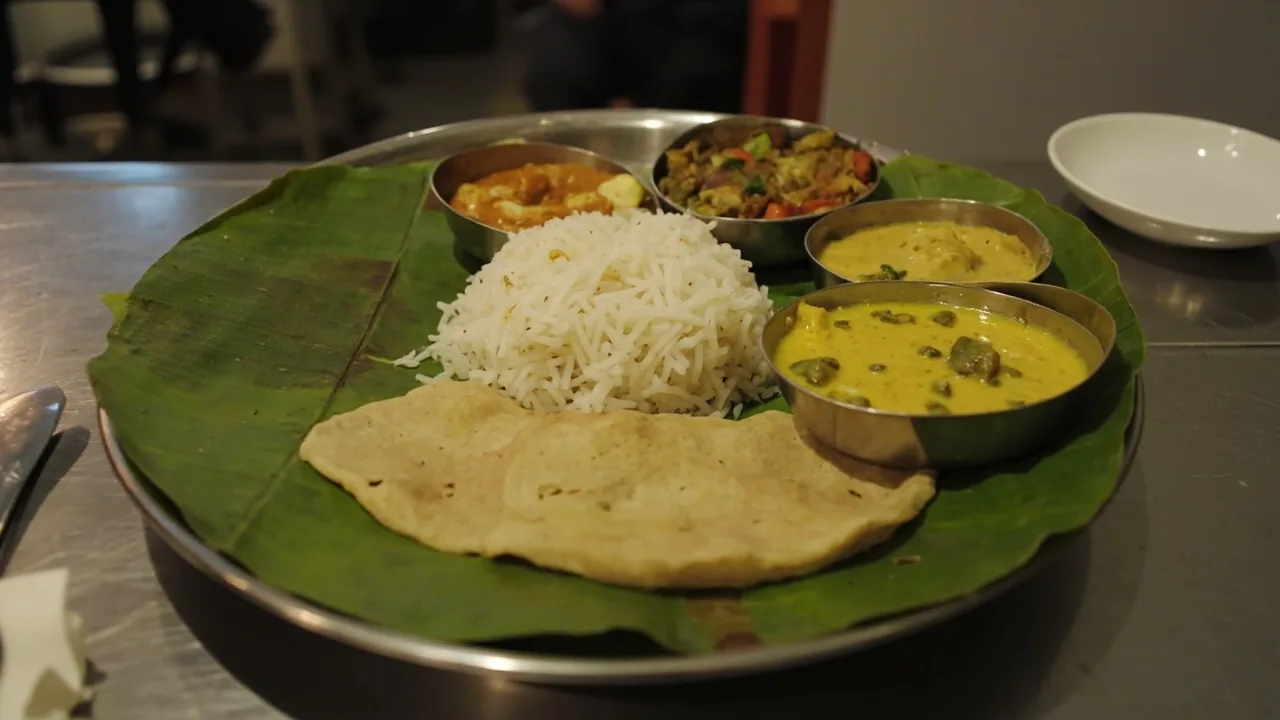
Woodlands Vegetarian Indian Restaurant (Penang, Georgetown) A South Indian pure-veg spot with a strong special thali. The thali is the move, rice, dhal, sambar, rasam, a couple of curries, curd, and pickle, all for under ₹473 (~20 MYR or ~$4.91). Casual setting, fast service. Check the menu and directions on Google Maps.
VR Penang Lily’s Vegetarian Kitchen (Penang) Healthy, home-style vegetarian Indian food. Thalis and North Indian curries both available. ₹284-₹473 (~12-20 MYR or ~$2.95-$4.91) per head. Walk-in friendly.
Olive Vegetarian (Penang) Cozy veg-only spot with a peaceful vibe, good for a quiet dinner when you’ve had enough of the hawker smoke. Expect ₹284-₹426 (~12-18 MYR or ~$2.95-$4.42).
Preeti’s Farsan Vegetarian & Vegan (KL) A Gujarati snack specialist. Farsan are crispy, salty Gujarati snacks, dhokla, khandvi, samosa, and thepla. Good for a light, fully-veg meal. ₹237-₹426 (~10-18 MYR or ~$2.46-$4.42).
Yun Shan He Vegetarian House (KL) A Chinese vegetarian restaurant, mock-meat-heavy, big portions, popular with the local Buddhist community. ₹284-₹473 (~12-20 MYR or ~$2.95-$4.91) for a full meal. Order the butter “chicken” mock and the yam ring.
Solh Restaurant & Bar (KL) Modern Middle Eastern food with several fully vegetarian mezze and mains. The falafel, hummus, mutabbal, and saffron rice are all solid. ₹592-₹1,065 (~25-45 MYR or ~$6.14-$11.05) per head, more of a dinner-out place.
If you’re in Brickfields, the Little India area of KL, walk the length of Jalan Tun Sambanthan. There are at least 15 pure-veg Indian restaurants on that one street alone. For a longer list, see best vegetarian Indian restaurants in Malaysia.
Eating in the Air: Malaysia Airlines Vegetarian Meals
If you’re flying Malaysia Airlines from India (Delhi, Mumbai, Chennai, Bangalore, Hyderabad all have direct flights), the vegetarian meal is one of the better ones in the region. Request at booking, then reconfirm 24 hours before departure.
- Indian Vegetarian Meal (AVML): Spicy North Indian-style curry with rice, dhal, vegetable side, roti or naan, and a dessert. Fully vegetarian, no eggs. Generally well-spiced and edible.
- Asian Vegetarian Meal (VOML): Lighter, often Chinese- or Southeast Asian-influenced, with rice, tofu, and stir-fried vegetables. Vegetarian but eggs may appear in some versions, double-check.
- Vegan / Jain / Hindu meal options: Available on request, though not always loaded on shorter routes.
The on-board veg meal is included in economy on long-haul routes. For more detail, see the Malaysia Airlines vegetarian meal guide.
Subodh’s Pro Tip: “Indian Vegetarian” is the safest code on Malaysia Airlines. It means no meat, no seafood, and the kitchen pulls from a separate Indian-vegetarian trolley, so cross-contamination is minimal.
Eating at KLIA and Other Malaysian Airports
KLIA, the main international airport, is south-southeast of KL city centre, around 45 to 60 minutes by KLIA Ekspres train. Food there is more expensive than downtown, and “vegetarian” labelling can be loose.
- KLIA Main Terminal (Klia1): Old Town White Coffee (vegetarian nasi lemak and curry, ₹284-₹426 (~12-18 MYR or ~$2.95-$4.42)), the food court on Level 3 has labelled vegetarian stalls. The “Pure Life” vegetarian outlet sometimes operates here.
- KLIA2 (AirAsia terminal): Bigger food court with several “vegetarian” labelled stalls and at least one burger option that offers a vegetarian patty.
- Penang International Airport (PEN): Small terminal, limited options, but the “Vegetarian Noodle” stall on the landside is reliable (₹189-₹284 (~8-12 MYR or ~$1.96-$2.95)).
- LCCT / Subang (SZB): Mostly cafés; look for the one or two spots with marked vegetarian wraps on the menu.
For a full breakdown of how to get from KLIA into the city, see the KLIA to city centre guide.
Food Safety & Hygiene
Malaysia is generally safe, but a few simple rules will save you a day in the hotel:
- Drink bottled or filtered water. Tap water in Malaysia is technically treated but not always reliable for travellers. Bottled water is ₹24-₹47 (~1-2 MYR or ~$0.25-$0.49) at any convenience store.
- Eat at busy stalls. A packed stall at 7 pm is a sign the food is fresh and turning over fast. An empty one at the same time is risky.
- Skip raw vegetables if you’re on day one. Your gut isn’t calibrated yet. After 48 hours, raw salads and herbs are usually fine.
- Carry ORS and a probiotic. Pharmacies (Caring, Guardian, Watsons) sell both. A 6-strip ORS pack is ₹71-₹118 (~3-5 MYR or ~$0.74-$1.23).
- Ice is usually fine in cities, since most commercial ice is factory-made. Avoid ice from unknown sources in rural areas.
- Fruit is safe if you peel it yourself. Durian season (June to August) is a treat, though the smell divides opinion.
For broader safety beyond food, see the Malaysia safety guide.
Getting Connected
A working SIM is genuinely useful for translation, Google Maps, and food-spot lookups on the go. Yes 5G and Unifi Mobile are the two main carriers; tourist SIMs start around ₹592 (~25 MYR or ~$6.14) for 30 days. ESIMs work fine if your phone supports them. A Nomad eSIM is a good option if you want data before you land; check the latest plan on the official Nomad site.
Common Food Mistakes Indians Make
Mistake 1: Ordering “vegetarian” and assuming local staff understand Indian vegetarian standards. What happens: You get a dish cooked with oyster sauce, chicken stock, or shrimp paste. Fix: Use the phrases above, or just say “fully vegetarian, no seafood, no egg, no animal stock.”
Mistake 2: Assuming “vegetarian Chinese” means Jain-friendly. What happens: Many Chinese vegetarian mock-meat dishes use garlic, onion, and eggs as flavouring. Fix: Say “no onion, no garlic” (tanpa bawang) if you’re Jain, or check the menu for “vegan” labels.
Mistake 3: Eating at the first halal mamak stall you see without checking the menu. What happens: Mamak (Indian-Muslim) food is halal, so no pork, but “vegetarian” items can still have fish, egg, or chicken. Fix: Stick to dhal, plain roti canai, vegetable curry (ask what’s in it), and curd-based drinks.
Mistake 4: Drinking tap water “because the hotel said it’s fine.” What happens: Stomach upset on day 2 or 3. Fix: Bottled water only, at least for the first week.
Mistake 5: Skipping breakfast because nothing looks vegetarian. What happens: You end up eating a Magnum ice cream at 11 am and calling it lunch. Fix: Almost every kopitiam (coffee shop) has kaya toast, soft-boiled eggs (skip the egg if you’re strict), and white coffee or teh tarik. Cheap, filling, and 100% vegetarian once you skip the egg.
FAQ
Is McDonald’s in Malaysia safe for vegetarians? Mostly yes. They have a McVeggie burger on the menu, and the french fries are cooked in vegetable oil. Skip the apple pie if you’re strict about eggs in the glaze.
Can I get Jain food in Malaysian cities? In major cities (KL, Penang, JB), yes. Pure-veg Jain-marked restaurants exist, especially in KL’s Brickfields and around Little India in Penang. Outside major cities, it’s much harder. Carry snacks.
Is fish sauce used in everything? Not everything, but a lot of stir-fried vegetable dishes and fried rice at hawker stalls. Always ask.
How expensive is vegetarian food in Malaysia? affordable. A full vegetarian meal at a hawker stall is ₹118-₹284 (~5-12 MYR or ~$1.23-$2.95). A thali at a sit-down Indian restaurant is ₹284-₹592 (~12-25 MYR or ~$2.95-$6.14). A Western-veg café meal is ₹473-₹1,065 (~20-45 MYR or ~$4.91-$11.05).
Is Malaysia good for vegan travellers? Yes, increasingly so. KL and Penang both have vegan cafés and Indian restaurants that label vegan options. The phrase “saya vegan, tanpa produk haiwan” (I’m vegan, no animal products) covers eggs, dairy, and honey.
Do I need a Malaysia visa to eat all this? Indians need either an eNTRI (free, 15 days) or eVISA (~₹1,800, 30 days). Apply on the official portal before flying, check the latest rules here.
Subodh’s Take
Malaysia is a vegetarian’s best friend in Southeast Asia, and most Indian backpackers underestimate it. You have full Indian thalis, mock-meat Chinese spreads, Malay kuih, and a growing vegan café scene all in one country. Learn the four or five Bahasa phrases above, screenshot them on your phone, and you’ll eat well in every city from Penang to Johor Bahru. The only real mistake is assuming “vegetarian” is universal. It isn’t, so say it out loud.
