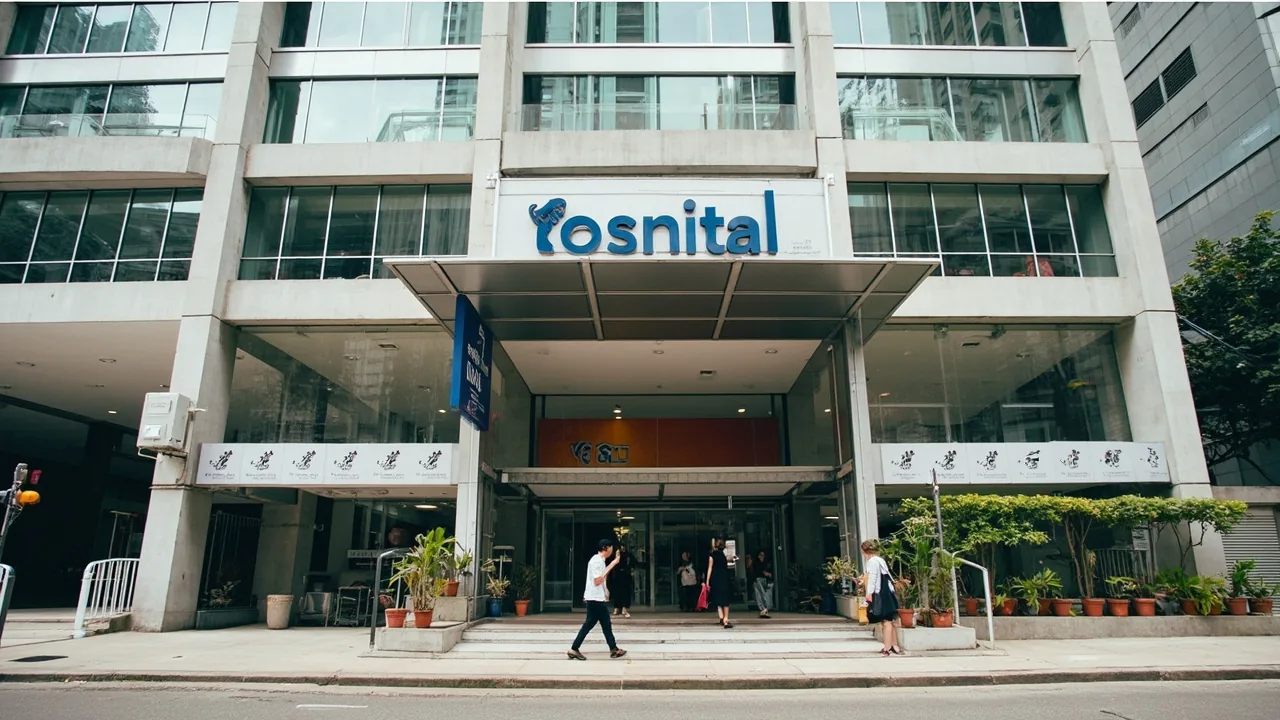
Emergency Medical Help in Vietnam: English-Speaking Doctors, Hospitals & Ambulance Numbers
If you’re looking for the best English speaking hospital in Ho Chi Minh City, this guide covers what Indian backpackers need: which clinics have reliable English front desks, what an ambulance ride costs, and how the Indian embassy fits in. It is verified against current traveller reports and cross-checked with the Indian embassy’s official Hanoi contact page.
Save this on your phone before you fly. For the full Southeast Asia health and safety overview, see our SE Asia backpacking hub.
Quick Answers
| What | Answer | Price (INR) |
|---|---|---|
| National ambulance number (Vietnam) | 115 (landline-style; English varies by province) | Free to call |
| Police (English-speaking tourist desk, HCMC) | 028 3829 4176 | Free to call |
| Best English-speaking hospital in Ho Chi Minh City | Family Medical Practice, 34 Le Duan, District 1 | ₹5,524-₹12,890 (~1,500,000-3,500,000 VND or ~$57.31-$133.71) for a general consult |
| Trusted international hospital in Hanoi | Family Medical Practice Hanoi, 298 I Kim Ma, Ba Dinh | ₹5,524-₹12,890 (~1,500,000-3,500,000 VND or ~$57.31-$133.71) for a general consult |
| Indian Embassy in Vietnam (Hanoi) | 58-60 Tran Hung Dao, +84 24 3824 4989 | Free to call |
The Real Risks in Vietnam (Ranked by What Happens)
I rank these by what Indian backpackers show up with at clinics, not by what makes for a dramatic headline. Travellers report scooter trauma, dengue, food poisoning, and ear/sinus infections from the air-con-to-heat cycle as the top four. Everything below that is rare but worth knowing.
| Risk | Likelihood | Impact | How to Avoid |
|---|---|---|---|
| Scooter/road trauma (rider or pillion) | High | Severe | Don’t ride without a valid IDP. Wear a helmet. Avoid night rides after rain. |
| Dengue fever | Moderate (peak Jun-Sep) | High | DEET 30%+ repellent daily, long sleeves at dusk, no standing water near your room. |
| Food poisoning (“Hanoi belly”) | Moderate | Low-Moderate | Stick to busy cooked-food stalls. Skip the pre-cut fruit on Day 1. Carry ORS sachets. |
| Sinus/ear infection from AC-to-heat swings | Common | Low | Don’t blast AC below 24°C. Carry a thin scarf for the bus. |
| Heat exhaustion (Central Vietnam, Apr-Aug) | Moderate | Moderate | 2-3 litres of water/day. Coconut water at any street stall for ~₹55 (~15,000 VND or ~$0.57). |
| Rabies (stray dog or monkey bite) | Low | Severe | Avoid touching animals. If bitten, wash with soap for 15 min, then head to an international clinic for immunoglobulin. |
| Typhoid or Hepatitis A | Low | High | Get vaccinated before flying. Drink only bottled or filtered water. See our Vietnam tap water guide. |
| Violent crime against tourists | low | Severe | Normal street awareness. Use Grab at night, not unmarked taxis. |
Prevention and Preparation (Do This Before You Board the Flight)
The cheapest medical care is the medical care you don’t need. Three things to lock in before leaving India.
1. Vaccines and medicines to sort in India
- Hepatitis A and Typhoid: both strongly recommended, both cheap at any Apollo or Manipal travel clinic (~₹1,500 each).
- Tetanus booster: if your last shot was over 10 years ago, get one.
- Rabies pre-exposure series: optional but cheap insurance if you’re going to be around monkeys (Phong Nha, Cat Ba, Son Tra). Three shots over 21 days, around ₹2,500 (~$25.93) total at a government hospital. See our Vietnam first-aid kit guide for what else to pack.
- Dengue vaccine (Qdenga): only worth it if you have a history of dengue or are immunocompromised. Discuss with your GP.
- Malaria prophylaxis: not routinely needed for the main tourist trail (Hanoi, HCMC, Da Nang, Hoi An, HCMC). Discuss if you’re heading to the Cambodia border or remote Mekong provinces.
Pack from your Indian medical cabinet:
| Indian medicine | Use | Vietnamese equivalent if needed |
|---|---|---|
| Electral/ORS sachets | Rehydration after food poisoning | Widely available as “Oresol” |
| Dolo 650 / Paracetamol | Fever, pain | Panadol at any pharmacy |
| Metrogyl 400 (Metronidazole) | Suspected amoebic dysentery | Available over the counter; pharmacist will hand it over without a script |
| Pantocid / Pantoprazole | Acid reflux, mild food-poisoning nausea | Same brand name sold locally |
| Avomine (Promethazine) | Motion sickness on sleeper buses | Phariton or equivalent |
| Cetaphil gentle cleanser | Heat rash, mystery rashes | Any local pharmacy |
2. Travel insurance that pays out A good Indian policy with international cover is fine if it includes scooter accidents (most don’t unless you specifically add it), emergency evacuation, and a 24-hour English helpline. If you don’t have one yet, this is the one cluster where I’d push you to sort it today, not tomorrow:
Read the small print on scooter cover. If your plan excludes motorised two-wheeler accidents, a Hanoi curb-bender becomes a five-figure out-of-pocket bill fast.
3. Digital and physical document backups
- Passport photo page: PDF in your email, screenshot in two cloud apps, WhatsApp to your parents.
- Visa e-print: keep the PDF offline on your phone. Border checkpoints sometimes ask.
- Insurance policy number and emergency assistance phone number: photo of the card, in your lock screen.
- Blood type, allergies, current medications: typed in your Notes app under a starred entry.
Best English-Speaking Hospital in Ho Chi Minh City (and Hanoi)
The international clinic vs public hospital divide is real in Vietnam. Public hospitals (Bach Mai in Hanoi, Cho Ray in HCMC) are the right call for severe trauma and are far cheaper, but front-desk English is patchy, billing is cash-up-front, and the queue at 2 a.m. On a Saturday is a soul test. For everything short of life-threatening trauma, the international clinics below are what Indian travellers use. The Family Medical Practice Vietnam pricing and English-fluency claims were cross-checked against the clinic’s published fee schedule (fmp.com.vn) and current traveller reports on Reddit r/VietNam and TripAdvisor in 2026: highest English fluency, the most reliable pricing, the most direct billing with international insurance.
Ho Chi Minh City (District 1, District 2)
Family Medical Practice HCMC, 34 Le Duan Boulevard, District 1. The original flagship, open 24/7 for emergencies, in-house lab and imaging, English-speaking doctors across general practice, paediatrics, orthopaedics, and OB-GYN. Direct billing with most international insurers including SafetyWing. A standard GP consult runs ₹5,524-₹9,208 (~1,500,000-2,500,000 VND or ~$57.31-$95.51). Walk-ins accepted.
A second JCI-accredited private Vietnamese hospital in District 7 (Thao Dien) is a good option for surgical cases — French-Vietnamese operator, English coverage is excellent at the international wing. Expect a GP consult in the ₹7,366-₹12,890 (~2,000,000-3,500,000 VND or ~$76.41-$133.71) range.
A third option, a Singaporean-owned international clinic chain in District 3, has predictable pricing and is strong for minor stuff like stitches, IV drips, and travel-medicine scripts. GP consult around ₹5,524-₹9,208 (~1,500,000-2,500,000 VND or ~$57.31-$95.51).
Hanoi
Family Medical Practice Hanoi, 298 I Kim Ma Street, Ba Dinh. Sister clinic to the HCMC flagship, 24/7 emergency, English-speaking paediatricians on call. This is the clinic most Indian embassy staff and Hanoi’s Indian community use.
Da Nang / Hoi An
For Central Vietnam trauma serious enough that you need a hospital with an ICU, the typical medevac path is ground ambulance or short flight to FV Hospital or Family Medical Practice HCMC.
What to Do If It Happens: Three Real Scenarios
Scenario 1: You come off a scooter in Hanoi
- Don’t move if you suspect neck or back injury. Get a bystander to call Grab to Family Medical Practice Hanoi (298 Kim Ma), or dial 115 for an ambulance. State the address slowly in English; operators in District 1 and Hoan Kiem speak some English, elsewhere it will be Vietnamese-only.
- Call your travel insurance emergency line before you arrive at the clinic. They will open a “guarantee of payment” file so you don’t pay the full deposit out of pocket.
- At the clinic: hand over your passport, insurance card, and any IDP (International Driving Permit). Expect a cash deposit of ₹18,415-₹55,245 (~5,000,000-15,000,000 VND or ~$191.02-$573.06) if insurance billing isn’t set up. Don’t sign anything you don’t understand; ask for an English copy of every invoice.
- Keep all receipts, X-ray films (digital copies work), and discharge summary. Claim within 30 days of return, otherwise most policies time-bar.
Scenario 2: Severe food poisoning (high fever, blood in stool, can’t keep water down for 12 hours)
- ORS sachets every 20 minutes. If you vomit it back, head to the nearest clinic for IV rehydration.
- Don’t reach for Metrogyl from your own kit without a doctor confirming it’s amoebic. Travellers’ diarrhoea is usually viral; antibiotics can make it worse.
- Family Medical Practice or Raffles will run a stool test (around ₹1,842-₹3,683 (~500,000-1,000,000 VND or ~$19.10-$38.20)) and start IV fluids within 30 minutes. Total bill for a same-day visit typically lands at ₹11,049-₹22,098 (~3,000,000-6,000,000 VND or ~$114.61-$229.22).
- If it’s after-hours in a smaller city (Hoi An, Phong Nha), the Family Medical Practice Hanoi or HCMC 24/7 line will do a video consult and direct you to the nearest partner clinic.
Scenario 3: Passport stolen (medical-ER crossover because it often happens together)
- File a police report first. Tourist police in HCMC: 028 3829 4176, English-speaking desk. In Hanoi: 024 3821 6507. Get the report number on paper.
- Contact the Indian Embassy in Hanoi: +84 24 3824 4989, 58-60 Tran Hung Dao. The Consular section can advise on emergency travel documents. Same-day turnaround if the report is filed by 11 a.m.
- Carry the emergency documents, police report, and any tickets the embassy advises, and follow the embassy’s and Immigration’s current instructions at the airport.
Indian-Specific Considerations
Embassy and consulate contacts (save these):
| Office | Address | Phone | Hours |
|---|---|---|---|
| Indian Embassy, Hanoi | 58-60 Tran Hung Dao, Hoan Kiem | +84 24 3824 4989 | Mon-Fri 9:00-17:00 |
| Indian Consulate, HCMC | 55 Nguyen Dinh Chieu, District 3 | +84 28 3823 7050 | Mon-Fri 9:00-17:00 |
| 24/7 emergency helpline (MEA, Delhi) | , | +91 11 2301 2113 / +91 11 2301 4103 | Always |
Money at the clinic:
- International clinics accept Visa, Mastercard, and JCB. Cash deposit required if your insurance card isn’t on file.
- Public hospitals: cash only. Bring small notes; the cashier often can’t break a ~500,000 VND (~$19.10) bill.
- For a standard clinic visit (consult + basic meds): ₹5,524-₹12,890 (~1,500,000-3,500,000 VND or ~$57.31-$133.71). A&E with imaging: ₹18,415-₹55,245 (~5,000,000-15,000,000 VND or ~$191.02-$573.06). Overnight admission: ₹55,245-₹147,320 (~15,000,000-40,000,000 VND or ~$573.06-$1,528.16).
Vegetarian and Indian food during recovery (yes, this matters): When you’re stuck in a Hanoi hotel room with food poisoning, the only thing that sounds edible is plain dal-chawal. Family Medical Practice HCMC and Hanoi both stock khichdi-grade white rice and plain toast, but if you can get out. Also see our Vietnam street food safety guide for prevention tips.
- Shri Natraj Indian Cuisine in HCMC for North Indian comfort food.
- Saffron Indian Restaurant in HCMC for South Indian thalis.
- Tanishq Indian Vegetarian Restaurant in HCMC for strict-veg dosas.
For Hanoi, check Little India around Pho Hue for a Jay or South Indian vegetarian restaurant that delivers.
City-by-City Scams and Gotchas (Medical-Adjacent)
These aren’t emergency-room issues but they end up costing Indian backpackers sleep and stomachs.
HCMC: Street “pharmacists” offering antibiotics without a script. Counterfeit Augmentin and fake Cipro are a real problem. Stick to registered pharmacies; if a sidewalk vendor offers “Japanese medicine” cheap, walk away.
Hanoi: Fake “Tiger Balm” bottles near the Old Quarter. Stick to sealed original-stock ones from established convenience stores.
Da Nang: Beachside “massage therapists” offering joint-cracking adjustments to sunburned backpackers. Real spinal injury risk if they pop your neck. Skip it.
Hoi An: Street-tailor cuts that lead to infected finger wounds from rusted needles. Bring a small first-aid kit (Band-Aids, antiseptic, Savlon) from India and treat any cut same-day. See our Vietnam motorbike safety piece for related scooter-incident prep.
Phong Nha: Cave-trip ankle sprains are common. Wear real trainers, not Crocs. The cave floors are wet limestone and unforgiving.
Getting Connected
This is the only cluster where I put SIM cards near the top. If you can’t call for help, every other prep is academic. Grab a Viettel or Mobifone physical SIM at the airport on arrival (tourist counter, passport required, around ₹552 (~150,000 VND or ~$5.73) for 30 days of 4G data and calls). If you’d rather land with data already working, get a regional eSIM before you fly:
Nomad eSIM (Vietnam coverage). No passport swap at the airport counter, data on before landing.
Either way, save these numbers as contacts named “EMERGENCY-HCMC” and “EMERGENCY-HANOI” so you don’t fumble at 3 a.m.
FAQ
Is the 115 ambulance number English-speaking? In Hanoi and HCMC, the dispatchers on the major districts have some English; in smaller cities, mostly Vietnamese. If you speak only English, call Family Medical Practice direct (their 24/7 line is English-first) and ask them to coordinate a private ambulance for you.
Do I need travel insurance for Vietnam? Yes. A scooter accident requiring orthopaedic surgery and a two-day hospital stay can easily cross ₹184,150 (~50,000,000 VND or ~$1,910.20). Insurance isn’t a luxury, it’s the cheapest line item on your trip.
Are Indian medicines available in Vietnam? Most common brands (Dolo, Crocin, Pantocid, Combiflam) are sold under the same or near-identical names at larger pharmacies. Prescription antibiotics are sold without a script at most independent pharmacies, but counterfeit rates are real; stick to established chains.
Is it safe to get a tattoo in Hoi An and then swim in the sea? The tattoo itself is fine at reputable studios. The infection risk is real if you soak the fresh tattoo in seawater within 24 hours. Treat any puncture wound (tattoo, cut, scrape) like an open door: clean, antiseptic, and covered.
Should I carry an Epipen if I have a history of severe allergies? Yes, from India. Vietnamese pharmacies don’t stock Epipen, and if you have a known anaphylactic allergy, you want your own auto-injector. Buy two, carry both.
What if I run out of a prescription medication mid-trip? Family Medical Practice and Raffles Medical can issue repeat prescriptions after a quick consultation. Bring your Indian prescription and the strip with the salt name. Brand-name drugs differ; salt names (Atorvastatin, Metformin, Levothyroxine) are universal.
Do I need a yellow fever vaccine for Vietnam? No, unless you’re arriving from a country with yellow fever transmission (most of sub-Saharan Africa, parts of South America). Indian passport holders flying direct from India don’t need it. Carry the certificate anyway if you’ve previously travelled to an endemic country.
Subodh’s Take
The international clinics in HCMC and Hanoi are genuinely world-class for non-emergency stuff, the doctors trained in Australia or the UK, the English is fluent, and the bills are survivable if your insurance is in order. Save this page to your phone before you fly.
